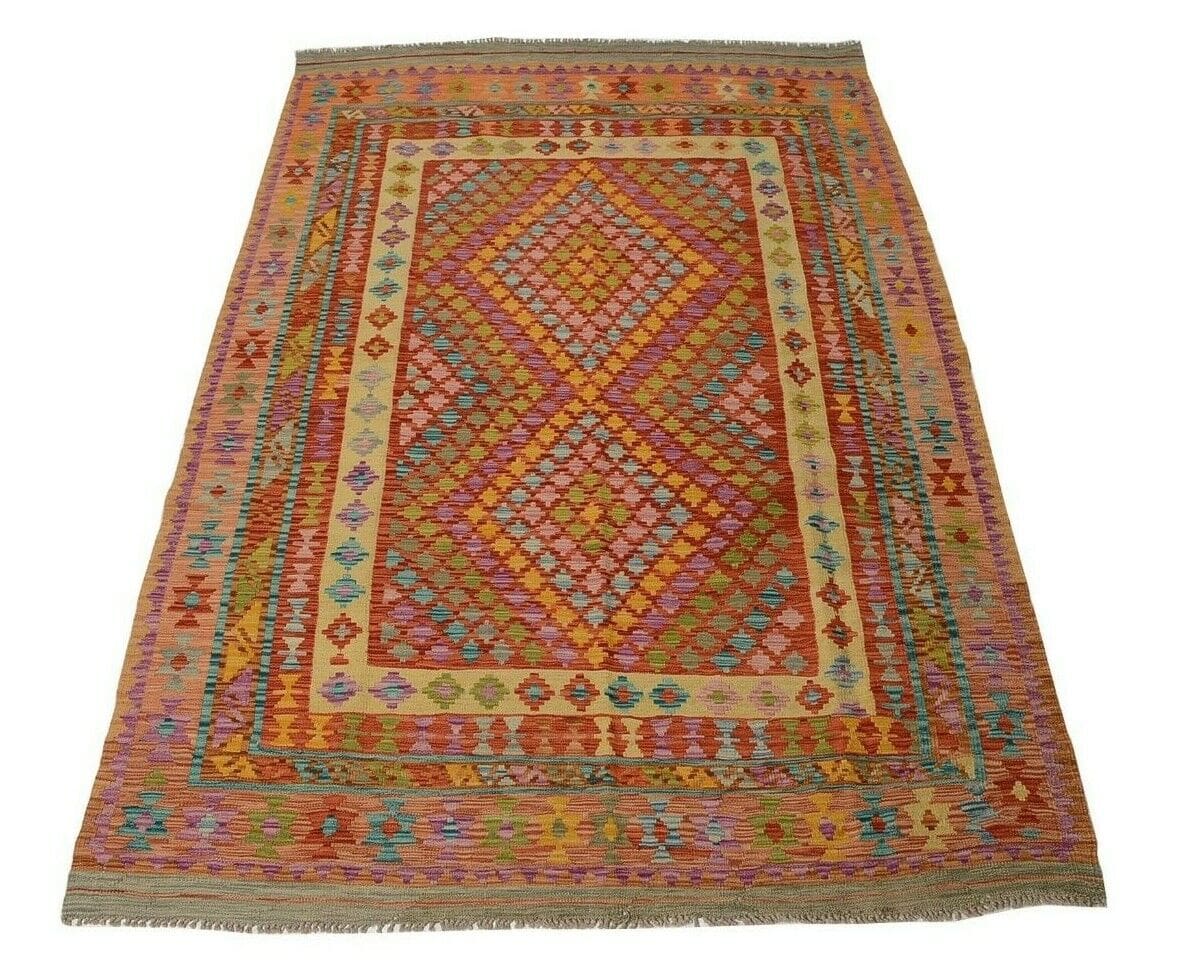
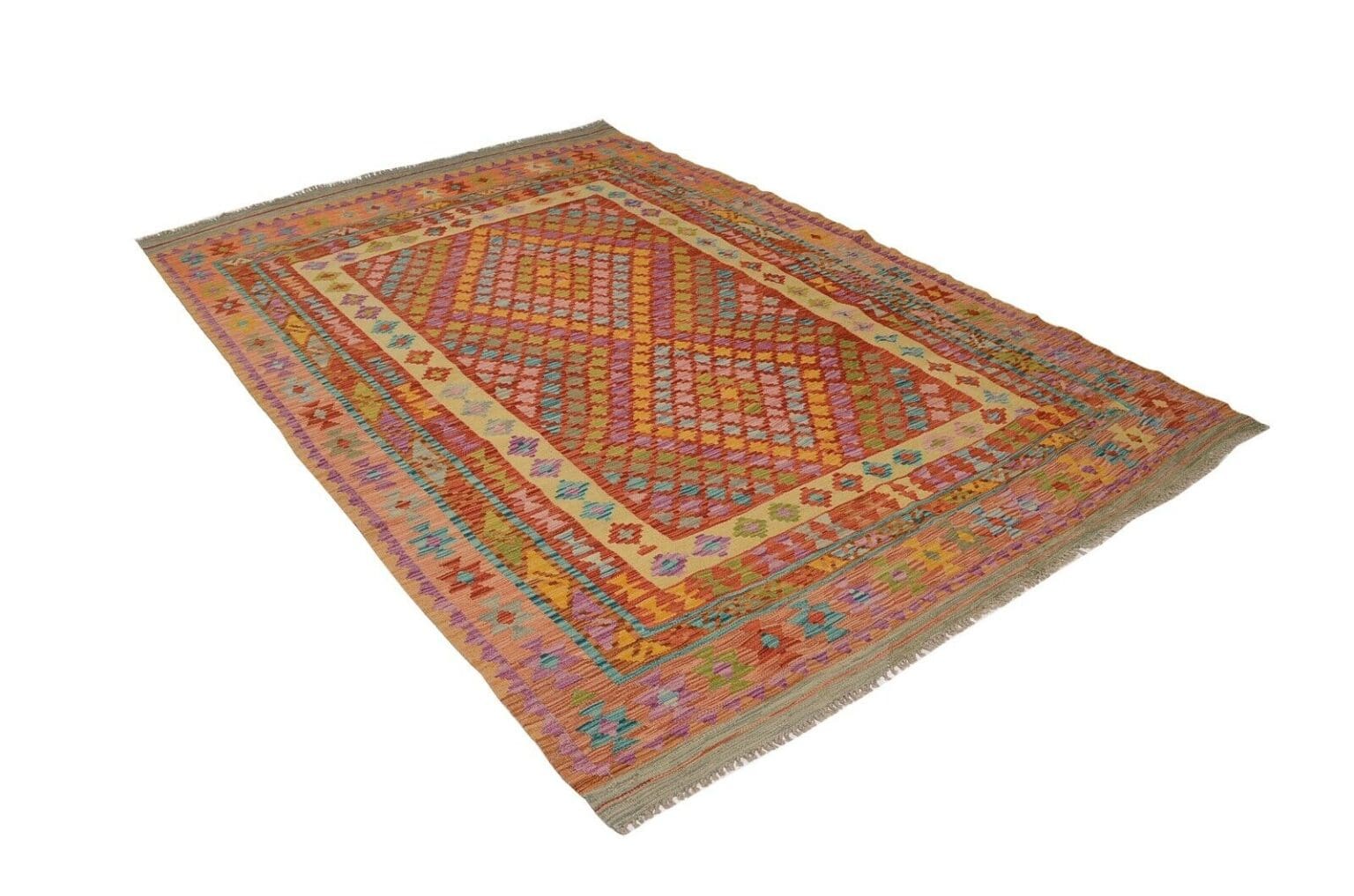
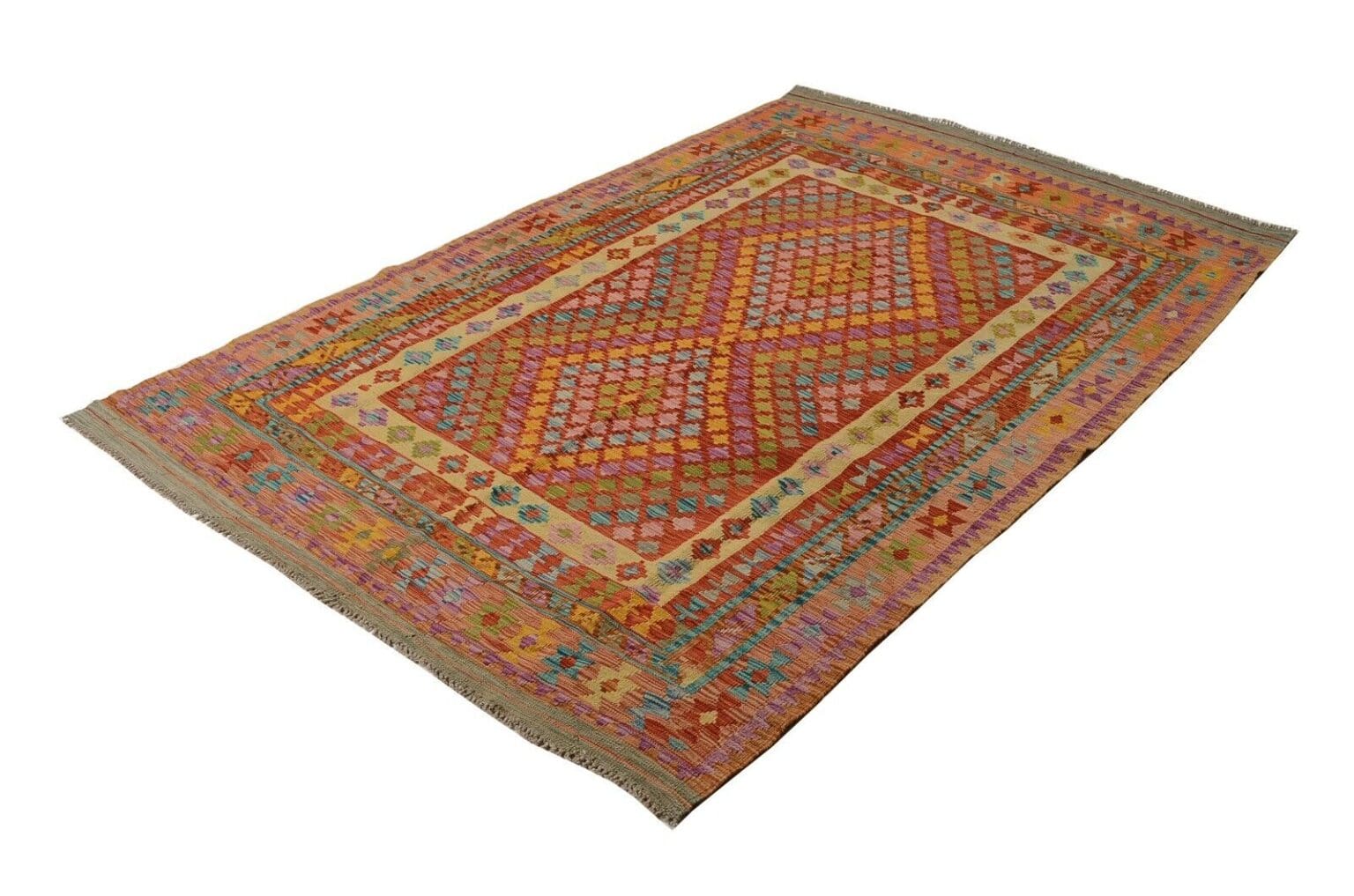
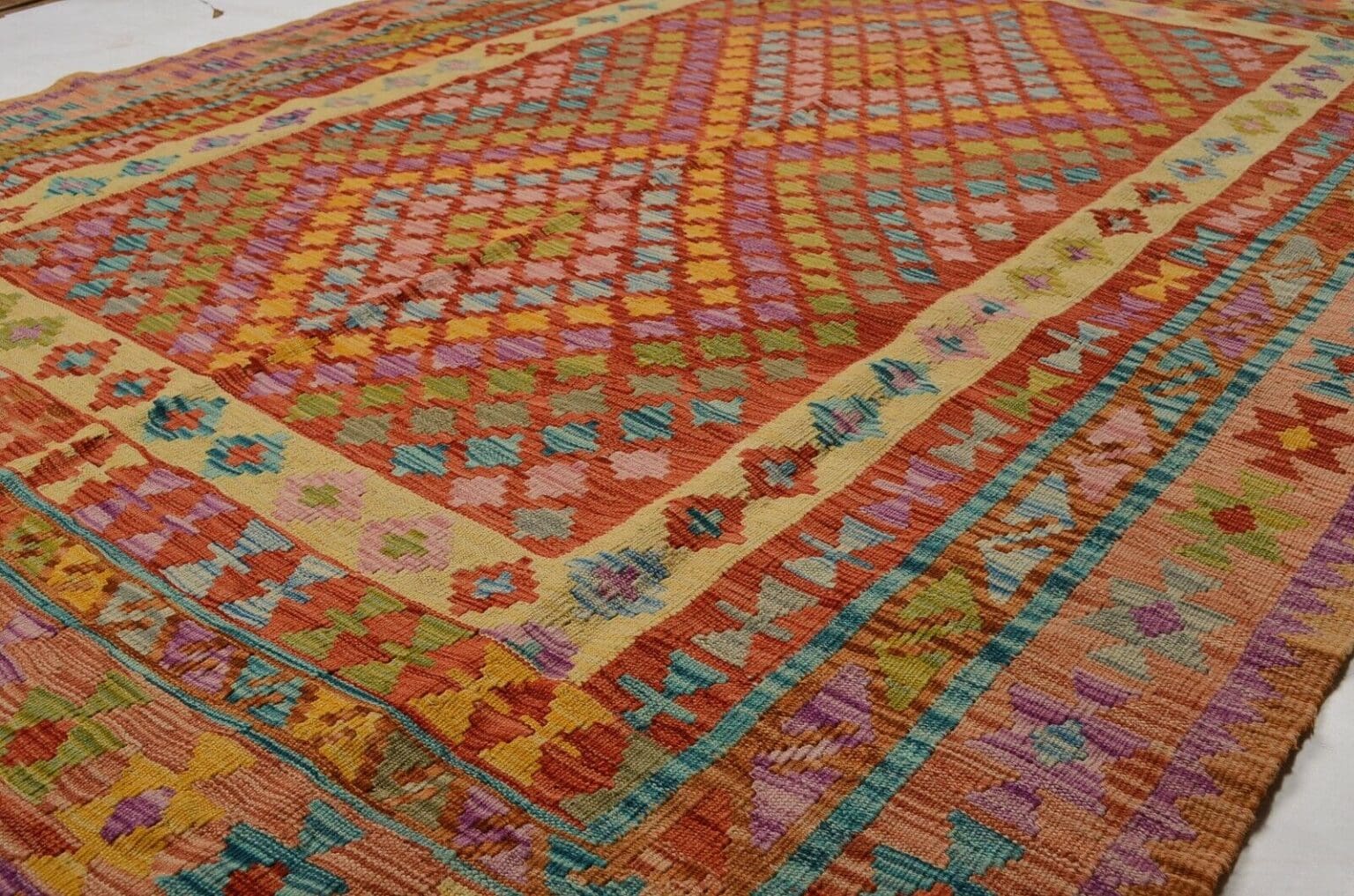
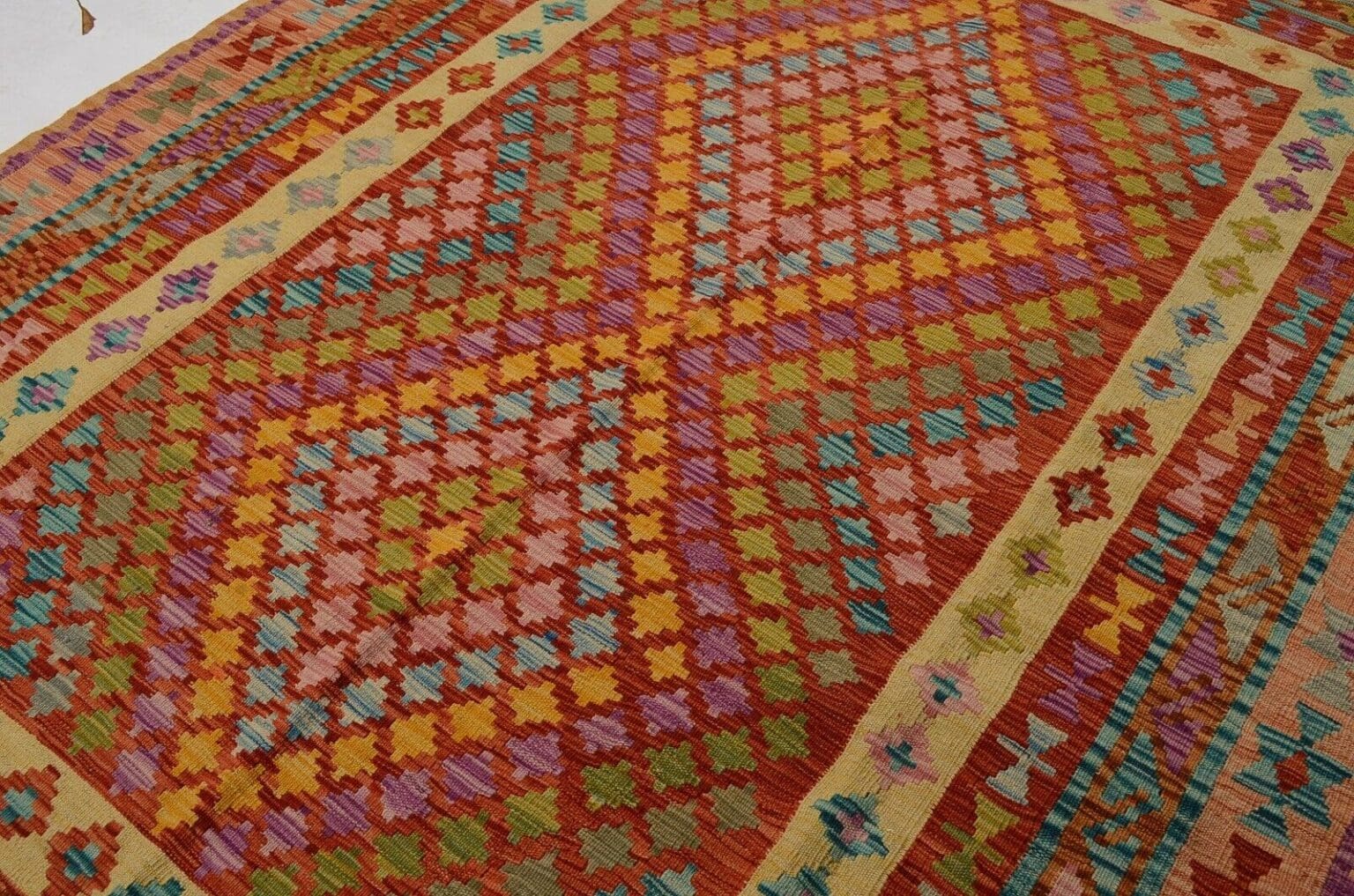
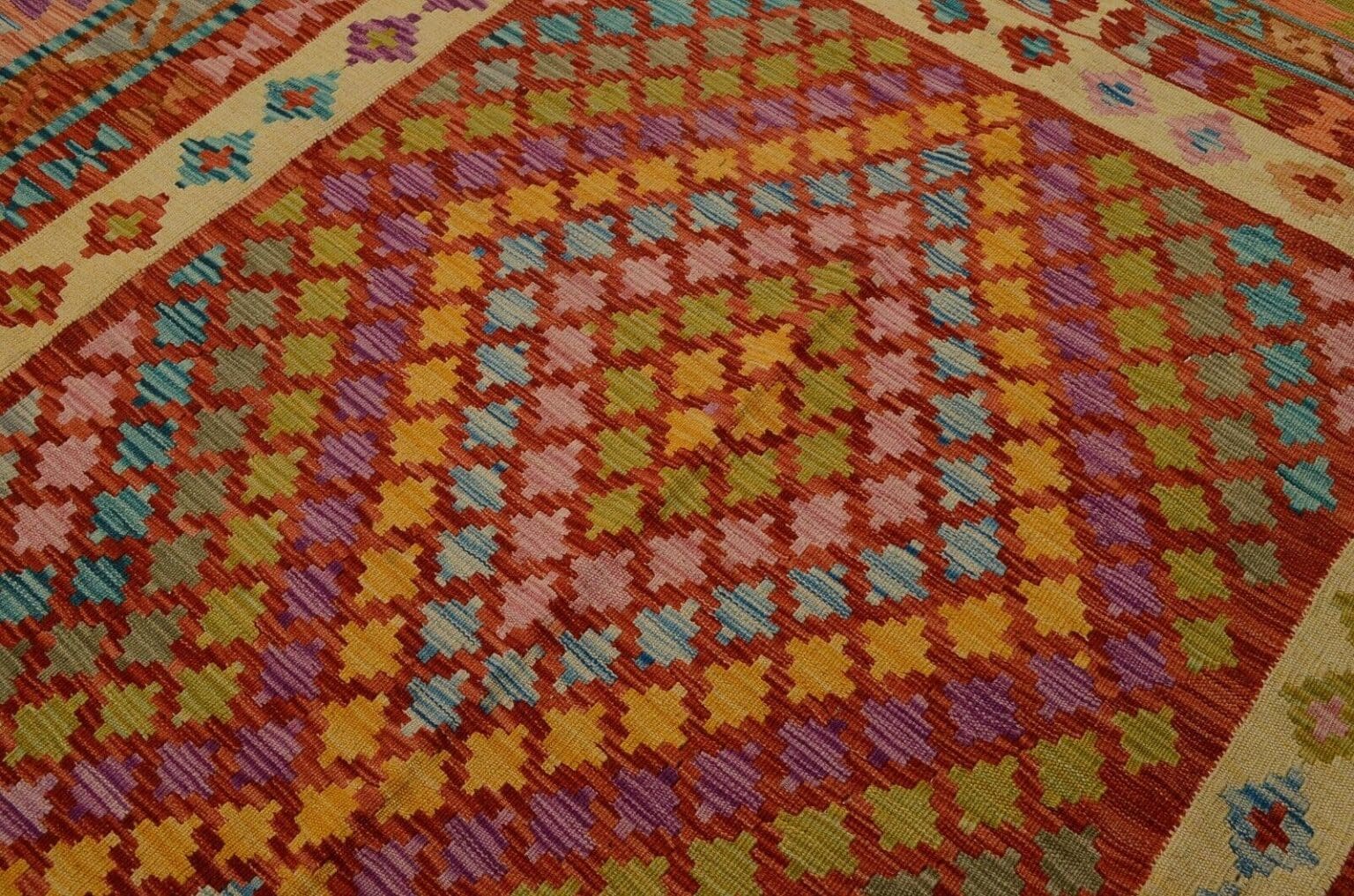
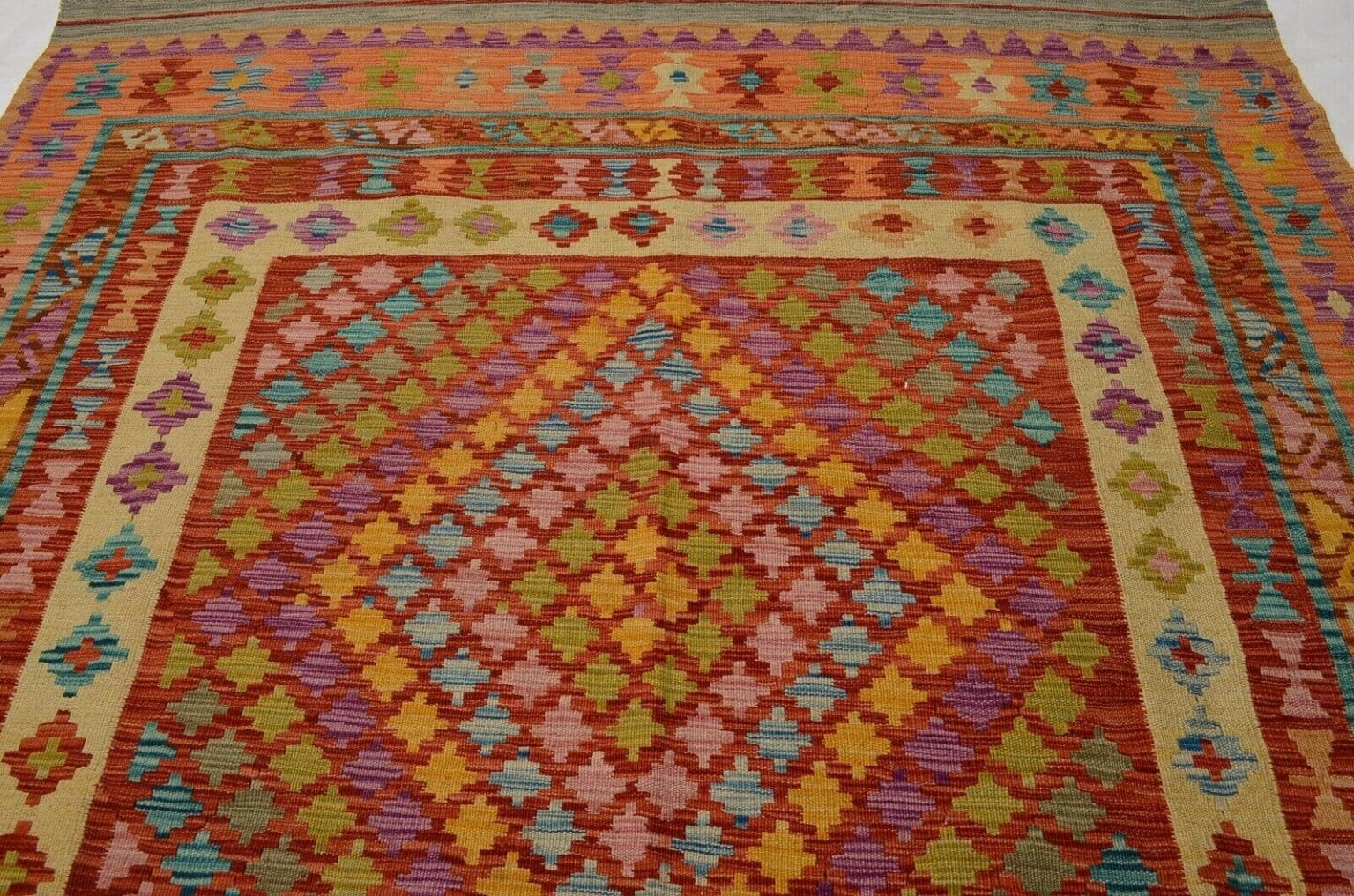
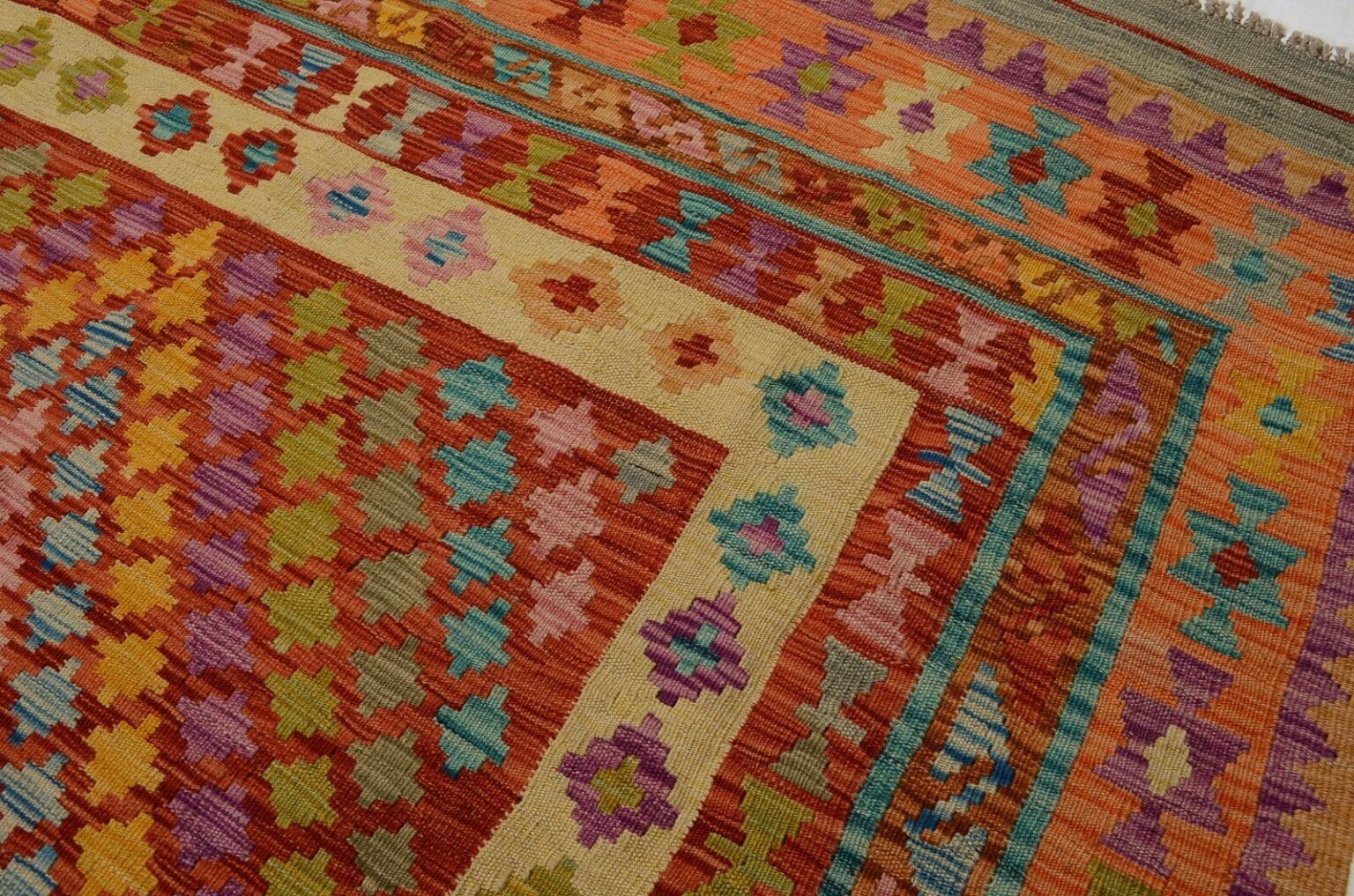
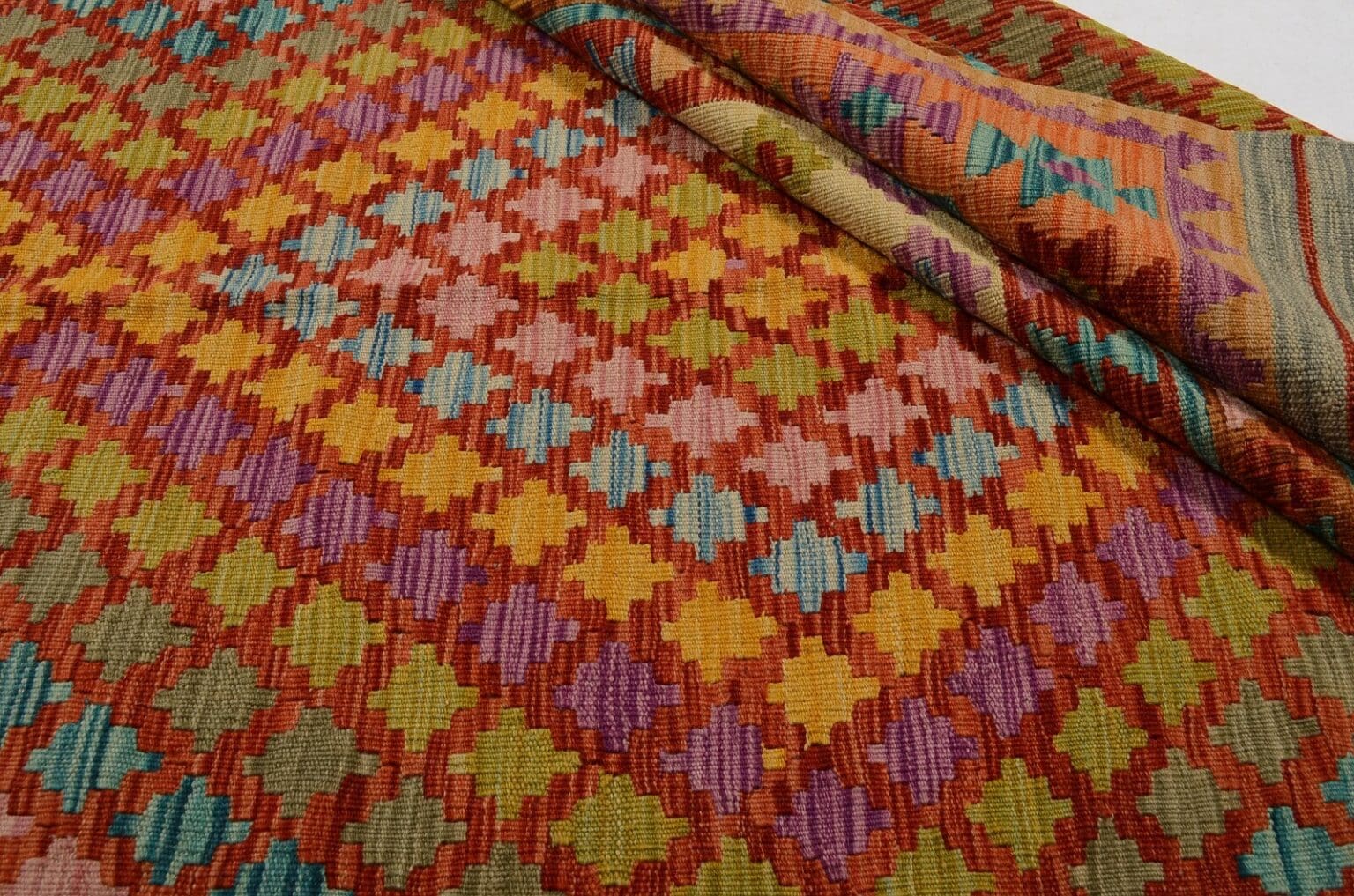
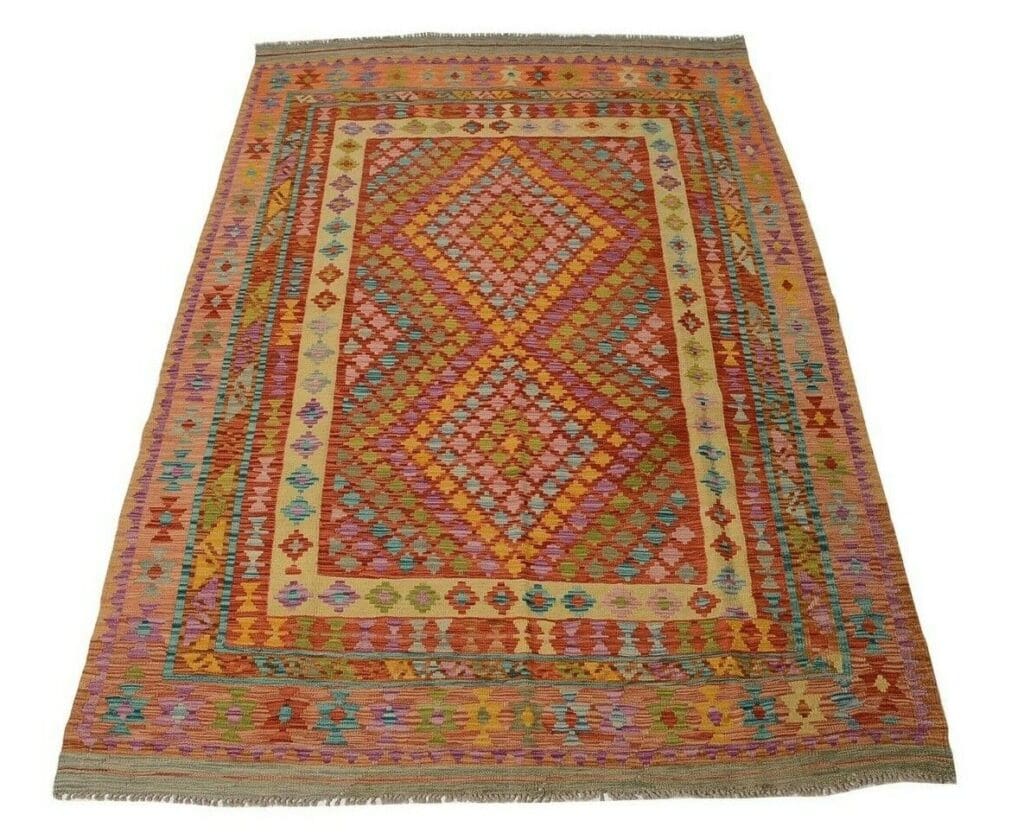
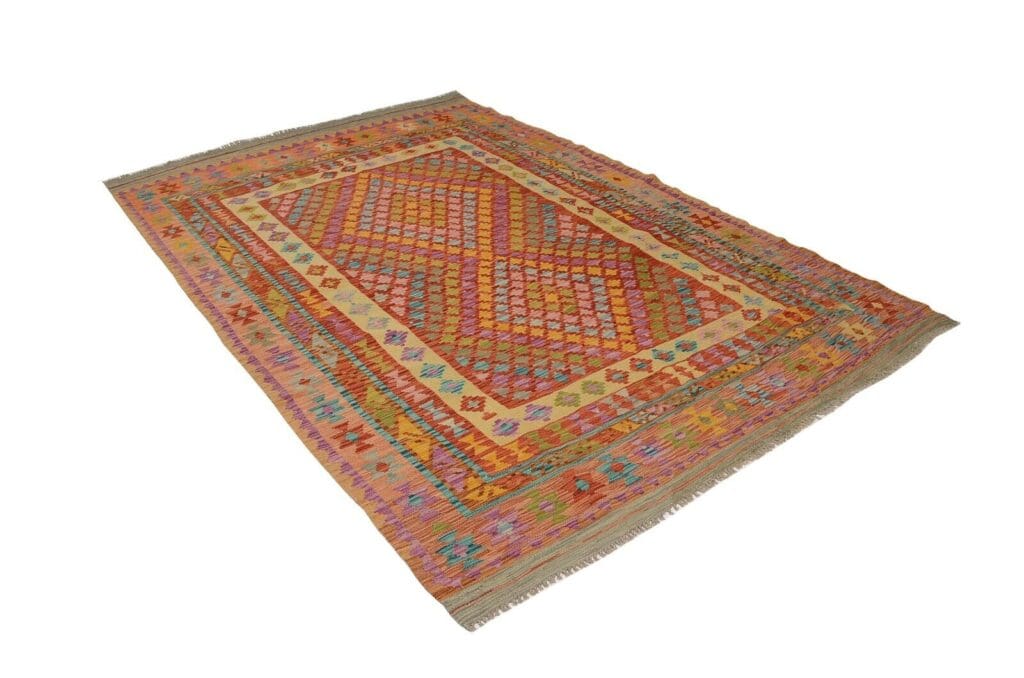
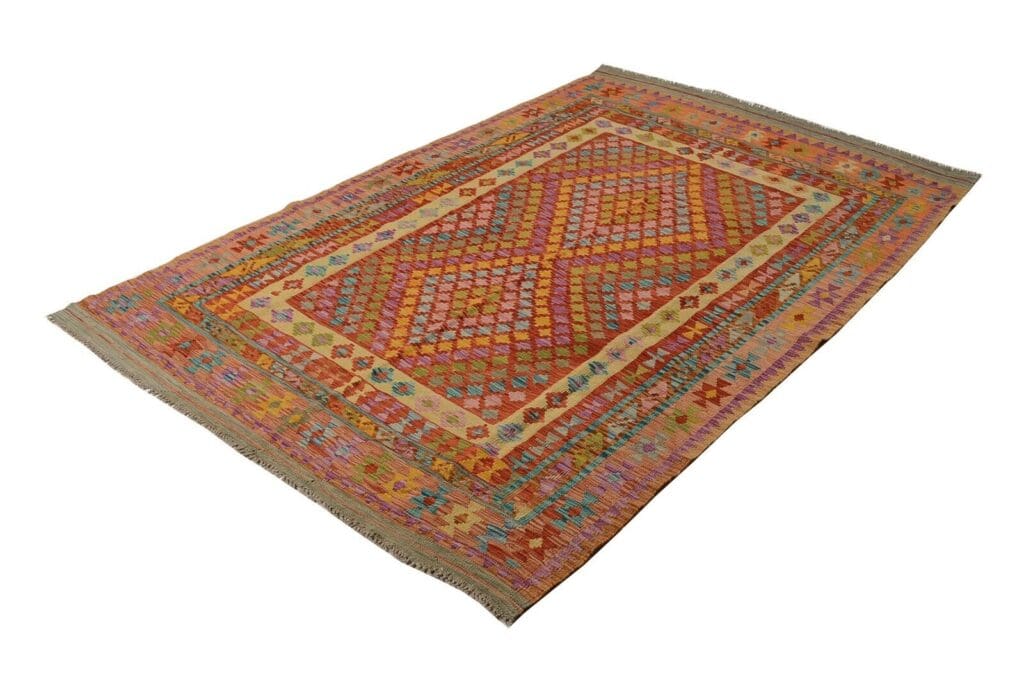
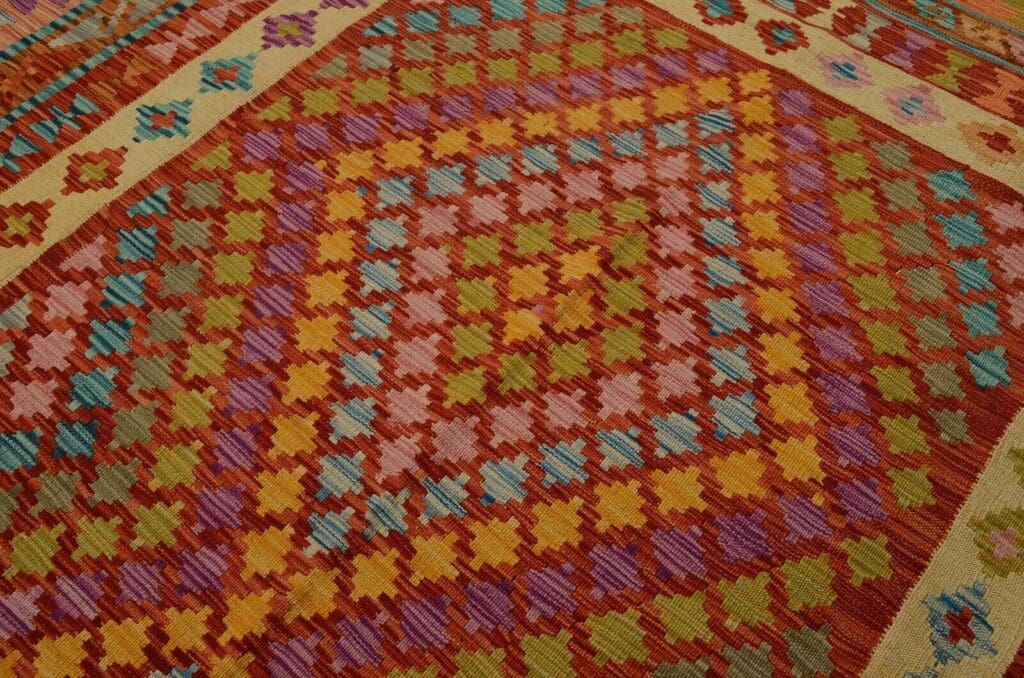
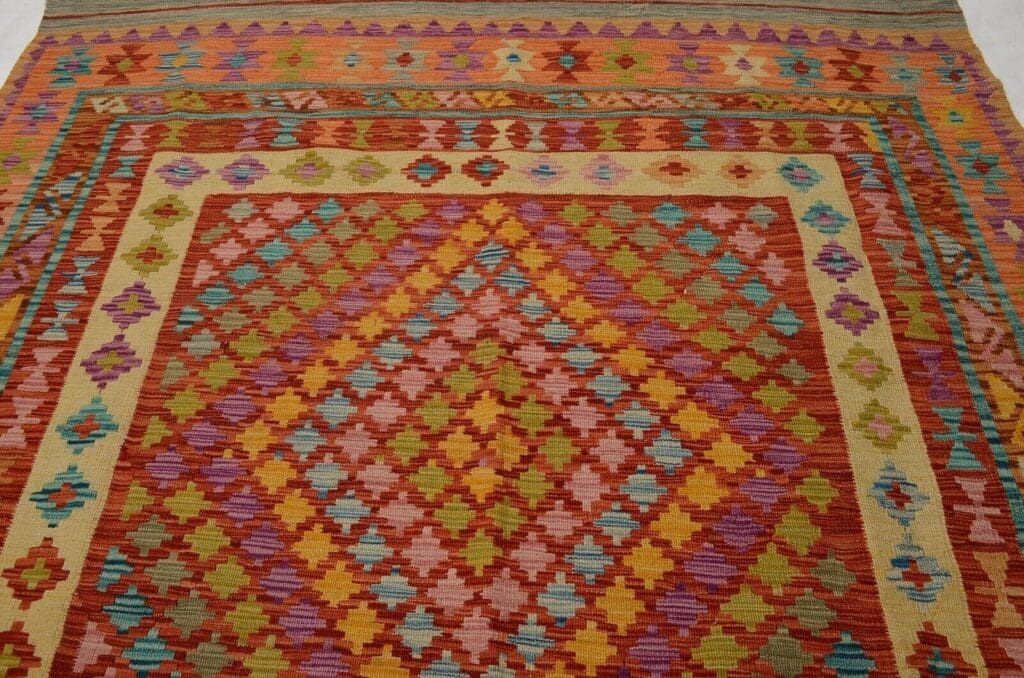
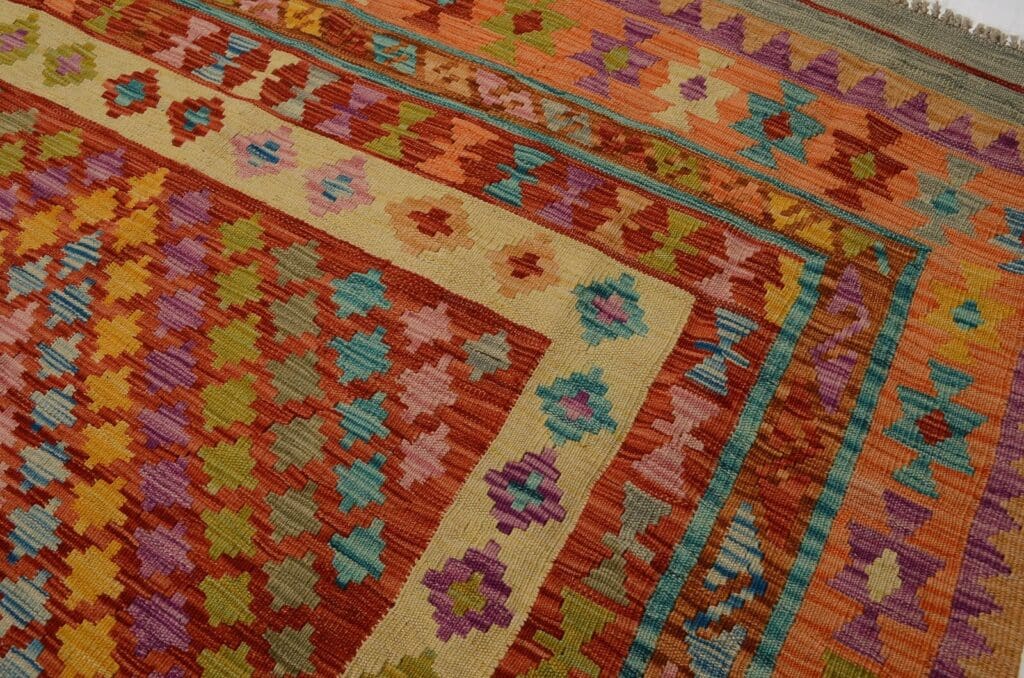
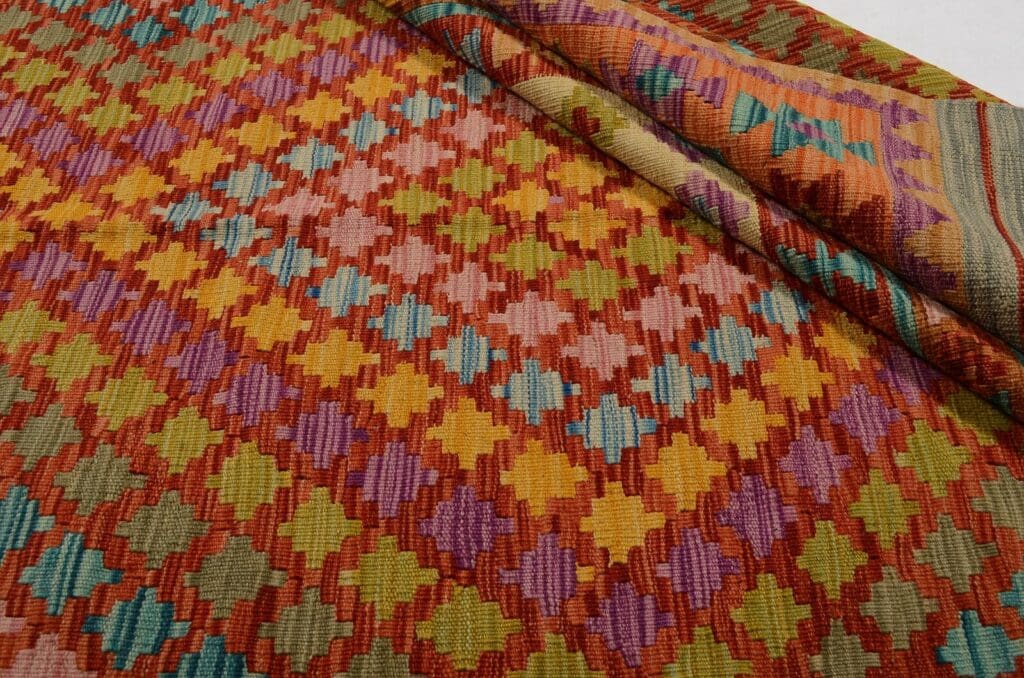
Oriental Rug Afghanistan 264 x 174 cm Wool Hand-woven
€ 902
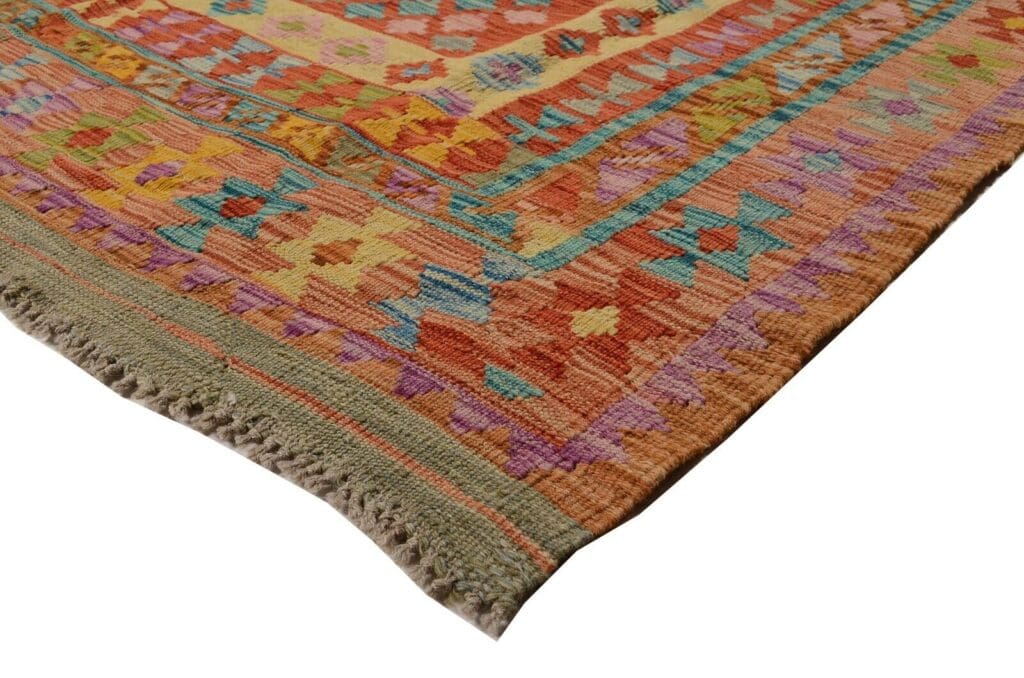
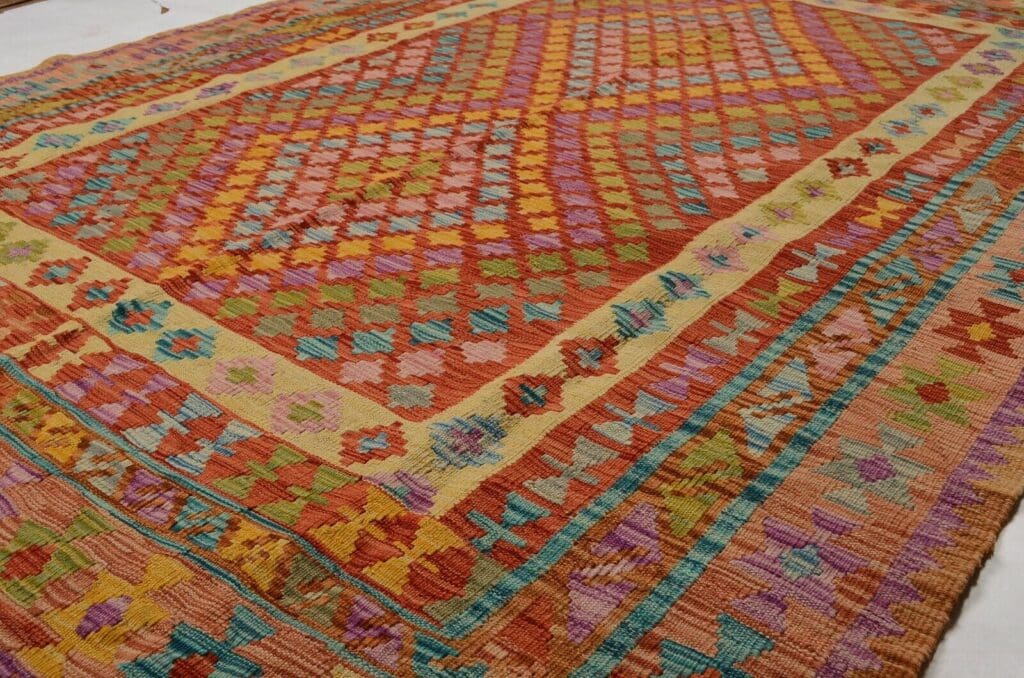
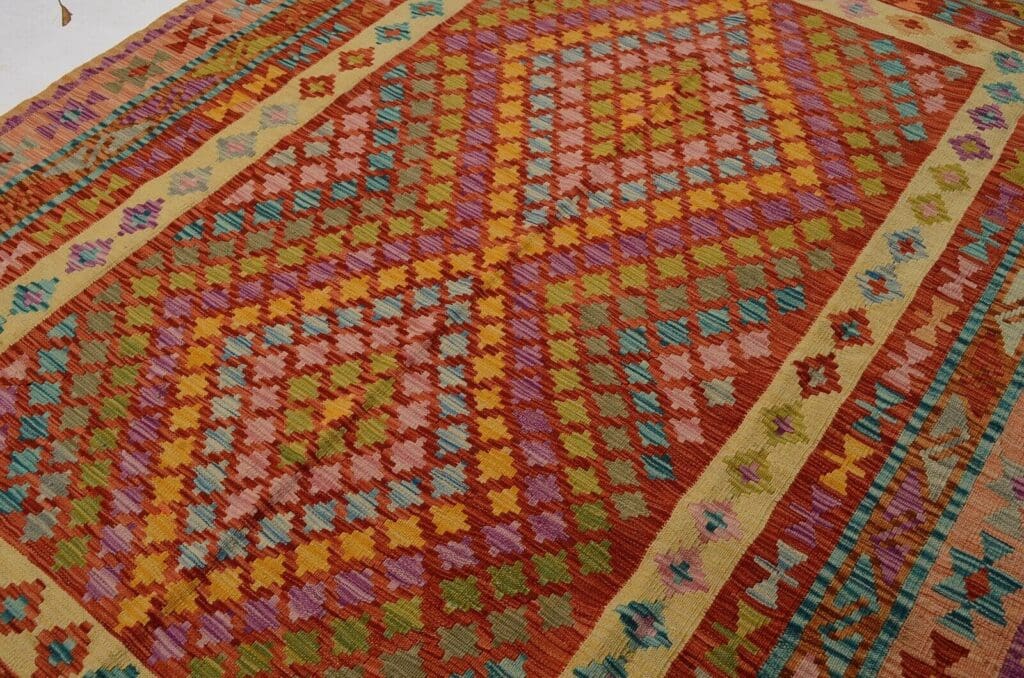
Hand-woven Afghan Kilim | Material: pile 100% hand-spun and hand-dyed virgin wool | Size: 264 x 174 cm | Pattern: geometric all-over design in pastel colours | Condition: new and perfect | Origin: Afghanistan
1 available
- ✓Free Shipping in EU
- ✓2-5 Business Days Delivery
- ✓14-Day Return Policy
- ✓Worldwide Shipping on request
 SECURE PAYMENT
 SHIPPING PARTNERS
Inventory number: 23F7B6EE
Description
Afghan Oriental Rug
Material and Craftsmanship
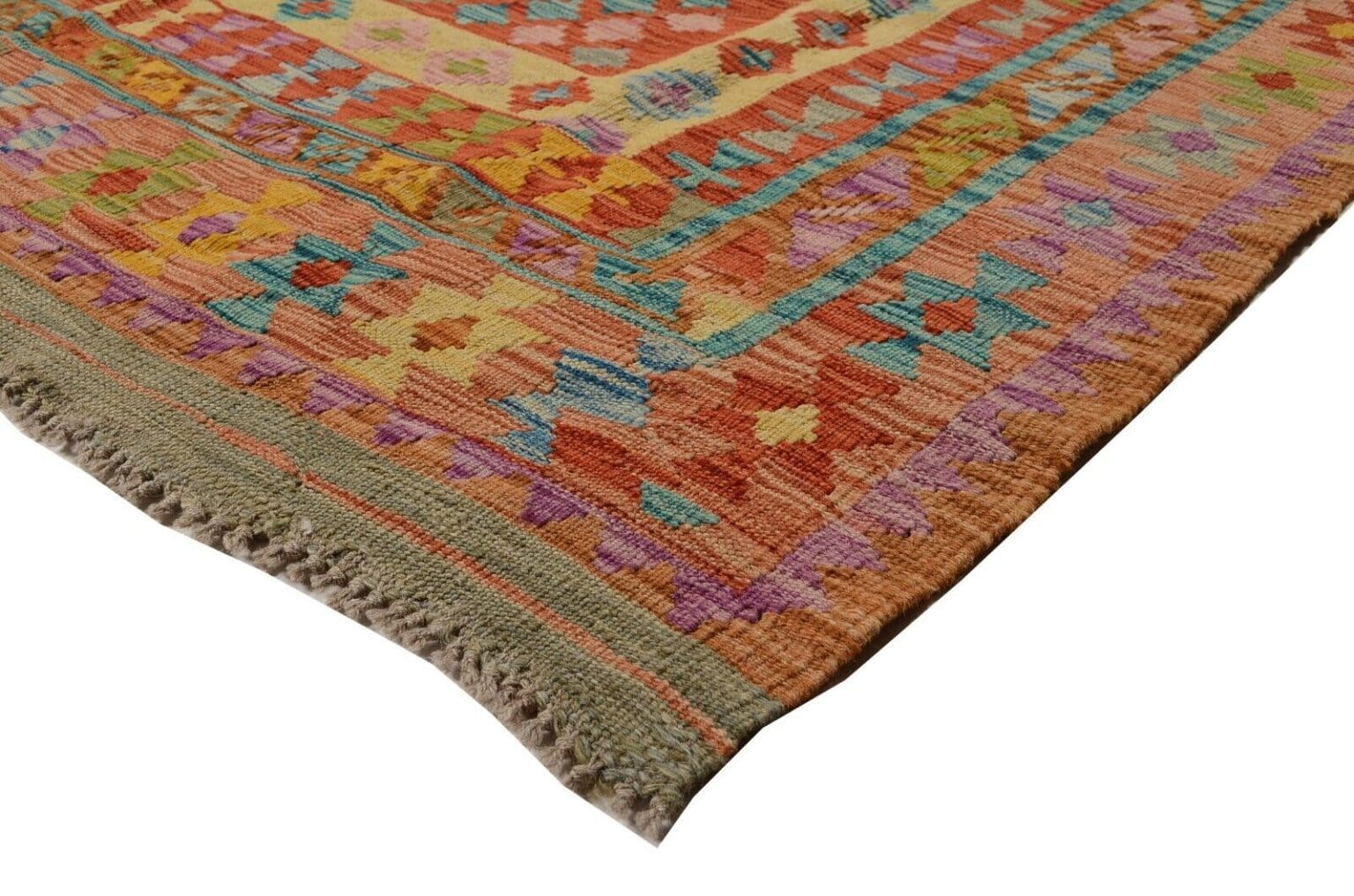
This hand-woven kilim is made from hand-spun and hand-dyed virgin wool. The material combines a natural fibre with a process in which the yarn itself remains part of the visual character of the textile. Wool has long been used for flat-woven rugs because it can be spun into resilient yarn and worked into a firm woven surface. Hand-spinning gives the yarn a lively structure rather than the completely uniform appearance associated with industrial production. That variation is part of the character of a handmade textile.
The rug is produced by hand weaving. A kilim is a flat-woven textile rather than a pile or knotted rug. The warp provides the framework, while the weft builds the visible surface and carries the design. By placing and compacting the weft threads, the weaver creates a flat, closely structured field. The pattern is formed as the rug is woven; it is not printed onto a finished surface. Hand-dyed wool allows the colours to be arranged within the construction of the textile, so colour and technique remain closely connected.
In a hand-woven kilim, selvedges, colour changes and variations in the placement of weft threads reflect the method of production. Differences in tension or in the execution of individual areas can therefore be understood as features of handmade work. The flat construction also makes kilims practical for everyday interiors, including spaces where furniture or regular foot traffic requires a textile with little pile. The material identified for this rug is hand-spun, hand-dyed virgin wool; no additional material is specified.
Flat weaving is a direct textile process. The yarn is prepared, dyed and arranged within the loom, and the surface develops progressively through the interaction of warp and weft. This differs from knotting, where individual knots create a pile that is later finished. A kilim instead presents the woven structure as its usable face. The result is a textile with a clear relationship between its construction, its colour sequence and its geometric composition.
Origin and Tradition
The kilim comes from Afghanistan. Afghan weaving belongs to a broad textile culture in which wool preparation, spinning, dyeing and weaving have been passed through generations of practical knowledge. Across the country, handmade textiles have developed in connection with local materials, daily use and established ways of organising colour and form. The country of origin identifies the cultural and production context of this rug, while the term kilim identifies its flat-woven technique.
Afghan kilims have their own place within the wider history of Oriental rugs. Oriental rug traditions include many regions and many methods, from knotted pile rugs to flat weaves. A kilim should therefore not be described as a knotted rug simply because it belongs to the same broad textile world. Its character comes from its woven surface, its direct handling of yarn and its ability to carry a design through interlocking or carefully placed areas of colour.
Flat-woven rugs have traditionally served both practical and decorative purposes. They can cover a floor, define an area within a room or be used as a textile furnishing element. Their relatively low profile makes them easy to combine with furniture and suitable for settings where a raised pile is not required. At the same time, the woven surface records the work of the maker. The rhythm of the threads and the transition between colours remain legible, giving the textile a clear connection to its method of manufacture.
Geometric design is strongly associated with many Afghan and neighbouring weaving traditions. Lines, diamonds, stepped shapes, bands and repeated fields can be created efficiently within a loom structure. A geometric vocabulary also allows a weaver to preserve familiar ideas while changing their scale, sequence or colour arrangement. Some motifs may be linked to inherited symbols or to observations of the surrounding world, but individual meanings are not automatically fixed. A geometric figure can carry decorative, structural and cultural roles at the same time.
Hand production involves a sequence of decisions rather than a single mechanical operation. The wool is prepared and spun, colour is introduced by hand, and the yarn is then organised within the weave. As the textile develops, the weaver maintains the tension and places the colours that form the composition. This working method creates a one-off rug with the direct qualities of handcraft. It also explains why a hand-woven kilim is best understood as a textile object in which construction and design cannot be separated.
The label Afghan describes the stated origin, not an unspecified city, tribe or province. No more precise place of manufacture is given for this rug. The description therefore remains with Afghanistan and with the Afghan kilim tradition in general. That distinction matters because Oriental rugs come from numerous weaving areas, each with its own terminology. Here, the reliable identifying facts are the Afghan origin, the hand-woven kilim technique, the wool material and the geometric pastel composition.
Design and Pattern
The rug carries a geometric all-over design in pastel colours. An all-over composition distributes the pattern across the field rather than concentrating the decoration in one central medallion. Repeated forms create a continuous visual rhythm from one area to the next. In a flat weave, geometric elements can be built from lines, angles, diamonds, stepped contours, stripes and small repeating fields. The exact named motifs are not specified here, so the design is best described by its overall geometric organisation.
Pastel colours give the pattern a restrained tonal character. Lighter shades allow the separate shapes to remain visible while avoiding the heavy contrast of a strongly saturated palette. The multicolour arrangement brings several tones into one woven order. Colour can separate neighbouring fields, mark a border-like rhythm or give repeated forms a changing sequence. Because the yarn is hand-dyed, the colour belongs to the handmade process described for this rug; no additional colour names are assigned to the piece.
The all-over layout can be read at different distances. Close viewing reveals the relationship between yarn, weave and colour placement. From farther away, the repeated geometry becomes a unified surface pattern. This layered reading is typical of textile design: the rug functions as a composed field in the room while still showing how its design was made. The pattern is decorative without requiring a pictorial scene, and its ordered forms can work with a range of interior approaches.
Geometric decoration can complement contemporary, bohemian and traditional settings because it offers structure without depending on one period-specific style. Its repeated lines and fields can echo furniture shapes, while the pastel palette can sit alongside both quiet and more varied interiors. These are general qualities of geometric flat-woven design, not additional claims about the rug’s provenance. For this individual piece, the stated pattern remains a geometric all-over design in pastel colours, produced in a multicolour hand-woven format.
The Afghan origin and the geometric language belong together without requiring a more specific motif attribution. The rug is not identified as a named city design, and no particular medallion, floral programme or regional pattern title is supplied. Keeping the description at this level preserves the actual information: the surface is geometrically organised, the composition extends across the rug and the colours are described as pastel and multicoloured.
Special Features
This kilim is described as new and perfect. Its flat-woven construction makes it suitable for rooms with underfloor heating. A flat textile presents less pile between the floor and the room, allowing heat to pass through the surface in a practical way. The rug is also versatile in use and can be placed in a living room, dining area or hallway. Regular gentle vacuuming is appropriate for routine care. Spills should be treated promptly with a damp cloth and mild cleaning solution, while harsh chemicals should be avoided.
The listed features include hand weaving, hand-spun and hand-dyed virgin wool, a geometric pastel all-over pattern, suitability for underfloor heating and the new, perfect condition. These characteristics describe the object without adding an unconfirmed city, workshop or motif attribution. Its handmade construction remains visible in the relationship between the woven surface, the wool yarn and the colour arrangement.
FAQ
How should I care for this hand-woven kilim?
Vacuum the kilim regularly and gently to remove everyday dust. If something is spilled, treat the area promptly with a damp cloth and a mild cleaning product. Avoid vigorous rubbing, which can disturb the flat-woven surface and affect the hand-dyed colours. Strong chemicals should not be used because they may damage the wool or alter the colour. For a more extensive cleaning, choose a professional service experienced with handmade wool rugs. Keeping the rug dry after spot treatment is also sensible, and furniture should not be dragged across it.
Can the kilim be used over underfloor heating?
Yes. This hand-woven Oriental kilim is suitable for rooms with underfloor heating. Its flat structure allows heat to pass through without the insulating depth of a thick pile. Lay it flat and use only a suitable rug underlay if one is needed for stability. The heating system’s own operating instructions still apply, since floor types and temperature controls can differ. If there is any uncertainty about an underlay or a particular heating installation, the heating manufacturer or a qualified flooring professional can provide the relevant guidance.
What does the Afghan origin mean for this kilim?
Afghanistan is the stated country of origin for this kilim. It places the rug within a wider Afghan tradition of working with wool, spinning yarn, applying colour by hand and creating flat-woven textiles. Geometric forms are common in many weaving cultures and may reflect inherited design ideas, practical pattern building or symbolic associations; a single universal meaning should not be assigned to every shape. This rug is specifically described as a geometric all-over design in pastel colours. No more precise Afghan city, province or workshop is identified.
Additional information
| Design Style | |
|---|---|
| Color | |
| Size | |
| Shape | |
| Origin | |
| Material |
Related products

Persian Rug Fars 240 x 150 cm Cashmere Hand-knotted
€ 1118
Persian Rug Qashqai 288 x 193 cm Wool Hand-woven
€ 798
Persian Rug Tabriz 388 x 295 cm Wool Hand-knotted
€ 1440
Persian Rug Gabbeh 200 x 300 cm Cashmere Hand-knotted
€ 1323
Persian Rug Heriz 340 x 254 cm Wool Hand-knotted
€ 1438
Persian Rug Fars 293 x 186 cm Wool Hand-woven
€ 798
Oriental Rug Qashqai 292 x 193 cm Wool Hand-woven
€ 798
Persian Rug Heriz ca 341 x 242 cm Wool Hand-knotted
€ 1800