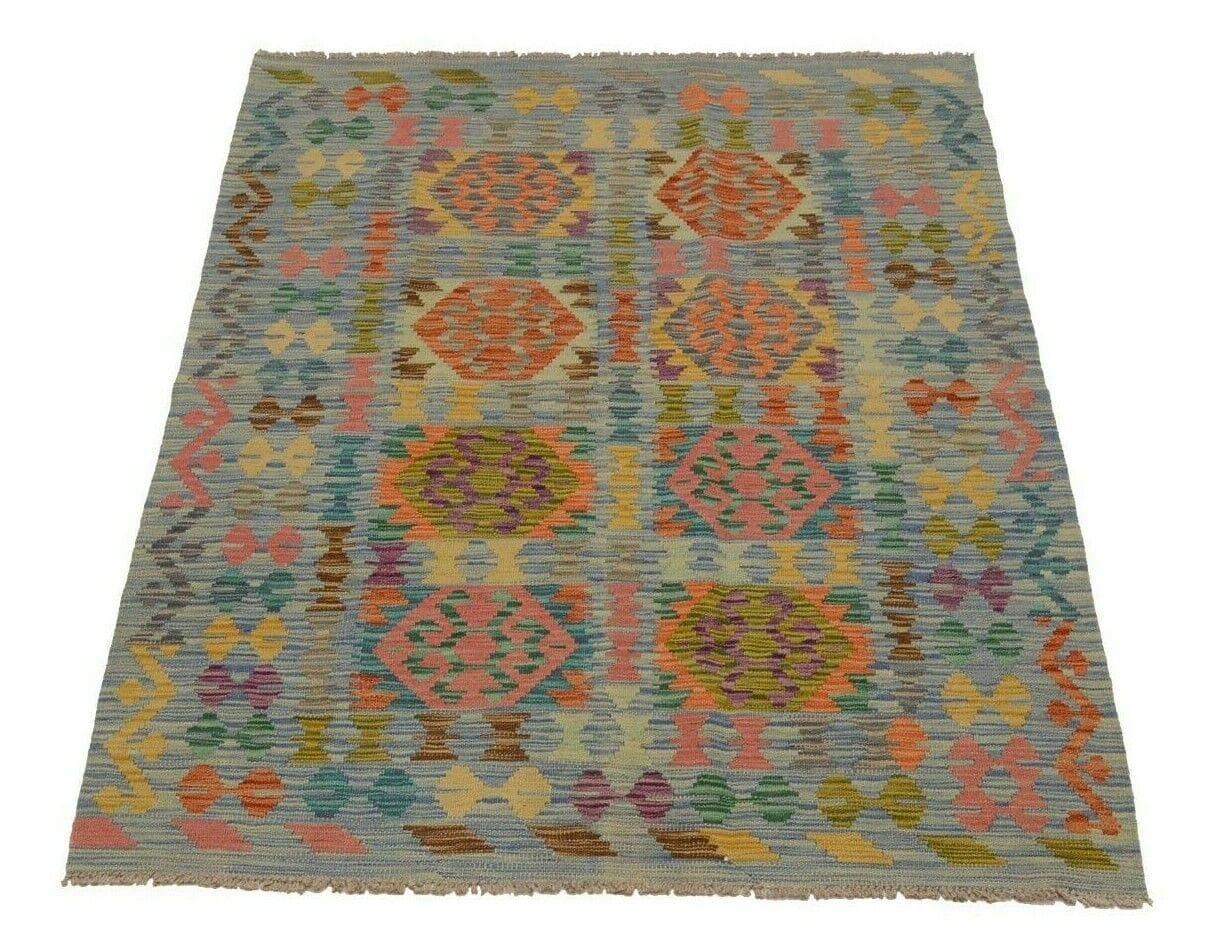
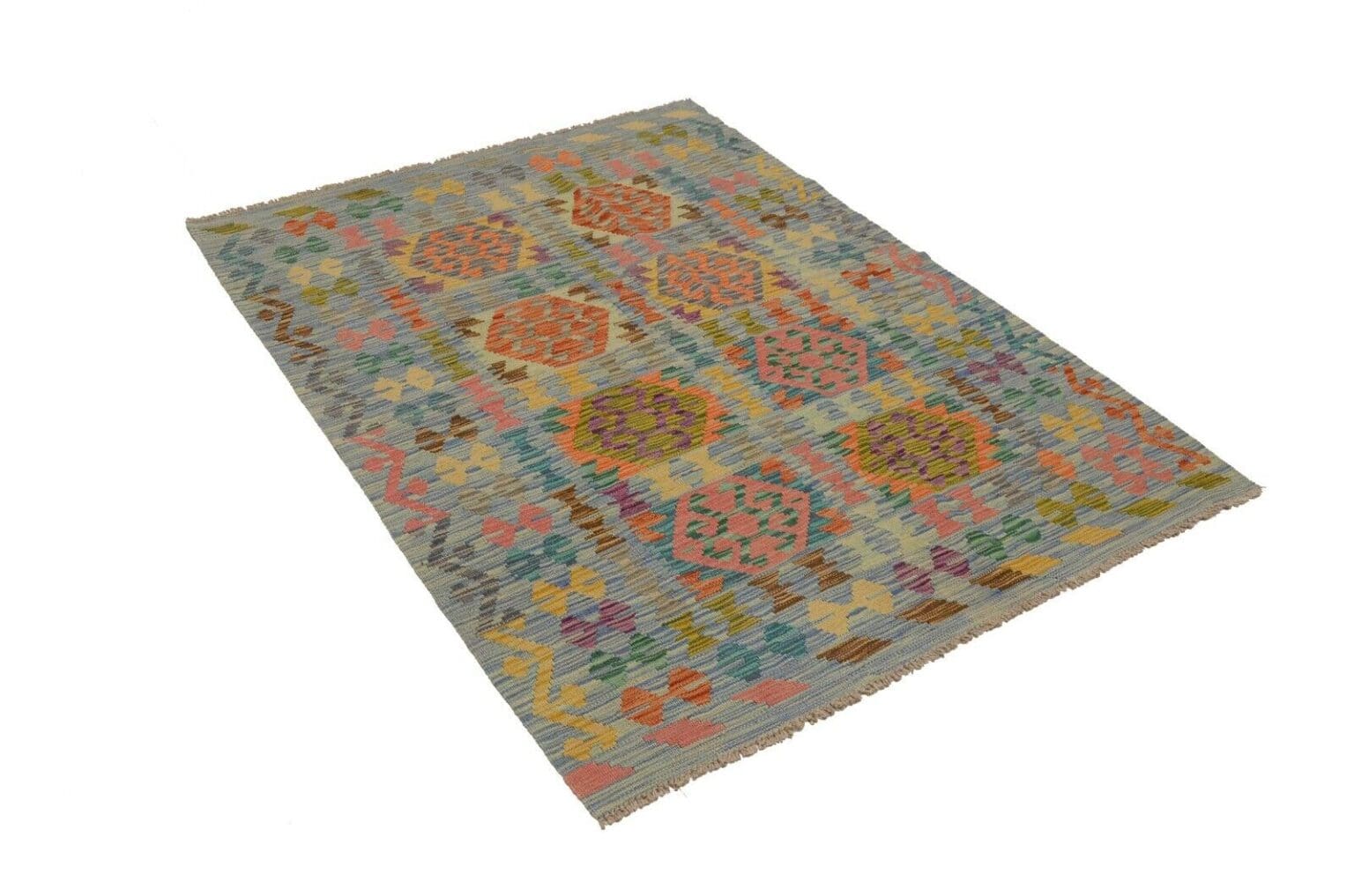
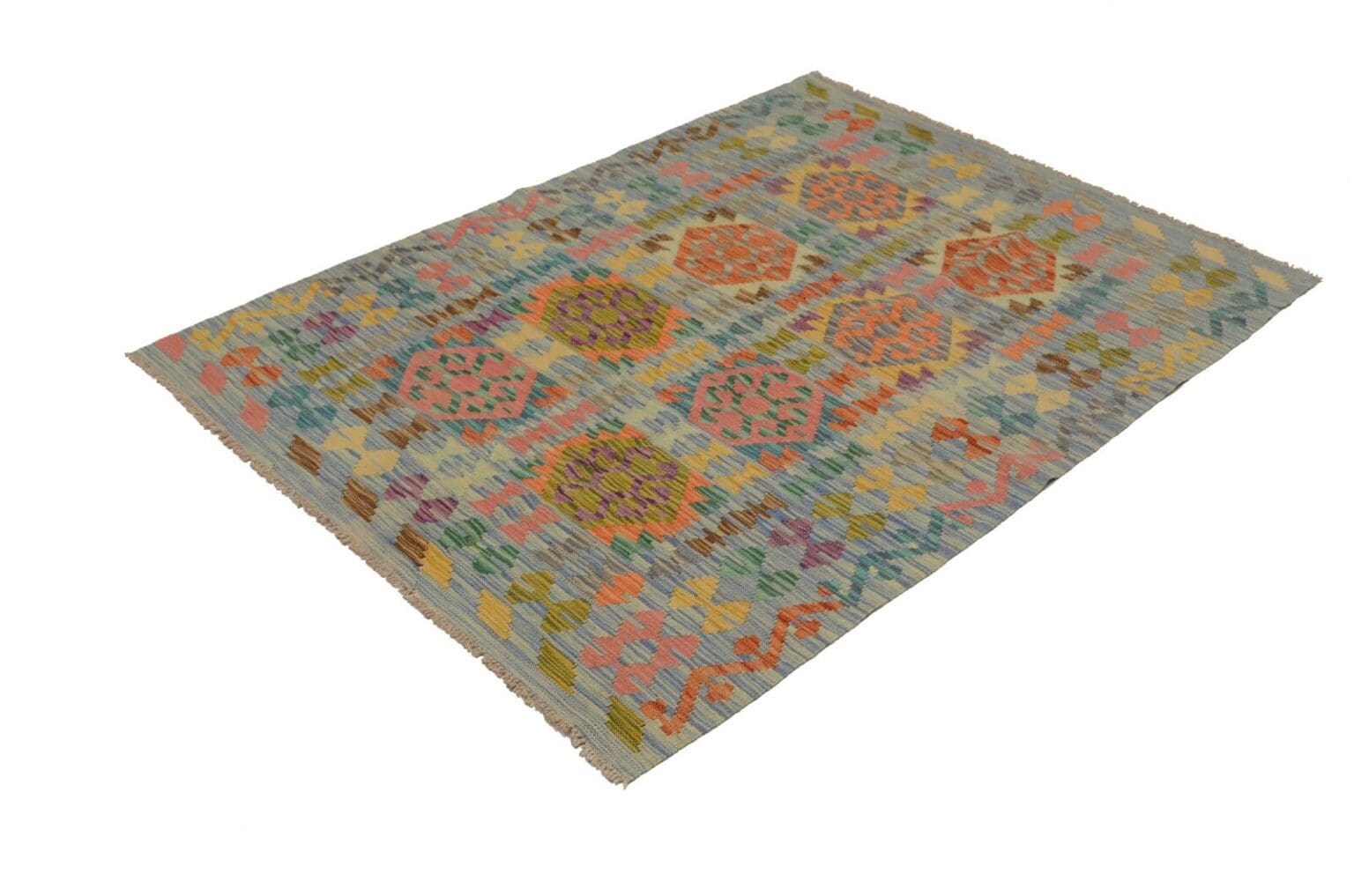
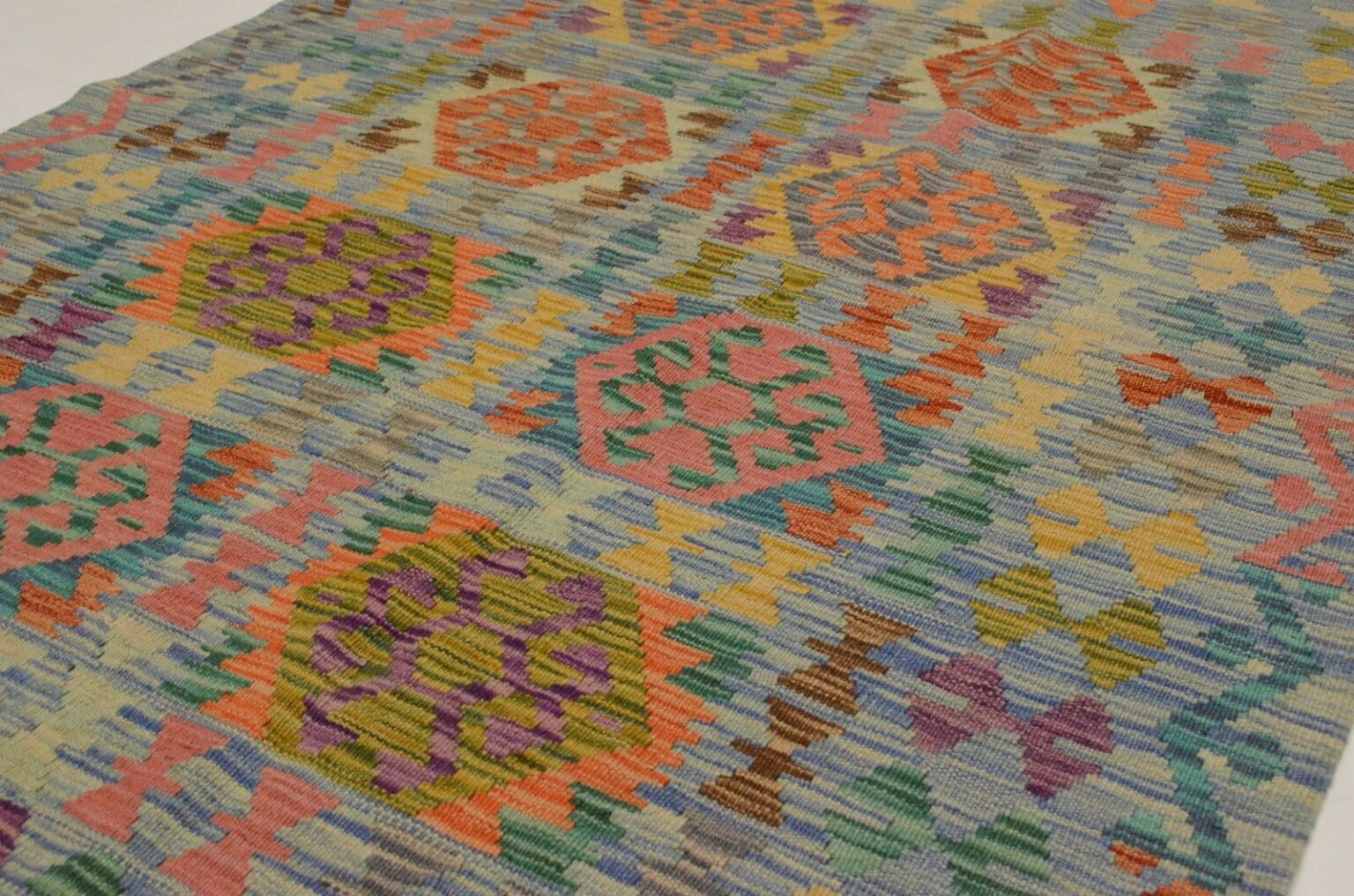
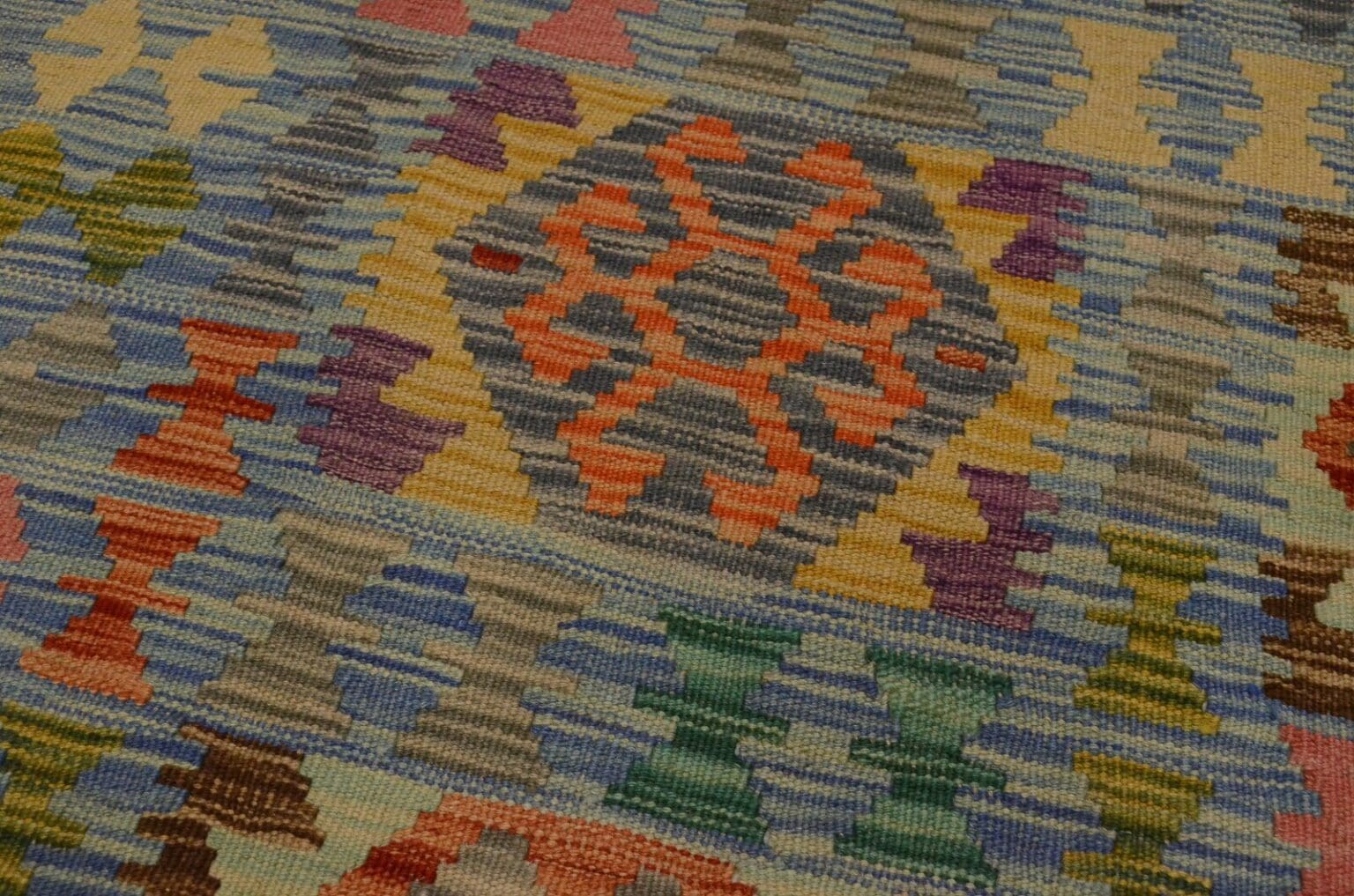
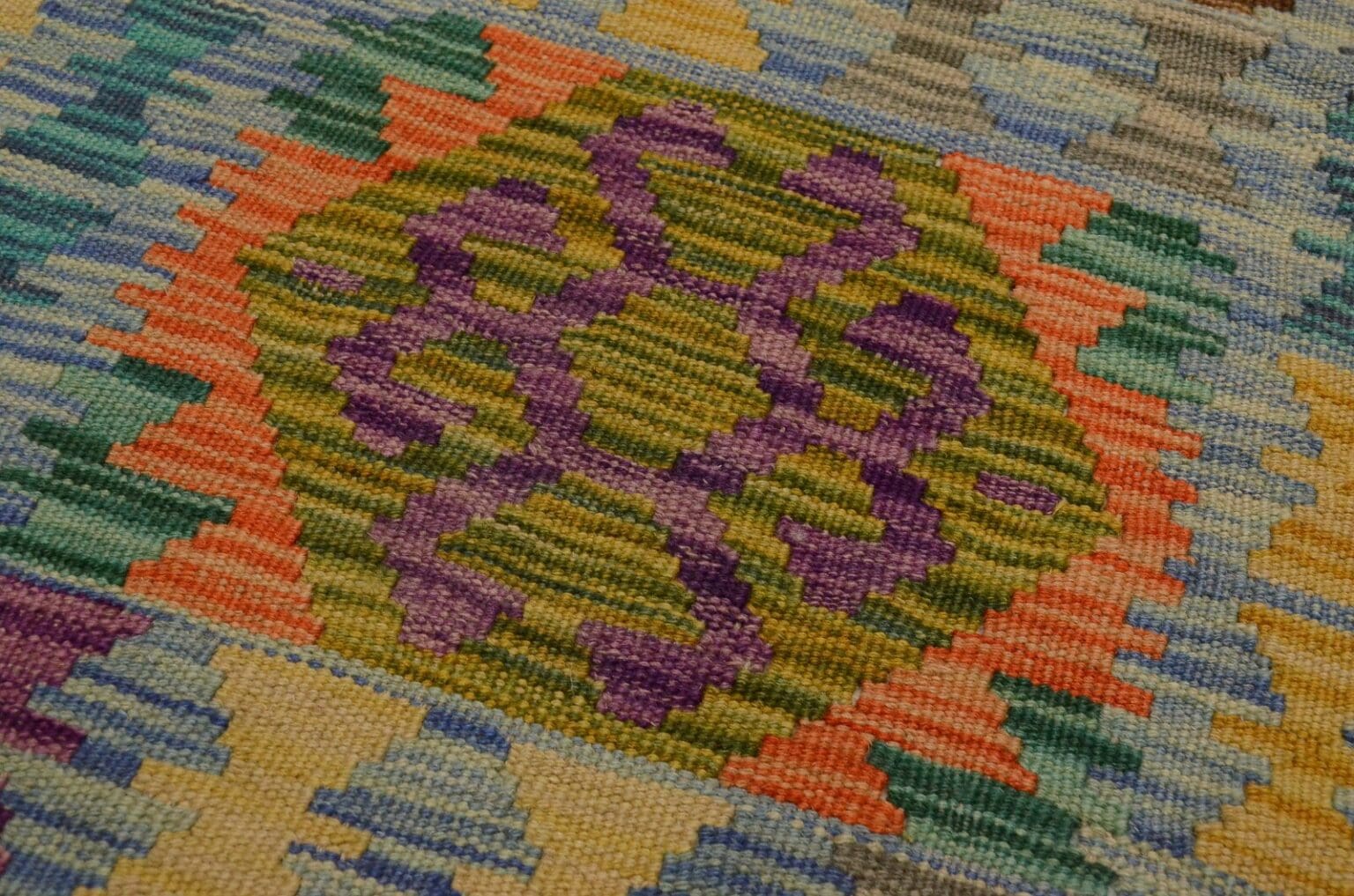
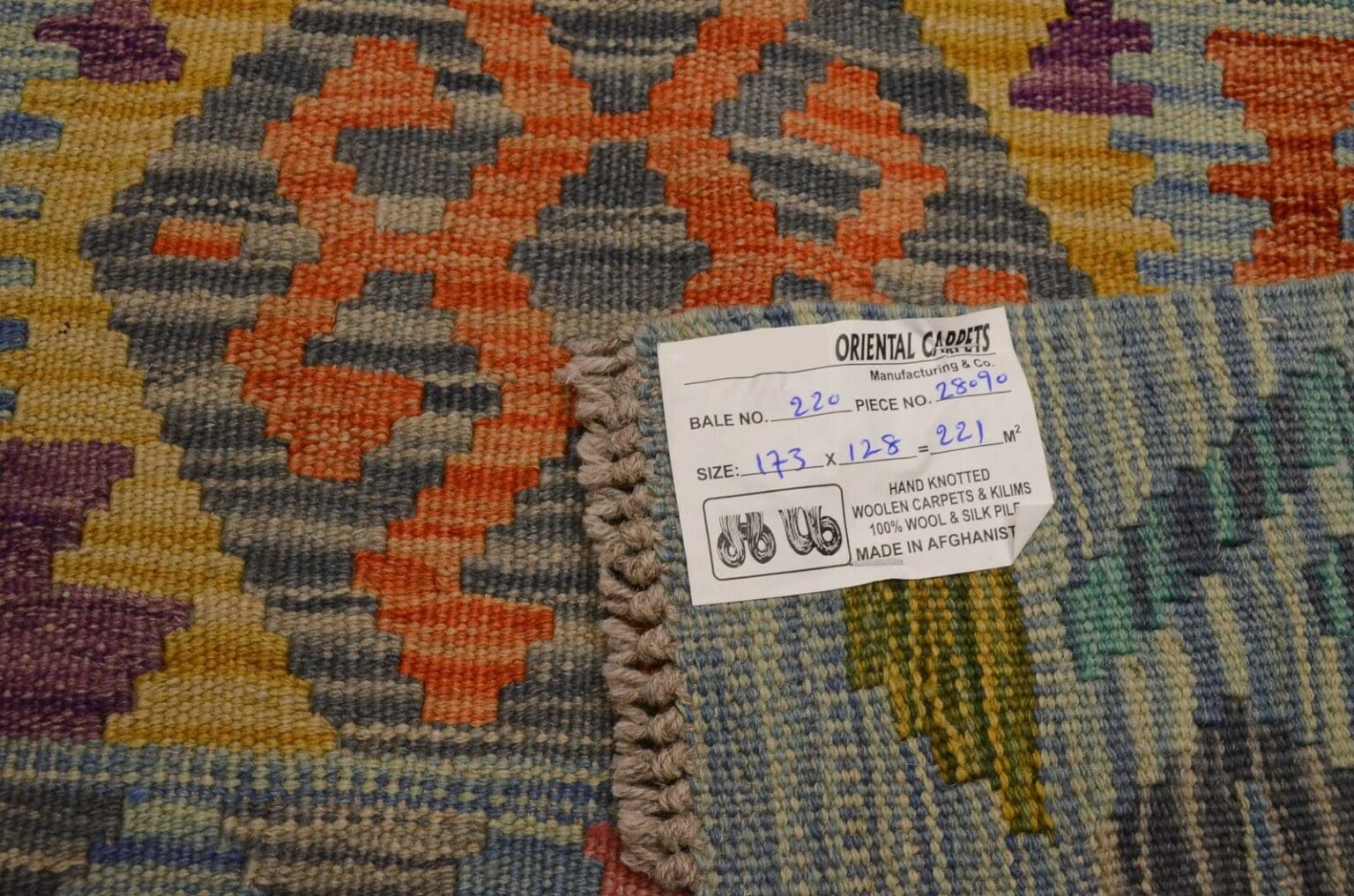
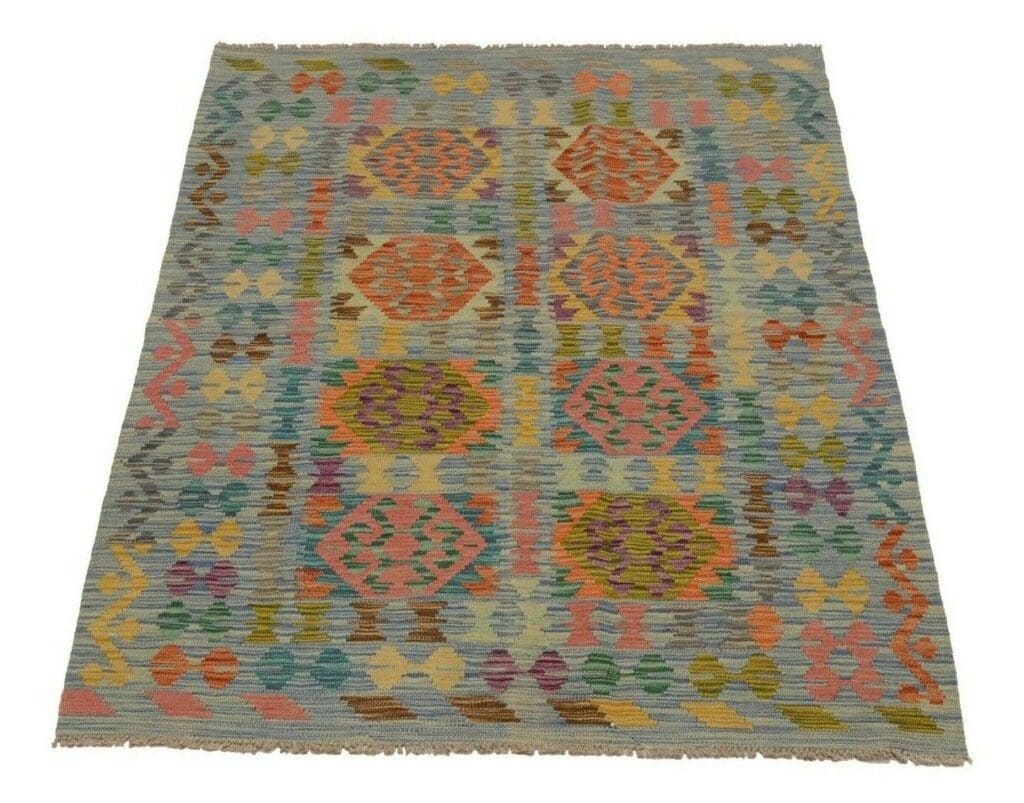
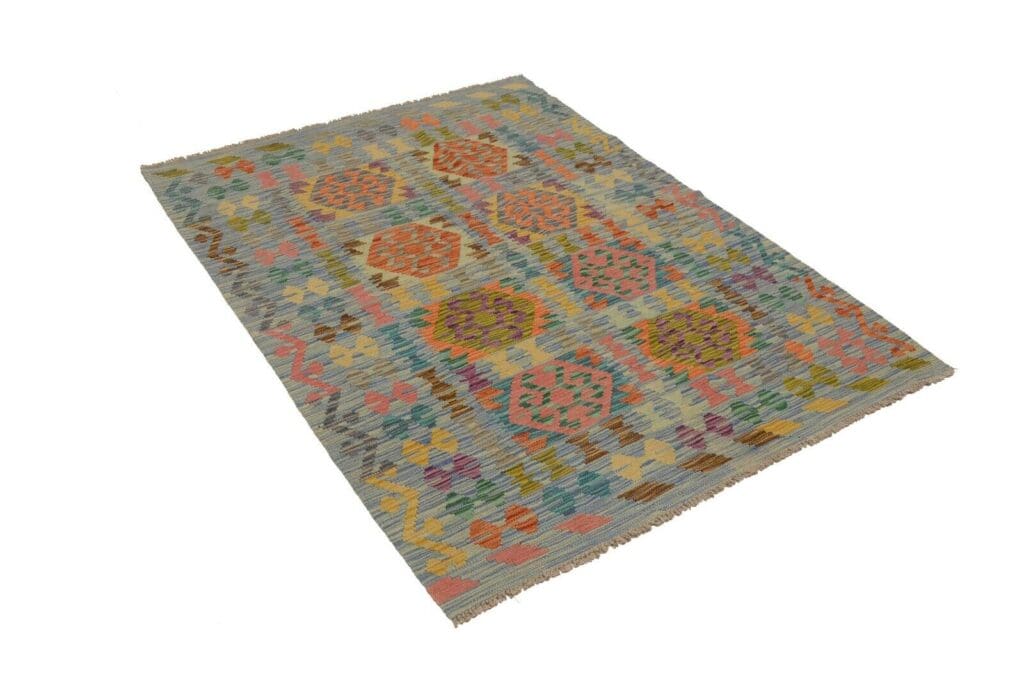
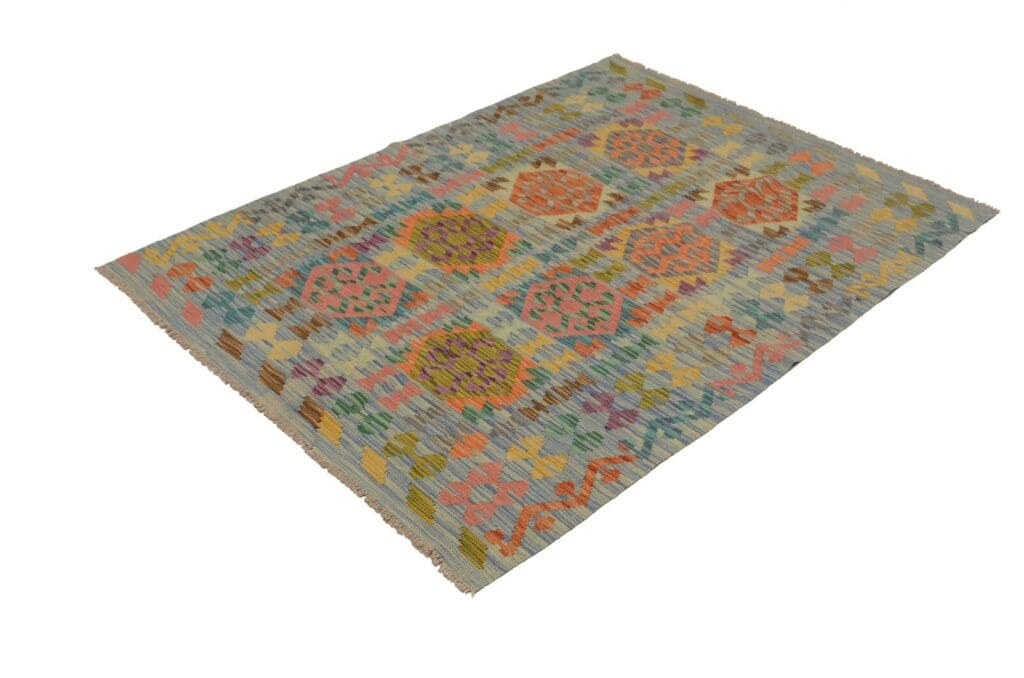
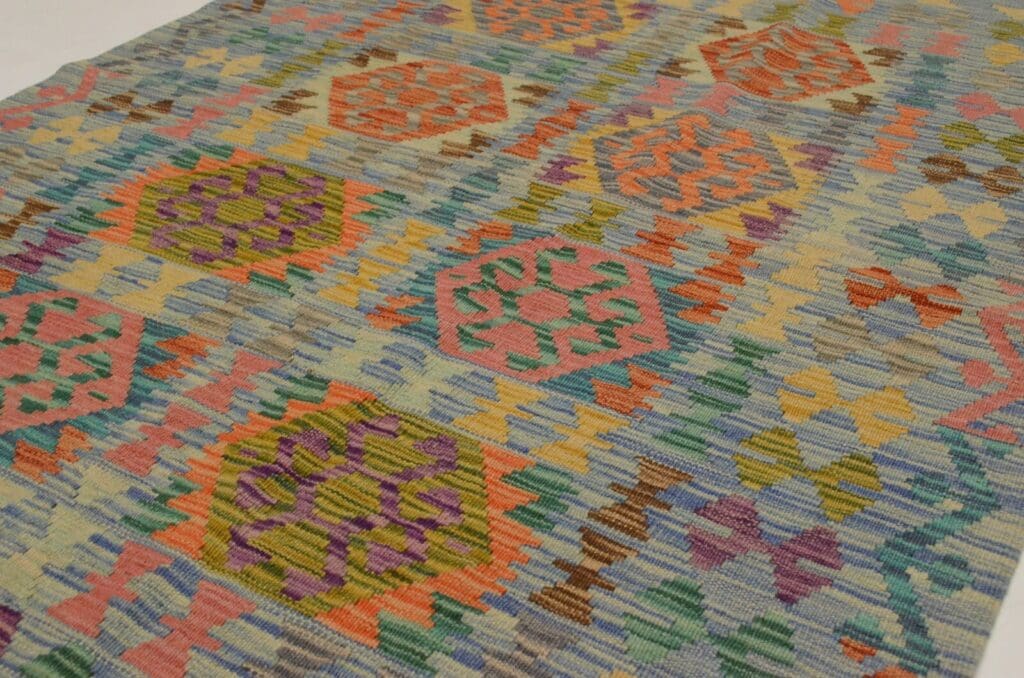
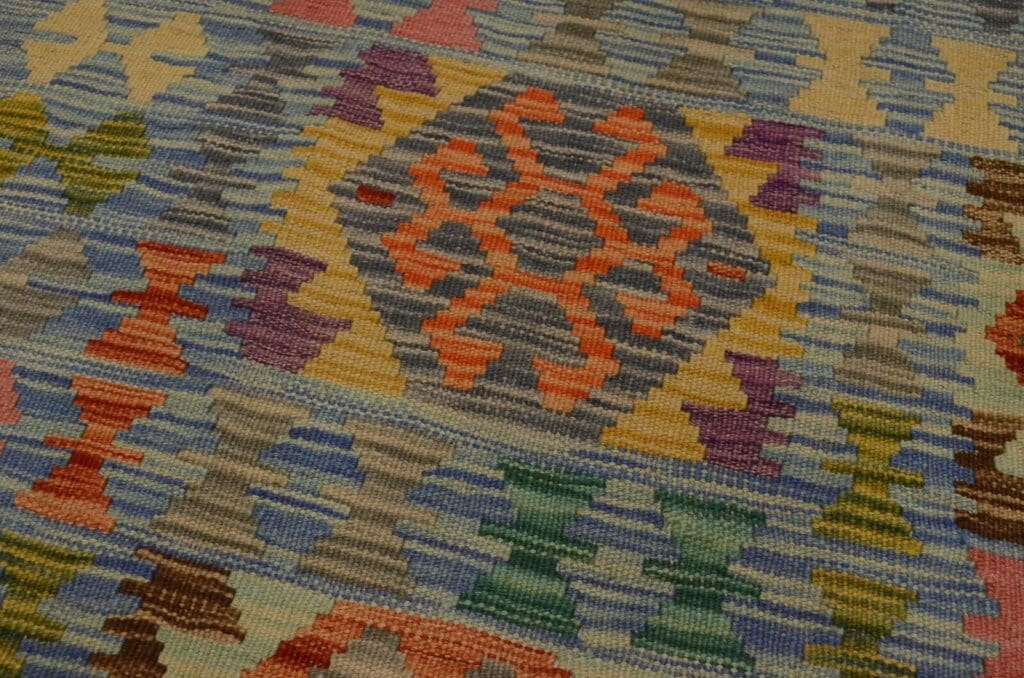
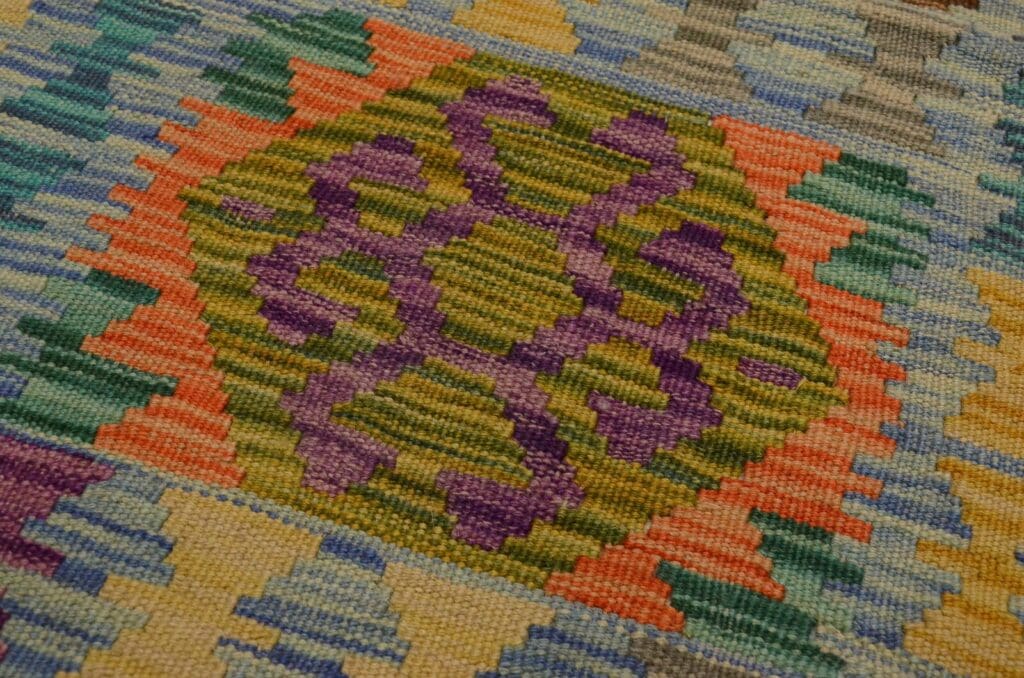
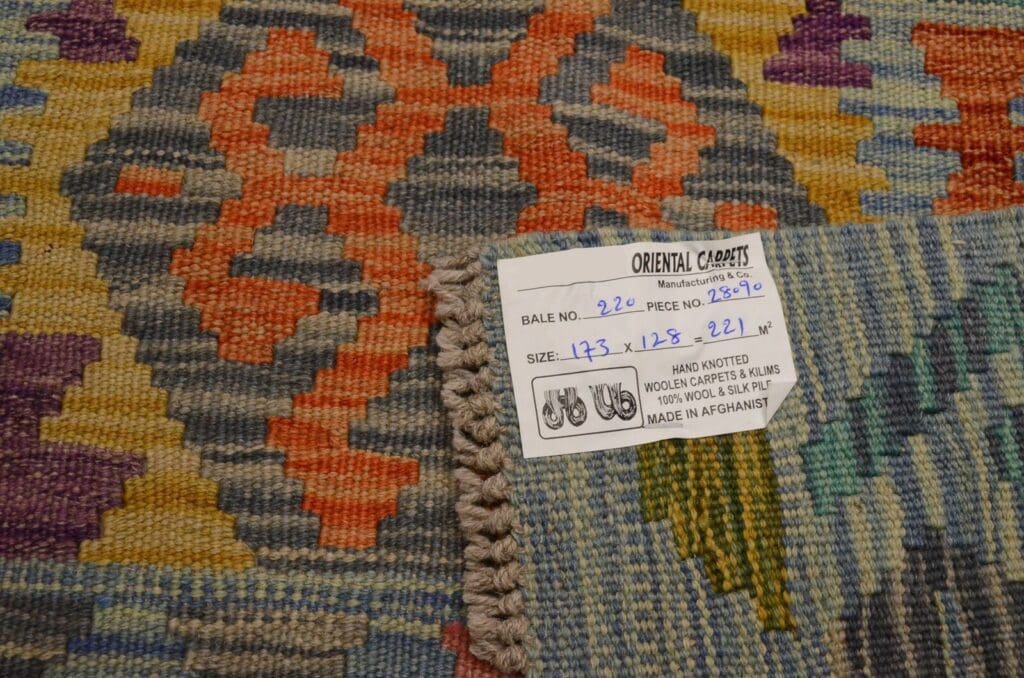
Oriental Rug Afghanistan 173 x 128 cm Wool Hand-woven
€ 433
Hand-woven Afghan Oriental rug | Material: Pile 100% virgin wool, hand-spun and hand-dyed | Size: 173 x 128 cm | Pattern: Geometric all-over design | Condition: New, perfect | Origin: Afghanistan
1 available
- ✓Free Shipping in EU
- ✓2-5 Business Days Delivery
- ✓14-Day Return Policy
- ✓Worldwide Shipping on request
 SECURE PAYMENT
 SHIPPING PARTNERS
Inventory number: 3E7FC6A6
Description
Afghanistan Oriental Rug
Material and Craftsmanship
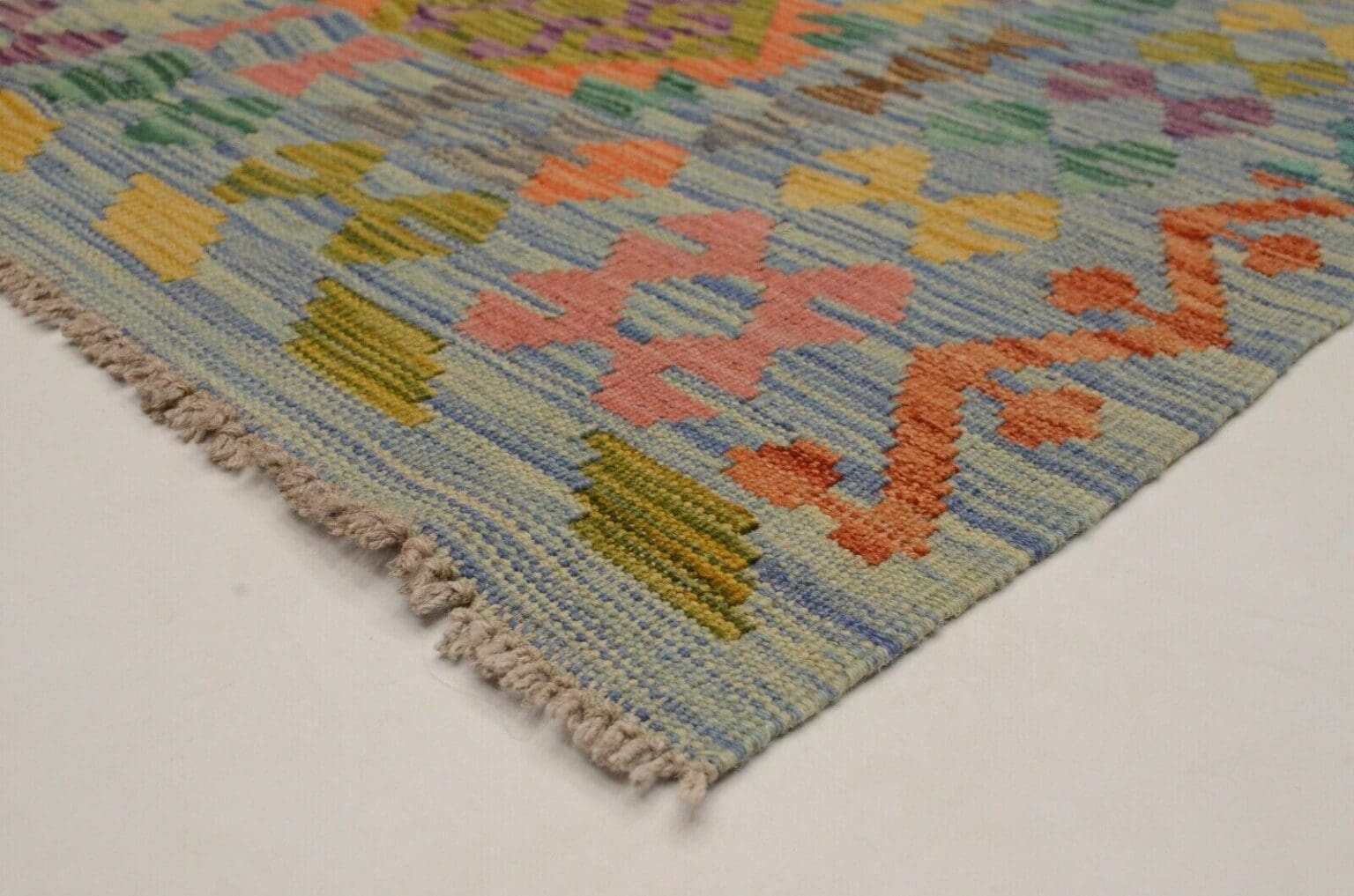
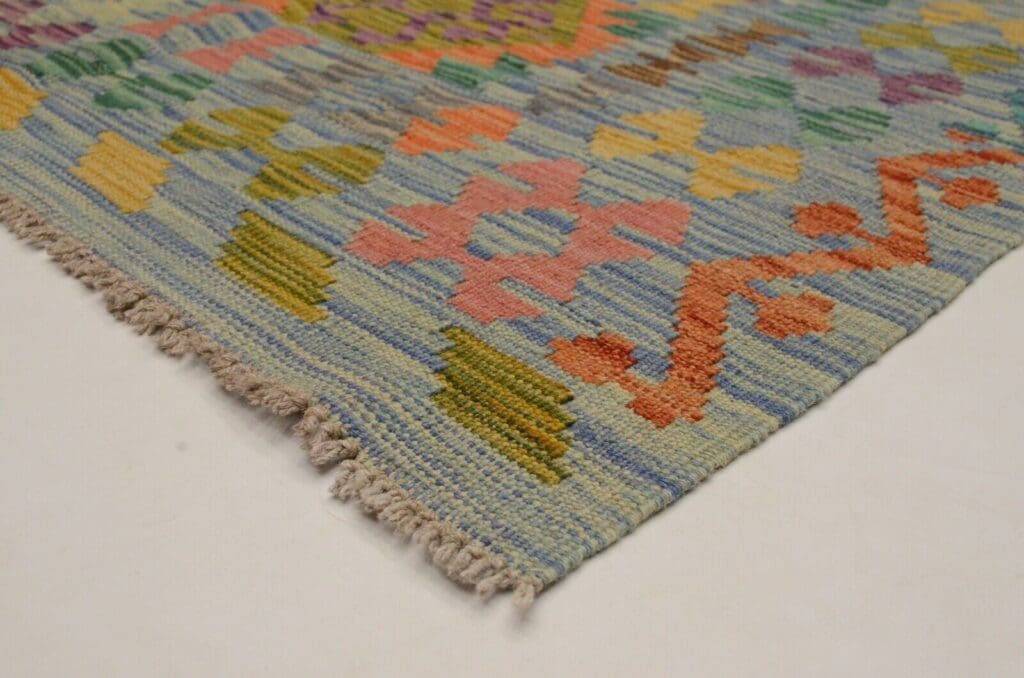
This Afghan Kelim is hand-woven from 100% virgin wool. The wool is hand-spun and hand-dyed, so the preparation of the fibre as well as the colouring remains part of the manual production process. Unlike a hand-knotted rug, a Kelim is made as a flat woven textile. The yarns are interlaced to create the surface rather than tied into individual pile knots. This construction is a defining feature of the piece.
Virgin wool comes from sheep and is used in Afghan textile production for its natural resilience and pleasant feel underfoot. Here, the material is not simply a manufactured component: it is prepared by hand before being woven. Hand spinning gives the yarn its place within the traditional sequence of work, while hand dyeing adds another stage carried out through established craft methods. The result is a woollen flatweave made through several connected manual processes.
Hand weaving also gives each Kelim the character of a one-off textile. The person at the loom builds the pattern section by section and controls the structure as the work progresses. Individual variations belong to this method and reflect the weaver’s skill and personal execution. This rug is described as new and in perfect condition. Its material is entirely virgin wool, with no other pile material stated.
The source describes the wool as durable and comfortable to walk on, and the natural fibre is also presented as easy to care for. These qualities are part of the material description of the Afghan Kelim. The hand-made construction, rather than industrial production, defines the way this particular oriental rug is produced.
Origin and Tradition
Afghanistan has a long-standing carpet and textile tradition and is recognised as an important centre of Oriental rug production. Weaving and rug making have been practised in the region for centuries, with techniques and design approaches passed from one generation to the next. An Afghan Kelim belongs to the flatweave side of this tradition. It represents a textile practice in which the structure and the pattern are developed together on the loom.
The use of wool is closely connected with the pastoral and rural environments found across Afghanistan. Sheep provide a natural fibre that can be spun, dyed and woven for practical textiles. Woven floor coverings could serve everyday needs while also carrying local design knowledge. This combination of usefulness and decoration remains characteristic of many traditional flatweaves. The Afghan origin identifies the regional craft context of this Kelim; no specific city or province is assigned to it.
Afghan rug making reflects the country’s cultural and ethnic diversity. Different communities have developed their own preferences in colour, arrangement and ornament. Some traditions favour strongly ordered geometric fields, while others place greater emphasis on repeated symbols or more open compositions. Such distinctions are not fixed boundaries, but they show how local knowledge contributes to the variety of Afghan carpets and Kelims.
A hand-woven Kelim is made by interlacing yarns across a loom to form a stable, flat textile. The weaver must maintain an even structure while introducing the coloured yarns that create the design. Because the pattern is built directly into the weave, the technical process and the visual composition remain closely linked. This differs from pile rugs, where knots are tied around a foundation and later form a raised surface.
Traditional Afghan weaving knowledge is often transmitted within families, workshops and local communities. It includes decisions about fibre preparation, spinning, dyeing, tension and pattern repetition. These skills are practical, but they also carry the memory of regional forms. A Kelim can therefore be understood as both a useful household textile and a record of a continuing craft tradition. Its hand-woven construction makes that tradition visible in the flat surface and in the ordered geometry.
Afghan textile art is known for designs that can be traditional, contemporary or a combination of both. Geometric compositions are particularly suited to flatweave construction because lines, angular forms and repeated units can be incorporated directly into the woven field. The present piece follows this broad Afghan tradition while being identified specifically by its geometric all-over design. Its origin is Afghanistan, without a more precise provenance stated.
Design and Pattern
The design of this Kelim is described as a geometric all-over pattern. Rather than focusing only on a single central medallion, an all-over composition organises the field through repeated or distributed elements. Geometry may be expressed through diamonds, stepped shapes, angular lines, zigzags or other stylised forms. The exact individual motifs of this rug are not specified, so the design is best described by its stated overall character.
Geometric patterning gives a woven textile a clear visual structure. Forms can be placed in rows, mirrored, repeated or connected to one another. This creates rhythm across the surface and allows the eye to follow the arrangement from one area to the next. In a Kelim, the pattern is not added on top of a finished pile. It is created as the coloured wool is inserted and interlaced during weaving, making design and construction inseparable.
Afghan geometric motifs often draw on a vocabulary of inherited shapes. They may be influenced by tribal traditions, local surroundings, textile customs or symbols that have been adapted over time. A geometric sign can have different associations in different communities, and not every motif carries one universally agreed meaning. For this reason, the present Kelim can be discussed factually as a geometric all-over design without assigning an unverified interpretation to a particular shape.
The broad use of geometry allows Afghan flatweaves to move between traditional and modern settings. Strong outlines and repeated forms can support a more traditional interior, while an ordered composition can also work alongside contemporary furniture. The Kelim brings the visual language of Afghan weaving into a room through its pattern as well as through its flat woven texture.
Its design can be used in several areas of the home. The source names the living room, bedroom and hallway as suitable settings. In each of these spaces, an all-over geometric composition can act as a connecting textile element rather than relying on a single pictorial centre. The flatweave character keeps attention on the relation between colour, line and repeated form. The result is an oriental rug that can be combined with boho-chic, restrained or modern-minimalist furnishings.
The pattern is both recognisably rooted in Afghan textile practice and accessible within current interior design. It does not need a literal image to establish its identity; the arrangement of geometric elements supplies the visual order. Since the rug is hand-woven and made from hand-dyed wool, the pattern belongs to a craft process in which the weaver develops the design directly within the textile. The relevant factual description remains a geometric all-over design of Afghan origin.
Special Features
This Kelim combines 100% natural virgin wool with hand spinning, hand dyeing and hand weaving. The sequence of manual work is its central distinctive feature. Each piece is an individual textile because the weaver’s execution is reflected in the finished work. The rug is new and in perfect condition.
The wool is described as durable, comfortable underfoot and easy to care for. Its natural self-cleaning ability helps the material remain fresh. Regular vacuuming without a brush attachment is recommended, while spots can often be wiped with a damp cloth. Direct sunlight should be avoided to reduce the risk of colour fading. The Kelim is also suitable for use over underfloor heating.
Its production is traditional and does not involve harmful chemicals. As a flat-woven floor covering, it also functions as a decorative textile. The combination of natural wool, manual preparation and geometric Afghan design gives the rug a clearly defined material and cultural character.
FAQ
How should I care for my Afghan Kelim?
Vacuum the Kelim regularly without using a brush attachment. This removes loose dust while avoiding unnecessary mechanical action on the woven surface. If a spill or mark occurs, wipe it promptly with a damp cloth. Direct sunlight should be avoided because prolonged exposure can cause colours to fade. The wool is described as easy to care for and naturally self-cleaning, but immediate attention to spots remains the appropriate routine.
Where can I use the Afghan Kelim?
The Kelim can be used in several rooms, including the living room, bedroom and hallway. Its geometric all-over design works with a range of furnishing approaches and can add a structured textile element to the room. The hand-woven flatweave is suitable as a floor covering as well as a decorative feature. It can be combined with boho-chic interiors, modern-minimalist furniture and other styles. The rug is also suitable for rooms with underfloor heating.
Is the Afghan Kelim environmentally friendly?
The Kelim is made from 100% natural virgin wool. The fibre is hand-spun and hand-dyed, and the rug is traditionally hand-woven. Its production process does not involve harmful chemicals. The use of a natural material together with traditional manual production makes this Kelim an environmentally conscious choice. This statement concerns the wool, the described processing and the traditional manufacturing method.
Additional information
| Design Style | |
|---|---|
| Color | |
| Size | |
| Shape | |
| Origin | |
| Material |
Related products

Persian Rug Qashqai 286 x 200 cm Wool Hand-woven
€ 798
Persian Rug Fars 292 x 206 cm Wool Hand-woven
€ 798
Oriental Rug Kelim 240 x 180 cm Wool Hand-woven
€ 2249
Persian Rug Qashqai 293 x 198 cm Wool Hand-woven
€ 798
Persian Rug Fars 240 x 150 cm Cashmere Hand-knotted
€ 1118
Oriental Rug Qashqai 292 x 193 cm Wool Hand-woven
€ 798
Persian Rug Heriz 340 x 254 cm Wool Hand-knotted
€ 1438
Persian Rug Gabbeh 270×83 cm Hand-knotted
€ 755