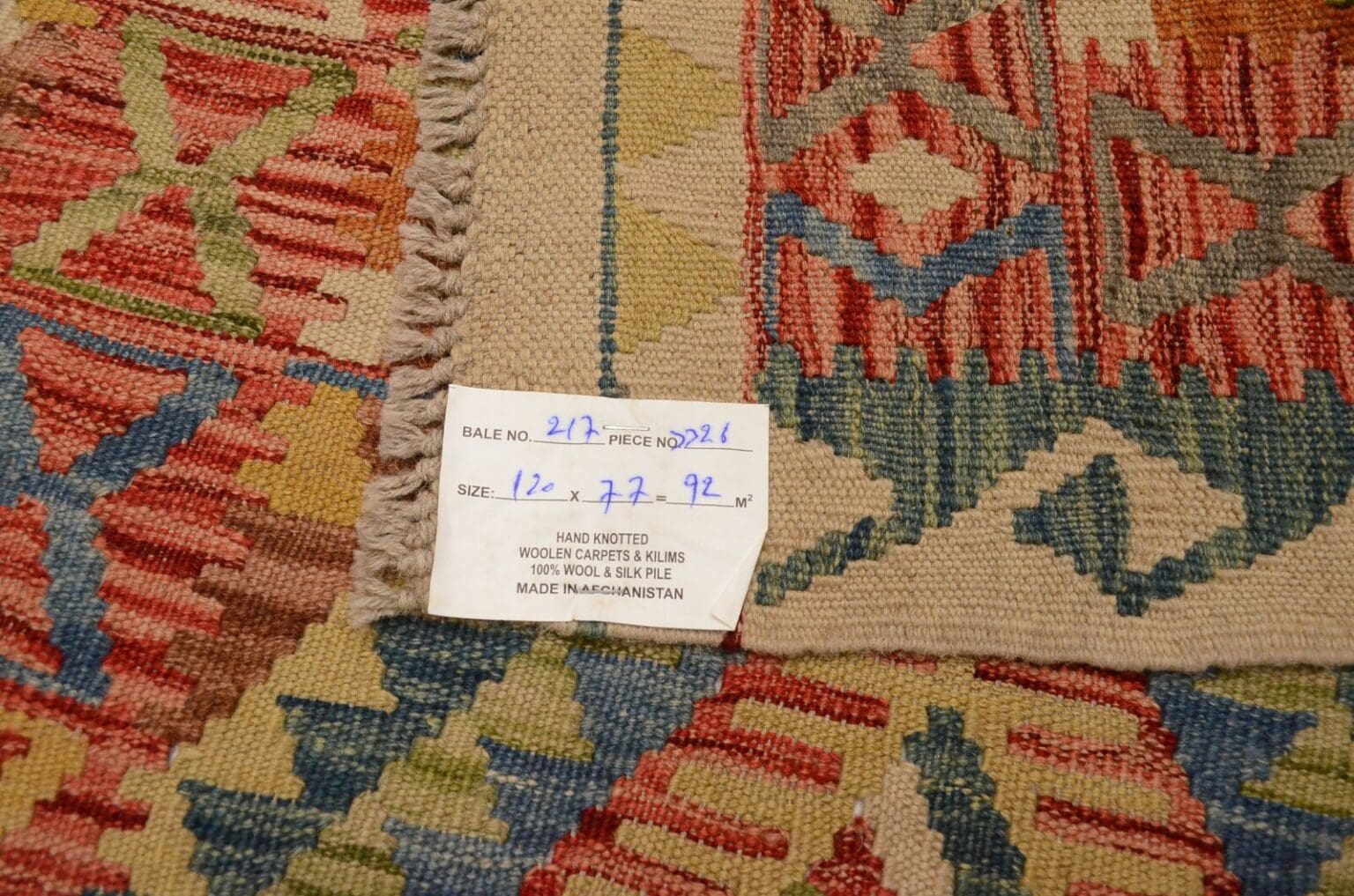
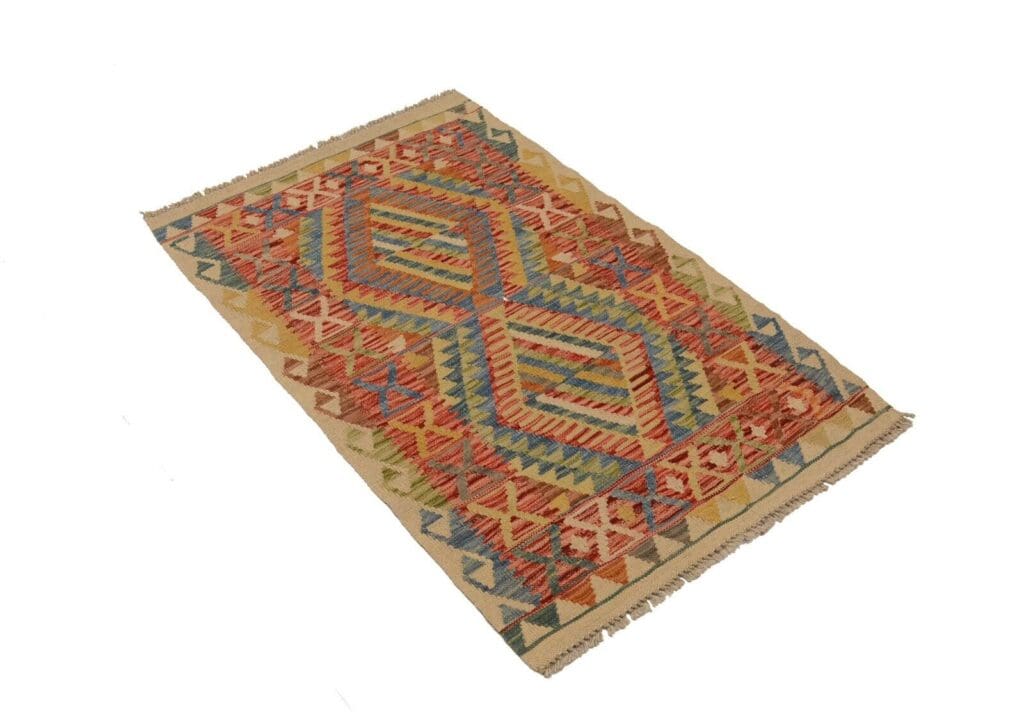
This Afghan kilim is hand-woven from 100% virgin wool. Wool gives the textile a natural tactile quality and is valued in rug making for its resilient character. As a renewable fibre, it has been used for generations in woven floor coverings. Its surface feels pleasantly textile, while the material remains suited to everyday use.
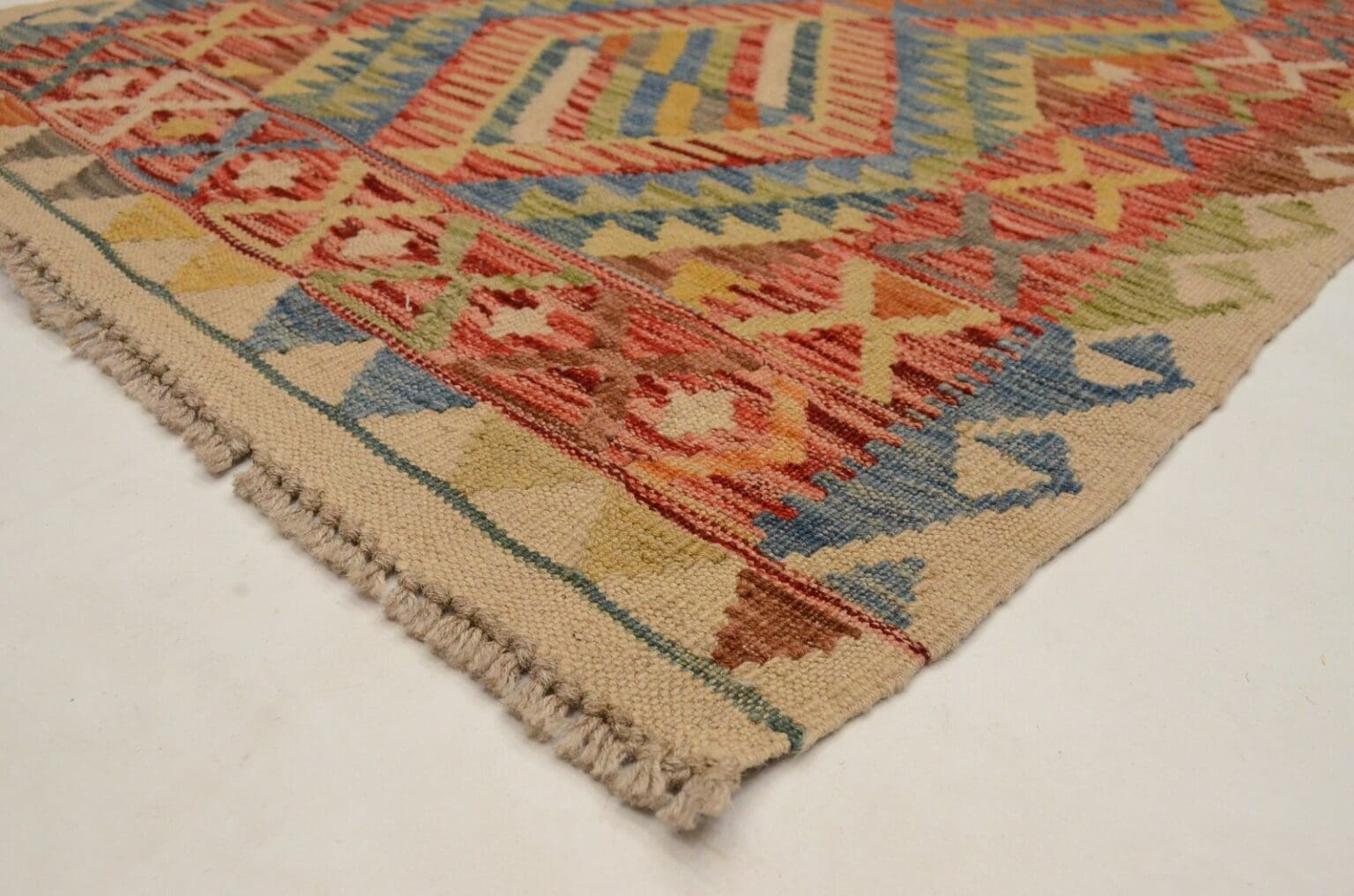
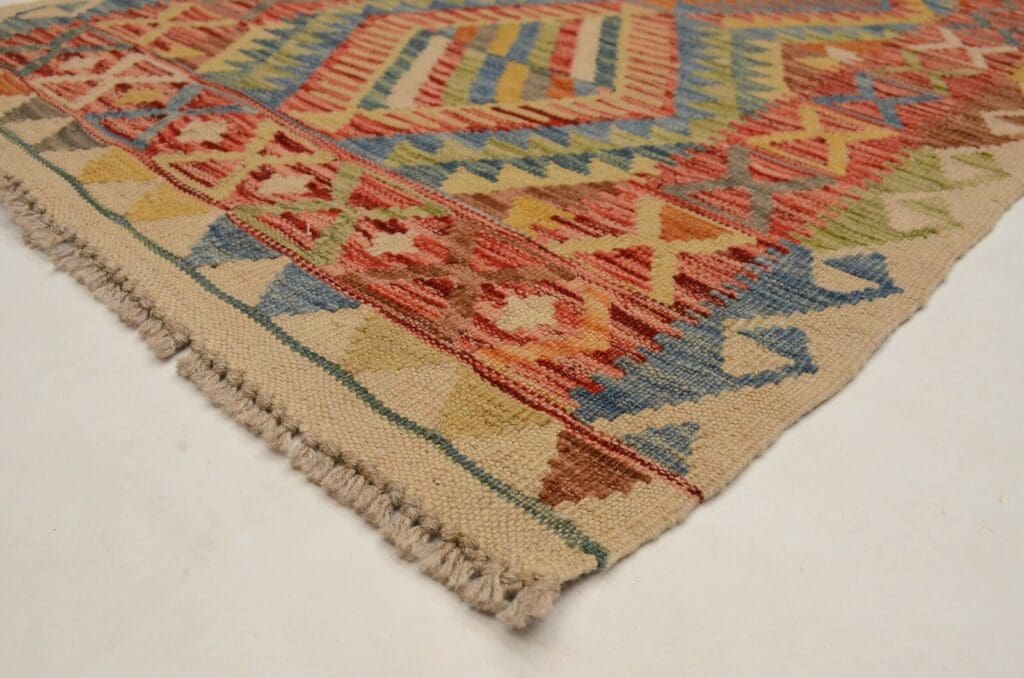
A kilim is made on a loom rather than by forming a pile from individual knots. The weaver passes the weft through the warp by hand, building a flat textile surface row by row. This construction makes the structure of the Afghan kilim easy to read and gives the pattern a direct connection to the fabric itself. The hand-woven technique is therefore both a method of production and a defining part of the rug’s appearance.
Hand weaving requires consistent handling of the wool, careful colour changes and attention to the tension of the threads. Minor individual characteristics are part of a handmade textile and distinguish it from a machine-produced floor covering. In this piece, the traditional kilim technique is combined with a restrained pastel palette. The condition is described as new and perfect.
Virgin wool is appreciated in rug production for its comfortable feel and practical textile qualities. In a flat weave, the material is not concealed by a high pile, so the relationship between fibre, colour and structure remains visible. The woven surface allows the geometric all-over design to be read across the rug as a connected composition.
Origin and Tradition
This kilim comes from Afghanistan, a country with a diverse and established tradition of rug weaving and flat-woven textiles. Afghan weaving culture includes the knowledge of different communities and workshops. Skills relating to preparing wool, spinning yarn, handling colour and working at the loom have been passed on through generations.
Afghan rugs do not follow a single uniform style. Designs, colour choices and the arrangement of motifs can differ according to regional and cultural context. That variety is an important feature of Afghan textile production. Kilims represent a form in which the composition is created directly through the interaction of warp and weft rather than applied to a completed pile surface.
The making of a kilim is a focused manual process. The weaver must guide the threads in an orderly way, maintain an even structure and place each colour change carefully. A geometric design is not printed onto the finished textile; it is built into the weave as the work progresses. Craft and visual design therefore remain closely linked throughout the process.
In Afghan domestic culture, rugs and woven textiles have uses that extend beyond simple floor covering. They can form part of the home, daily life and the continuation of local craft knowledge. Kilims are practical textiles that can be laid out and incorporated into different areas of a dwelling. Their flat construction is one reason this type of weaving has remained useful across many textile traditions.
Afghan weaving encompasses both strongly geometric compositions and more elaborate ornamental approaches. Clear geometric forms are particularly compatible with the loom because they can be organised through repeated lines, fields and colour blocks. Each handmade textile nevertheless receives its own character through the individual execution of the weaver. This kilim links that established background with a light, contemporary colour treatment.
The use of pastel colours shows how a traditional textile technique can be presented in a current interior context. The Afghan origin remains expressed through the hand-woven kilim construction and the manual workmanship. Afghan textile tradition is not limited to deep or highly saturated shades; the same woven form can also support a softer palette. Here, the colouring and the construction work together without separating the rug from its craft background.
Design and Pattern
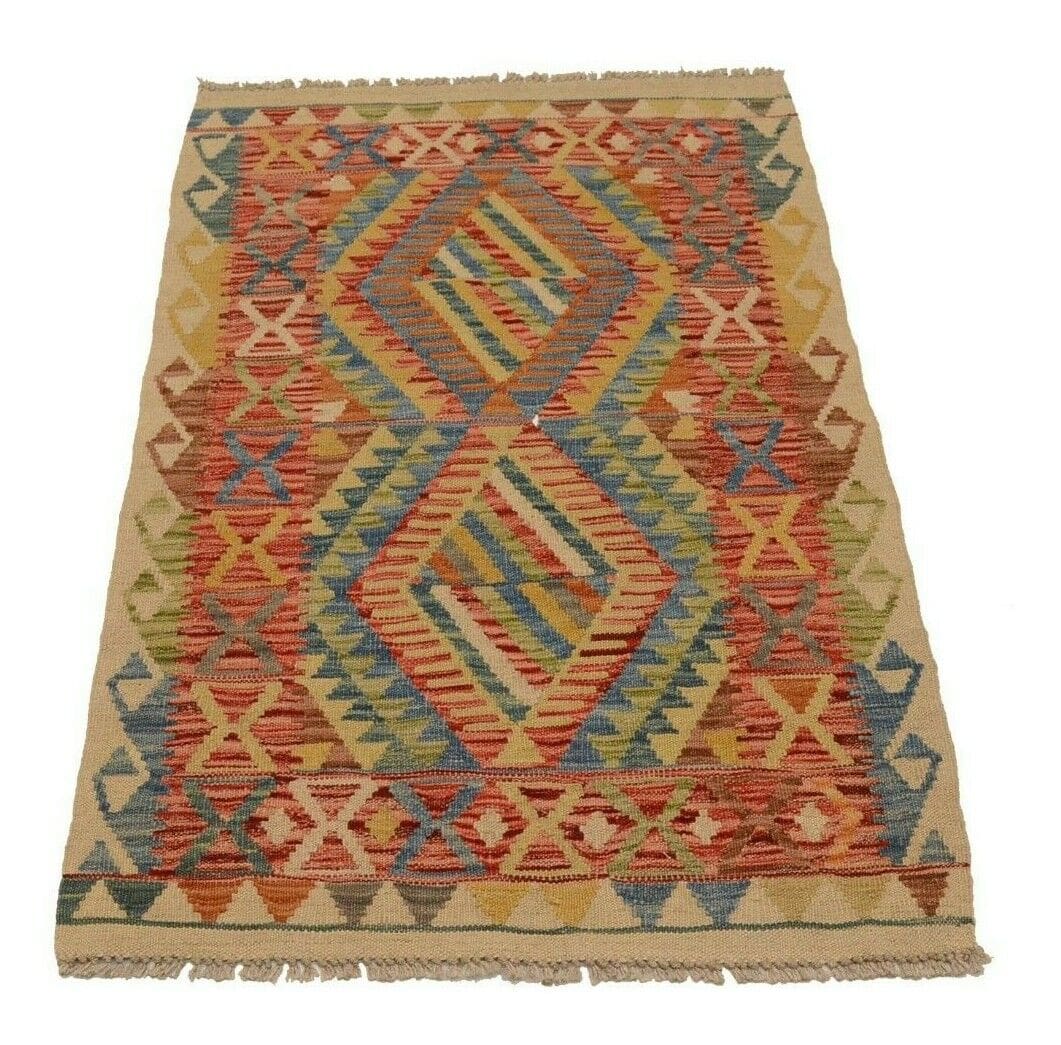
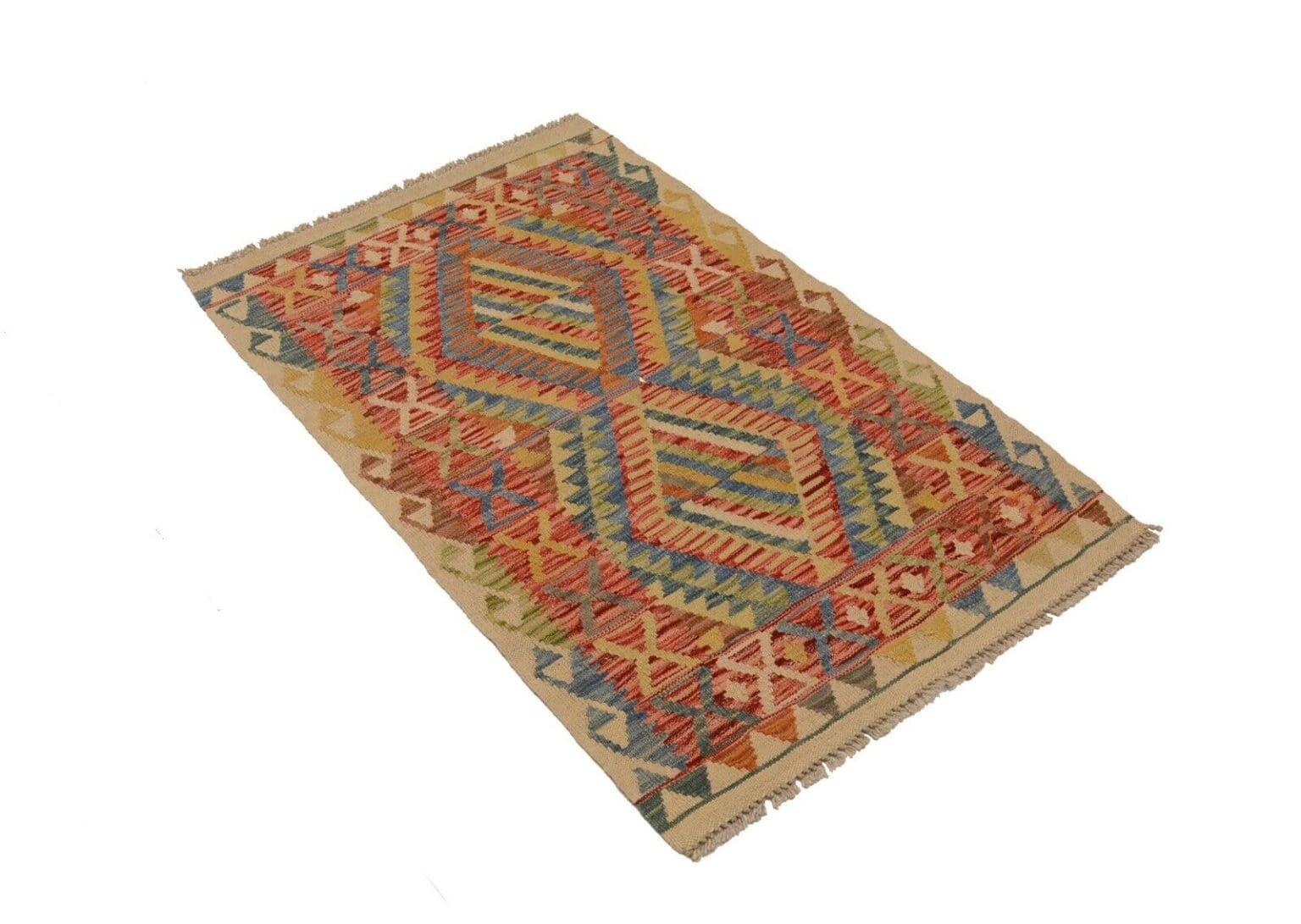
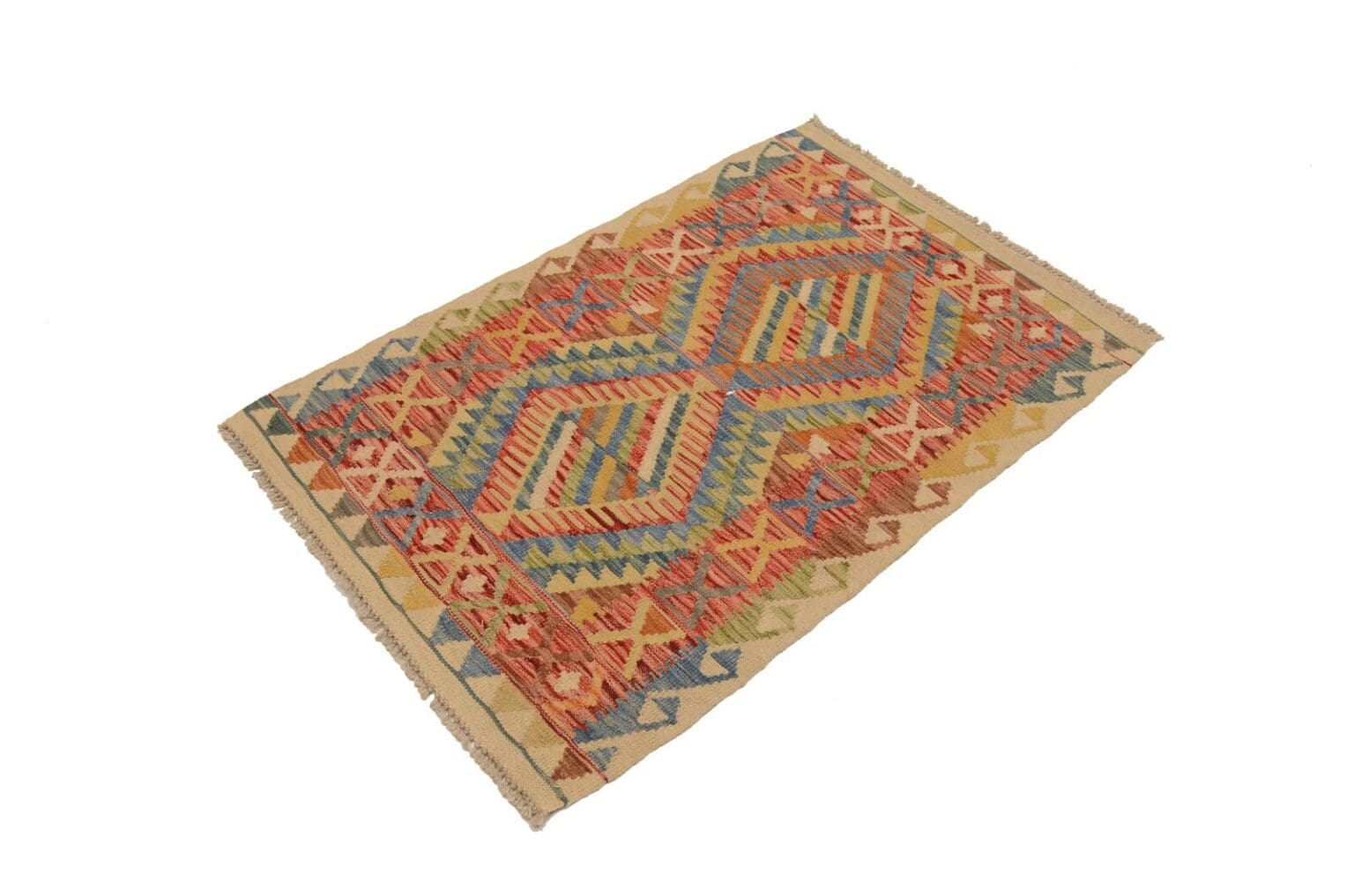
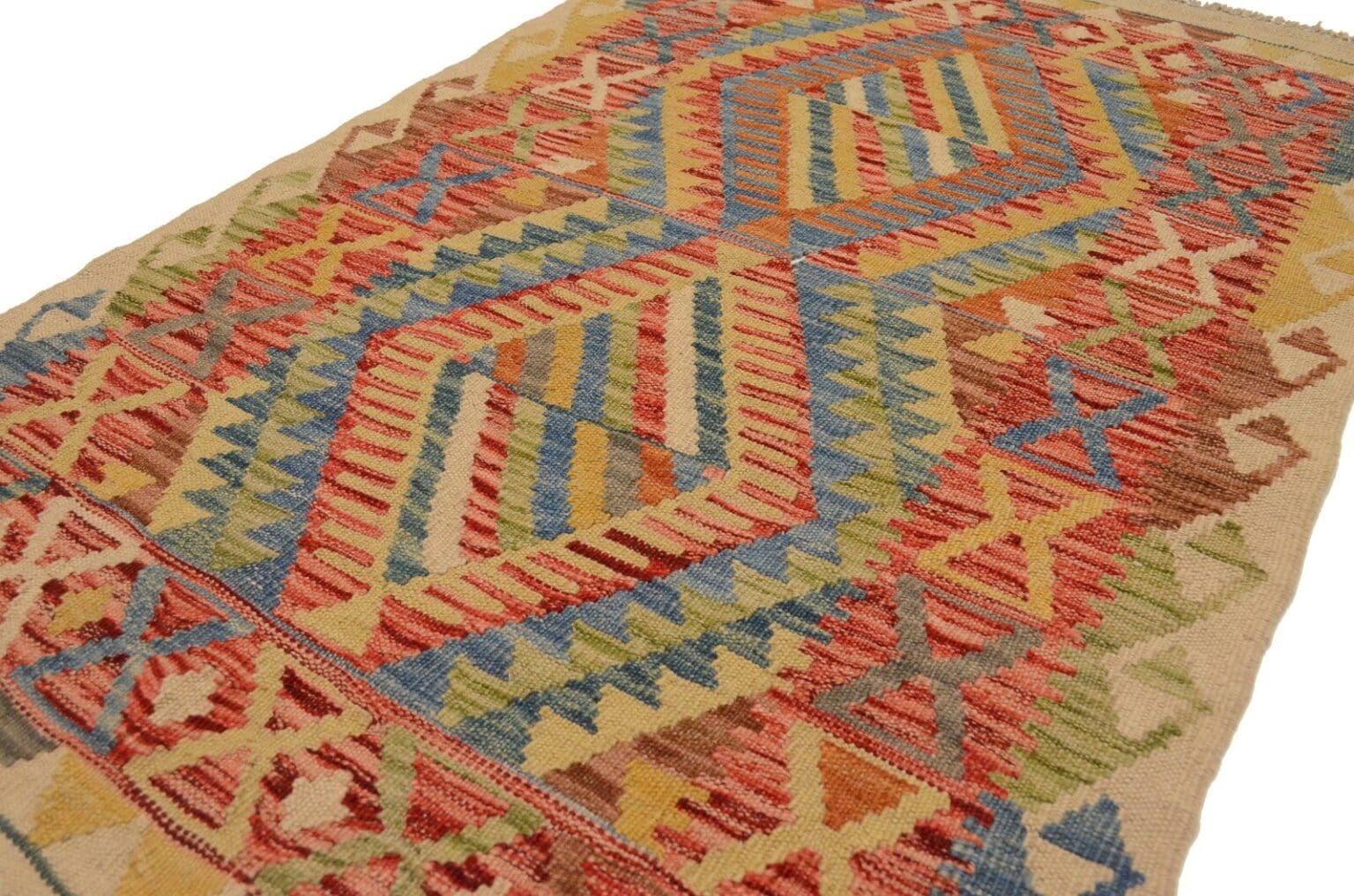
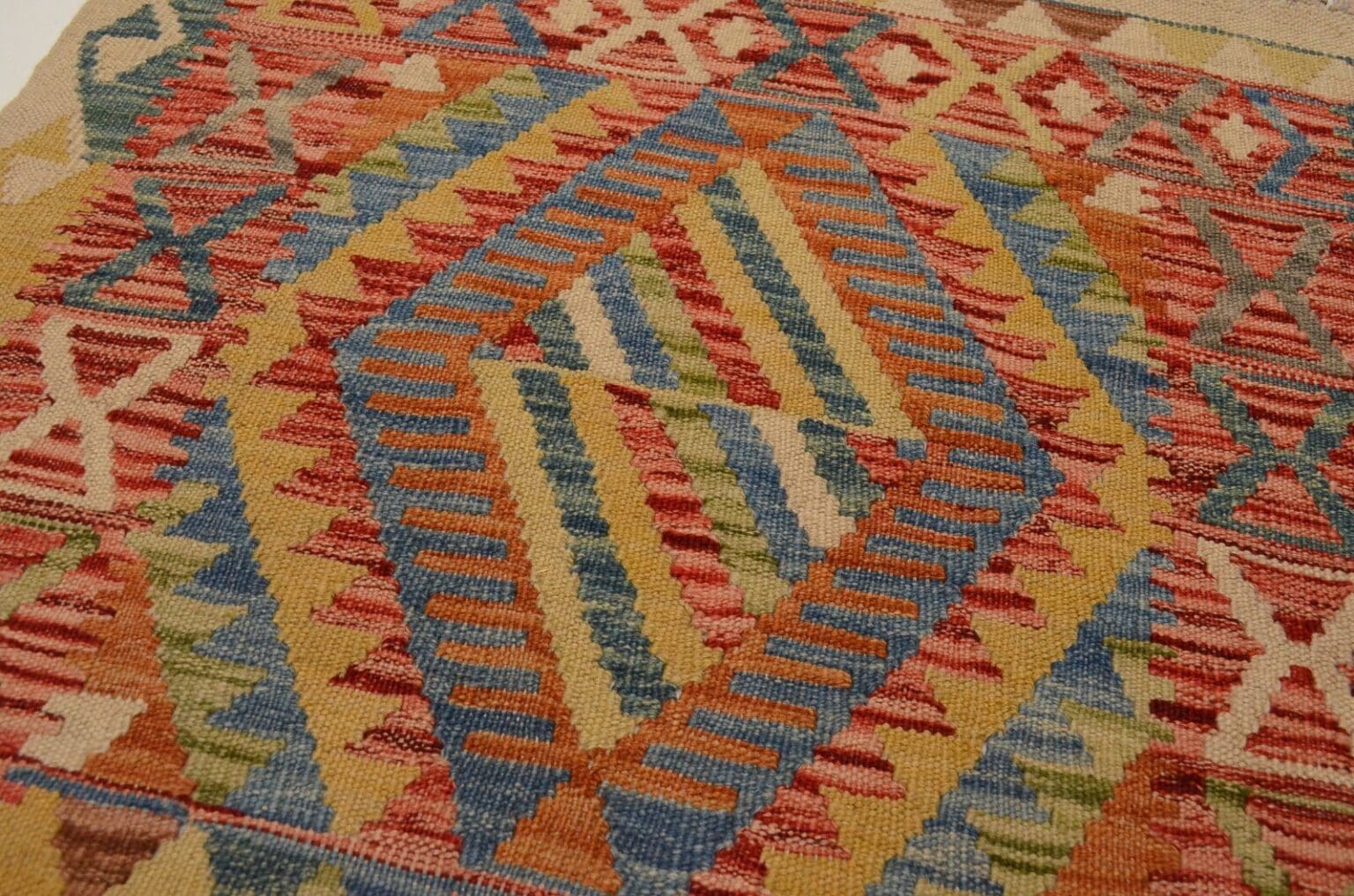
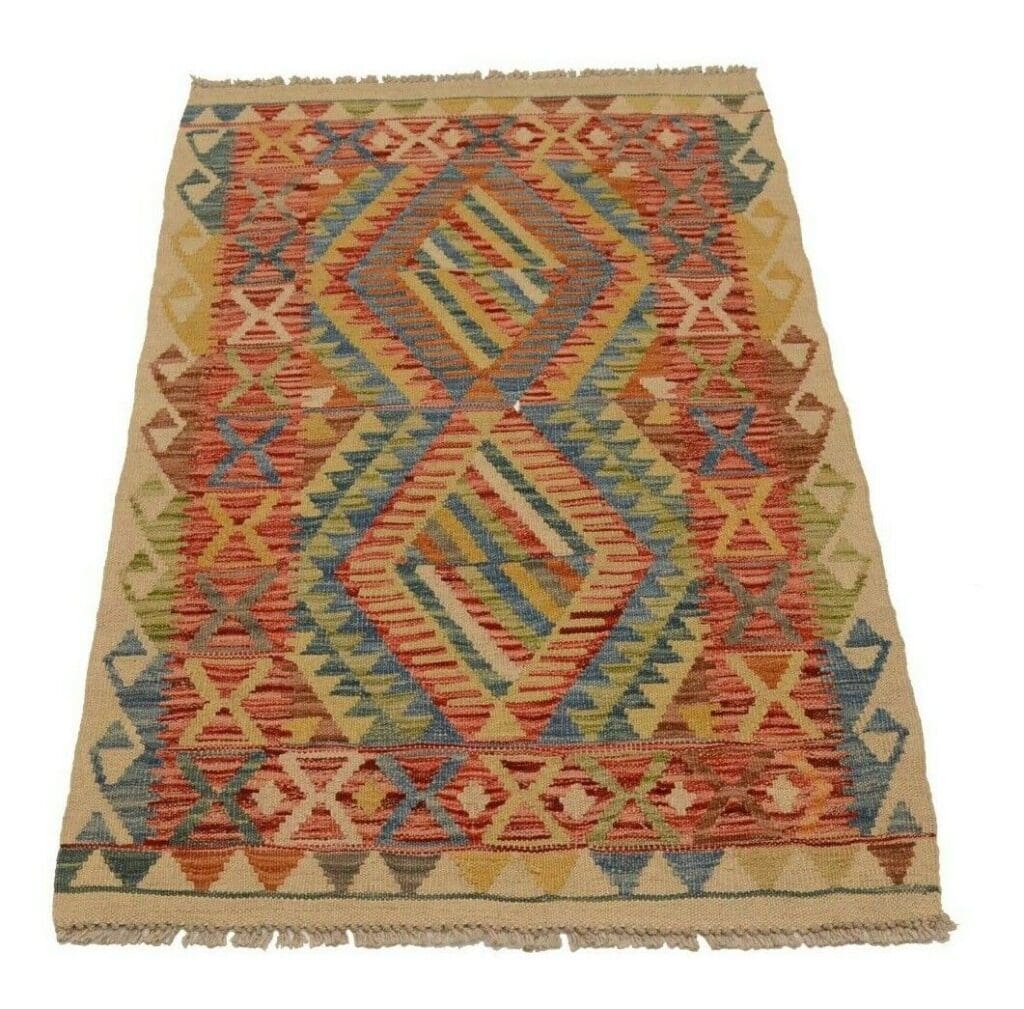
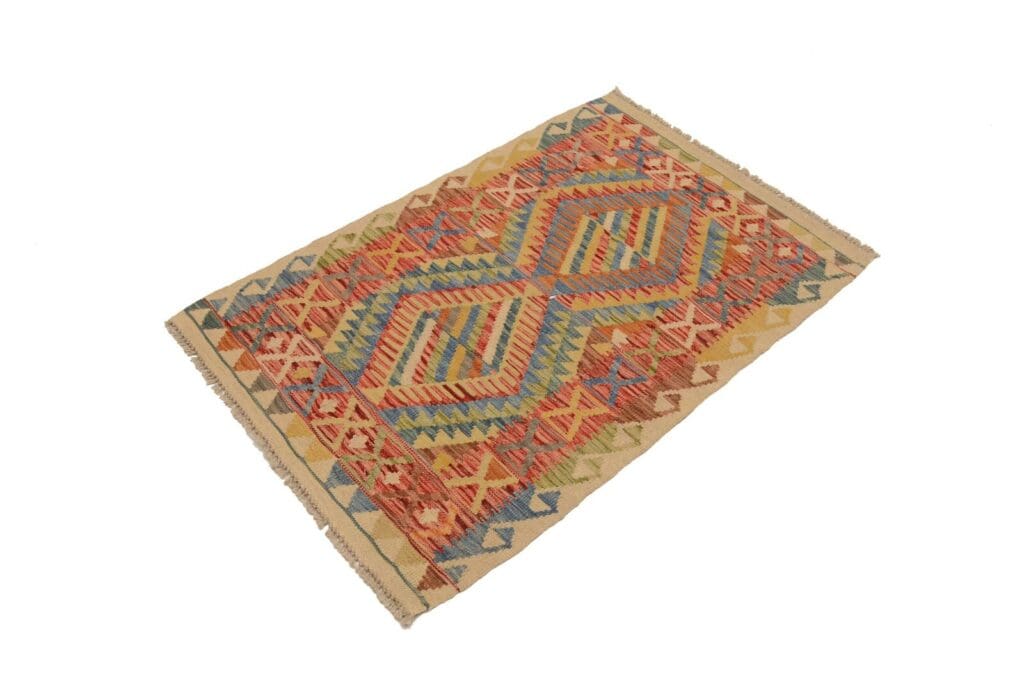
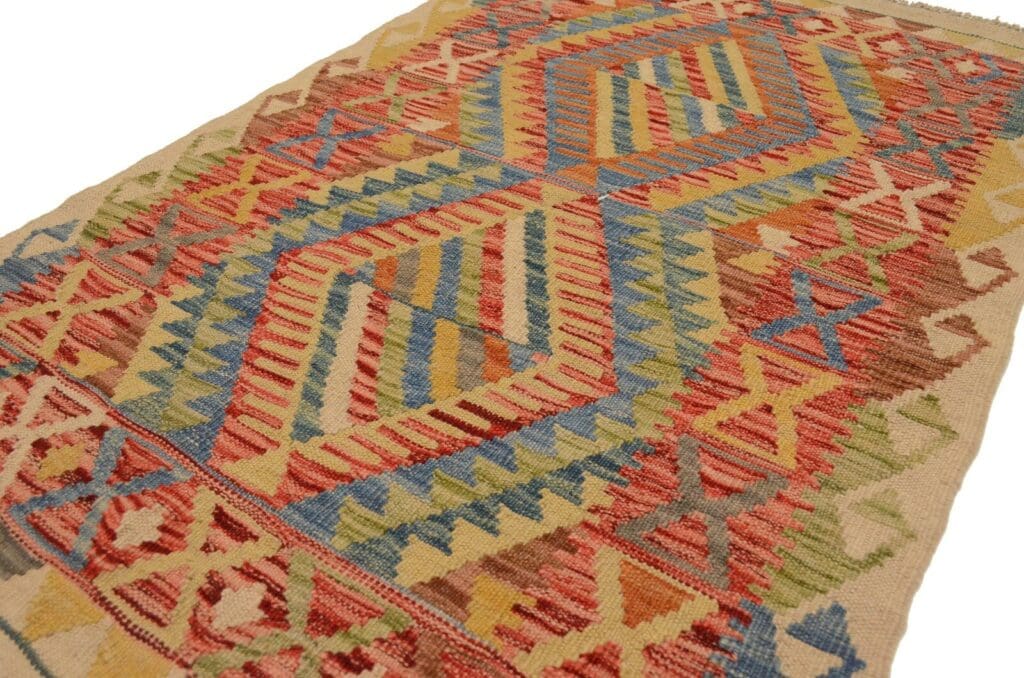
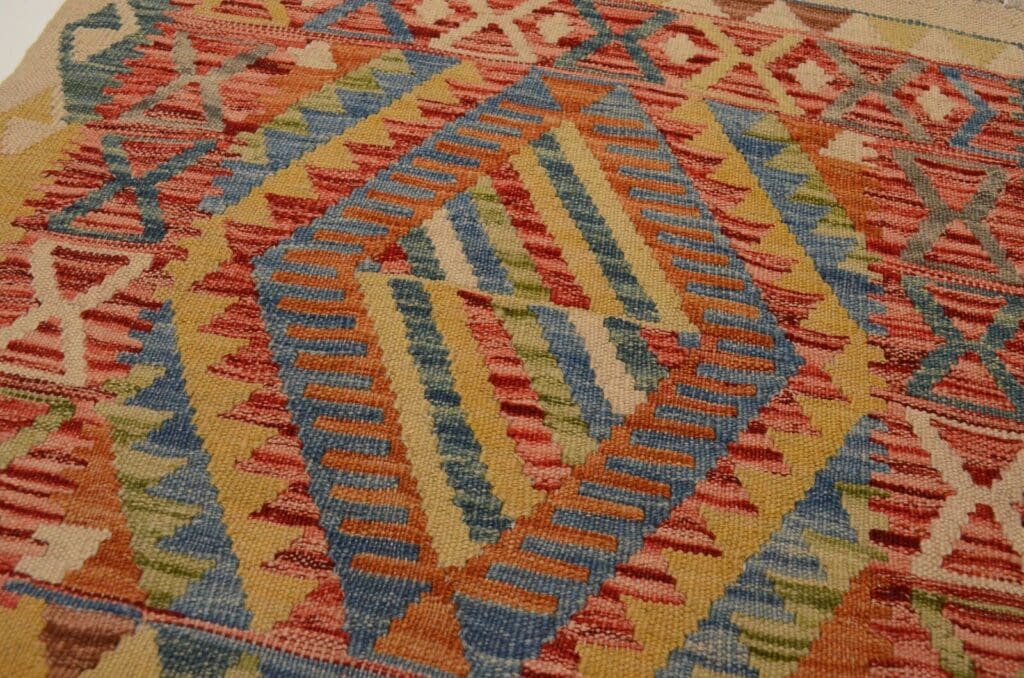
The pattern is described as a geometric all-over design in pastel colours. An all-over composition distributes its visual elements across the complete field instead of concentrating the design solely in one medallion or central panel. Repeated forms create continuity from one area to the next and give the rug an even overall order.
Geometric patterns are built from lines, angles, fields and recurring shapes. In a woven kilim, these elements are created through adjoining areas of colour and through the sequence of the weft. The design develops during the weaving process, so the pattern is part of the textile’s construction rather than a separate surface treatment.
The pastel palette gives the geometry a calm and contemporary appearance. Soft, muted shades can make lines and repeated forms visible without introducing the strong contrast associated with a very dark or saturated colour scheme. This allows the kilim to function as a considered textile element in different interiors. It can add colour to a restrained setting or sit alongside existing tones in a more varied room.
An all-over design has a different visual rhythm from a composition dominated by one large central motif. The eye can move across the surface and register the repetition of the geometric elements. This regular distribution is suitable for a floor textile viewed from more than one direction. At the same time, the hand-woven execution keeps the individual character of the work present in the lines, joins and colour boundaries.
The design brings together two perspectives. The kilim technique refers to a long-established form of Afghan weaving, while the pastel colouring gives the composition a modern direction. The result is not presented as a reproduction of one historical pattern, nor as an unstructured abstract field. Instead, geometric order provides a link between traditional manual work and contemporary interior design.
Pastel kilims can be used wherever colour and woven texture should be visible without becoming visually overwhelming. In a living room, bedroom or another domestic setting, the flat textile can define the floor area while allowing the repeated geometry to remain legible. These possible uses follow from the described pastel colouring and kilim construction; the rug is not restricted to one particular room.
Special Features
This piece combines Afghan origin, hand-woven kilim construction and a geometric all-over design. Pastel colours give the traditional textile a contemporary direction, while the loom-based technique preserves the character of manual craft. Material, production method and pattern are therefore clearly connected.
The kilim is new and in perfect condition. It is made from virgin wool and is suitable for rooms with underfloor heating. Its flat woven construction creates a direct textile layer over the floor, while the wool contributes a natural and comfortable surface character. The rug is also described as breathable for this use.
As a handmade one-off, the Afghan kilim has the individual character associated with a manually woven textile. Its appearance is defined by the combination of wool, handwork, pastel colours and geometric organisation. It can therefore be understood both as a functional floor covering and as an example of Afghan weaving presented through a modern colour scheme.
FAQ
What is the best way to clean the Afghan kilim?
For regular care, remove dust and loose dirt gently. The kilim can be vacuumed with care or taken outside and lightly beaten, while avoiding unnecessary strain on the flat weave. If a spill occurs, treat the affected area promptly with a damp cloth and a mild cleaning product. Vigorous rubbing can put stress on the wool fibres and colour areas, so gentle dabbing is preferable. For a more thorough treatment, professional rug cleaning is a suitable option. The cleaning method can then be selected for virgin wool and the hand-woven construction.
Can the kilim be used in a room with underfloor heating?
Yes. This Afghan kilim is suitable for use in rooms with underfloor heating. Its flat woven structure and wool material provide a textile surface that can be used over a heated floor. The stated suitability does not replace the operating instructions for the heating or flooring system. General care guidance for wool textiles and the recommendations applying to the particular floor should still be followed. With those considerations in place, the kilim can be used as a woven layer in a room with underfloor heating.
How is a hand-woven kilim made?
A hand-woven kilim is produced on a loom using warp and weft threads. The weft is passed through the warp by hand, and the textile surface is built gradually. Geometric forms and changes of colour are created during weaving, which means that the pattern is integrated into the fabric. The process calls for concentration, skill and patience because the thread tension and the arrangement of the coloured sections must be monitored throughout the work. In an Afghan kilim, this technique is connected with the country’s wool-working and weaving traditions. Here it is used to create a geometric all-over design in pastel colours.
To provide the best experiences, we use technologies like cookies to store and/or access device information. Consenting to these technologies will allow us to process data such as browsing behavior or unique IDs on this site. Not consenting or withdrawing consent, may adversely affect certain features and functions.
Functional Always active
The technical storage or access is strictly necessary for the legitimate purpose of enabling the use of a specific service explicitly requested by the subscriber or user, or for the sole purpose of carrying out the transmission of a communication over an electronic communications network.
Preferences
The technical storage or access is necessary for the legitimate purpose of storing preferences that are not requested by the subscriber or user.
Statistics
The technical storage or access that is used exclusively for statistical purposes.The technical storage or access that is used exclusively for anonymous statistical purposes. Without a subpoena, voluntary compliance on the part of your Internet Service Provider, or additional records from a third party, information stored or retrieved for this purpose alone cannot usually be used to identify you.
Marketing
The technical storage or access is required to create user profiles to send advertising, or to track the user on a website or across several websites for similar marketing purposes.
 SECURE PAYMENT
 SHIPPING PARTNERS


