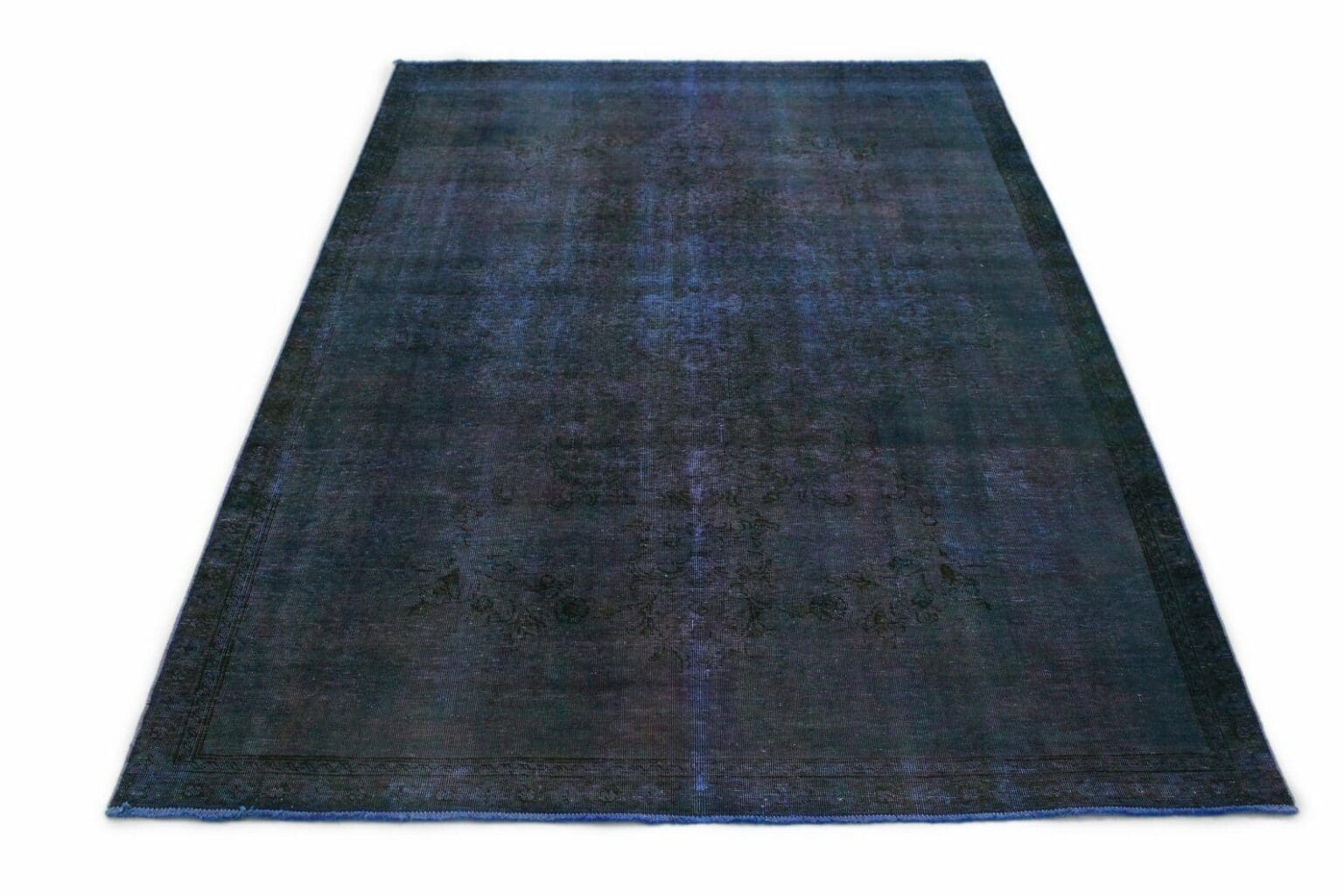
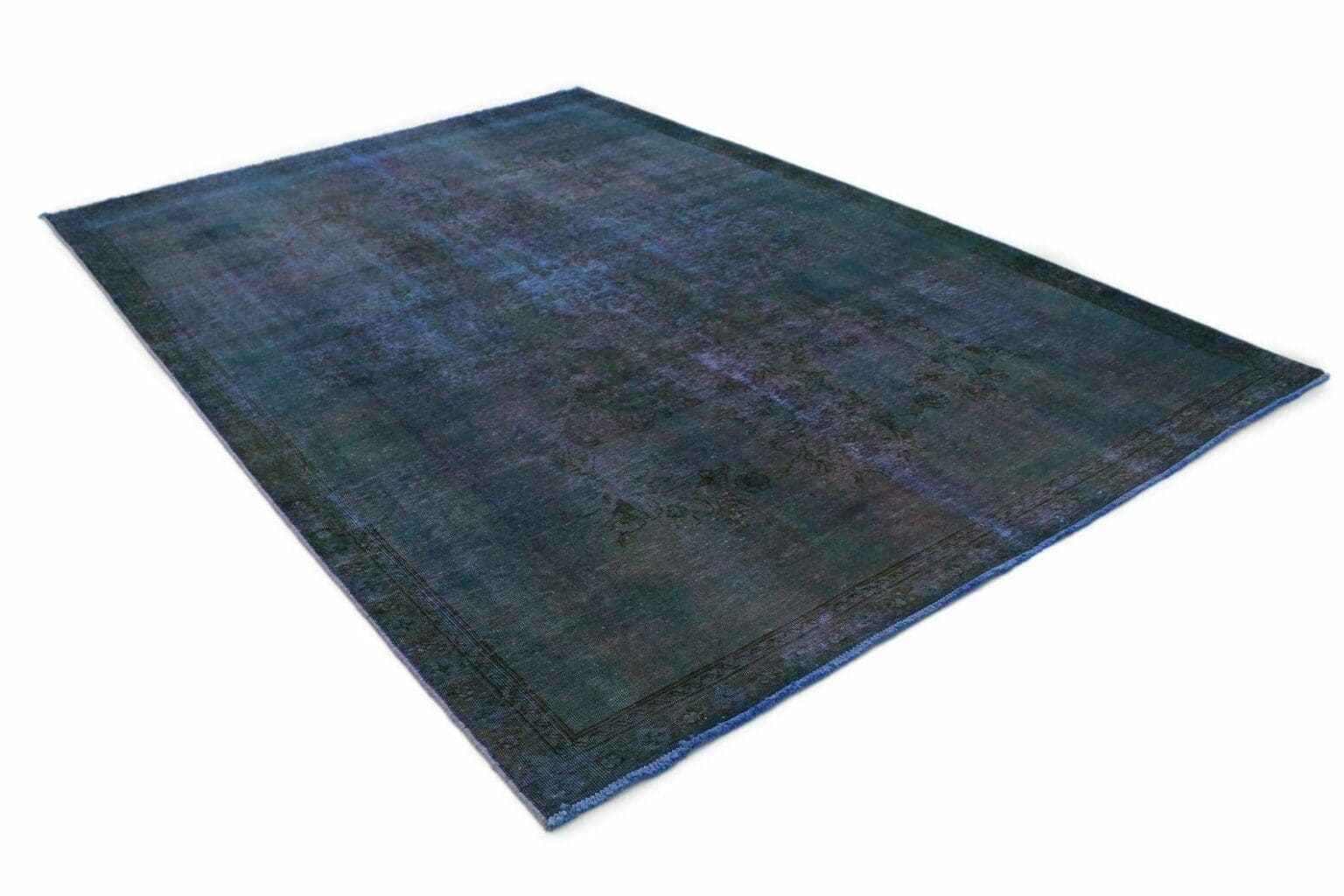
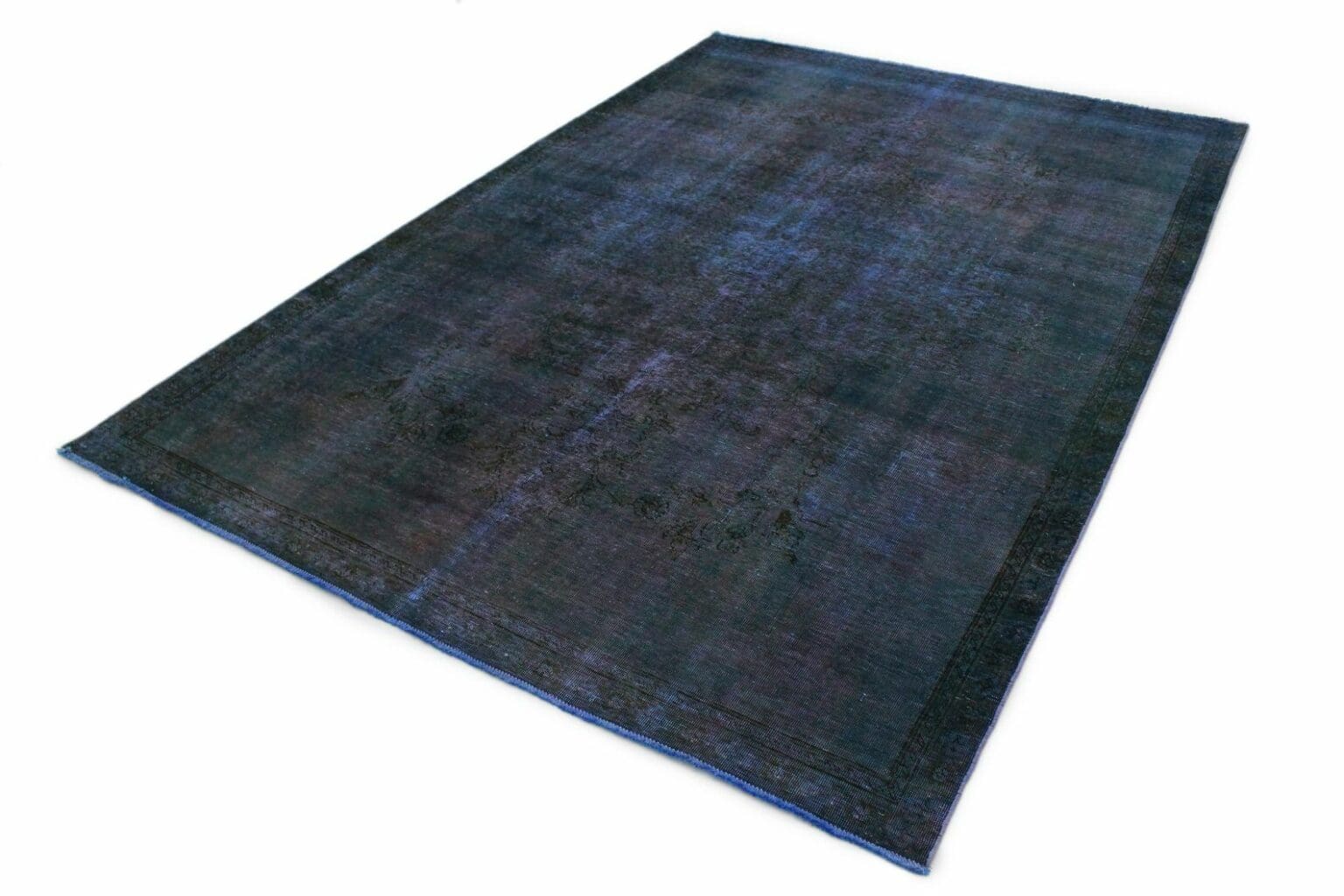
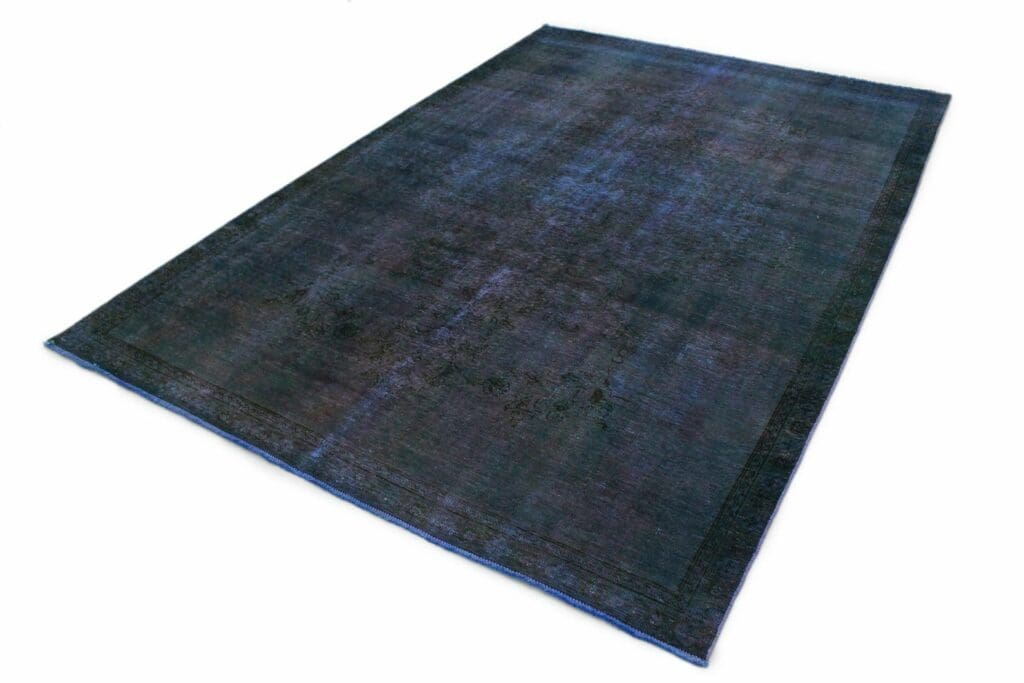
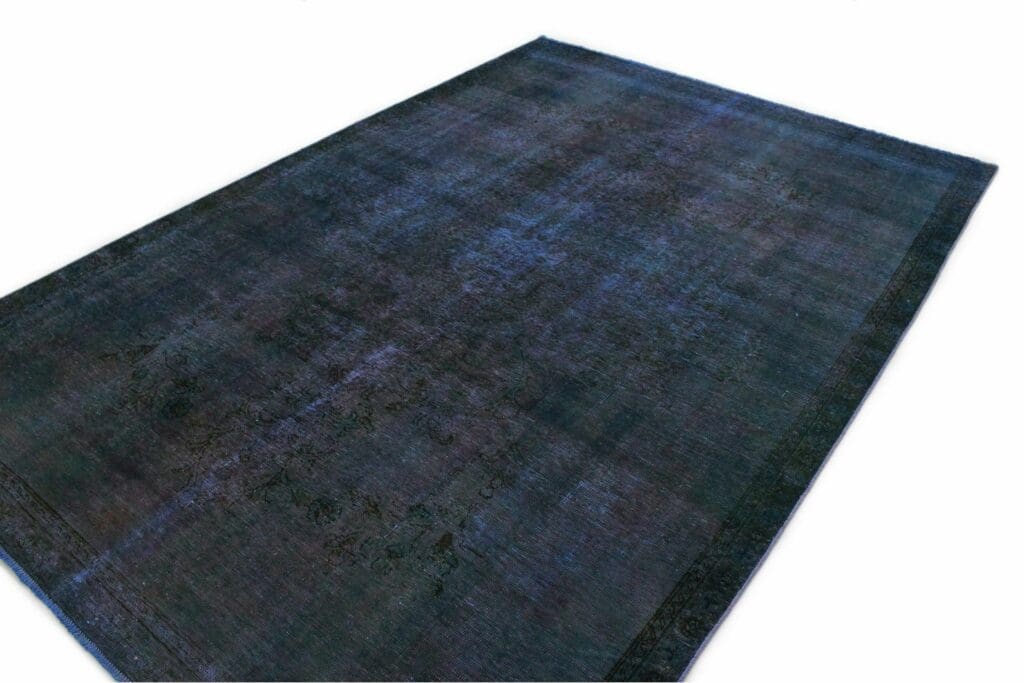
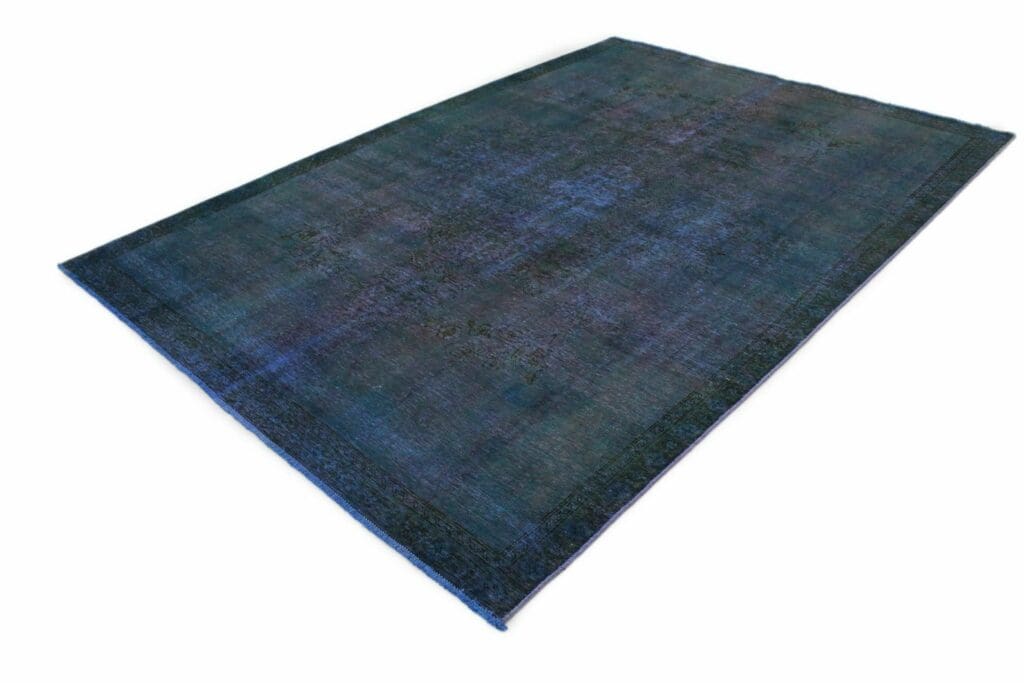
Hand-knotted Oriental rug | Knot density: Hand-knotted | Material: hand-spun wool and cotton | Size: 320×219 cm | Pattern: traditional and timeless | Condition: New with tag
This vintage rug is hand-knotted and made from hand-spun wool and cotton. These natural fibres give the piece a tactile, warm textile character and reflect the craft-based nature of its construction. Hand-spun wool is produced by drawing fibres into yarn by hand rather than turning them into a completely uniform industrial thread. The resulting yarn can retain subtle variations in texture. Cotton is also listed among the materials and has long been used in the making of oriental rugs.
In hand-knotting, each knot is placed individually into the developing rug structure. The knots are worked row by row and secured through the surrounding construction. This process does not create a mechanically identical surface; instead, it builds the pile through repeated manual work. The person knotting the rug gradually establishes the surface, colour areas and ornamental forms, following a design or a traditional arrangement as the work progresses.
The item’s knot-density entry is given as “hand-knotted”, which describes the method of manufacture. Hand-knotted rugs are made through a slower textile process in which yarn, structure and design are closely connected. Hand-spun wool supplies the pile with a distinct natural texture, while cotton forms part of the stated material composition. No additional fibres or material percentages are specified for this rug.
Hand-knotting makes the rug a handmade interior textile rather than a fully industrially produced floor covering. Variations in yarn, knot appearance and surface can be associated with this kind of work. They express the manual origin of the construction and distinguish it from machine-made production. The confirmed materials for this piece are hand-spun wool and cotton, and its stated technique is hand-knotting.
Origin and Tradition
The rug is described as an Oriental rug with its origin given as the Orient. This is a broad cultural and geographic designation, not the name of a particular country or province. It therefore does not support a more specific attribution. Oriental rugs can be made in a range of weaving and knotting regions, each with its own approaches to structure, colour, ornament and workshop practice.
The history of oriental rugs extends far into the past. In many cultures, rugs first served practical purposes: they insulated floors, provided sitting or sleeping surfaces and helped define domestic, ceremonial or religious spaces. Over time, these useful textiles also developed into forms of decorative and artistic expression. Designs, colour relationships and working methods were passed on through families, workshops and regional communities.
A characteristic feature of hand-knotted rug making is the combination of a planned design with manual execution. A pattern may be based on a drawn guide or on forms learned through tradition. During knotting, that design is translated into individual colour areas and rows of knots. The process requires patience, a steady hand and an understanding of how borders, fields and ornaments relate to one another. Depending on the tradition, the result may be geometric, floral, formally repeated or more freely arranged.
The word vintage describes this rug’s style, while its condition is explicitly stated as new with tag. These are separate details: vintage refers to the visual direction, not to a stated age or used condition. No production year, exact age or individual workshop is provided. Likewise, no specific region within the Orient is identified. The appropriate origin description for this piece therefore remains Oriental rather than a named country or weaving centre.
Oriental rug traditions were shaped by many different centres. Turkey, Persia, India and the Caucasus are among the areas associated with long-established rug-making cultures, but their traditions should not be treated as interchangeable. Each may use its own construction methods, colour conventions and design vocabulary. Those broader traditions provide useful context for understanding the category. They do not establish a particular provenance for this rug, whose origin is stated only as the Orient.
Design and Pattern
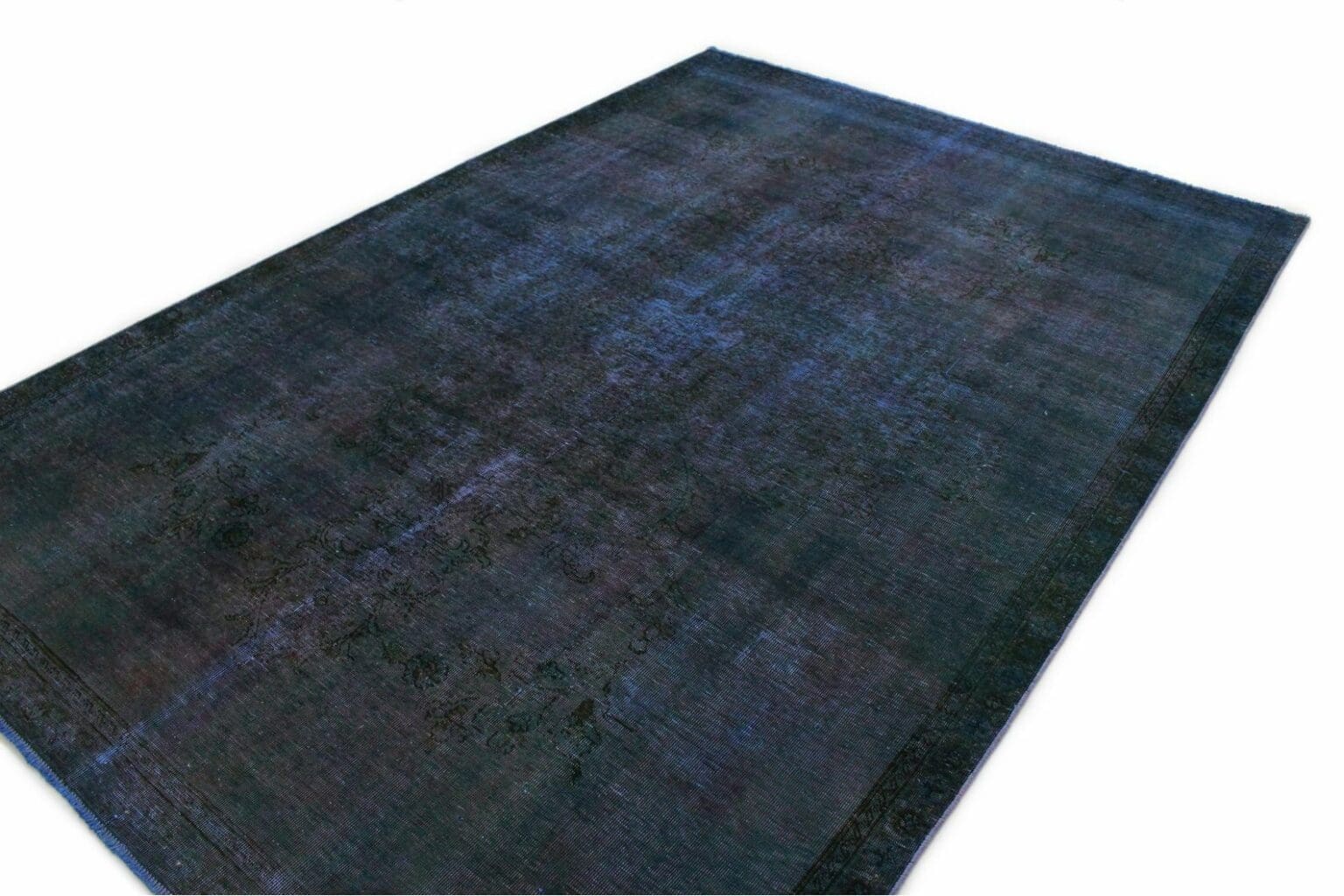
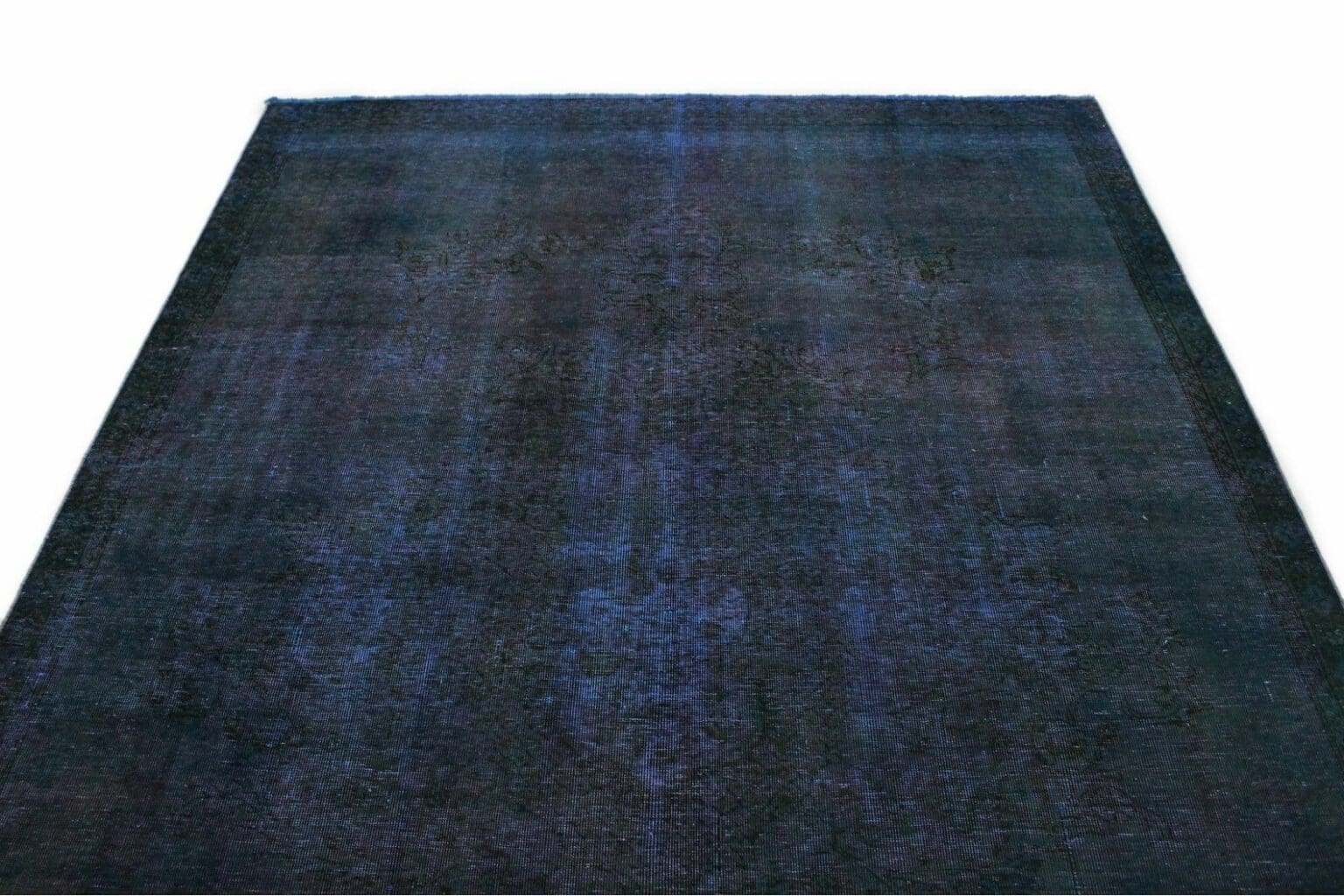
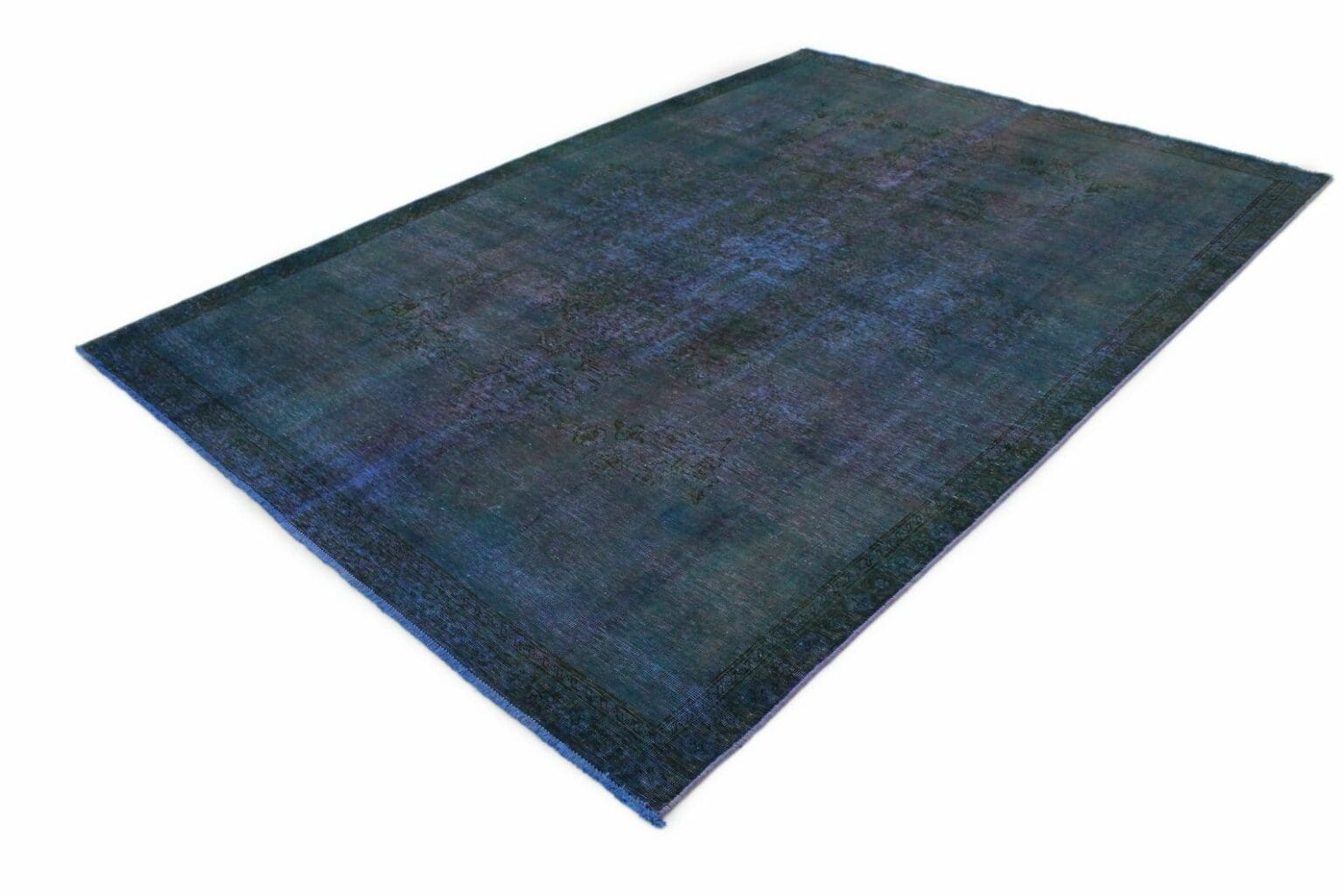
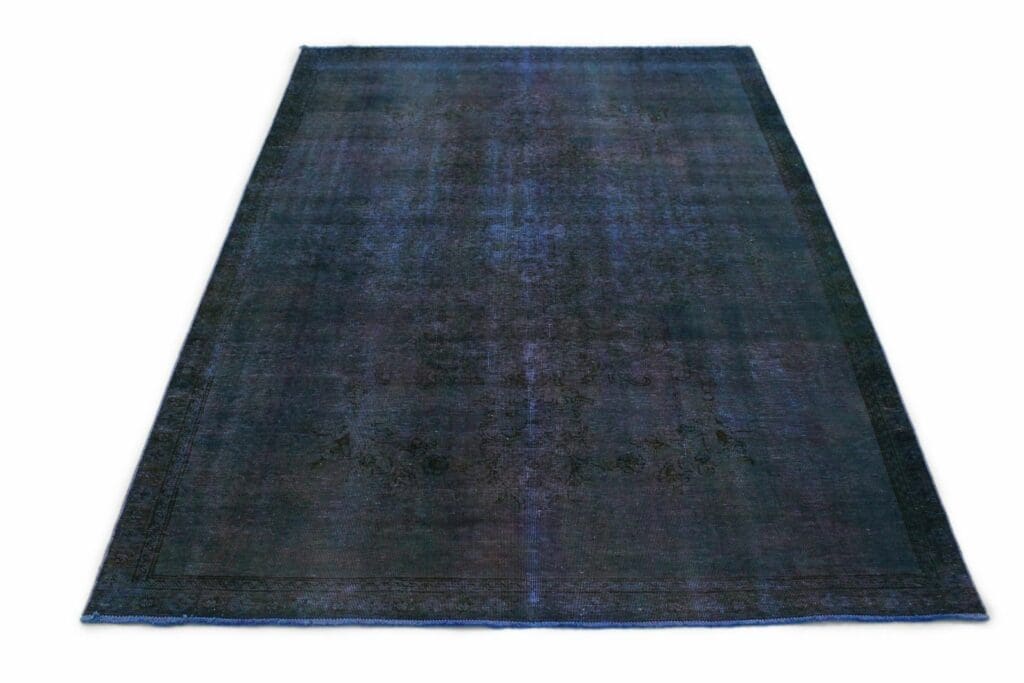
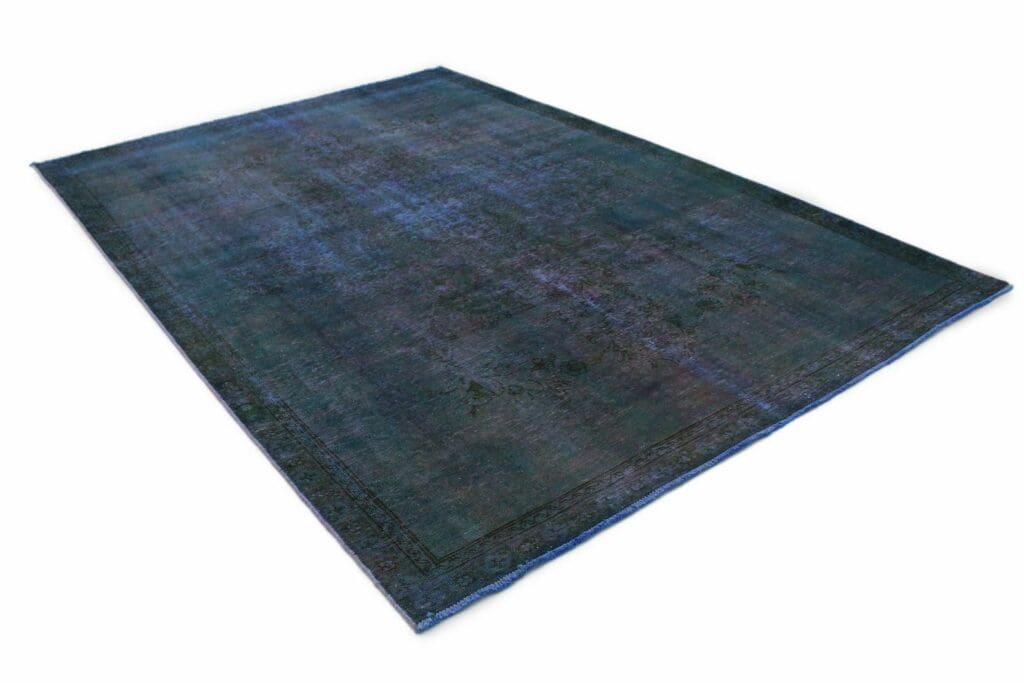
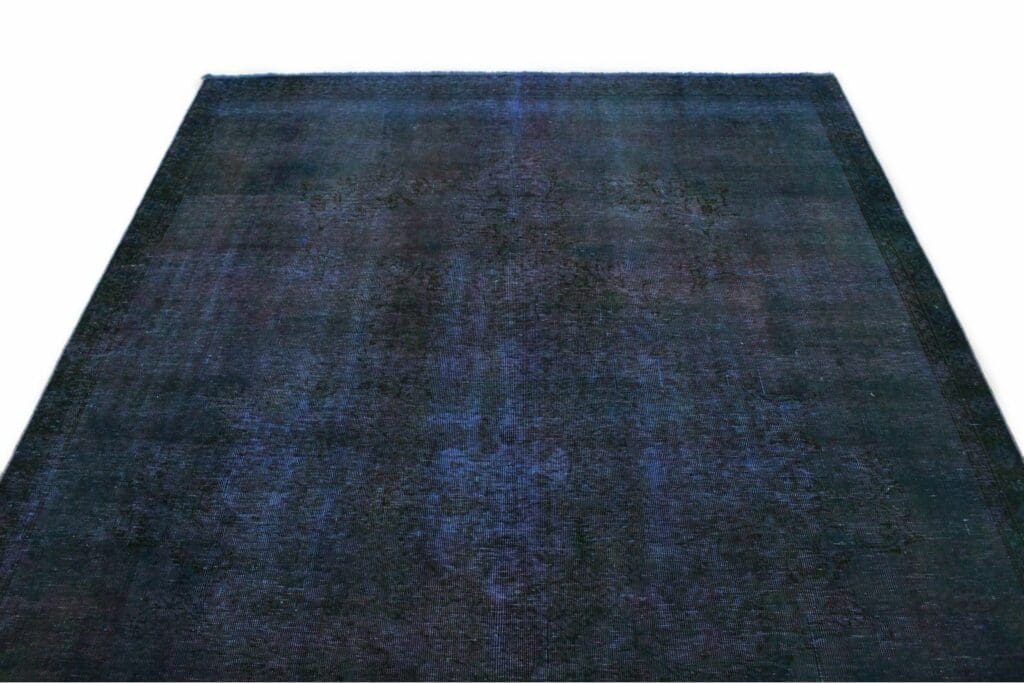
The rug is blue. Blue can introduce a calm yet clearly defined colour presence into an interior. Depending on its tone, it may appear cool, muted, strong or deep. It can be paired with neutral furniture, natural wood and restrained contemporary schemes. The exact shade, tonal range and distribution of individual blue areas are not described in further detail, so no narrower colour claim is made here.
Its style is listed as modern and vintage. This combination brings a contemporary interior direction together with an appearance associated with traditional rug imagery. Vintage styling often draws on familiar or inherited visual forms, while the modern classification allows the rug to be considered within current, more streamlined interiors. A particular named motif or single confirmed ornament is not specified for this one-off piece.
The description refers to traditional and timeless patterns as possible characteristics. Such designs may include geometric forms, floral elements or elegant ornaments. Geometric compositions can use lines, angles, diamonds, axes and repeated fields. Floral designs may interpret leaves, blossoms, vines or stylised plants. Ornaments can appear as borders, medallions or smaller recurring marks that help organise the overall surface.
Within oriental rug traditions, patterns serve more than a purely decorative role. Repeated motifs can preserve inherited signs, regional visual habits and ideas of balance, order and rhythm. A border frames an inner field, a repeated unit establishes movement, and a symmetrical arrangement can give the surface a clear structure. Depending on the weaving tradition, these elements may be repeated with strict regularity or adjusted by hand as the rug is made.
No single motif is identified as a definite feature of this rug. Geometric, floral and ornamental forms are therefore described as established possibilities within oriental design, not as additional confirmed details of this piece. What is specified is the blue colour and the modern and vintage style classification. Together, these characteristics allow the rug to be considered for different interiors without assigning it to an unmentioned province or regional pattern school.
An Oriental rug can act as a colour reference in a modern room. In a minimalist setting, blue can provide a distinct accent; in a more layered interior, it can relate to existing tones or create a deliberate contrast. The effect depends on the surrounding materials, light and furnishings. This rug is described as suitable for living rooms, bedrooms and dining rooms, so its design can be considered across several domestic settings.
Special Features
The rug is listed as new with tag. This condition statement remains separate from its vintage styling. It is also described as suitable for underfloor heating, so its use in rooms with that type of heating is expressly included in the product information. The suitability of the particular floor surface and correct installation should still be considered when placing any textile floor covering.
As a handmade one-off, the rug brings together a blue colour, hand-knotted construction and the stated materials of hand-spun wool and cotton. Its modern and vintage style can be incorporated into several furnishing approaches. It is intended for use in living rooms, bedrooms and dining rooms, where its colour and handmade surface can support either a restrained or a more traditional room concept.
Care should be gentle. Regular vacuuming at low suction helps remove dust and loose dirt while limiting unnecessary stress on the surface. For a spot, use a slightly damp cloth and a mild cleaning product. Avoid overly forceful rubbing. A professional cleaner is recommended for a thorough cleaning because professional treatment can take the colours and structure of a hand-knotted rug into account.
FAQ
How should I clean my vintage rug?
Clean it carefully. Vacuum regularly using low suction to remove dust and loose dirt. If a mark appears, use a slightly damp cloth with a mild cleaning product. Do not rub the surface more strongly than necessary. For a complete cleaning, professional rug cleaning is recommended, as it is better suited to protecting the colours and structure of a hand-knotted rug.
How can I assess the quality of a hand-knotted rug?
Knot density is one useful indication; it refers to the number of knots within a defined area. A higher density can point to a finer and more robust construction. The materials, consistency of the workmanship and treatment of design details are also relevant. High-quality wool or silk are generally regarded as valuable rug materials. For this rug, the listed materials are hand-spun wool and cotton, and the stated technique is hand-knotting.
Can I use this rug in a modern interior?
Yes. Its combination of modern and vintage styling makes it suitable for contemporary rooms. The blue colour can serve as a clear accent in a minimalist setting or connect with tones already present in the room. Traditional-looking pattern language can create an intentional contrast with straight-lined furniture and plain surfaces. The rug is described as suitable for living rooms, bedrooms and dining rooms, allowing it to be used according to the needs of the interior.
To provide the best experiences, we use technologies like cookies to store and/or access device information. Consenting to these technologies will allow us to process data such as browsing behavior or unique IDs on this site. Not consenting or withdrawing consent, may adversely affect certain features and functions.
Functional Always active
The technical storage or access is strictly necessary for the legitimate purpose of enabling the use of a specific service explicitly requested by the subscriber or user, or for the sole purpose of carrying out the transmission of a communication over an electronic communications network.
Preferences
The technical storage or access is necessary for the legitimate purpose of storing preferences that are not requested by the subscriber or user.
Statistics
The technical storage or access that is used exclusively for statistical purposes.The technical storage or access that is used exclusively for anonymous statistical purposes. Without a subpoena, voluntary compliance on the part of your Internet Service Provider, or additional records from a third party, information stored or retrieved for this purpose alone cannot usually be used to identify you.
Marketing
The technical storage or access is required to create user profiles to send advertising, or to track the user on a website or across several websites for similar marketing purposes.
 SECURE PAYMENT
 SHIPPING PARTNERS


