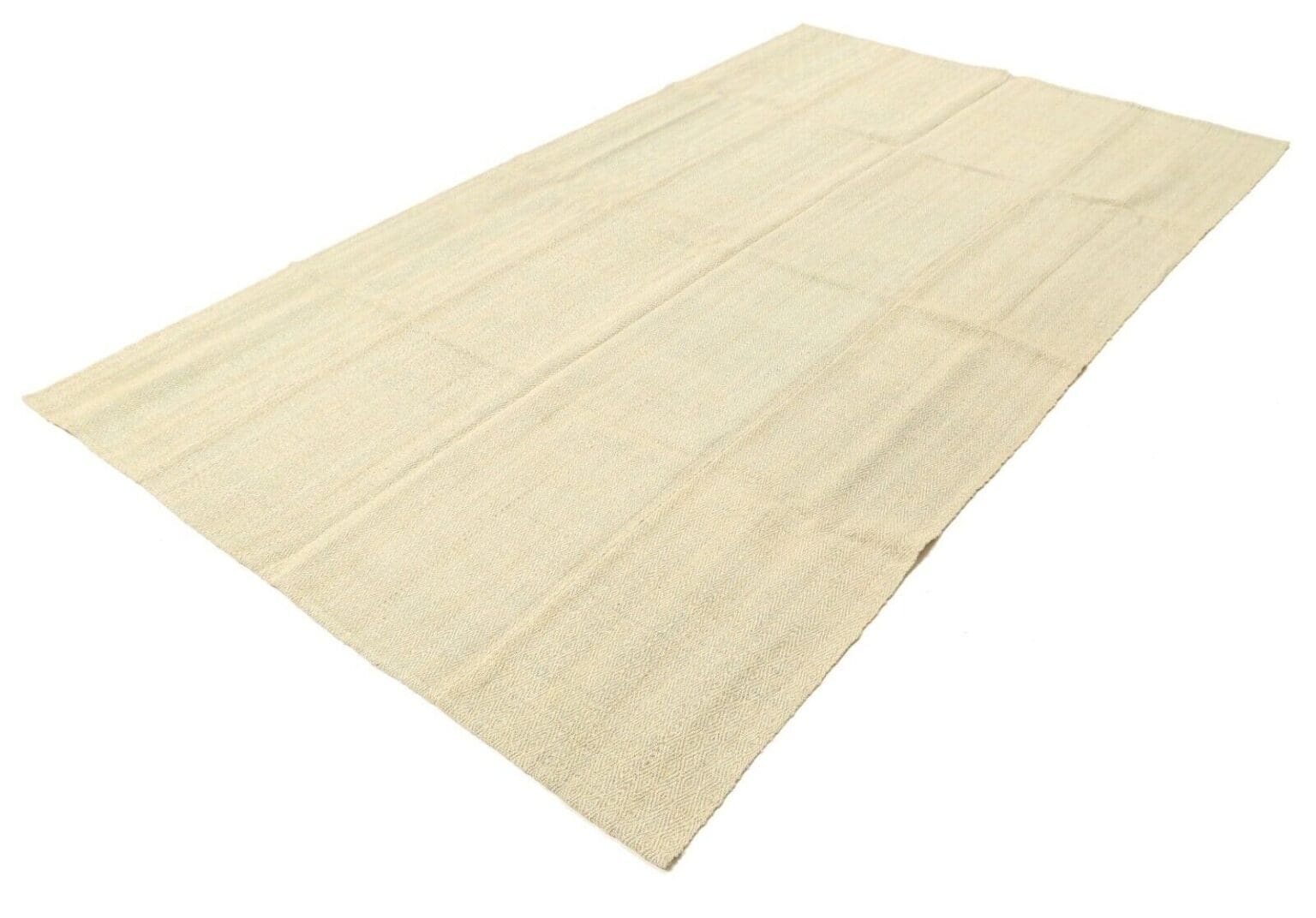
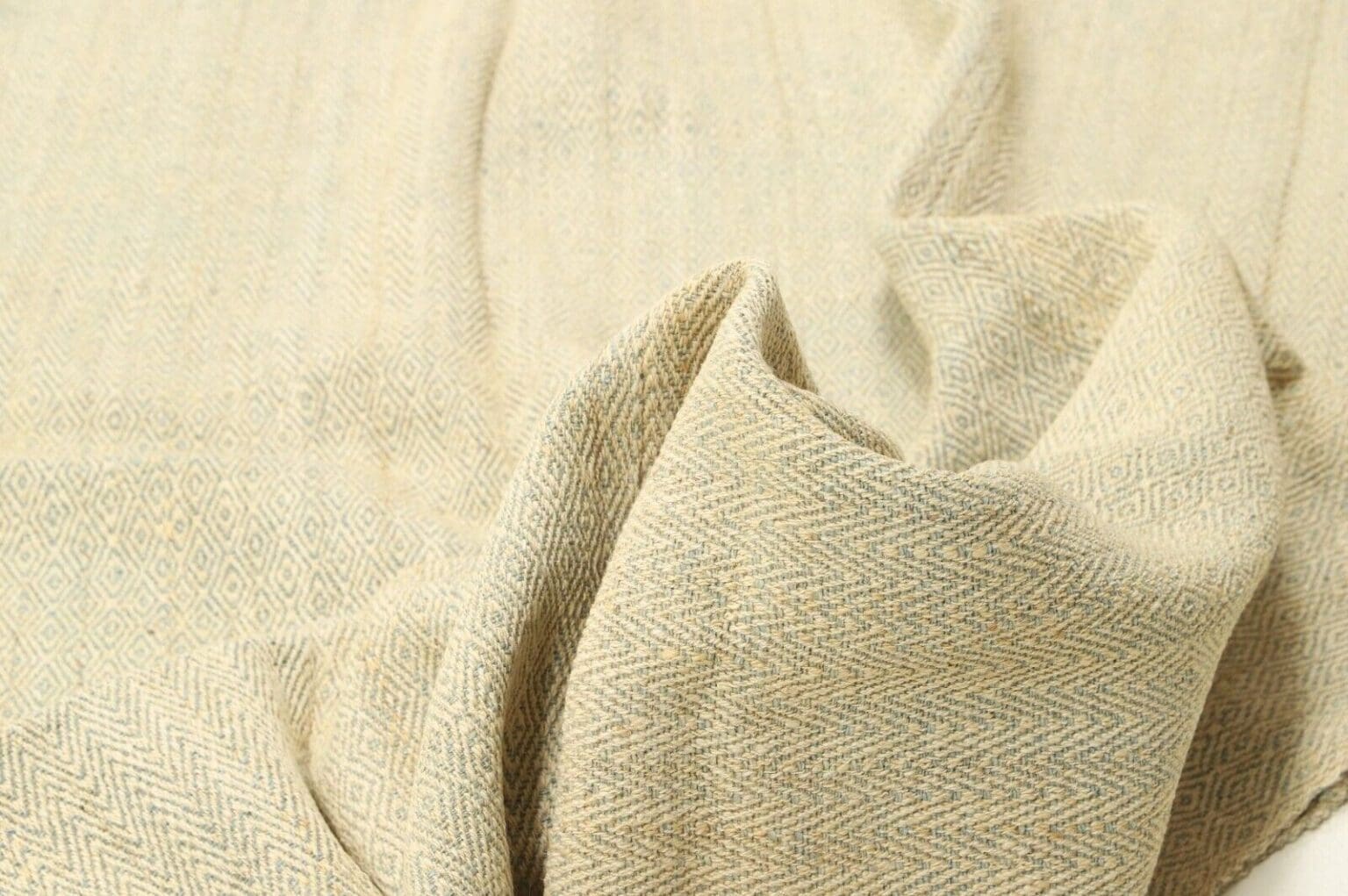
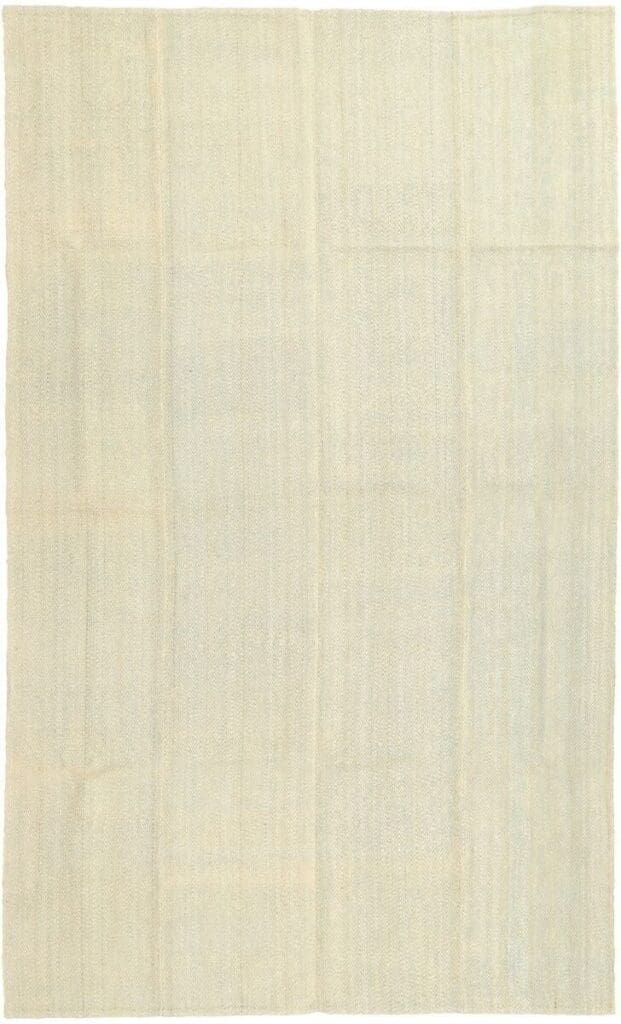
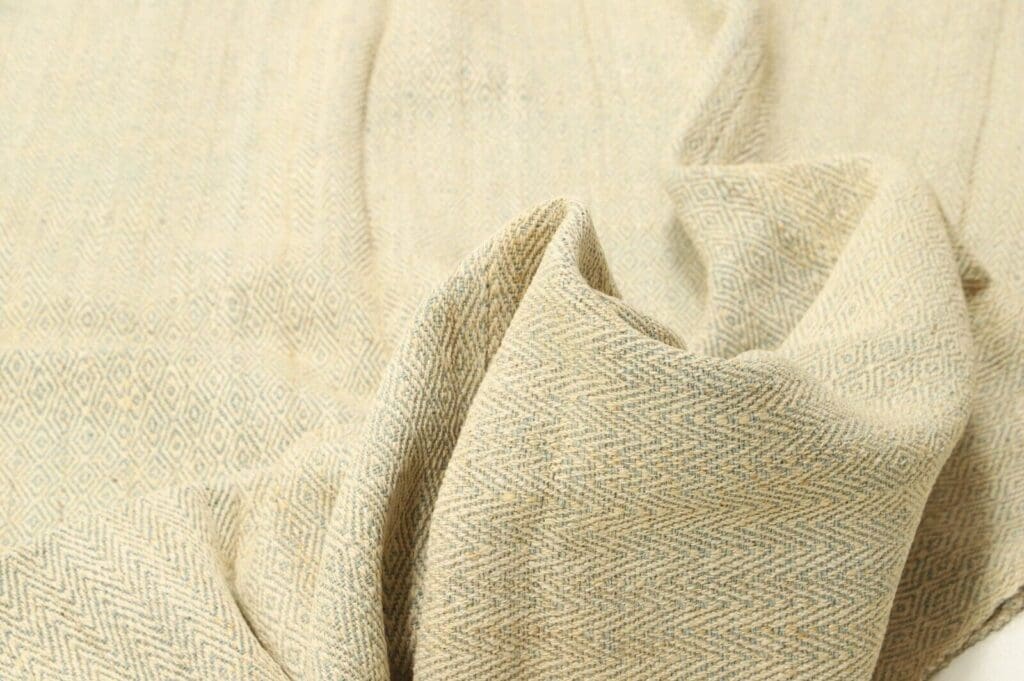
This Oriental rug is made from 100% wool and hand-woven in the Kelim technique. Pure wool gives the textile a soft character and a pleasant feel underfoot. It is also valued for its durability and natural ability to provide thermal insulation. As a natural fibre, wool can contribute to a comfortable room environment and offers natural resistance to dirt and stains.
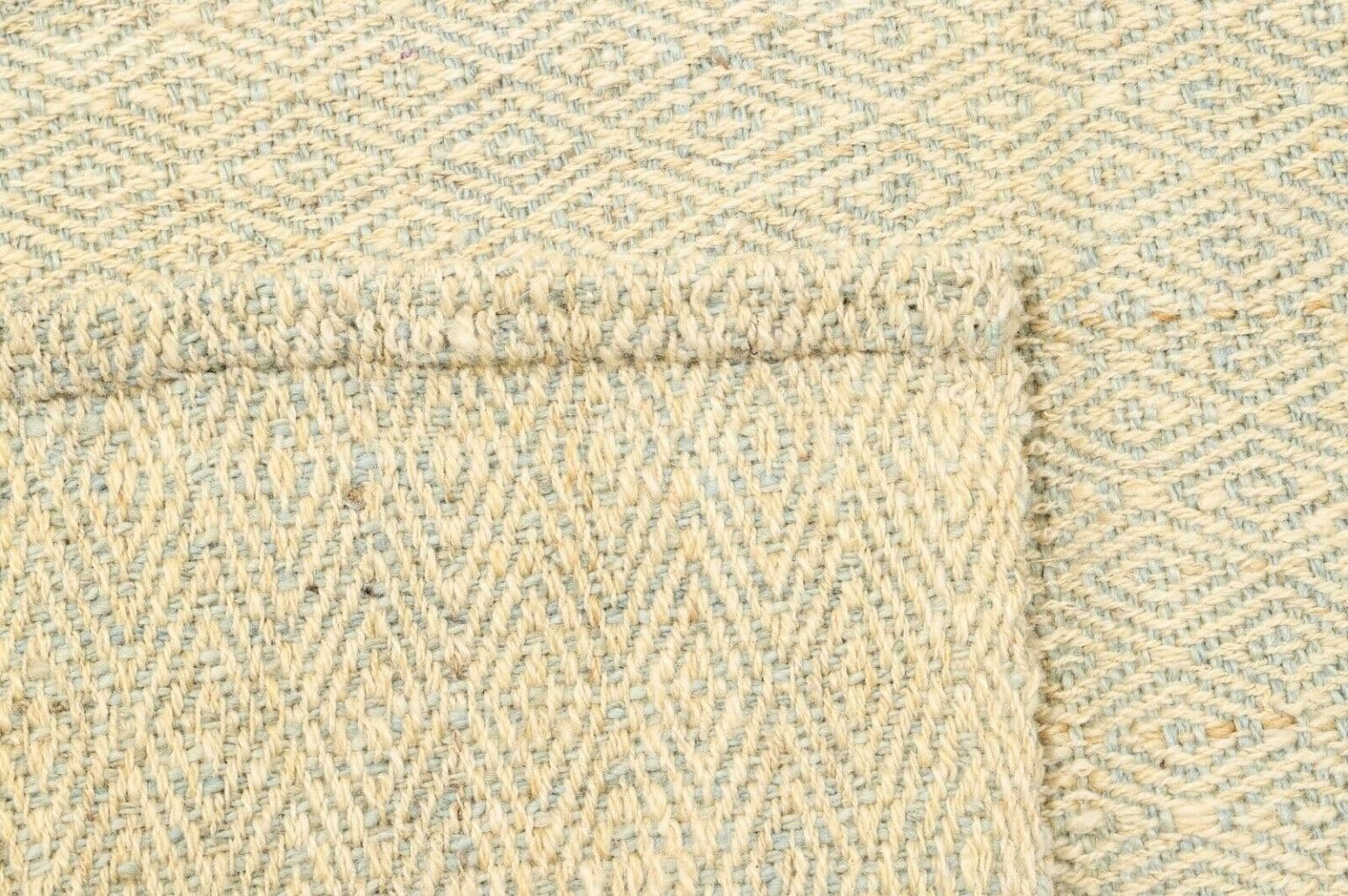
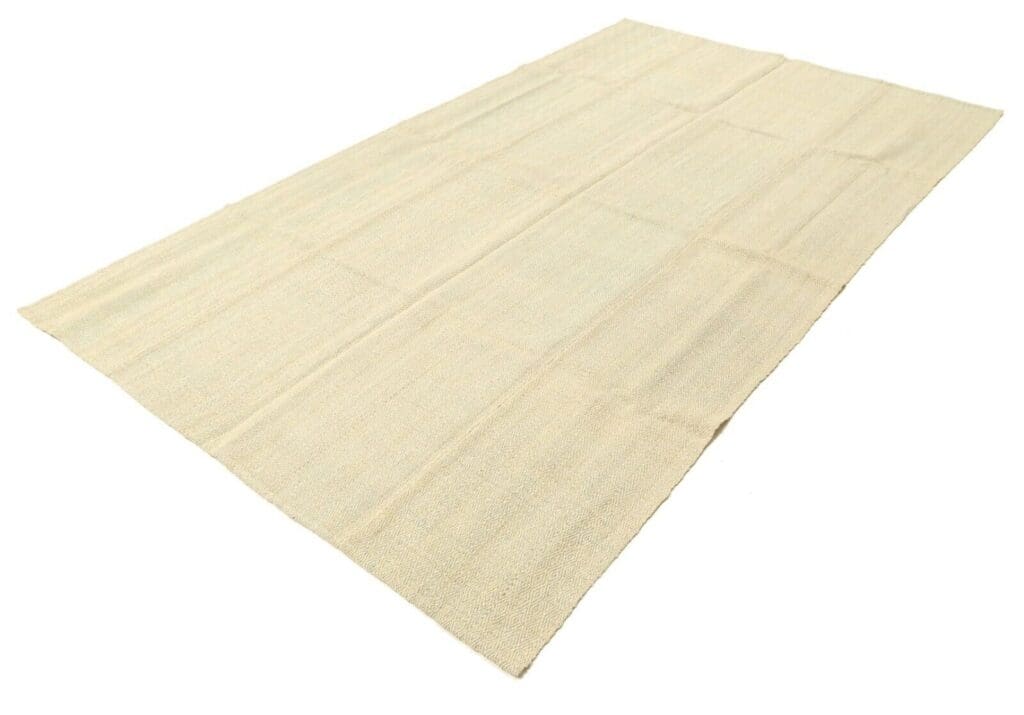
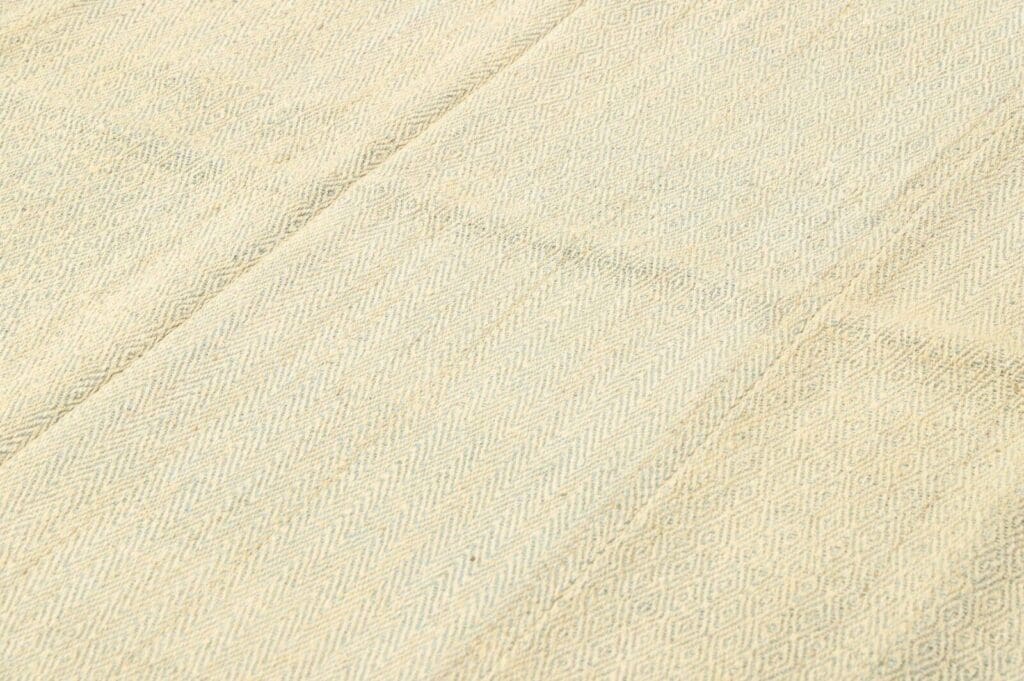
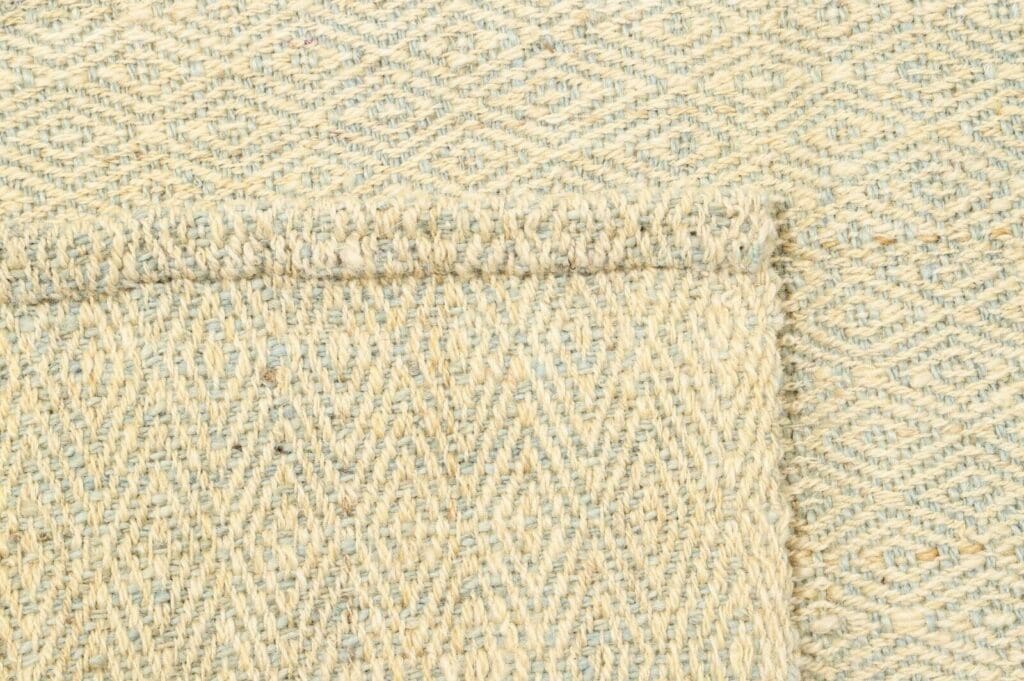
A Kelim is made by weaving rather than by using the conventional knotting method. This produces a flat textile surface. The pattern and colour fields are built directly into the woven structure, which distinguishes a Kelim from a traditionally hand-knotted rug with a raised pile. The low profile also allows the rug to be combined readily with furniture and other decorative elements.
Hand-woven production reflects a textile process in which the surface is formed progressively. Wool remains the defining material of this rug. Its properties bring together a soft, tactile appearance and a practical surface for everyday interiors. The rug is presented as a modern Kelim, joining a traditional weaving technique with a contemporary visual approach.
Origin and Tradition
Kelim rugs belong to a long-established Oriental weaving tradition. Their history is closely linked to the cultures of the East and extends back over several centuries. Unlike knotted rugs, Kelims are made as flat weaves on a loom. This method allows coloured areas and clearly structured forms to be built directly from the arrangement of the threads.
The Kelim tradition is especially prominent in the Caucasus and Anatolia. Different tribes and peoples developed their own weaving methods, colour combinations and systems of visual symbols. Regional variety can be seen in the way geometric shapes are ordered, separated and connected through colour. In this way, Kelims preserve textile knowledge that has been passed down through generations.
Traditional Kelim design depends on the relationship between manual production and a clearly organised surface. During weaving, lines, transitions and motifs arise from the placement of the threads. The flat construction is therefore more than a practical feature; it is also a visible expression of the technique. It shows how individual threads are brought together to form a complete textile field.
In their weaving regions, Oriental rugs have served both as useful household textiles and as decorative works of textile art. Patterns and colours could be influenced by the surrounding landscape, available dyes and local design traditions. This relationship is particularly apparent in Kelims because the motifs are not hidden by a dense pile; they remain directly visible in the woven surface.
Modern Oriental rugs draw on this heritage while using a contemporary design language. The Kelim concept here is associated with a modern character and Art Deco elements. Traditional weaving therefore appears alongside a style suited to present-day interiors. The description of traditional Kelim design refers to the visual and technical connection with this weaving tradition, not to a named province or specific place of manufacture.
Design and Pattern
The design of this hand-woven Kelim is modern and multicoloured. Its range of colours forms an important part of its appearance, linking textile tradition with current interior design. The style is identified as Art Deco. This places the design within a decorative vocabulary where ordered composition, distinctive areas of colour and a deliberate relationship between shape and pattern are important.
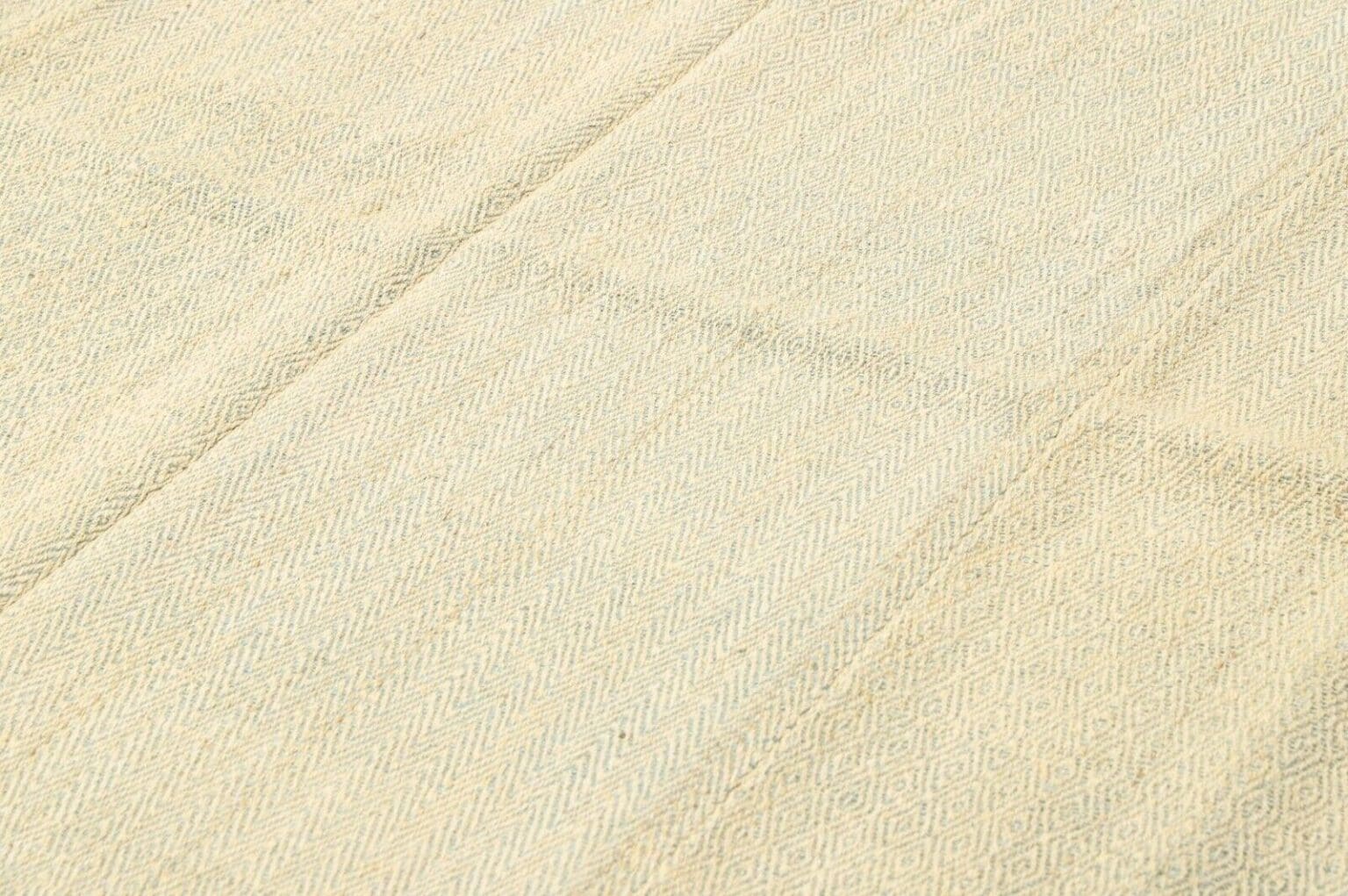
Geometric patterns are among the characteristic forms of expression found in many Kelims. They may consist of diamonds, lines, angles, stepped outlines or repeated fields. Such forms are not created by a separate layer of knots but by the structure of the weave itself. The direct connection between colour and geometry gives the surface a clearly legible organisation.
Within Oriental textile art, geometric signs can carry cultural associations. Motifs are often preserved over long periods and adapted in regional variations. Their meaning is not identical for every rug and cannot be assigned universally to one particular symbol. What can be said generally is that Kelim pattern traditions are closely connected with the history of the weaving cultures in which they developed.
The multicoloured design can serve as a visual reference point within a room. At the same time, a flat Kelim can be combined with many furnishing styles. Its modern direction works with restrained interiors, while the traditional woven structure can provide a textile contrast in more classic settings. The Art Deco character supports rooms in which decorative geometry and a considered use of colour are part of the overall scheme.
Because the rug is flat-woven, its surface drawing remains easy to read. Lines, colour changes and geometric elements are directly related to the construction of the textile. The pattern therefore has a crisp woven quality without a deep pile altering the contours. The result combines a multicoloured appearance with the broad, planar effect associated with Kelims.
Special Features
A defining feature of this rug is its hand-woven Kelim construction with a flat surface. This sets it apart from traditionally knotted rugs and makes everyday care easier. The wool is breathable and resistant to dirt. The rug is also suitable for use with underfloor heating. It therefore combines a traditional textile method with a feature relevant to contemporary living spaces.
The rug is made entirely from 100% wool and is described as new without a label. Wool is robust and can retain its shape and colour over many years, including with intensive use. Suggested areas include living rooms, dining rooms, hallways and studies. The flat surface can be coordinated with different kinds of furniture and interior arrangements.
FAQ
How should I care for a hand-woven Oriental rug?
Vacuum the rug regularly to remove dust and loose dirt before it settles into the textile surface. If a spill occurs, it can be treated with a damp cloth and a mild soap solution. Cleaning should be carried out carefully rather than with aggressive products. Professional rug cleaning is recommended for a more thorough treatment, as it can help protect the material and colours. The flat Kelim construction makes routine maintenance straightforward, but stains should still be handled promptly and gently.
Is the rug suitable for underfloor heating?
Yes. This hand-woven wool Oriental rug is suitable for underfloor heating. Wool provides natural insulation and can absorb and transmit warmth. The rug can therefore be used on a floor equipped with this type of heating. As with any textile floor covering, the heating should be operated evenly and the surface should be kept free of dust through regular care.
Where is the best place to use this Oriental rug?
The Kelim can be used in several areas of the home. The suggested settings include living rooms, dining rooms and hallways, as well as a study or home office. Its modern, multicoloured Art Deco design can work with contemporary interiors and with more traditional furnishings. The flat weave also makes it easy to combine with furniture and other decorative features.
To provide the best experiences, we use technologies like cookies to store and/or access device information. Consenting to these technologies will allow us to process data such as browsing behavior or unique IDs on this site. Not consenting or withdrawing consent, may adversely affect certain features and functions.
Functional Always active
The technical storage or access is strictly necessary for the legitimate purpose of enabling the use of a specific service explicitly requested by the subscriber or user, or for the sole purpose of carrying out the transmission of a communication over an electronic communications network.
Preferences
The technical storage or access is necessary for the legitimate purpose of storing preferences that are not requested by the subscriber or user.
Statistics
The technical storage or access that is used exclusively for statistical purposes.The technical storage or access that is used exclusively for anonymous statistical purposes. Without a subpoena, voluntary compliance on the part of your Internet Service Provider, or additional records from a third party, information stored or retrieved for this purpose alone cannot usually be used to identify you.
Marketing
The technical storage or access is required to create user profiles to send advertising, or to track the user on a website or across several websites for similar marketing purposes.

 SECURE PAYMENT
 SHIPPING PARTNERS


