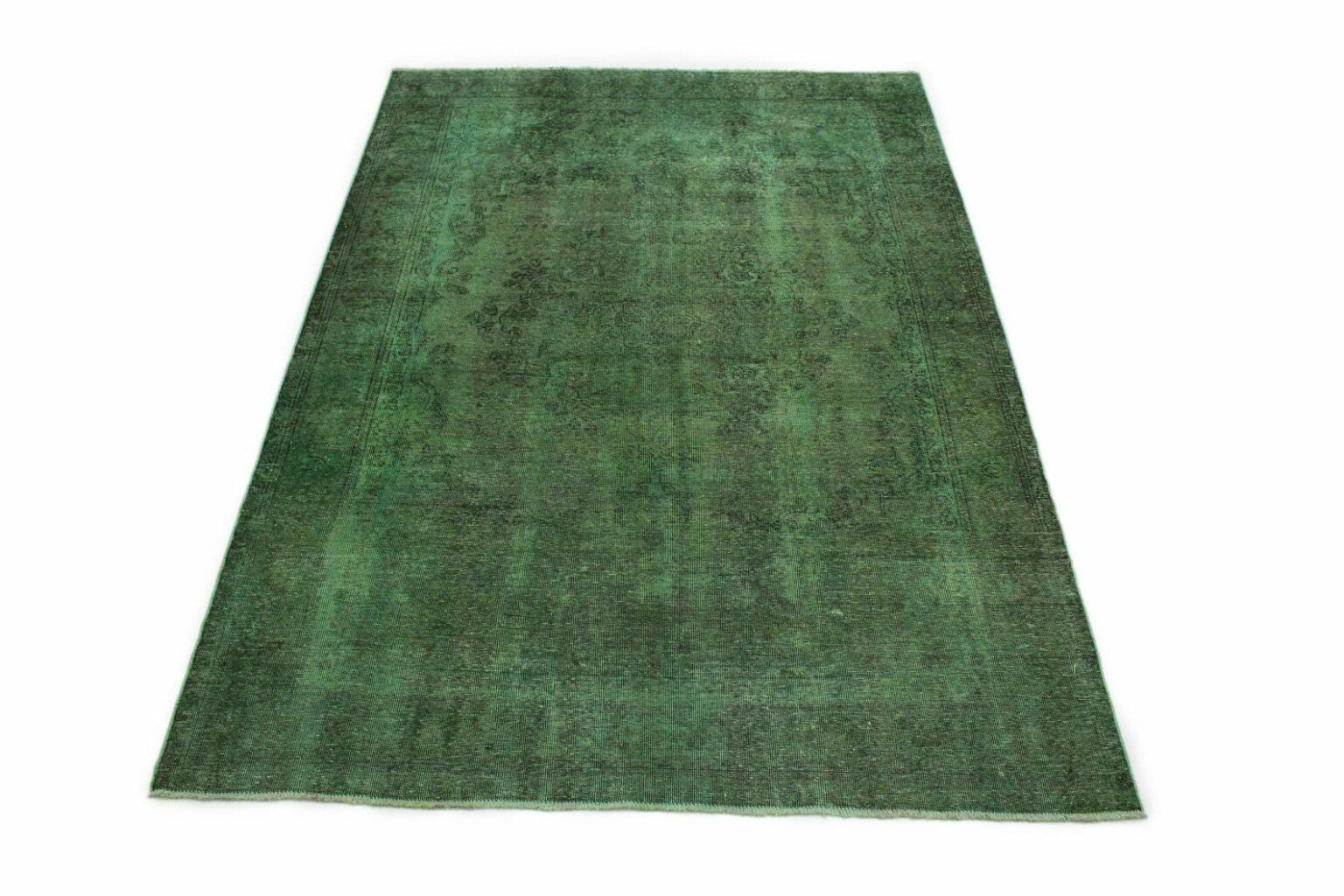
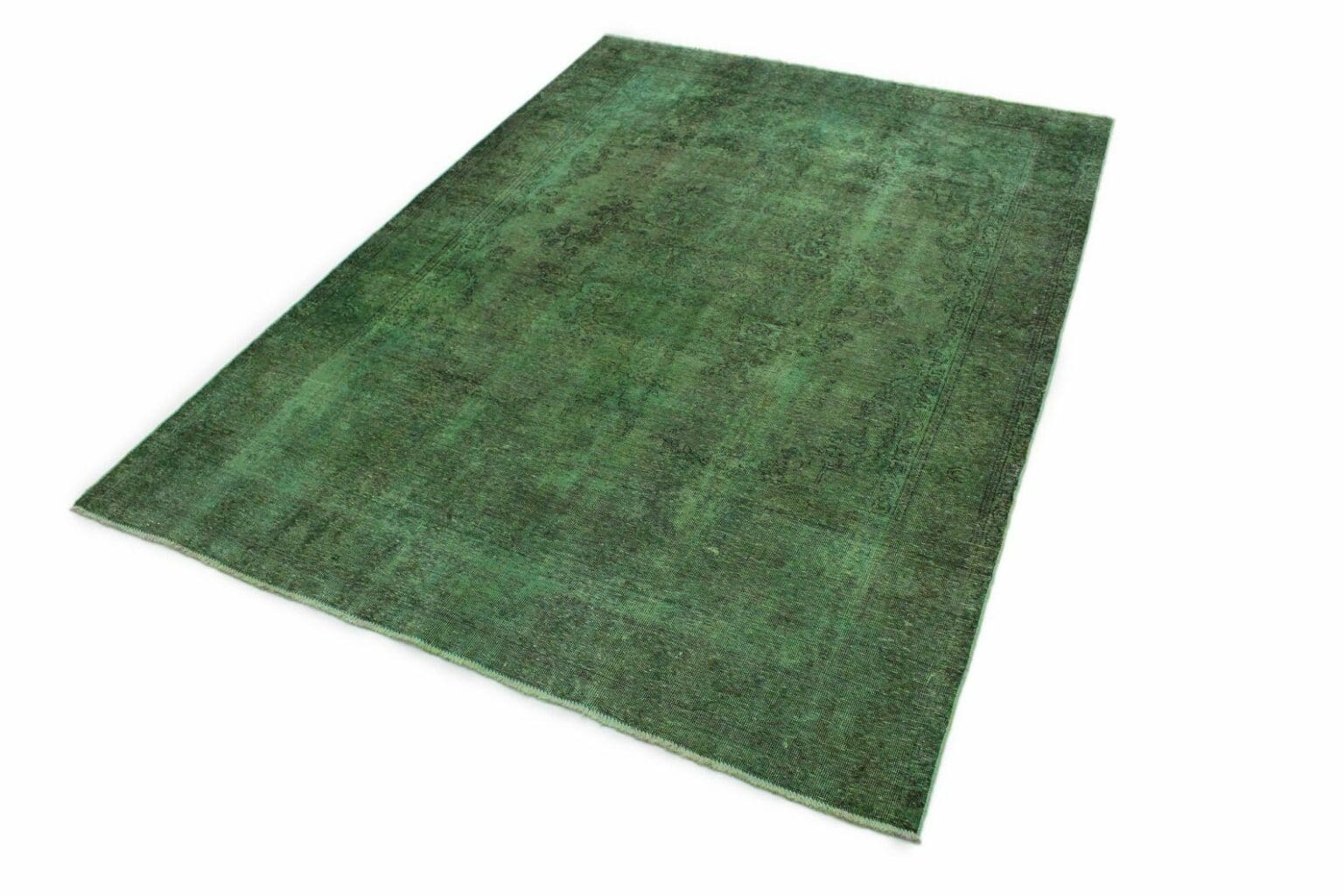
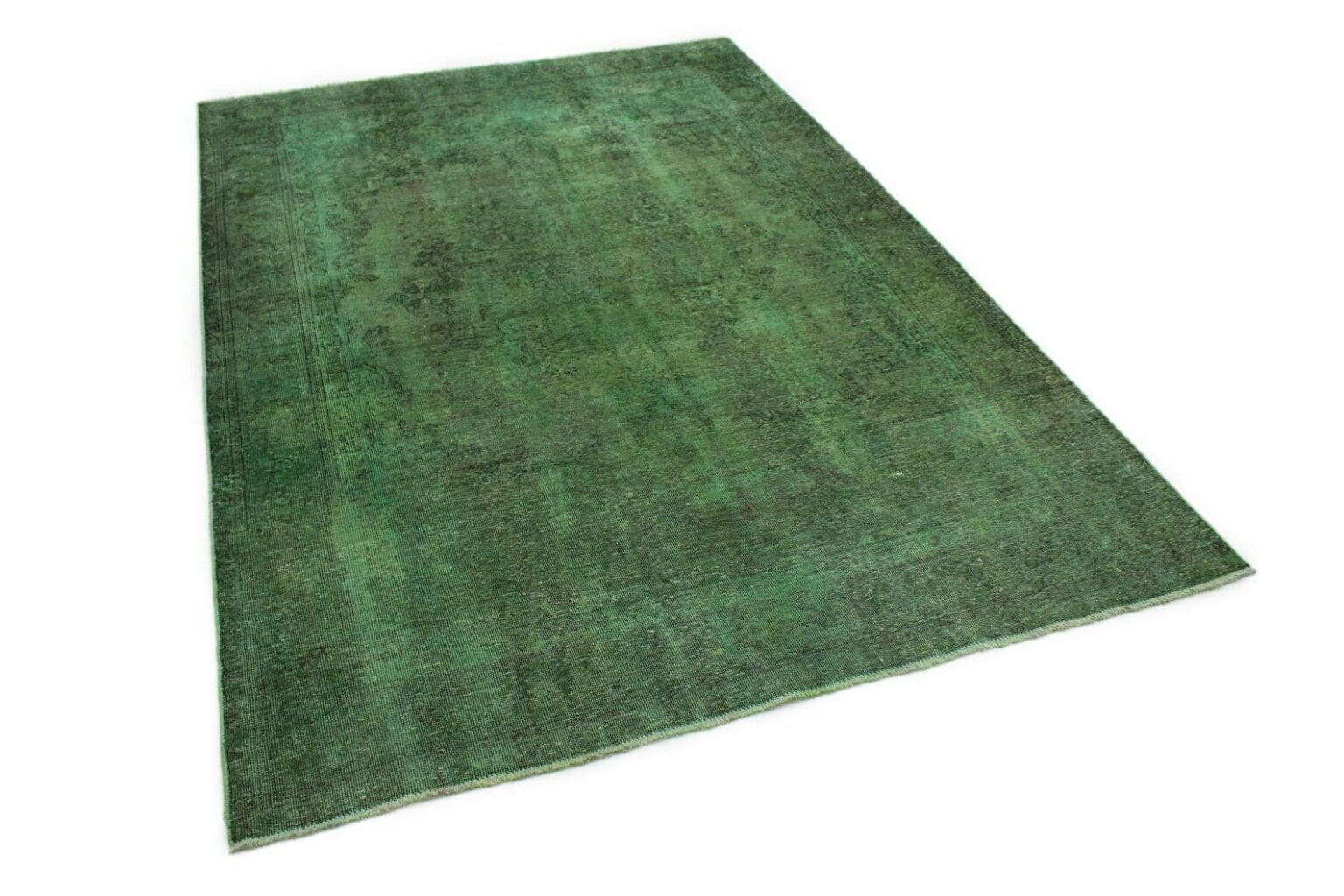
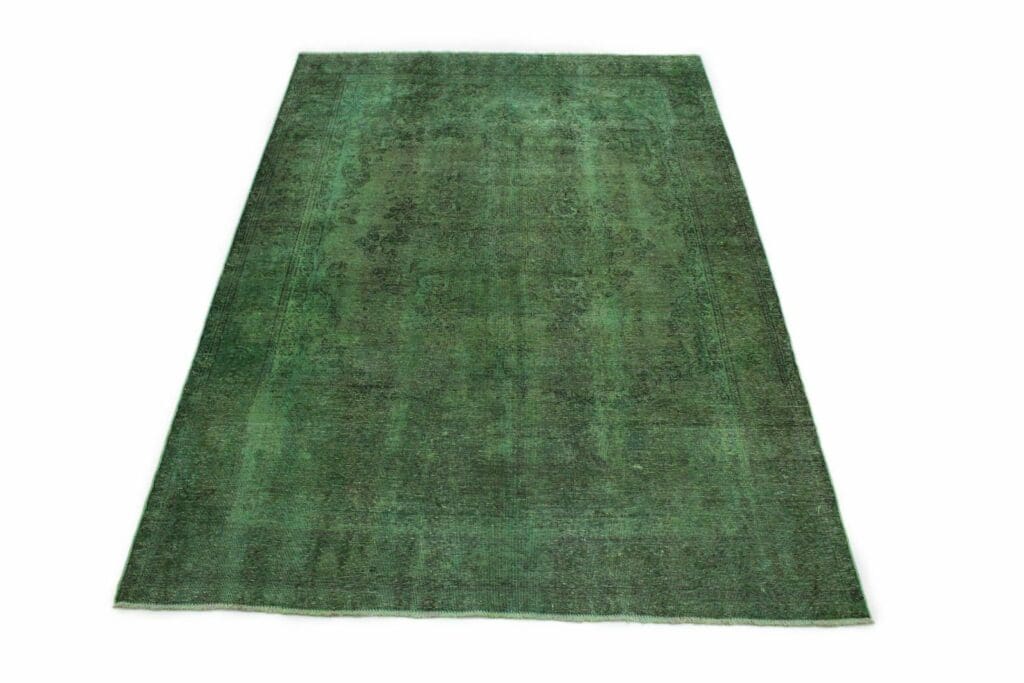
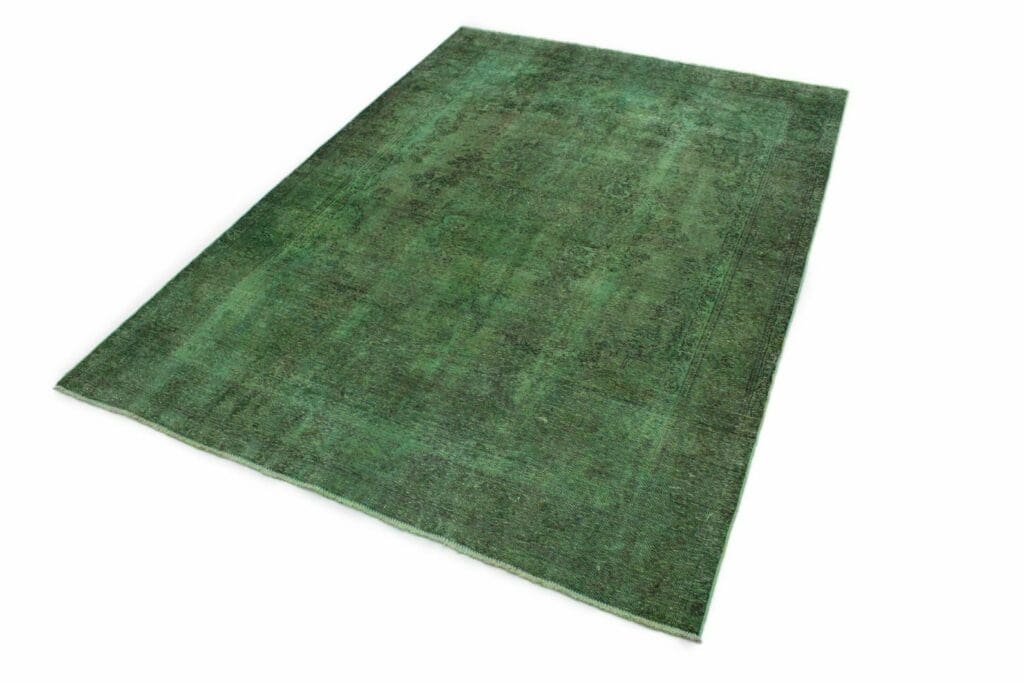
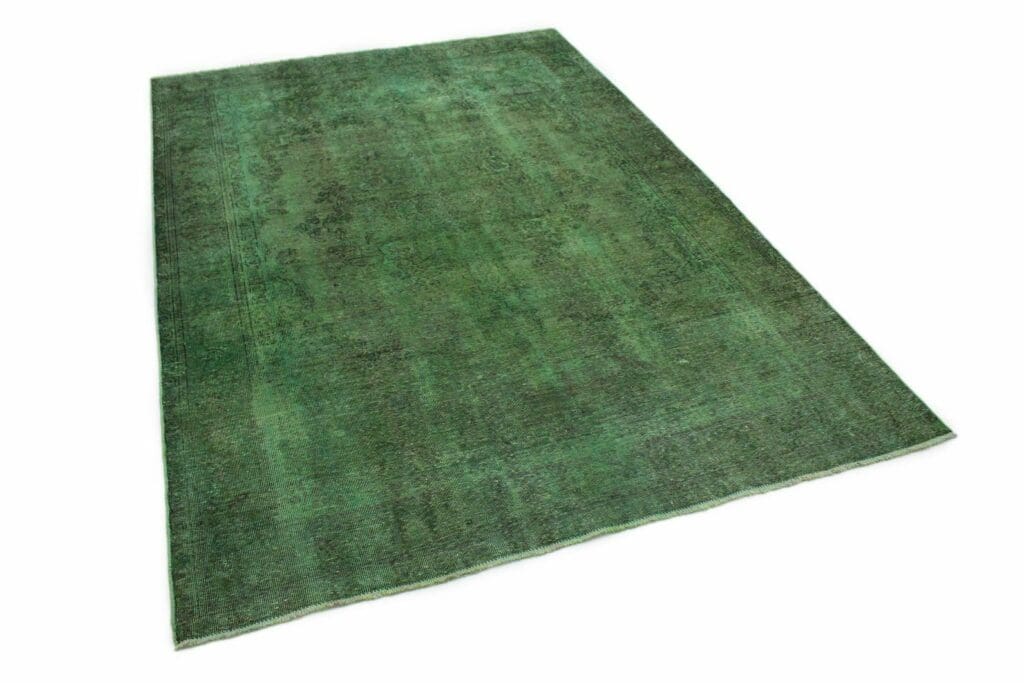
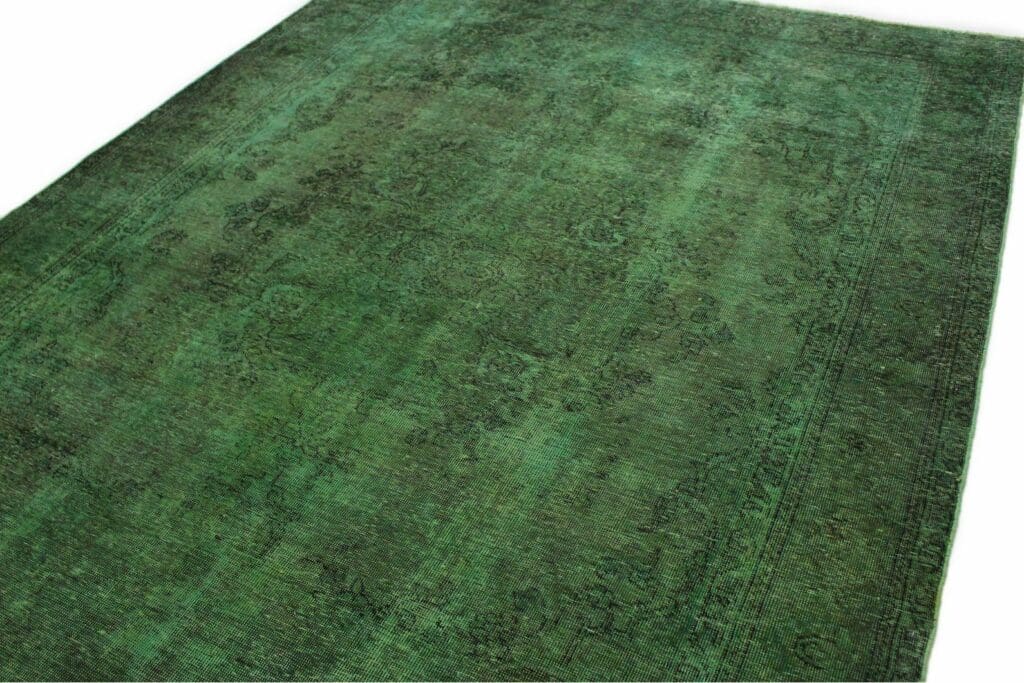
Hand-knotted Oriental rug | Knot density: particularly high | Material: wool and cotton | Size: 283 x 198 cm | Pattern: green vintage design with overdyeing | Condition: new with tag
This green Oriental rug is hand-knotted and made as a one-off piece. Its materials are hand-spun wool and cotton. Wool provides the defining pile material and is associated with a soft yet durable textile surface, while cotton completes the stated material combination. In hand-knotting, each knot is inserted individually into the prepared structure. The result is a distinct textile object rather than an industrial product repeated in identical units.
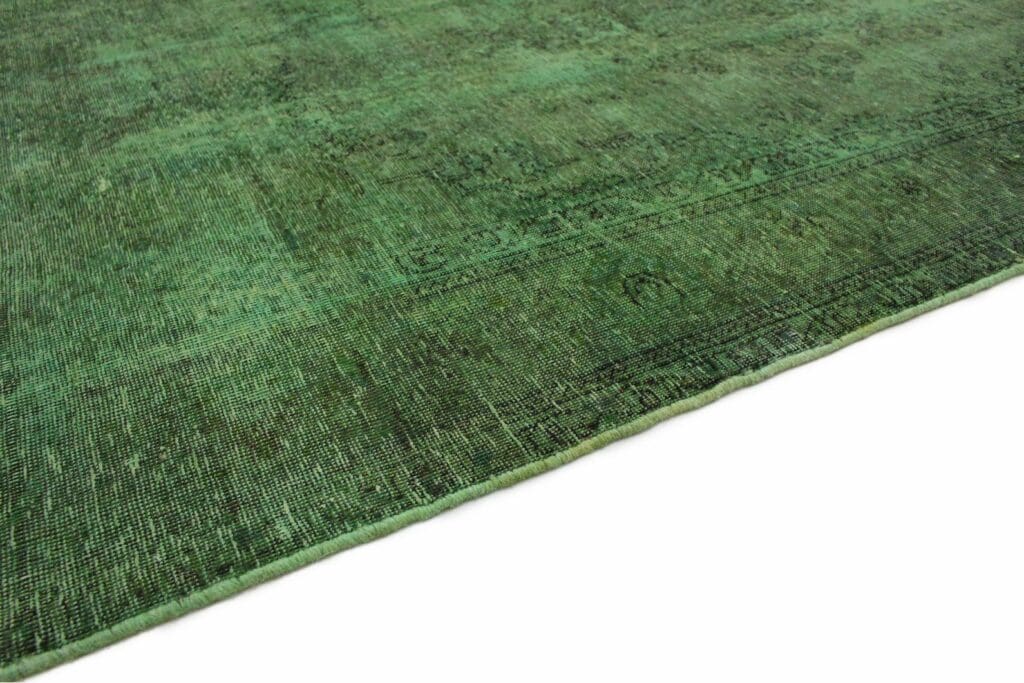
The knot density is particularly high. Hand-knotting builds the pile one knot at a time, after which the rows are secured and the surface is trimmed and finished. In general, a high knot density allows lines, fields and small pattern variations to be rendered with greater control. Hand-spun wool also gives the pile a textile irregularity that differs from a mechanically uniform surface. Cotton forms part of the material specification, while the overall construction links this rug to the established craft of oriental rug making.
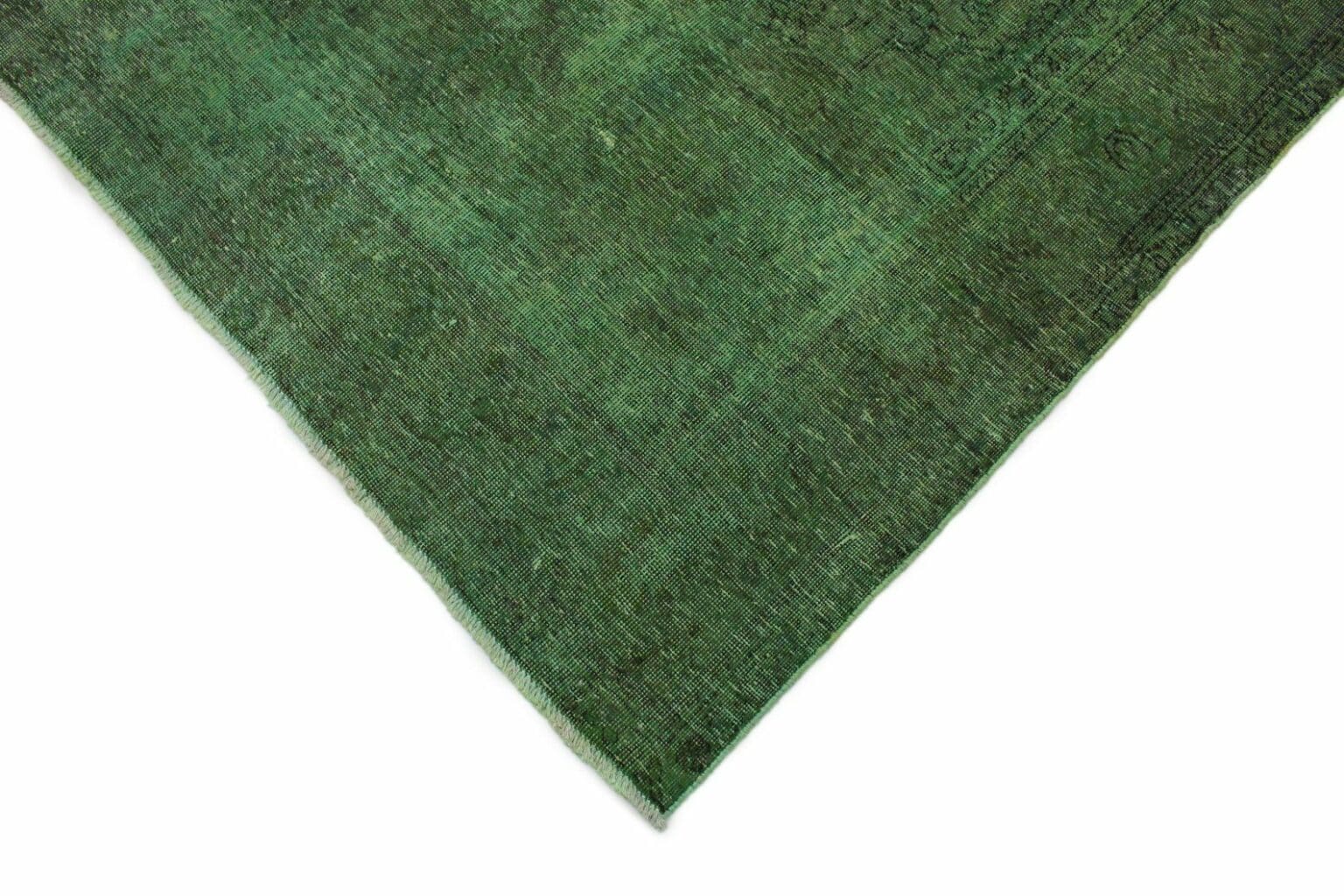
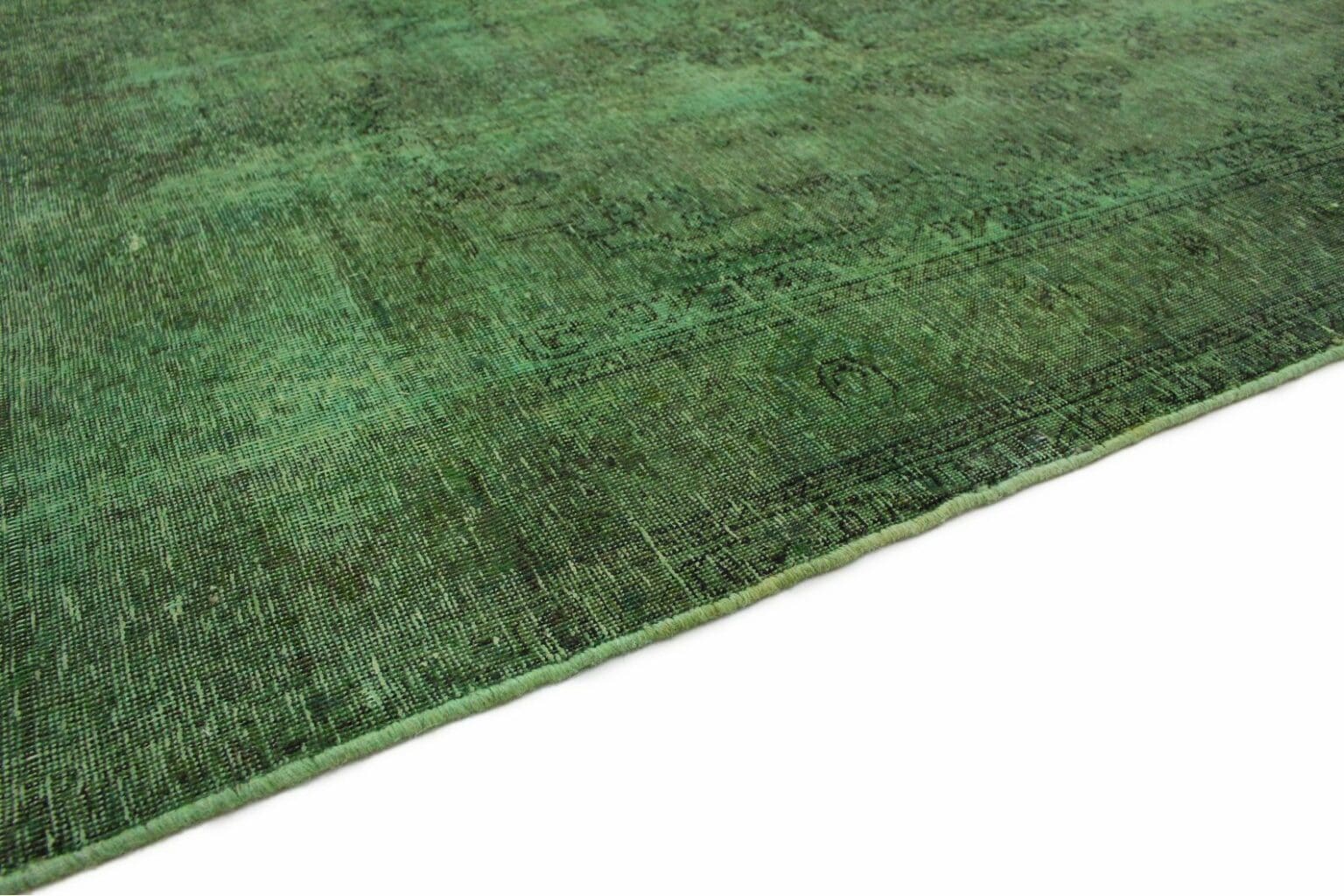
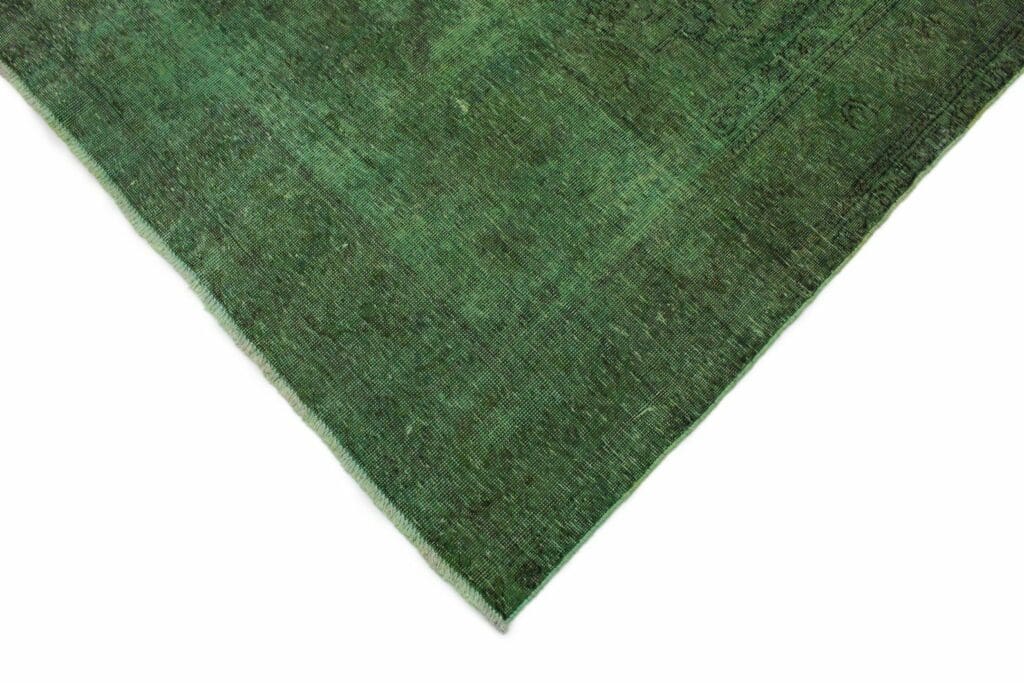
An individual overdyeing process contributes directly to the appearance. The already constructed surface is given an additional colour treatment to create the intended modern vintage design. The resulting worn character is part of the special processing described for this rug. It does not mean that the rug is listed as used: its condition is new with tag. The rug is also suitable for use with underfloor heating, with the specific heating system and floor construction still needing to be considered.
Origin and Tradition
The rug is described as an Oriental rug with the origin stated as the Orient. No particular province or individual weaving centre is named. Here, Oriental rug is therefore a cultural and craft designation rather than a claim that the piece comes from one specific place. For centuries, rug making developed in many parts of the Middle East and Asia. Local traditions differ in their knotting methods, materials, colour systems, drawing conventions and ways of transferring a design onto the loom.
Traditional hand-knotted rugs are made on a vertical or horizontal loom. Warp threads create the underlying framework. Coloured yarn is then tied into individual knots, while weft threads help secure each completed row. After repeated stages of knotting and finishing, the pile is clipped and the surface is evened. This method gives hand-knotted rugs a particular handle and an individual visual character. Even when a design follows a plan, each knot is made under slightly different conditions, which is one reason a hand-knotted piece can be presented as a one-off.
Oriental rugs have historically served purposes beyond covering a floor. They could define seating areas, add warmth, divide interiors and provide a textile field for ornament. In Turkey, Persia, the Caucasus and other parts of Asia, rugs have formed part of everyday material culture for centuries. Skills and pattern knowledge were passed through workshops, families and local communities, with each tradition developing its own balance between structure and variation. The broad term Oriental rug brings these interconnected histories together without suggesting that they are all identical.
Modern Oriental rugs can combine a traditional making method with a contemporary treatment of colour and surface. They do not have to imitate an old rug in every respect. In this case, the individual overdyeing process adapts the colour effect and supports a current vintage interpretation, while the hand-knotted construction remains rooted in established rug-making practice. The piece is described as a modern designer rug and at the same time belongs to the wider tradition of hand-knotted Oriental rugs.
The term Oriental does not identify a single visual language. Some regional rugs use precise geometric repeats, some favour floral drawing, and others combine medallions, borders and field ornaments in different ways. Their appearance depends on the working tradition as well as on the materials and finishing methods. This broader context is relevant to the present rug because its design draws on the visual vocabulary associated with Oriental rugs while the overdyeing gives the surface a distinctly modern vintage effect.
Design and Pattern
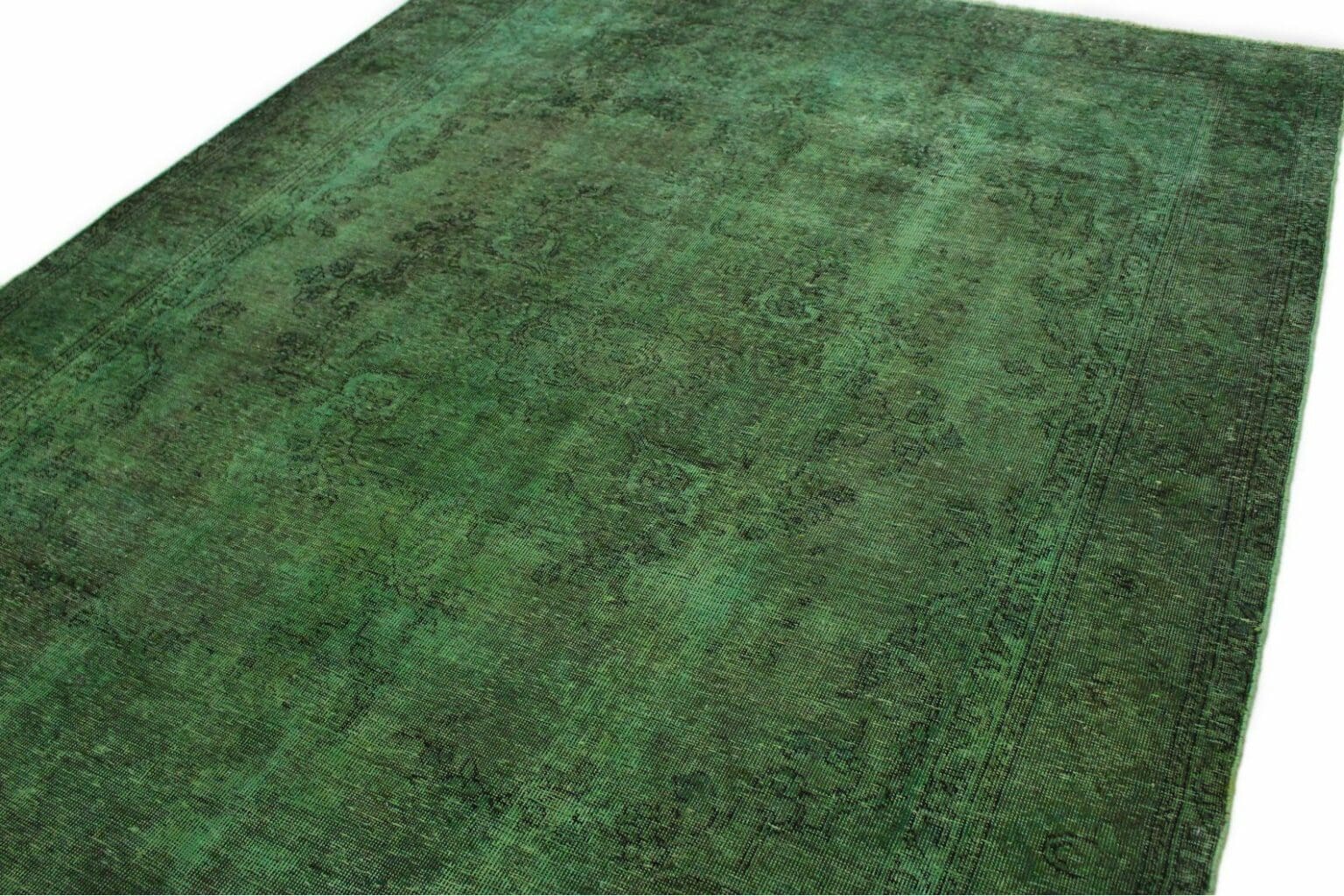
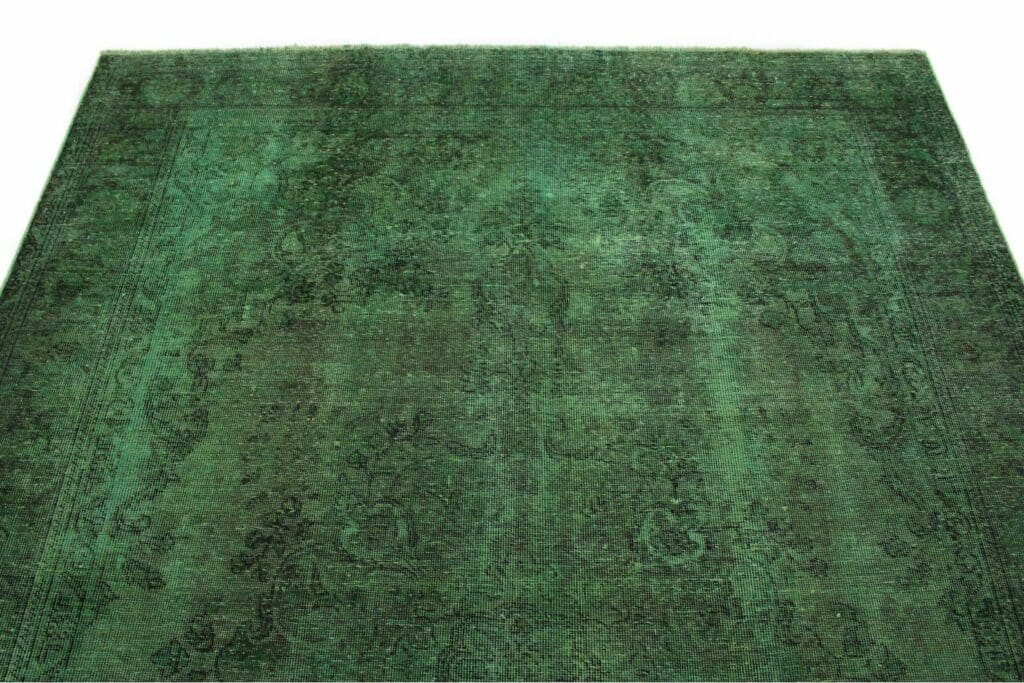
The design of this one-off is defined by a green colour and a vintage appearance. The green tone gives the surface a cohesive, calm presence and can be placed in both contemporary and more traditional interiors. The pattern is described as individual. Its effect therefore comes not from a mass-produced printed motif, but from the relationship between hand-knotting, the arranged textile surface and the subsequent colour treatment.
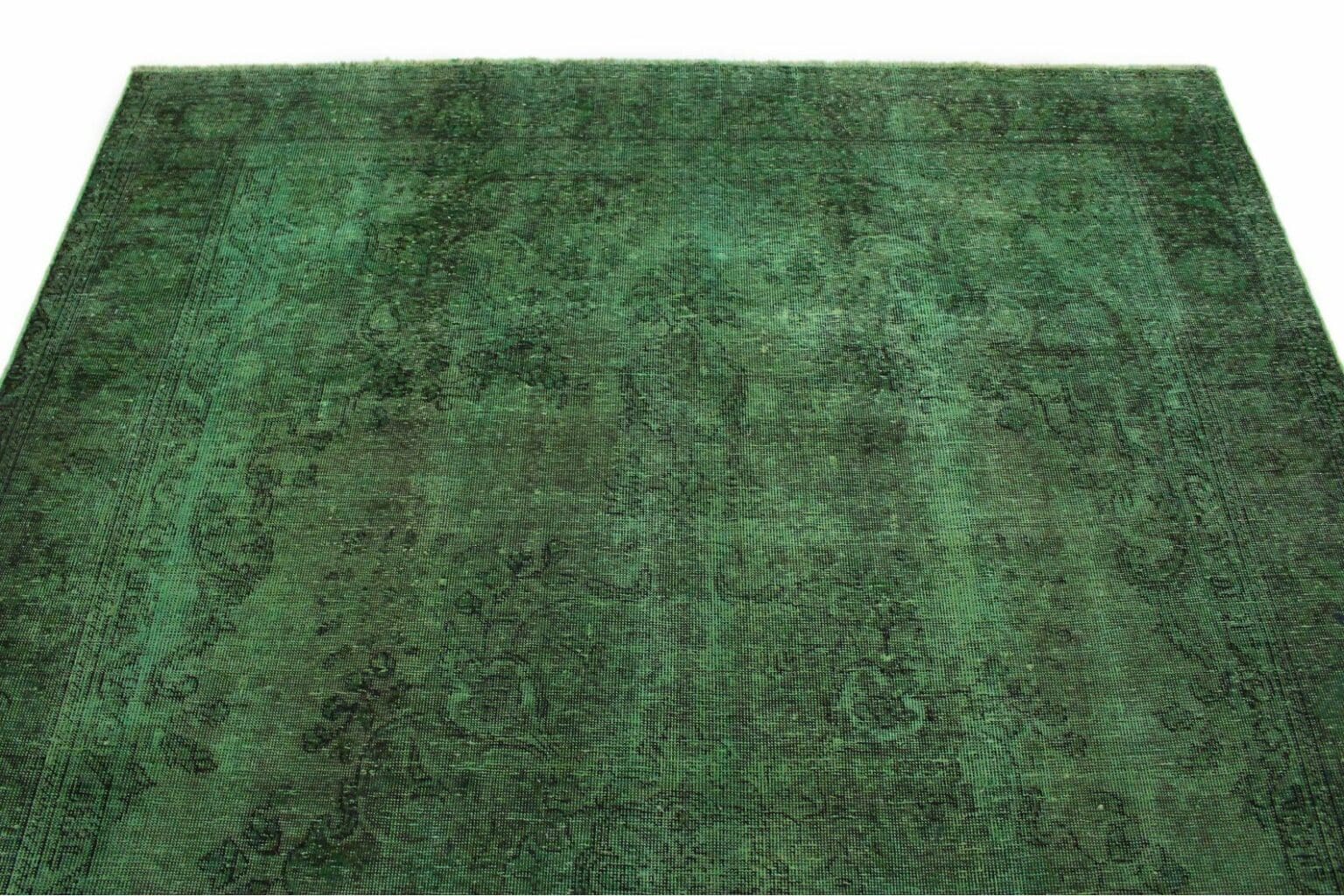
Traditional Oriental rugs may contain geometric forms, floral imagery, medallions, scrolling vines or regularly structured borders. These elements are drawn differently across weaving traditions. Geometric designs often rely on repeated units, balanced axes and clear intervals, while floral designs use leaves, stems and blossoms as ornamental forms. On a rug with a vintage design, the colour and surface treatment can soften those structures, place layers over them or make parts of the drawing appear deliberately irregular. The result is a meeting of inherited pattern ideas and a contemporary visual language.
Overdyeing is a central part of this rug’s appearance. It changes the way the colours are perceived and gives the green surface its characteristic depth. The worn character created by the process is intentional and belongs to the specified special treatment. At the same time, the hand-knotted structure remains the foundation of the design. Differences in surface, colour application and pattern visibility help explain why the piece has an individual appearance and is offered as a unique rug.
Vintage rugs are often designed to connect historical references with a restrained present-day palette. This makes them compatible with simple furniture as well as with classic wood tones and other textile furnishings. Green can work as a linking colour within a room without requiring one particular period of interior design. Its effect will depend on daylight, flooring, furniture and the surrounding colours. The rug may be used in a living room, bedroom or office, as described for its possible settings.
The particularly high knot density generally supports a differentiated rendering of pattern. In a hand-knotted rug, the drawing is not printed onto a finished textile; it is created through the arrangement of coloured knots and the later finishing of the pile. Combined with overdyeing, this can give the design a layered textile quality. The present piece is therefore characterised by the interaction of its green colour concept, individual surface treatment, hand-knotted structure and intentionally worn vintage appearance.
Special Features
The combination of hand-knotted construction, hand-spun wool and cotton, and an individual overdyeing process is a defining feature. This rug is a one-off and has the worn character expressly associated with its special processing. It is nevertheless offered in new condition with tag. That combination distinguishes a deliberately created vintage appearance from a statement about age or previous use; no historical age is specified.
The rug is suitable for underfloor heating. Regular vacuuming is given as a suitable part of routine care. For stains, gentle cleaning with an appropriate carpet cleaner is recommended. Occasional cleaning helps maintain the surface in good condition. Direct sunlight should be avoided to help prevent the colours from fading. The right treatment in an individual case depends on the type of stain and the conditions in the room, so a gentle method is appropriate for the hand-spun wool and overdyeed surface.
FAQ
How should I care for this green vintage Oriental rug?
Regular vacuuming is the basic care recommended for the rug. Direct sunlight should be avoided because it can contribute to colour fading. If a stain occurs, use gentle cleaning with a suitable specialist carpet cleaner. Occasional cleaning helps keep the surface in good condition. Strong agents or an untested treatment should be avoided, since the rug combines hand-spun wool with an overdyeed surface and therefore calls for a careful approach.
How can I assess the quality of an Oriental rug?
Knot density, the wool used and the level of pattern detail are important points of reference. In general, a higher number of knots per area allows finer and more detailed work and can be associated with a longer service life. This rug is described as having a particularly high knot density. Its hand-knotted construction, hand-spun wool and individually developed colour and pattern effect provide further information about the way the textile was made.
Can this rug be used with underfloor heating?
Yes. This Oriental rug is suitable for use with underfloor heating. For effective heat transfer, a rug should not be excessively thick; the instructions for the particular heating system and floor construction should also be followed. Even heat distribution and an appropriate room temperature support suitable everyday use. Compatibility with underfloor heating is one of the properties expressly stated for this piece.
To provide the best experiences, we use technologies like cookies to store and/or access device information. Consenting to these technologies will allow us to process data such as browsing behavior or unique IDs on this site. Not consenting or withdrawing consent, may adversely affect certain features and functions.
Functional Always active
The technical storage or access is strictly necessary for the legitimate purpose of enabling the use of a specific service explicitly requested by the subscriber or user, or for the sole purpose of carrying out the transmission of a communication over an electronic communications network.
Preferences
The technical storage or access is necessary for the legitimate purpose of storing preferences that are not requested by the subscriber or user.
Statistics
The technical storage or access that is used exclusively for statistical purposes.The technical storage or access that is used exclusively for anonymous statistical purposes. Without a subpoena, voluntary compliance on the part of your Internet Service Provider, or additional records from a third party, information stored or retrieved for this purpose alone cannot usually be used to identify you.
Marketing
The technical storage or access is required to create user profiles to send advertising, or to track the user on a website or across several websites for similar marketing purposes.
 SECURE PAYMENT
 SHIPPING PARTNERS


