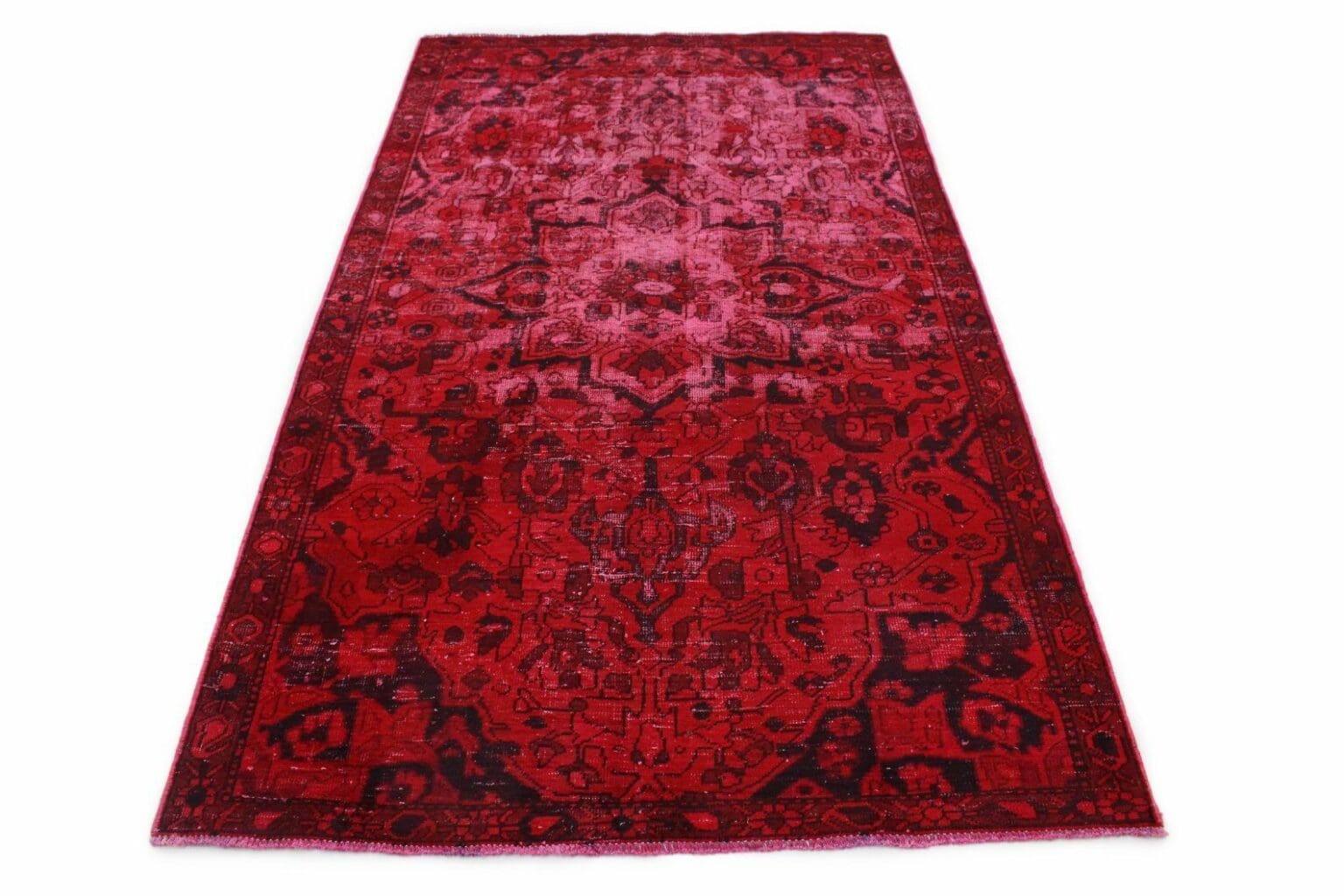
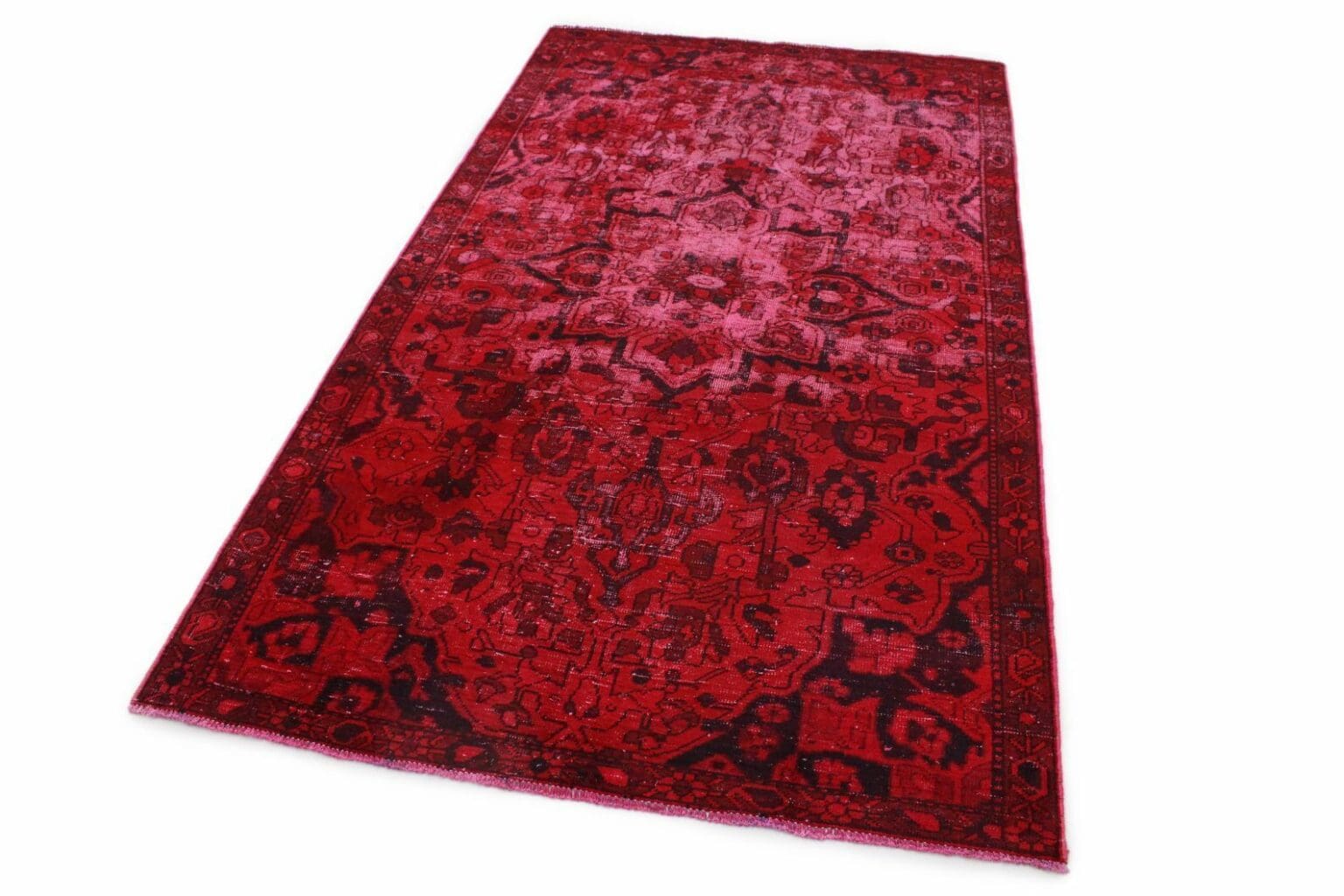
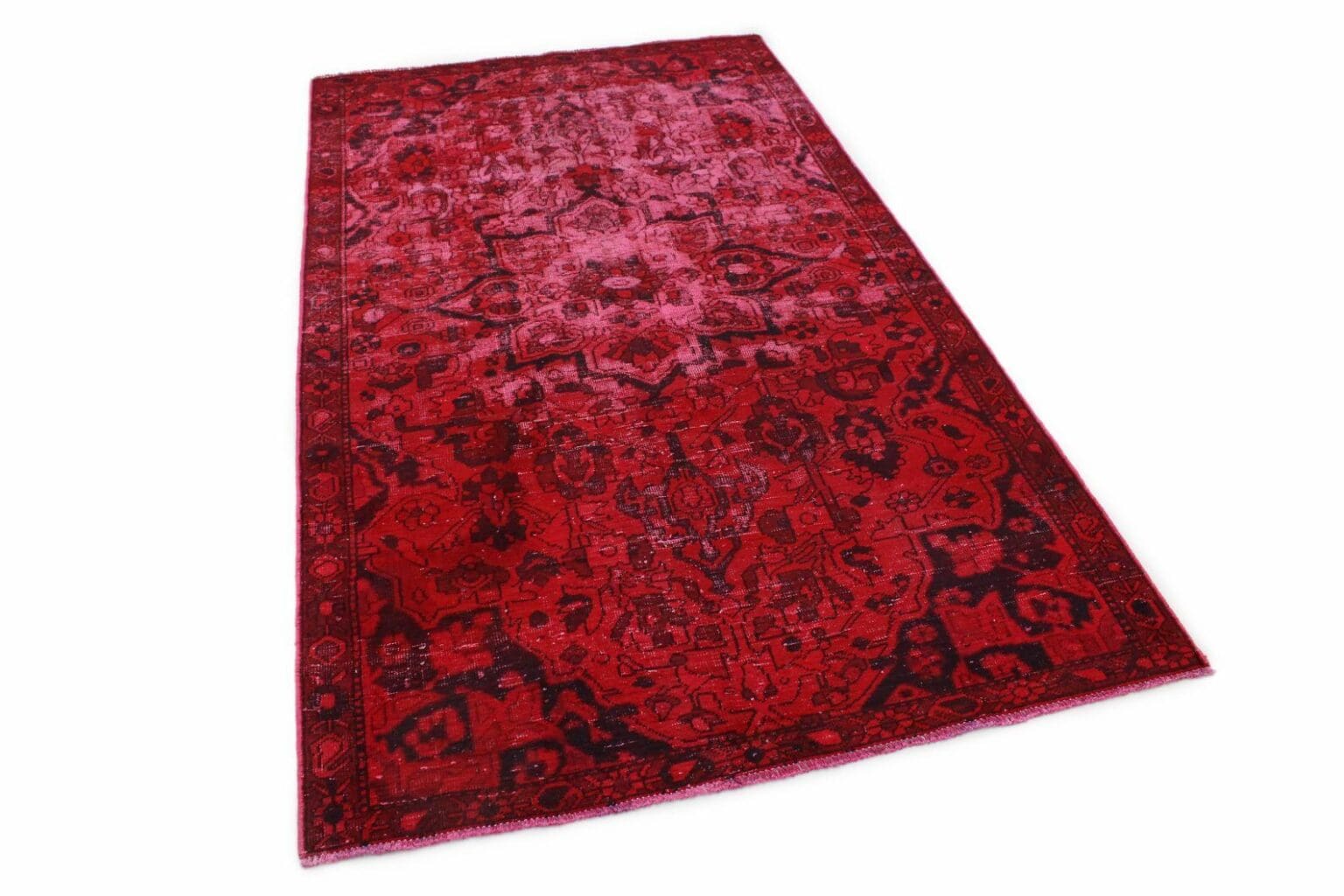
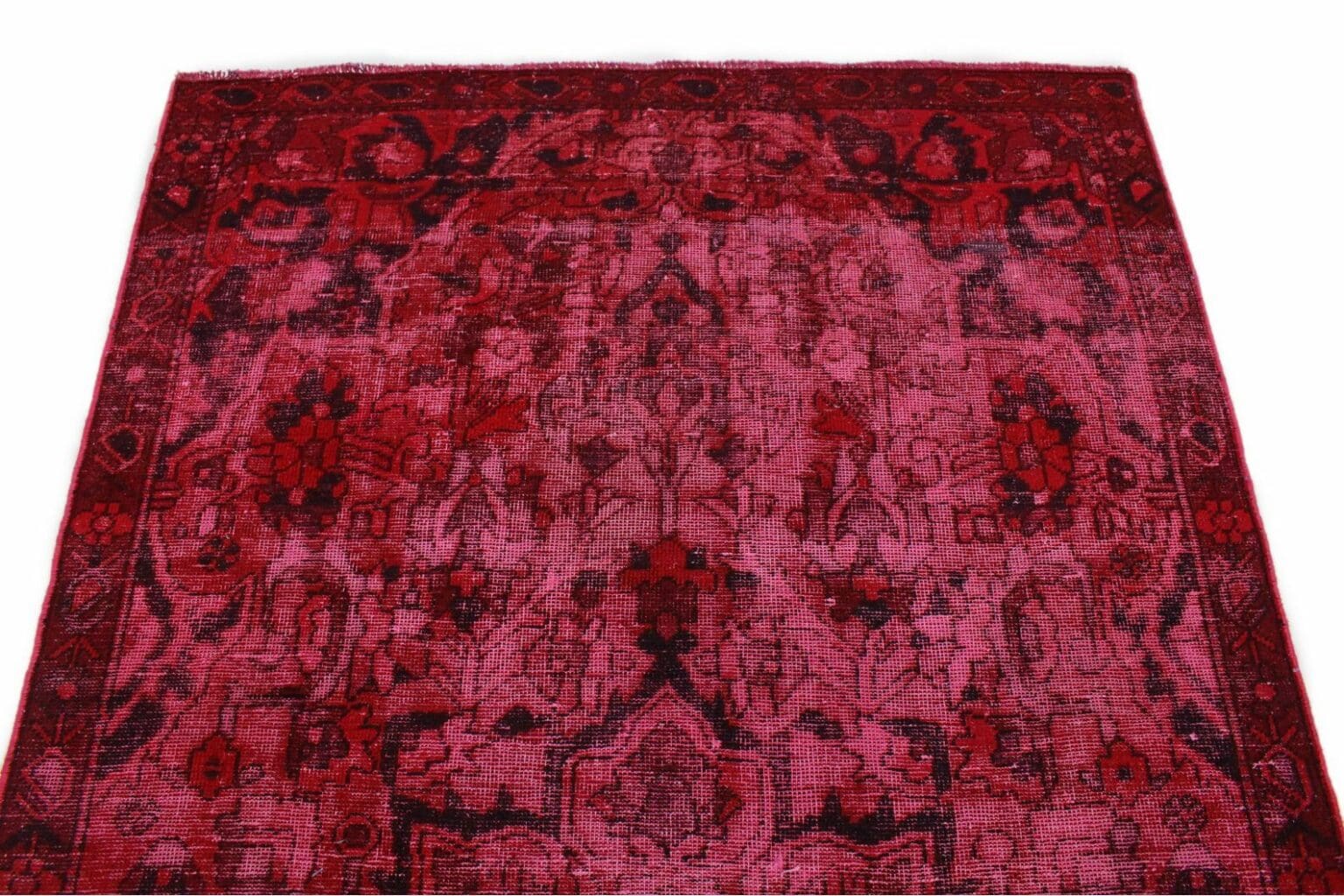
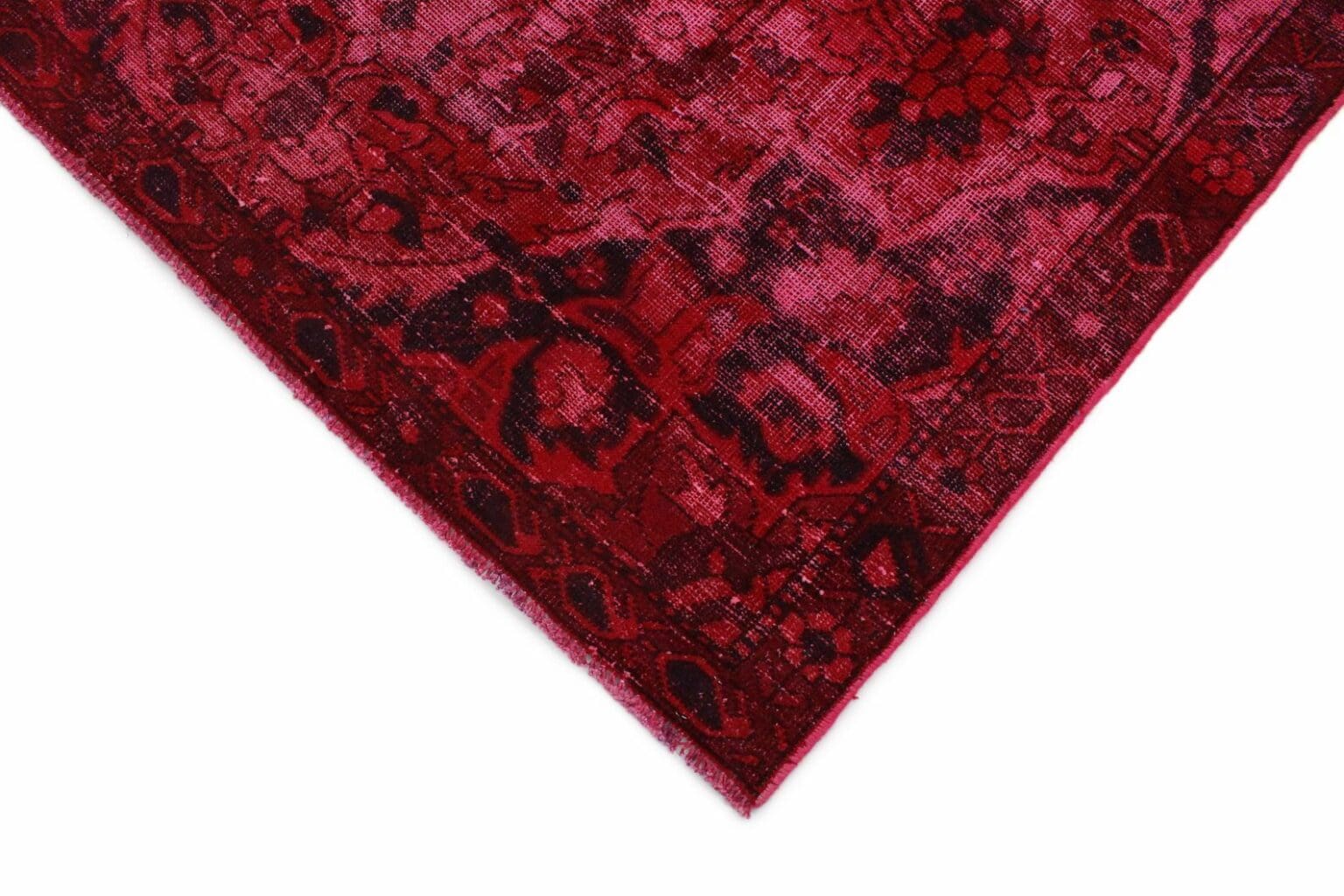
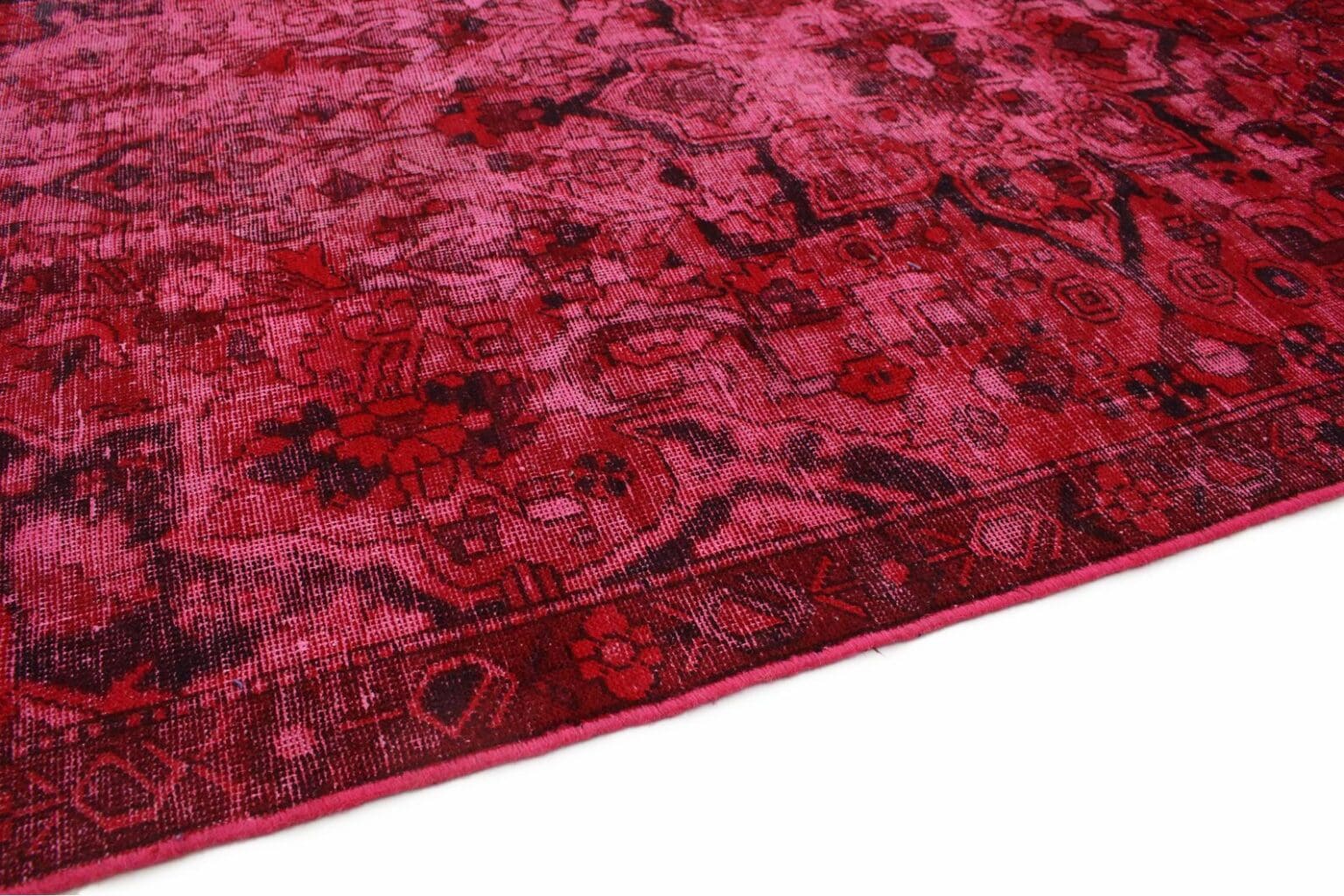
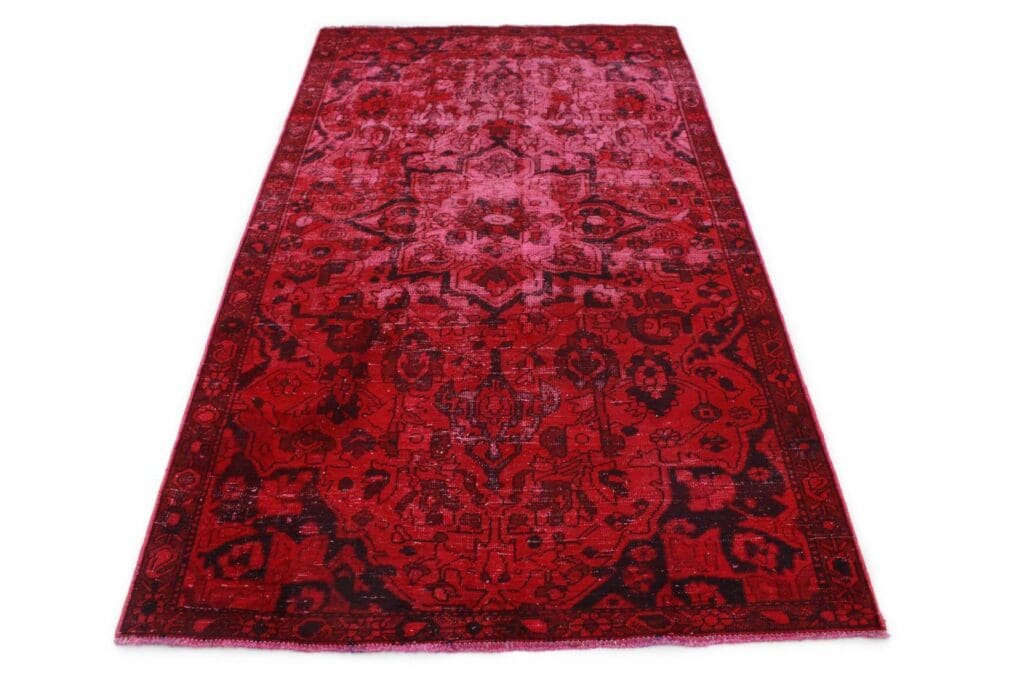
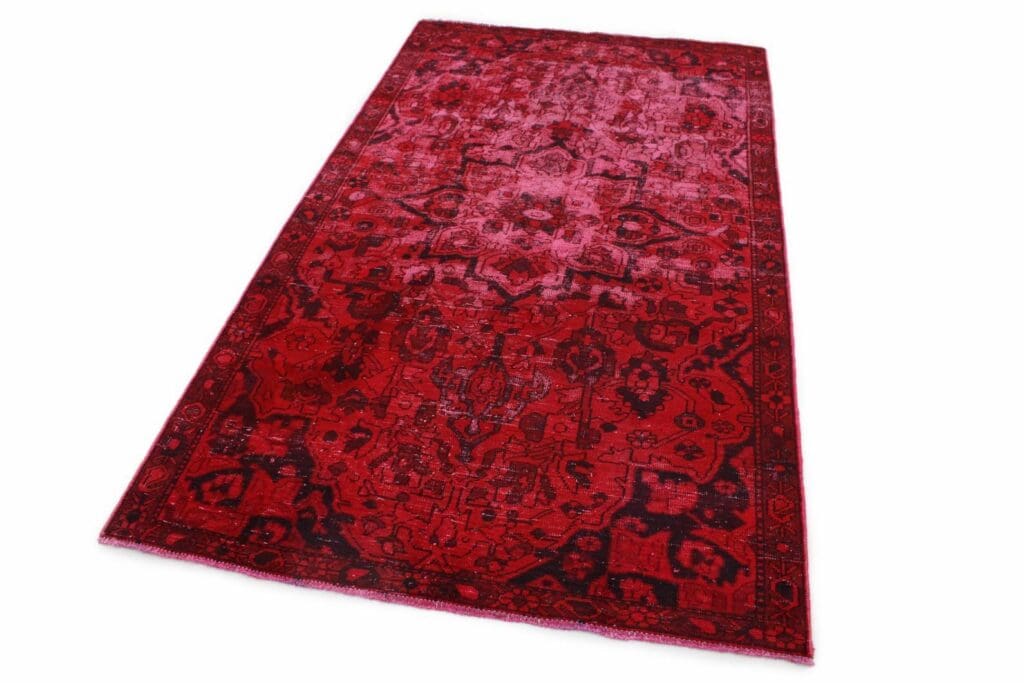
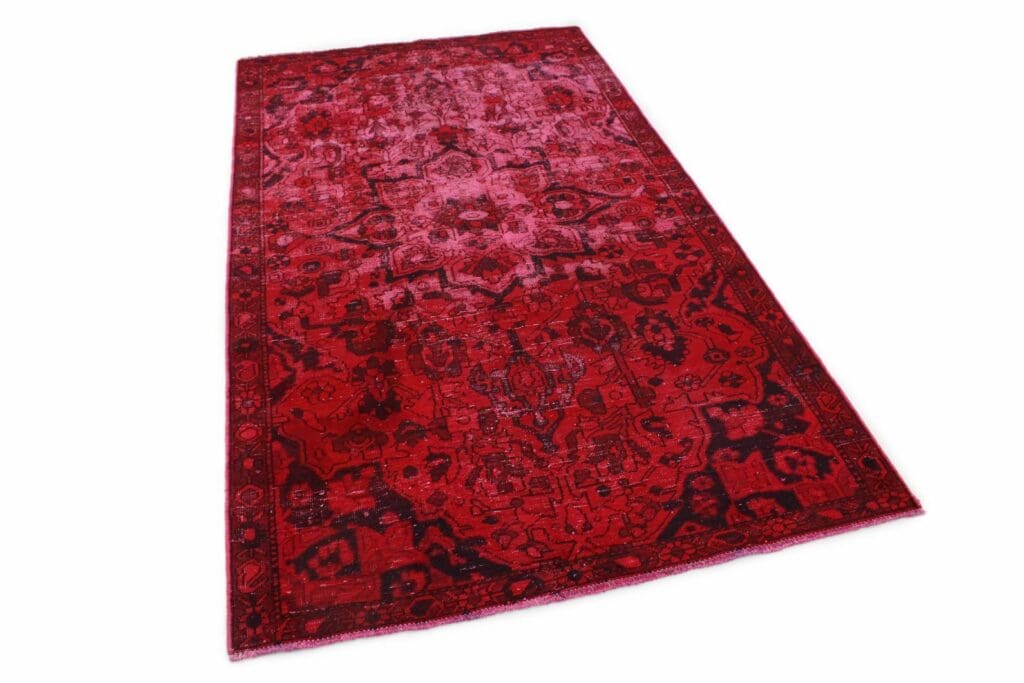
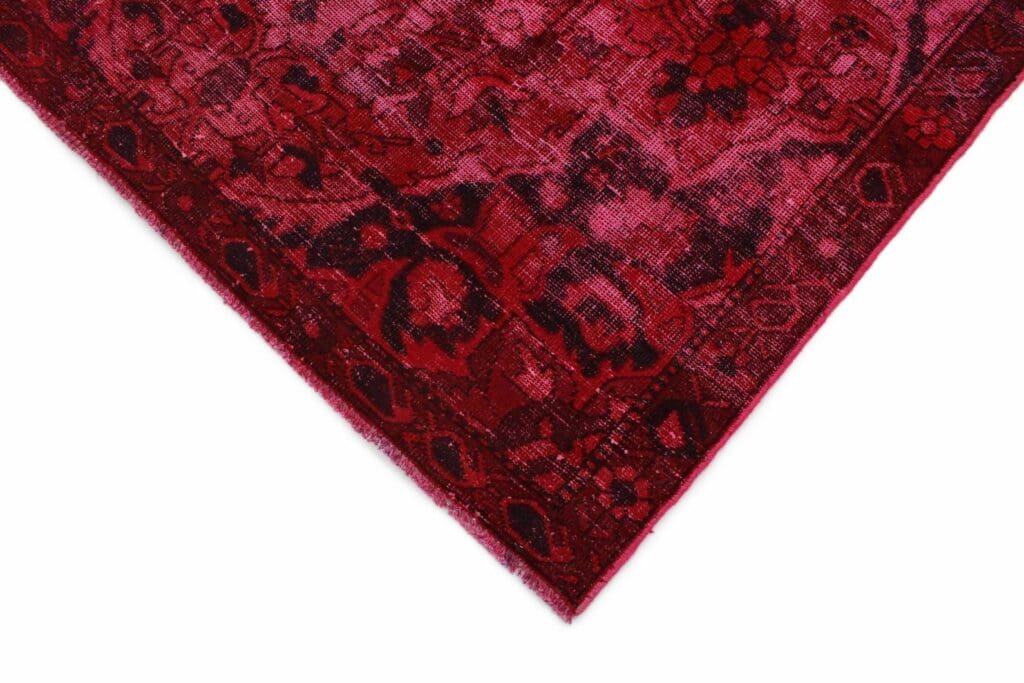
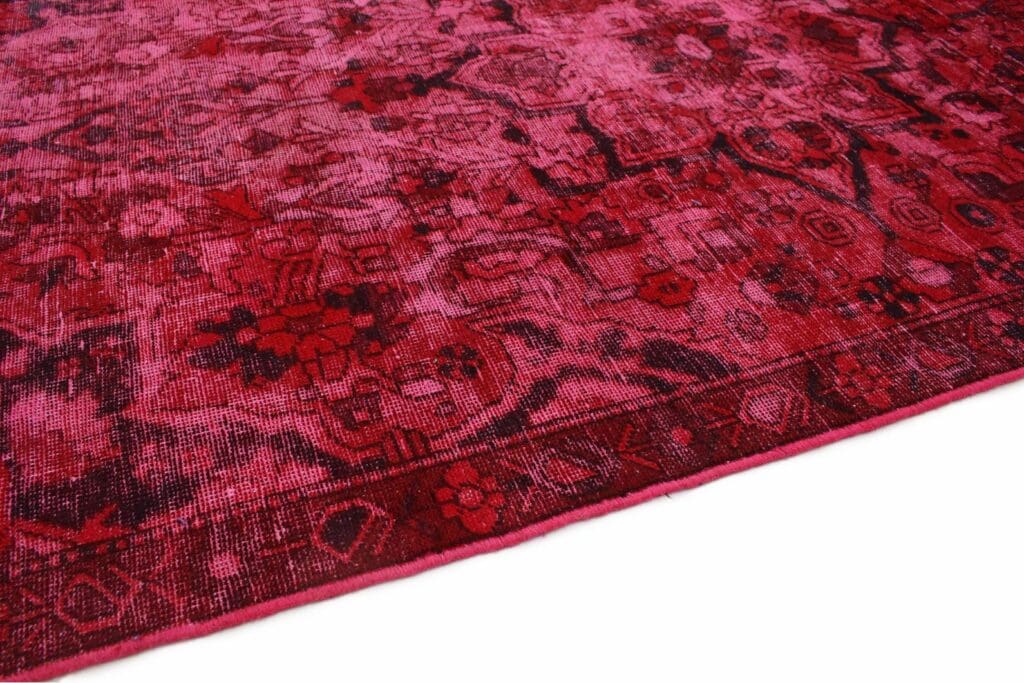
Oriental Rug 274×151 cm Wool Hand-knotted
€ 1041
Hand-knotted Oriental rug | Knot density: high | Material: hand-spun wool and cotton | Size: 274×151 cm | Pattern: overdye oriental structure | Condition: new with tag
Sold out
- ✓Free Shipping in EU
- ✓2-5 Business Days Delivery
- ✓14-Day Return Policy
- ✓Worldwide Shipping on request
 SECURE PAYMENT
 SHIPPING PARTNERS
Inventory number: FE56740D
Description
Oriental Rug
Material and Craftsmanship
This hand-knotted Oriental rug is made from hand-spun wool and cotton. The description names both materials together and does not assign either one specifically to the pile or the warp. Hand-spun wool is produced by twisting prepared fibres into yarn by hand. The thread can retain a gently varied character, depending on how the fibres are prepared and spun. Cotton can be made into a firm, even yarn and has long been used in textile work. The exact function of the cotton in this rug is not specified.
Hand knotting is a construction method in which each knot is inserted individually into the foundation. The knotter works the yarn around the warp threads and secures the rows with weft threads. The rug grows gradually, row by row, rather than receiving a pattern through printing or industrial surface treatment. Its design is created by the placement of differently coloured yarns within the structure. The description records a high knot density, meaning that the knots are worked in a closely arranged sequence.
Rug making normally involves several separate stages. The foundation is prepared from warp and weft threads, after which coloured yarn is introduced knot by knot. Once the knotting is complete, the surface may be trimmed, cleaned and prepared for use. The source does not list every finishing operation for this particular piece. It does identify the hand-spun wool, cotton, hand-knotted construction and high knot density. These details describe the recorded workmanship without adding an unlisted technical specification.
Wool has a long place in rug making because it can be spun into yarn and formed into a textile surface with varied tactile qualities. Depending on the fibre and the treatment of the yarn, a wool surface may feel soft, firm or textured. Cotton has a different fibre structure and can be used alongside wool in textile construction. The combination of fibres is part of the stated material description. No percentage, fibre allocation or additional material is given for this rug.
The rug is offered as a one-off piece. A hand-knotted item develops its individual appearance through the precise sequence of knots, the distribution of colour and the treatment of its surface. Even related designs can differ because manual work is not reproduced in exactly the same way. Its condition is described as new with tag. That statement records how the piece is presented for sale and does not claim any additional restoration or undocumented finishing process.
Origin and Tradition
The rug is identified as an Oriental rug from the Orient. No particular province, city or country of manufacture is named. Orient is therefore the general origin designation supplied for this piece. The wider Oriental rug tradition includes many regions and workshops with different approaches to foundations, yarns, knotting, colours and patterns. Without a more precise place name, the rug cannot be assigned to one regional school or production centre.
The history of Oriental rugs includes a wide range of textile practices. Rugs have been made in family settings, village communities, small workshops and larger urban productions. These different settings can influence how the foundation is prepared, how yarn is selected and how a pattern is planned. Some designs are preserved through repeated teaching, while others change in response to materials, interiors and the preferences of the maker or customer. The broad word Oriental reflects this diversity rather than identifying one particular community for this item.
A hand-knotted rug is built in stages. Warp threads are first arranged to create the lengthwise foundation. Weft threads stabilise that framework as the coloured yarn is inserted knot by knot. Each row depends on the structure already created, and the tension of the threads affects the developing surface. Knot density, row alignment and later finishing all influence the visual result. A high knot density can support closely worked detail, but it is a technical description and not evidence of a particular geographical origin.
Oriental rugs have traditionally combined practical use with visual design. They have served as floor coverings, insulating textiles and elements of domestic interiors. At the same time, the rug surface has provided space for repeated forms, borders, fields and colour relationships. Floral motifs, scrolling lines, geometric compartments and abstract signs appear in many regional traditions, although their forms and meanings vary. General knowledge of these categories gives context to Oriental rugs but does not assign an unrecorded motif to this example.
Knowledge of the craft has often been passed on through practical instruction. Spinning, dyeing, knotting and finishing require different skills, and experienced makers can teach these processes through repeated work. Over time, this creates recognisable regional tendencies as well as personal variations. A hand-knotted rug therefore belongs both to a broad textile history and to the specific manual decisions involved in its making. For this rug, the documented origin remains Orient and the documented method remains hand knotting; a narrower workshop tradition is not supplied.
The vintage designation adds a time frame to the general origin statement. This rug is given an age of 20 to 50 years. That range indicates a period rather than a specific year of manufacture. Its style is described as modern and vintage. Vintage refers to the stated age range, while modern describes the way the overdyed Oriental structure is presented and read in contemporary interiors. Neither term establishes a particular historical school.
Overdyed rugs are associated with a more recent design practice in which an existing Oriental structure receives an additional, broad colour treatment. This can soften contrast, visually connect separate areas or make an earlier pattern appear quieter and more unified. The treatment concerns the surface and its visual presentation. It does not establish a province, a country or a workshop. The pattern recorded for this piece is an overdye Oriental structure.
Design and Pattern
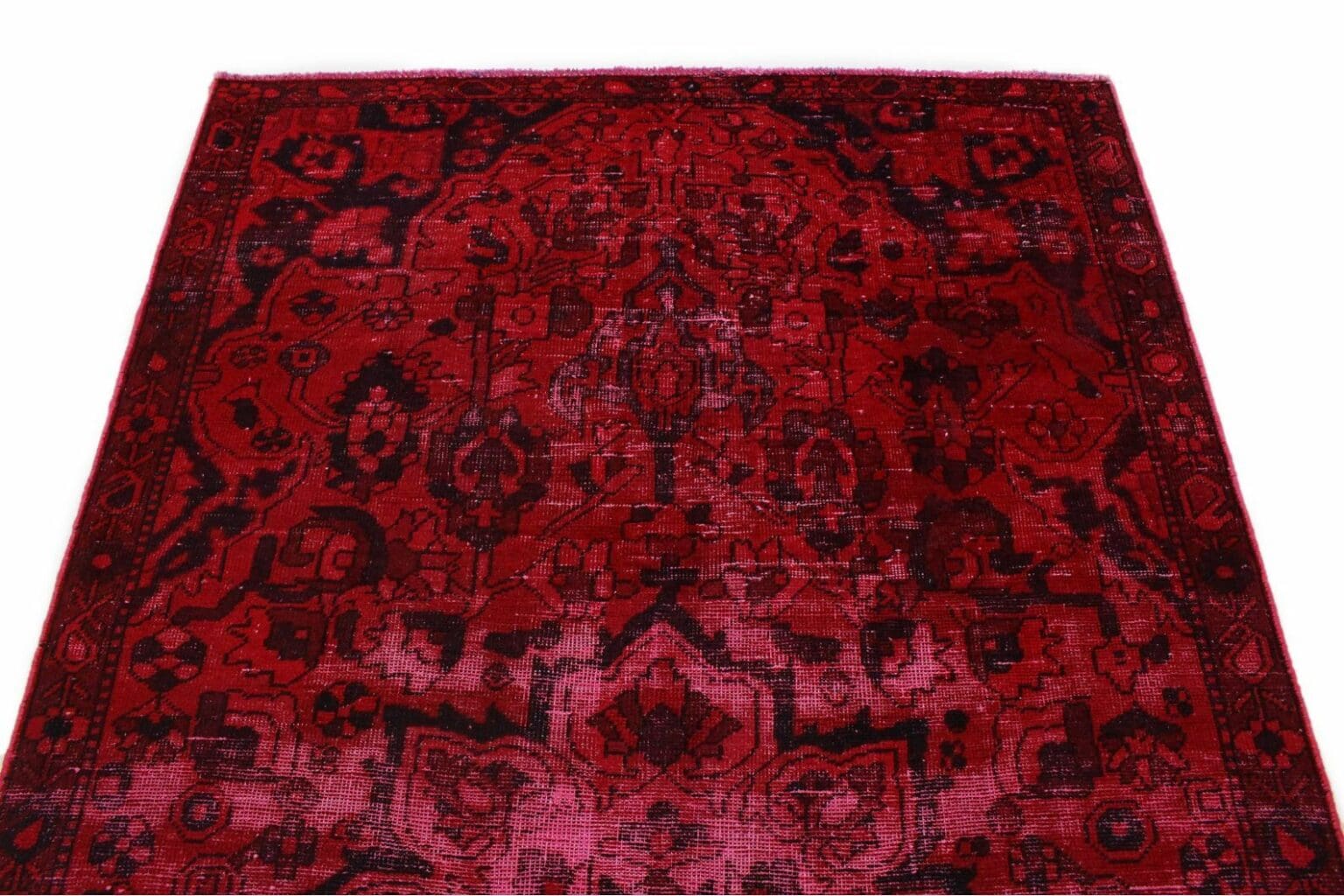
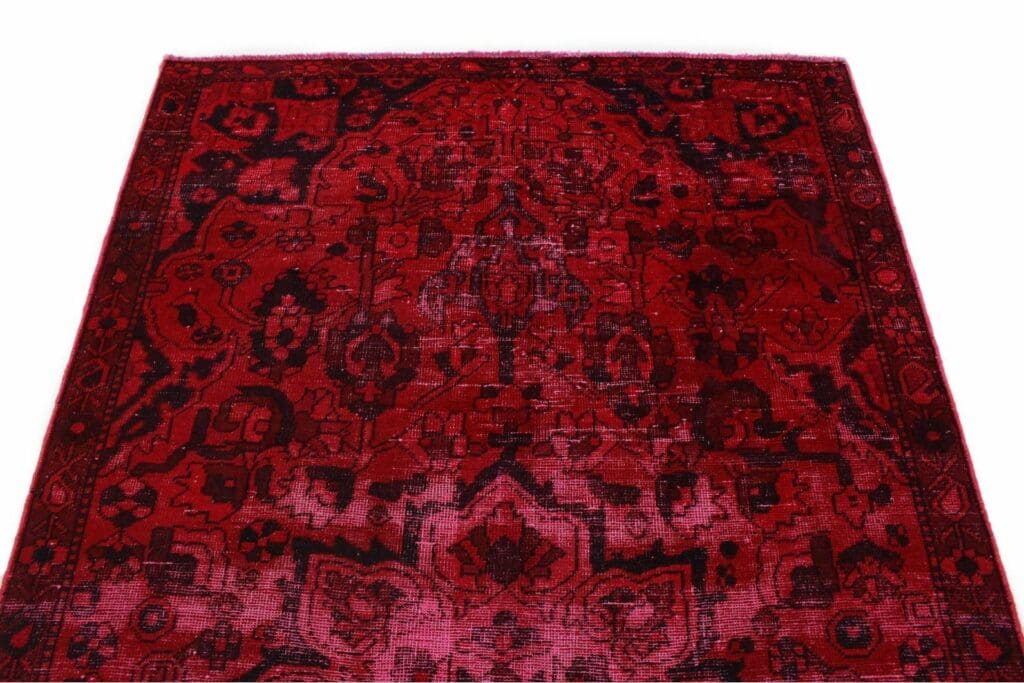
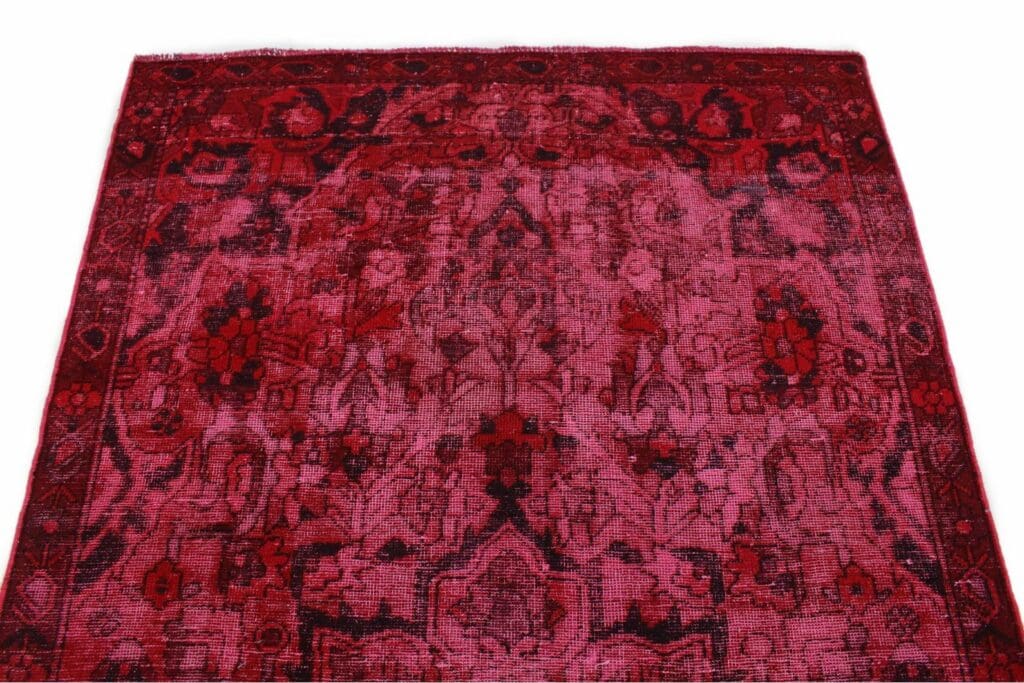
The pattern is described as an overdye Oriental structure. This identifies the combination of an Oriental pattern base and an overdyed surface rather than naming one individual emblem or provincial design. An overdye can place a broad colour effect over the existing arrangement, changing the relationship between field and detail. Parts of the earlier drawing may remain visible, while other areas may appear more subdued or integrated into the overall surface.
Red is the stated main colour of the rug. The longer description also mentions occasional golden tones. These are the recorded colour impressions; no complete palette is supplied. Red has often been used as a field or ground colour in Oriental rug design, where it can bring separate elements together visually. Golden nuances can serve as lighter accents within a related colour arrangement. The way these shades appear may be affected by the yarn texture, pile direction and available light.
Many Oriental pattern traditions use repetition, rhythm and balance. Floral forms can connect areas through stems and scrolling lines, while geometric shapes can organise a field into compartments or borders. These are broad categories within the history of rug design. No specific border, medallion or named regional motif is recorded for this rug, so none of those elements is presented as a feature of the individual piece. The accurate pattern description remains the overdyed Oriental structure.
Overdyeing can change the visual hierarchy of an existing design. Strong contrasts may become softer, and separate pattern areas may read as a more continuous field. The underlying texture can remain perceptible even when the drawing is less sharply defined. This effect is also influenced by the direction of the pile, the thickness of the yarn and the way light falls across the surface. These are general properties of textile and colour surfaces, not additional undocumented characteristics of this rug.
The combination of red and the mentioned golden tones is described as lively and warm. Colour on a hand-knotted rug is not perceived in isolation. Fibre preparation, yarn thickness, knot arrangement, surface trimming and viewing direction can all influence whether a colour appears deeper, lighter or more varied. An overdyed surface may make these changes particularly noticeable. The description does not provide a complete list of colours, so the recorded palette remains limited to red and the sometimes mentioned golden tones.
The style description modern and vintage concerns two different aspects. Vintage refers to the stated age of 20 to 50 years. Modern refers to the contemporary reading of the overdyed structure and its use within current interior settings. Together, the terms describe an older Oriental handcraft object with a modern and vintage stylistic presentation. They do not indicate a specific historical provenance or a particular regional design school.
As a one-off, the rug has its own combination of colour, surface and knot arrangement. Hand knotting can produce small differences in spacing, tension and visibility of the underlying pattern, even when two rugs are based on related ideas. No individual motif beyond the overdyed Oriental structure is named here. The documented design features are therefore the red colour, the occasional golden tones and the overdyed Oriental pattern structure.
Special Features
The rug is offered as a one-off. Its stated features include hand-spun wool, cotton, hand-knotted construction, a red colour and an overdye Oriental structure. The knot density is described as high. The condition is new with tag, and the age is given as 20 to 50 years. Condition and age describe different product details: one concerns the way the rug is presented, while the other gives its stated period of manufacture.
The product description states that the rug is suitable for underfloor heating. Its hand-knotted construction and textile materials should nevertheless be treated with care during use. Direct sunlight should be avoided because prolonged exposure can fade textile colours. This is a general care recommendation and does not claim that the rug already shows fading. The listed materials are hand-spun wool and cotton; no further material composition or percentage is provided.
For routine care, vacuum gently to remove dust and loose dirt. Blot spills with a damp cloth rather than rubbing them vigorously. Harsh cleaning products can affect fibres and colours and should be avoided. A professional cleaner is recommended for a deeper treatment. Turning the rug occasionally can help distribute wear more evenly. Damp underlays and remaining liquid should be removed promptly so that moisture is not held in the textile and mould does not develop.
FAQ
How should I clean the vintage Oriental rug?
Vacuum the rug regularly and gently to remove dust and loose particles. If a stain occurs, blot the area with a damp cloth instead of rubbing it firmly. Avoid aggressive cleaning products, since they can affect the colours of the overdyed surface and the textile fibres. For a deeper clean, use a professional rug cleaner. Spilled liquids should be absorbed promptly and should not remain in the rug. If careful blotting is not sufficient, professional assessment is the appropriate next step.
Where can I place the rug?
The rug can be used in a living room, in a dining room beneath a table or in a hallway. In a living room, its red colour and overdyed Oriental structure can define a textile area. Beneath a dining table, it should be positioned securely and maintained regularly. In a hallway, it can serve as a textile floor covering. Keep it away from direct sunlight to reduce unnecessary fading. The description states that the rug is suitable for underfloor heating.
How should I care for the fibres?
Treat the hand-spun wool and cotton gently. Do not leave the rug in direct sunlight for extended periods, as this can reduce the intensity of textile colours over time. Rotate it occasionally to support more even wear. Remove damp underlays and spilled liquids promptly so moisture does not remain in the textile. Vacuum carefully and avoid harsh cleaning agents. For intensive cleaning, contact a professional familiar with hand-knotted rugs and their fibres.
Additional information
| Color | |
|---|---|
| Size | |
| Shape | |
| Material |
Related products

Persian Rug Qashqai 284 x 183 cm Wool Hand-woven
€ 798
Oriental Rug Ushak ca 420 x 296 cm Wool Hand-knotted
€ 2250
Persian Rug Gabbeh 250 x 180 cm Cashmere Hand-knotted
€ 1118
Persian Rug Gabbeh 305×260 cm Wool Hand-knotted
€ 2307
Persian Rug Fars 292 x 206 cm Wool Hand-woven
€ 798
Persian Rug Qashqai 290 x 192 cm Wool Hand-woven
€ 798
Persian Rug Qashqai 290 x 200 cm Wool Hand-woven
€ 798
Persian Rug Qashqai 288 x 193 cm Wool Hand-woven
€ 798