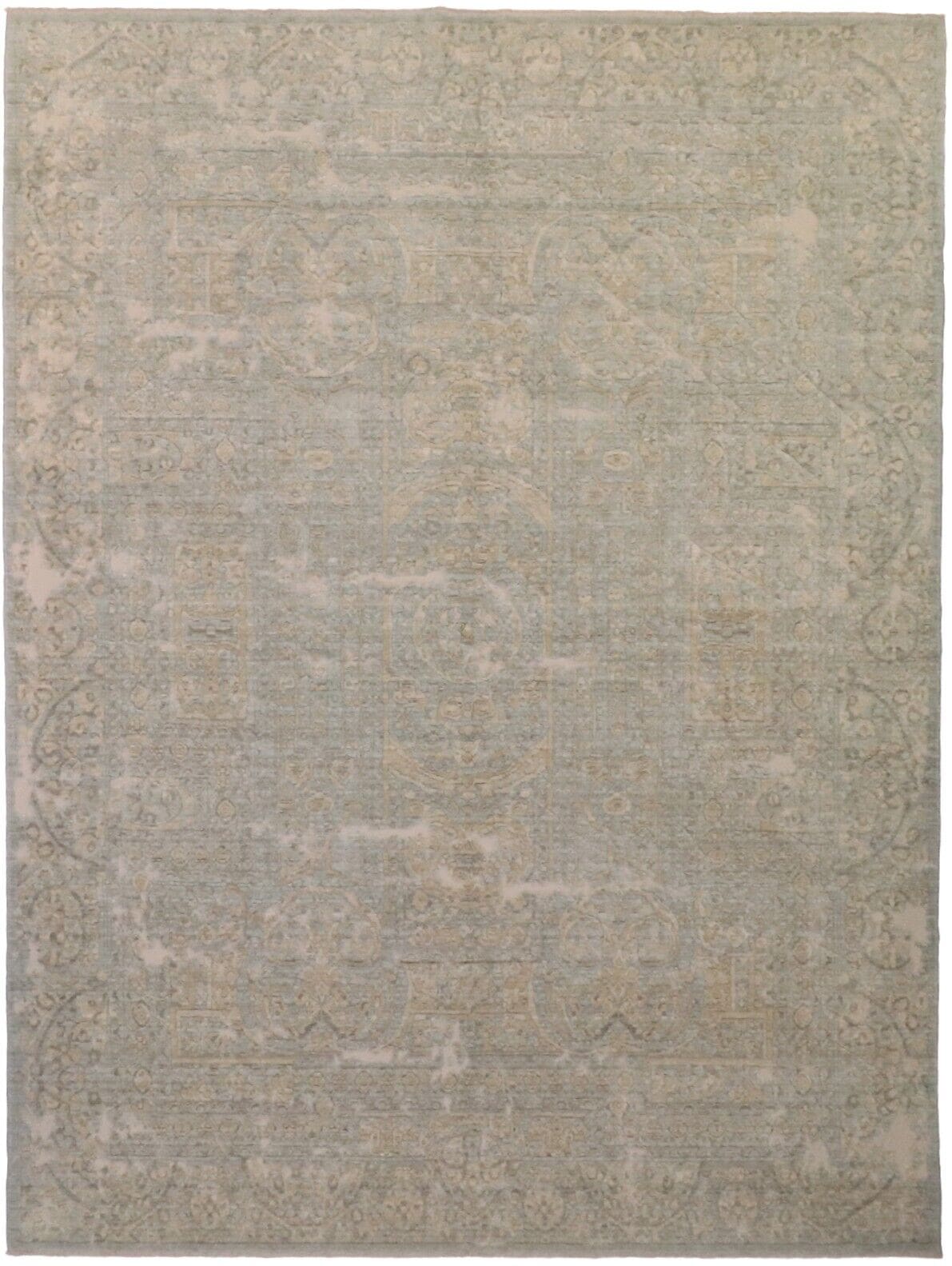
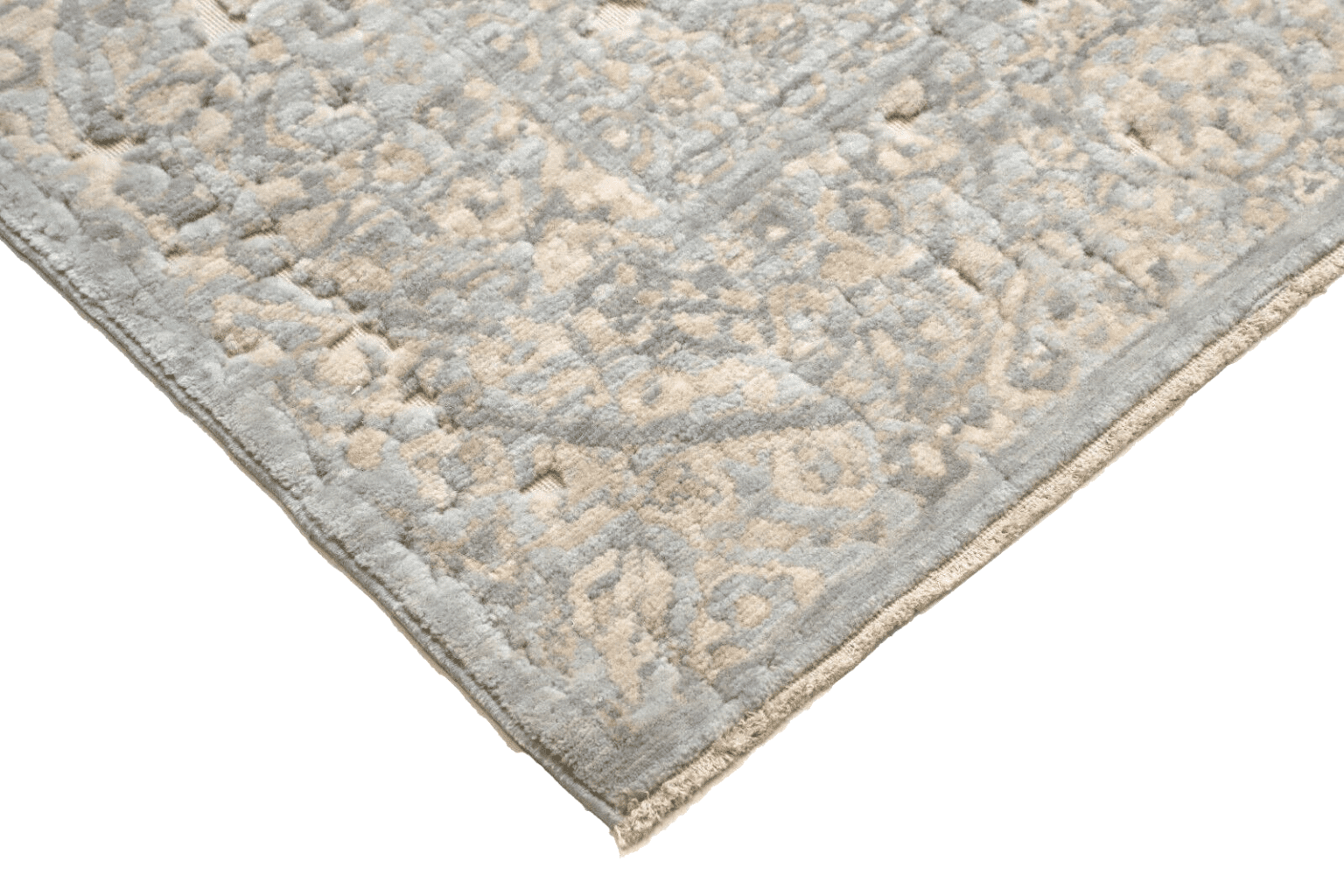
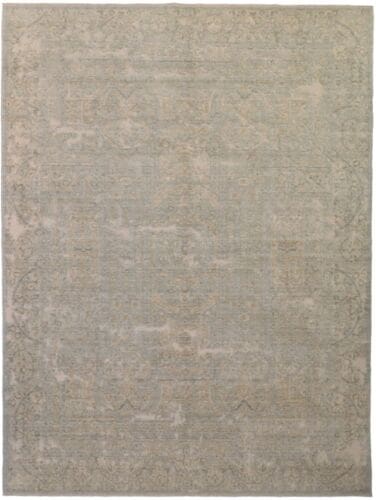
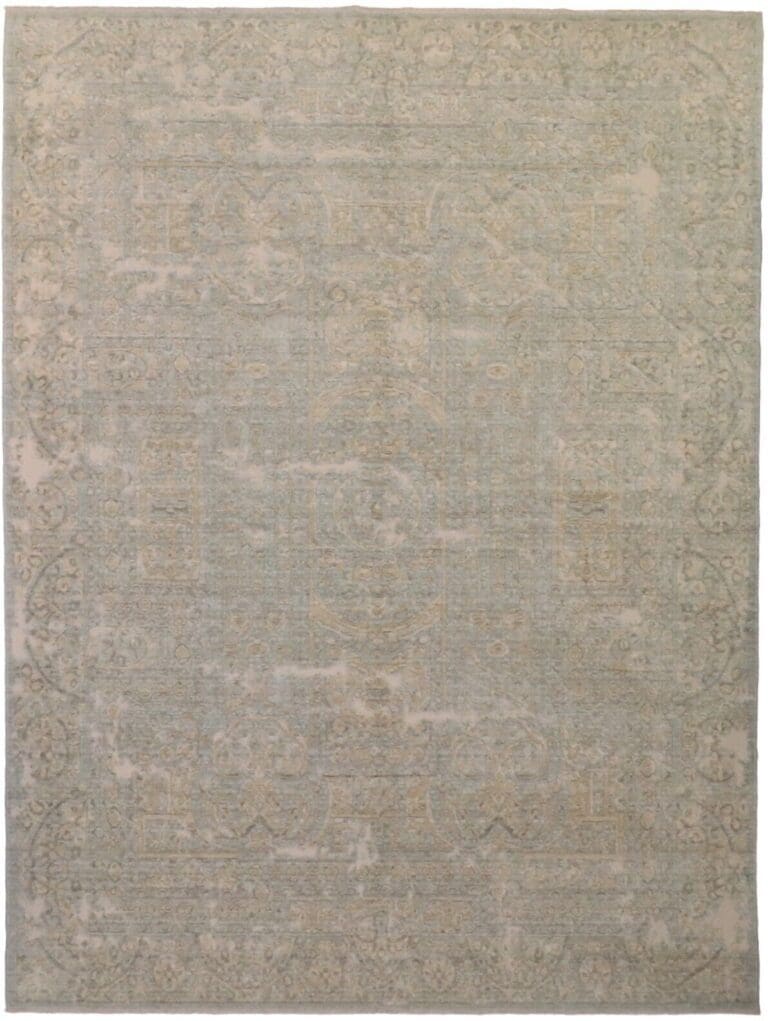
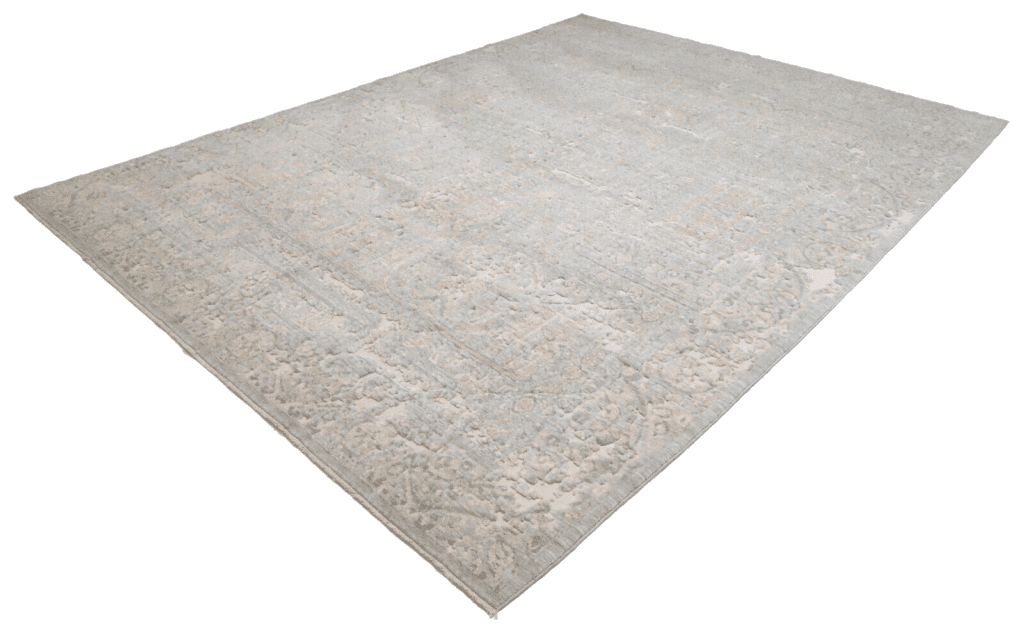
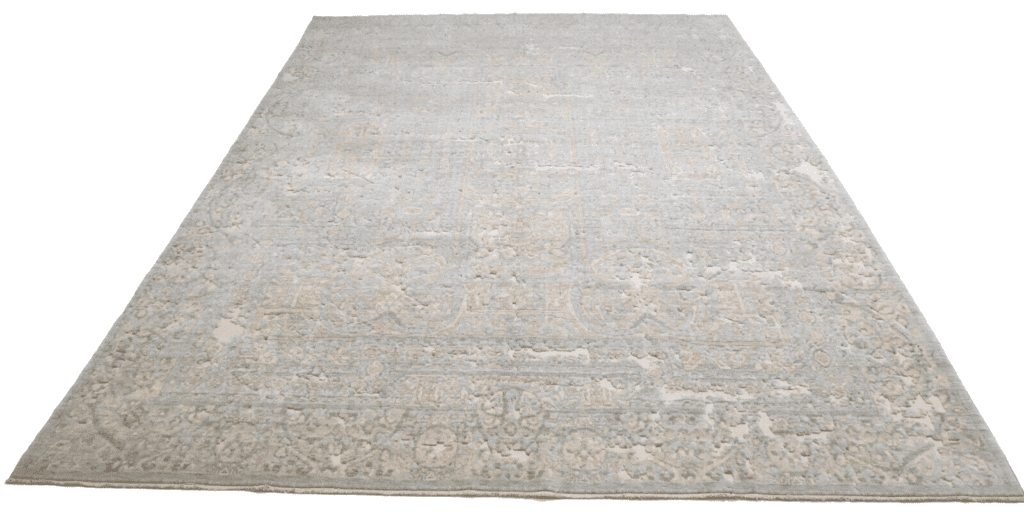
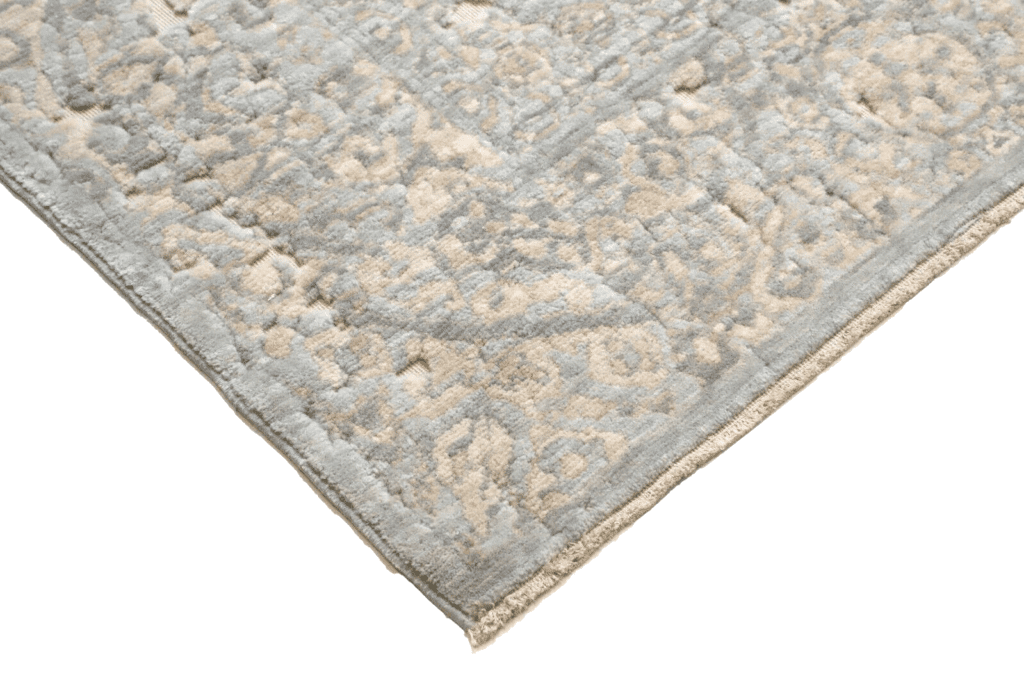
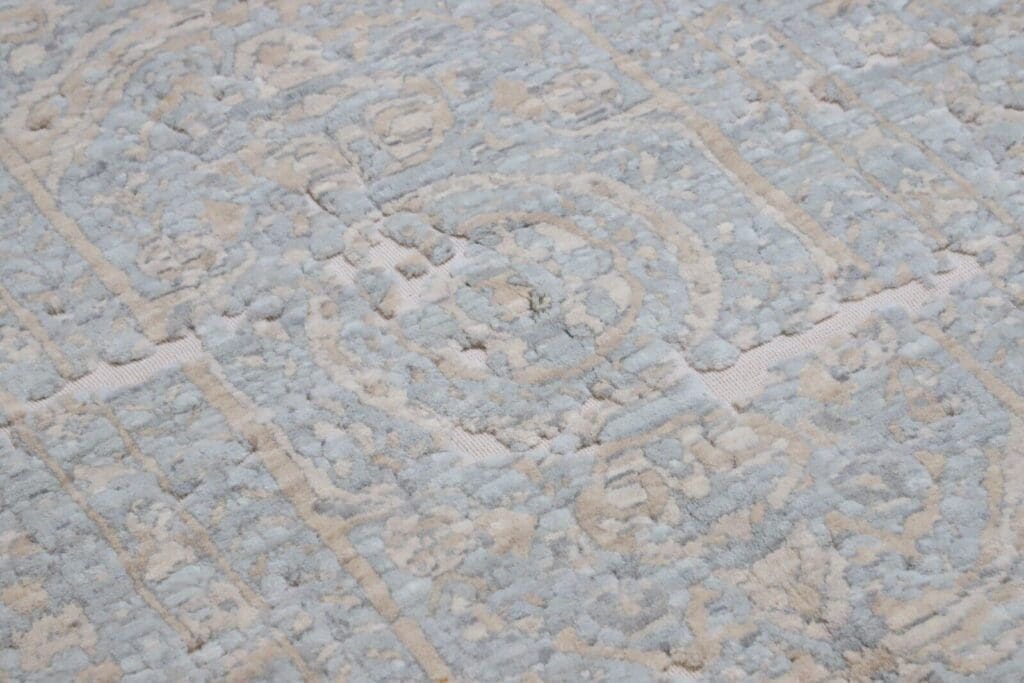
This Oriental rug is hand-knotted and combines a traditional making process with a contemporary appearance. The listed materials are genuine wool and cotton. It has a high pile, giving the surface a clearly raised and tactile character. The colour scheme is based on beige, with delicate cream and pastel shades. These tones form an important part of the described design and create a light, restrained overall impression.
Hand-knotting is carried out by inserting individual knots into a prepared foundation. The knots create the pile, while the vertical and horizontal foundation threads hold the structure together. Once the knotting is complete, the pile is generally aligned and finished to create an even surface. A high pile leaves the fibres more prominent than a closely cut pile, so the relief effect can be experienced by touch as well as seen.
Wool has long been used in rug making because it can be formed into a resilient and comfortable pile. Cotton is also common in traditional rug construction, particularly as part of the supporting foundation. Both materials are specified for this rug, but the product information does not assign each one to a particular part of the construction. The factual description therefore rests on the stated combination of wool and cotton, the hand-knotted technique and the high pile.
The rug is described as new without a label. It is also suitable for use with underfloor heating. This concerns its intended use in an interior setting. The phrase modern designer rug identifies its contemporary direction, while the hand-knotting belongs to a longstanding craft tradition. The result is a piece described through both its traditional production method and its modern visual character.
Origin and Tradition
The origin given for this rug is Turkey. Turkish rugs belong to a broad and varied tradition of oriental weaving and knotting. Different parts of the country developed their own approaches to colour, ornament and construction. Turkish rug making is therefore not defined by one single visual formula. Alongside geometric compositions, the tradition includes floral interpretations, stylised forms and contemporary designs.
Turkey occupies a historic meeting point between Europe and Asia. For centuries, materials, patterns and craft knowledge travelled through Anatolia and neighbouring regions. These exchanges influenced the development of Turkish carpets and rugs. Motifs were adopted, altered and adapted to local preferences. Turkish rug art is consequently best understood as a group of regional traditions rather than as one uniform pattern language.
Hand-knotting is one of the more labour-intensive ways to make a rug. Each knot is formed around the foundation threads and secured before the next one is added. Row by row, the knots build the pile surface. The process requires time, consistency and careful control of the design. After the knotting, further finishing steps may include securing the ends, arranging the pile and treating the surface so that the structure can be read clearly.
Wool has an important place in Turkish rug traditions as a pile fibre. Its natural texture can hold colour and give the surface a varied appearance. Cotton is often used in rug foundations because it can provide an even supporting structure. The exact role of a material depends on the construction of an individual rug. For this piece, wool and cotton are stated as materials, but the product information does not further explain their precise positions within the construction.
Traditional craft and modern design can exist together. Many contemporary rugs made in Turkey retain handwork while using simplified, abstract or relief-based compositions. This allows them to suit present-day interiors without removing the handmade character of the technique. The rug described here is identified as a modern designer rug with an Oriental relief design. Its Turkish origin and hand-knotted construction provide the factual context for that appearance.
The term Oriental rug is appropriate here because the stated origin is Turkey. No Iranian province or Persian place of origin is given for this piece. Names such as Isfahan, Kashan or Qom refer to other regional traditions in general descriptions and should not be treated as the origin of this rug. The relevant origin for this item is Turkey.
Design and Pattern
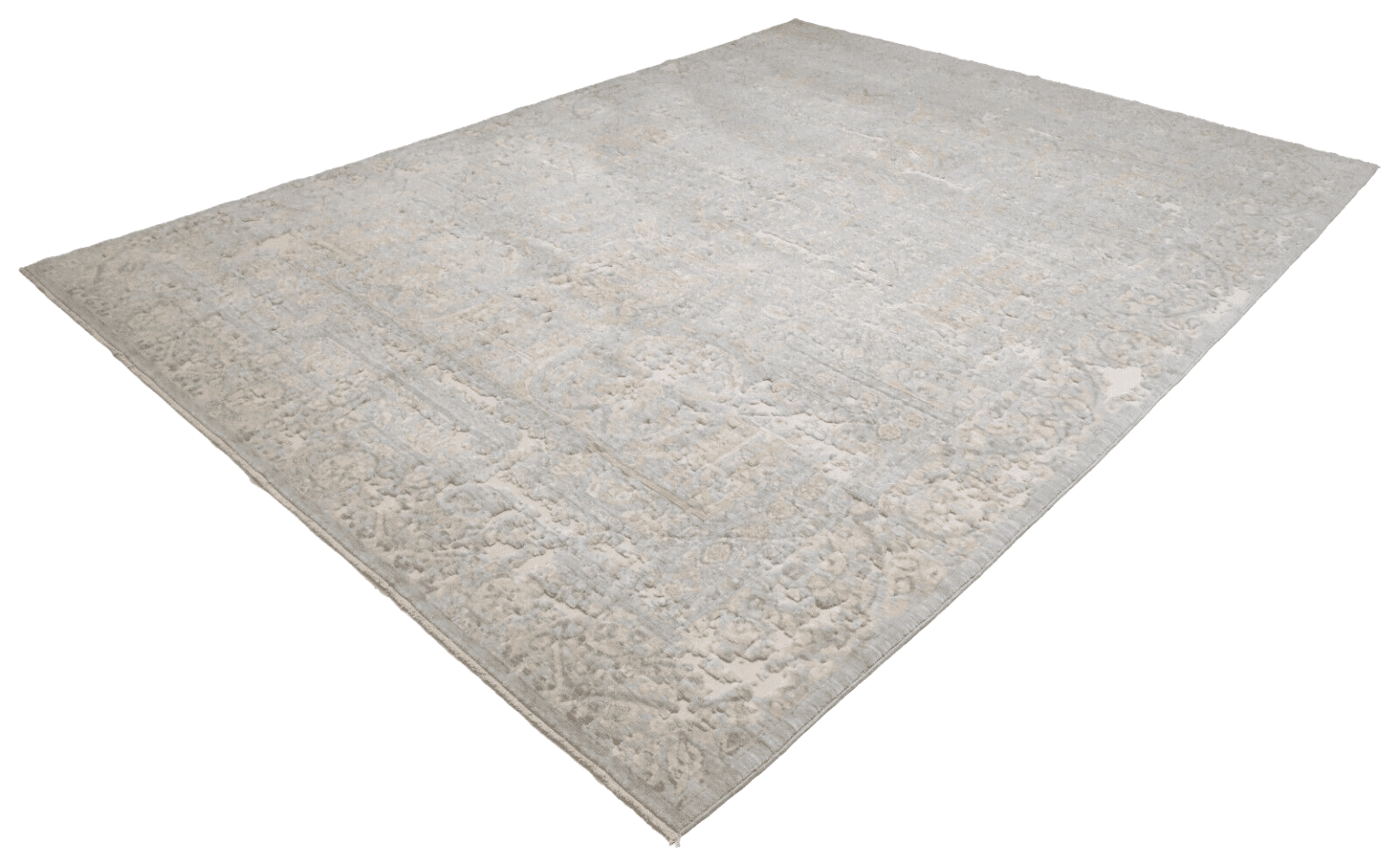
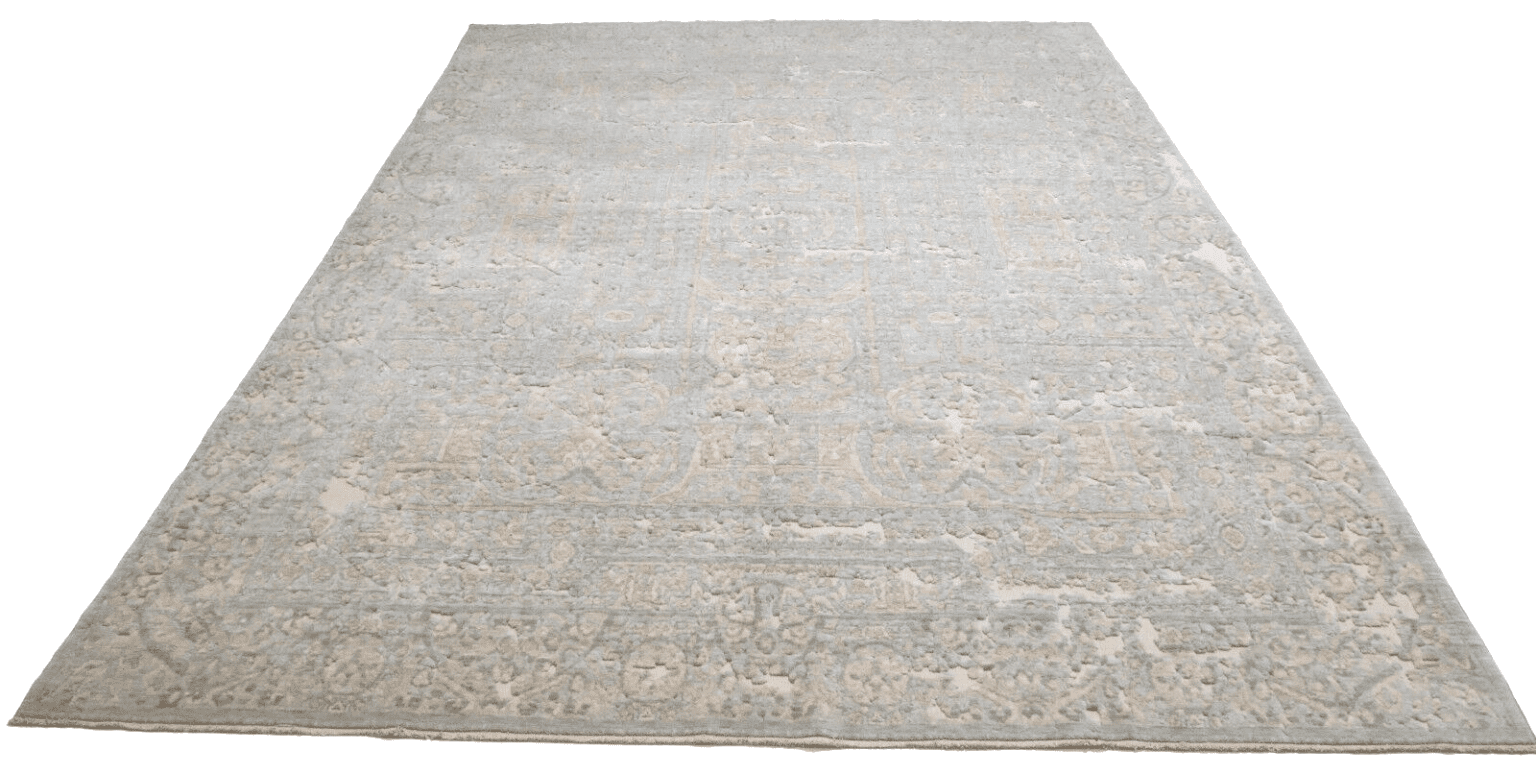
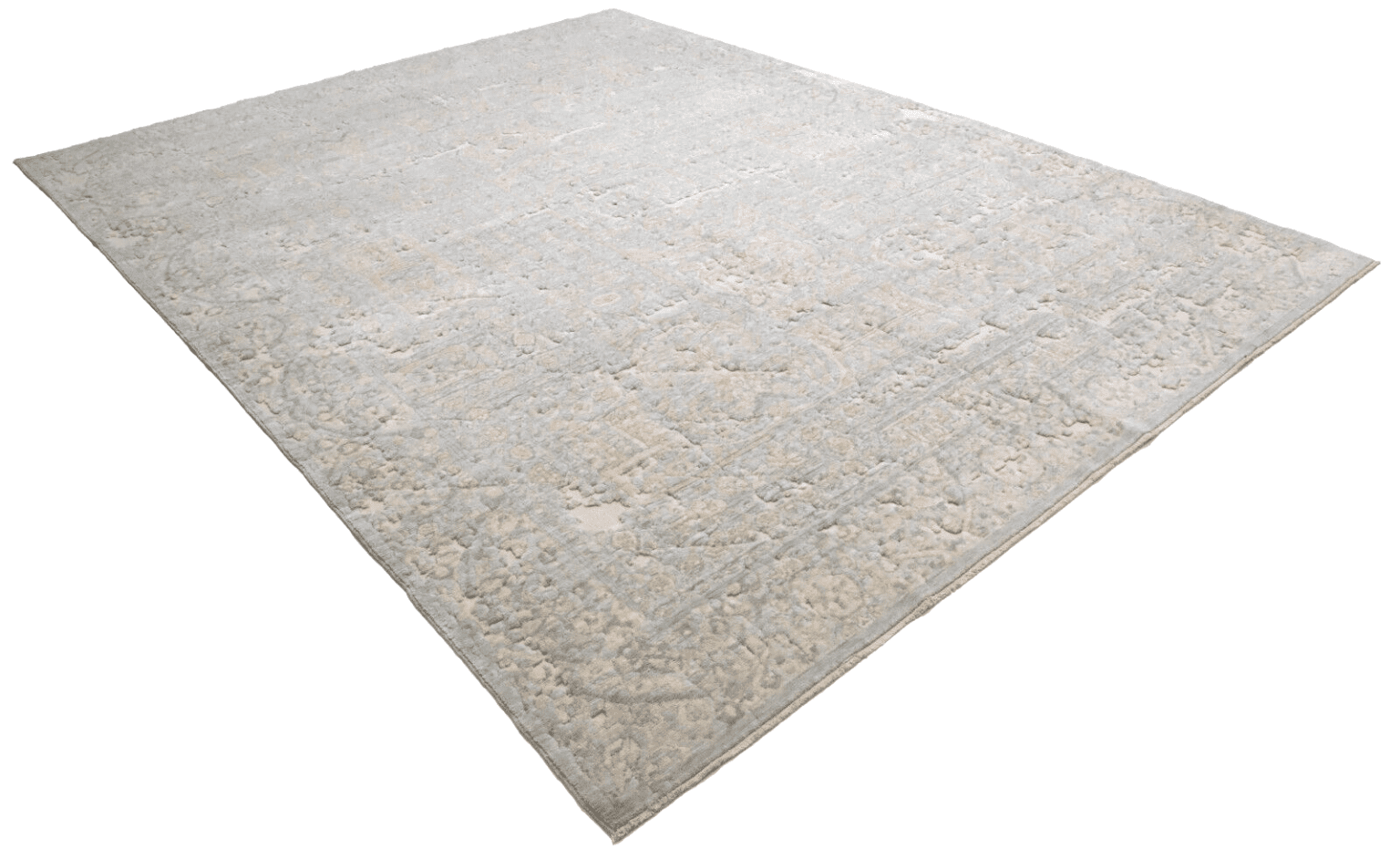
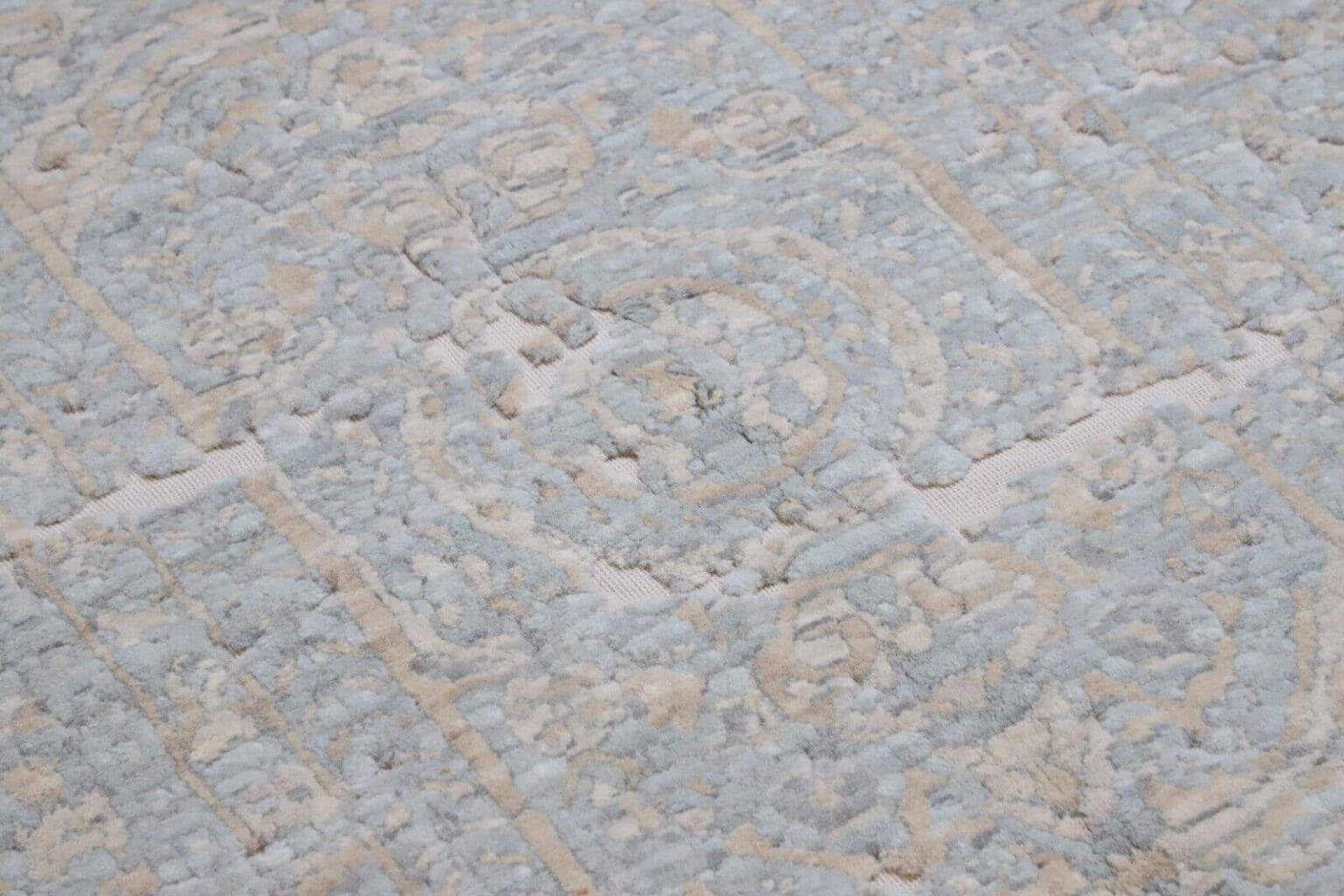
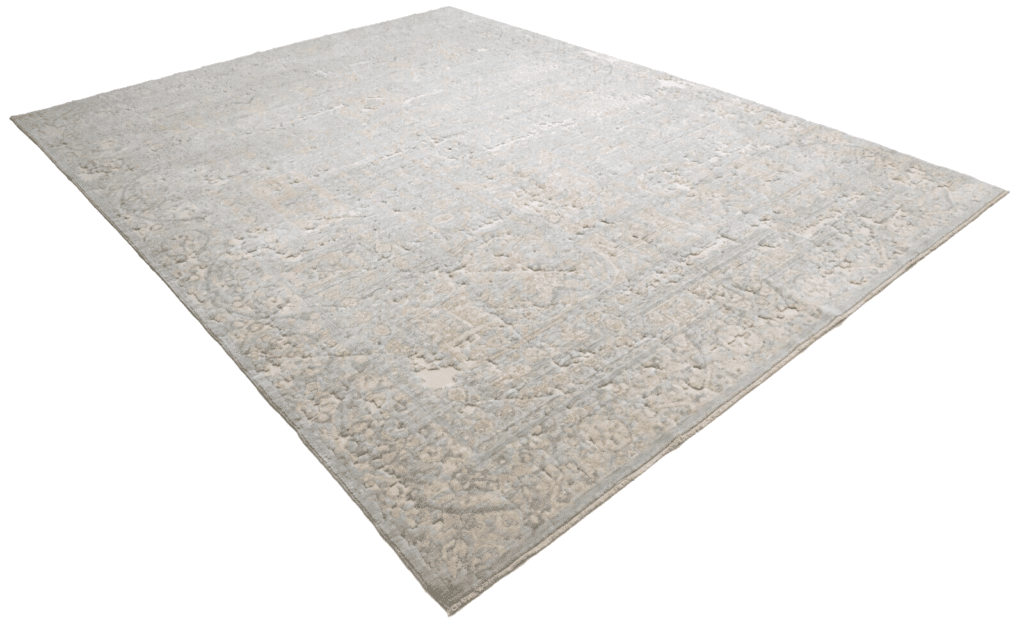
The pattern is described as an Oriental relief design. A relief design creates visible and tactile differences in height across the surface. Depending on the execution, some areas stand above others, producing a more dimensional reading of the pattern. The effect comes not only from the distribution of colour but also from the way the pile is shaped and perceived.
The palette is beige with delicate cream and pastel shades. Beige provides the calm base tone. Cream can lighten transitions, while pastel colours introduce restrained accents. The overall palette remains soft and understated. It can therefore work with modern interiors where a quiet range of colours is paired with a surface that has a distinct texture.
Oriental pattern traditions include many different ways of organising a field. Some designs use a central area, borders or repeated ornaments to structure the composition. Others distribute forms more freely and avoid a strict arrangement. Relief designs may combine echoes of traditional ornament with a reduced, contemporary drawing. The individual motifs on this rug are not specified in the description. The documented features are the Oriental relief design, the modern style and the beige, cream and pastel colour scheme.
The appearance of a textured rug can change with light and viewing angle. Raised sections may cast small shadows, while lower areas can appear lighter. The colours themselves remain the same, but the surface gives them a shifting visual presence during the day. The high pile supports this tactile and optical effect. In this way, the pattern is experienced through the construction of the rug rather than as a flat graphic alone.
Modern designer rugs often draw on Oriental visual language without reproducing a historical source in full. Simplified ornaments, gentle colours and emphasised textures can recall traditional rug imagery while creating a current design vocabulary. Here, that relationship is expressed by the descriptions modern designer rug and Oriental relief design. No particular historical region or single traditional motif is identified, so no narrower attribution is made.
The light palette can be used in a variety of interior schemes. Beige, cream and pastel shades can sit beside neutral furnishings or accompany selected colour accents. The relief texture supplies a visual focus without relying on a strong base colour. This rug is described as a floor covering and is suitable for underfloor heating. No further claim about a specific room or furnishing arrangement is made.
Special Features
The expressly listed features are the hand-knotted construction, high pile, wool and cotton materials and Oriental relief design. The rug is new without a label. Its colours are beige with delicate cream and pastel shades. It is also suitable for underfloor heating. These points describe its materials, construction, condition, style and intended use without adding unsupported properties.
A further characteristic is the combination of traditional handwork and modern presentation. The piece is called a modern designer rug, yet it is made using hand-knotting. A contemporary visual direction therefore meets a longstanding textile technique. The stated Turkish origin places this combination within the wider context of Turkish rug making.
FAQ
Where does this Oriental rug come from?
The rug comes from Turkey. It is described as a Turkish Oriental rug. An origin in Iran or in a particular Iranian rug region is not given for this piece.
What materials is the rug made from?
The listed materials are genuine wool and cotton. The rug is hand-knotted and has a high pile. The product information does not specify which part of the construction is made from wool and which part is made from cotton.
Is the rug suitable for underfloor heating?
Yes. The rug is suitable for underfloor heating. It is also described as new without a label. Care should be chosen to suit a hand-knotted rug with a high pile.
To provide the best experiences, we use technologies like cookies to store and/or access device information. Consenting to these technologies will allow us to process data such as browsing behavior or unique IDs on this site. Not consenting or withdrawing consent, may adversely affect certain features and functions.
Functional Always active
The technical storage or access is strictly necessary for the legitimate purpose of enabling the use of a specific service explicitly requested by the subscriber or user, or for the sole purpose of carrying out the transmission of a communication over an electronic communications network.
Preferences
The technical storage or access is necessary for the legitimate purpose of storing preferences that are not requested by the subscriber or user.
Statistics
The technical storage or access that is used exclusively for statistical purposes.The technical storage or access that is used exclusively for anonymous statistical purposes. Without a subpoena, voluntary compliance on the part of your Internet Service Provider, or additional records from a third party, information stored or retrieved for this purpose alone cannot usually be used to identify you.
Marketing
The technical storage or access is required to create user profiles to send advertising, or to track the user on a website or across several websites for similar marketing purposes.
 SECURE PAYMENT
 SHIPPING PARTNERS


