This runner is hand-knotted and has a pile made from hand-spun wool. These two details describe both its material and its construction: the wool fibres were spun by hand, and the rug was made knot by knot rather than by machine. Hand-knotting is one of the defining techniques associated with oriental rug making. In this process, individual knots are secured along the foundation in successive rows. The design is formed during the making of the textile rather than being printed onto a completed surface.
The combination of hand-spun wool and manual workmanship links the yarn with the way this runner was produced. Wool is widely used in rug making because of its textile structure and its suitability for forming a pile. Hand-spinning can give a yarn a lively and individually varied character. That is a general property of hand-spun yarn and does not establish a particular fibre thickness or knot density for this rug.
No knot density is given for this runner, so no numerical density is stated here. What is established is that the rug was made by hand, with each knot forming part of the construction. The term hand-knotted identifies the technique, but by itself it does not indicate a particular number of knots, a specific weaving centre, or a defined quality grade. This distinction matters in oriental rugs, where material, construction, design and origin are separate characteristics.
Origin and Tradition
The runner is described as an Oriental rug from the Orient. No individual province or city is named. Oriental rug is a broad term covering handmade rugs associated with the traditional rug-producing areas of the Orient. These areas include different countries, landscapes and workshops, each with their own materials, structures, colour systems and design traditions. The broad origin given here therefore cannot be narrowed to a particular regional attribution.
Oriental rug making includes work produced in rural households as well as rugs made in specialised workshops. Techniques and visual languages vary from one area to another. Some traditions favour geometric forms and orderly repetition, while others use floral scrolling, medallions or finely divided fields. Colour arrangements may range from strong contrasts to subdued tonal compositions. This variety is part of the wider tradition and does not identify a specific regional design for this runner.
Hand-knotted rugs are traditionally made through a sequence of carefully executed manual steps. A drawing or pattern plan may guide the work, while the knotters transfer the design gradually into the textile surface. Once the knots are completed, the pile and edges are finished and the rug is prepared for use. This process brings together a practical floor covering and a decorative textile. For this piece, the origin is recorded as the Orient; no particular country, village, workshop or province is specified.
The age is given as 20 – 50 years, which places the runner in the vintage category. In rug retail, vintage describes an age classification and does not automatically establish a particular regional provenance. The condition is simultaneously recorded as new with label. Both descriptions are retained as product information: the runner carries a vintage age range while being described as new with label. No further account of previous use, storage or ownership is provided.
Design and Pattern
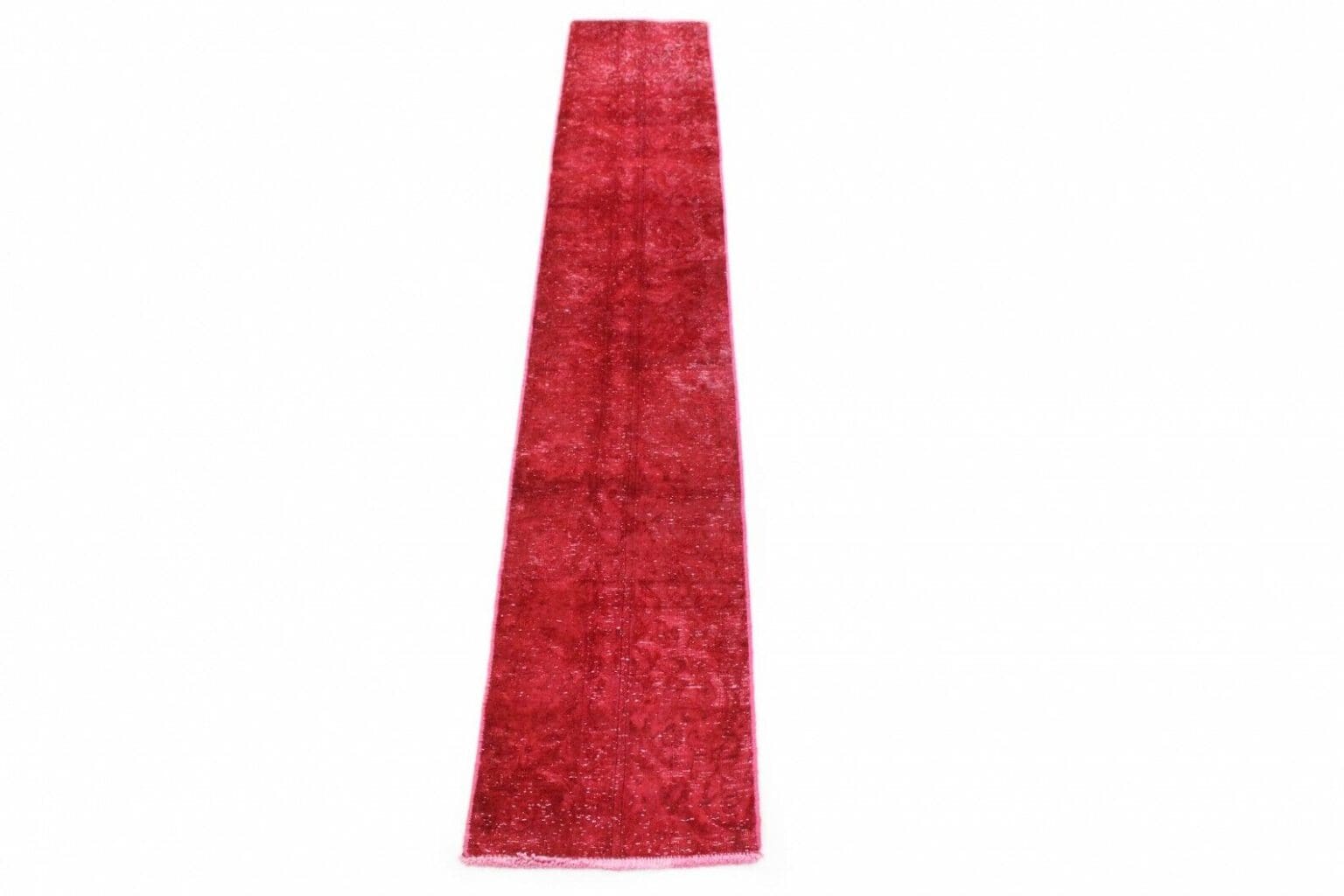
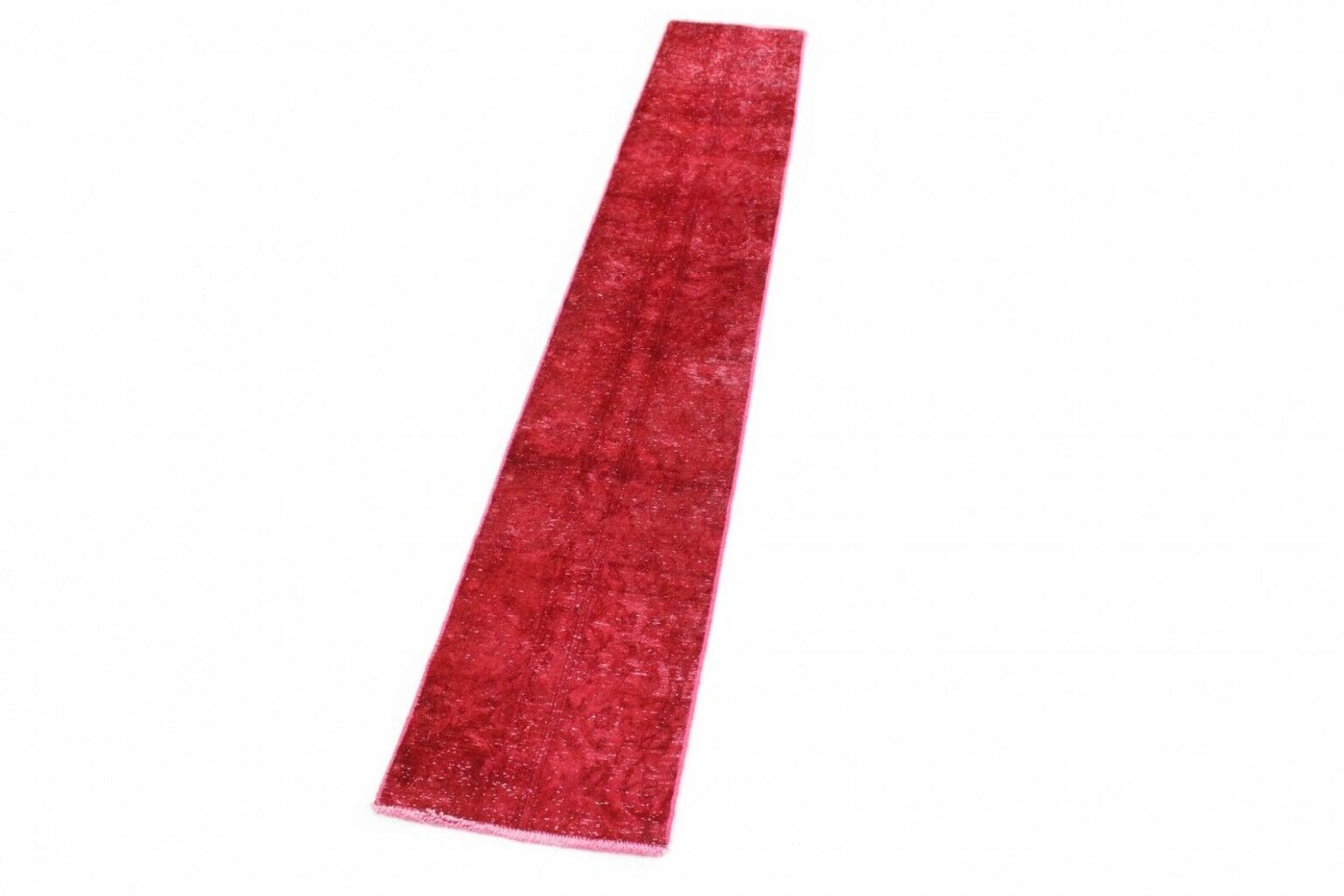
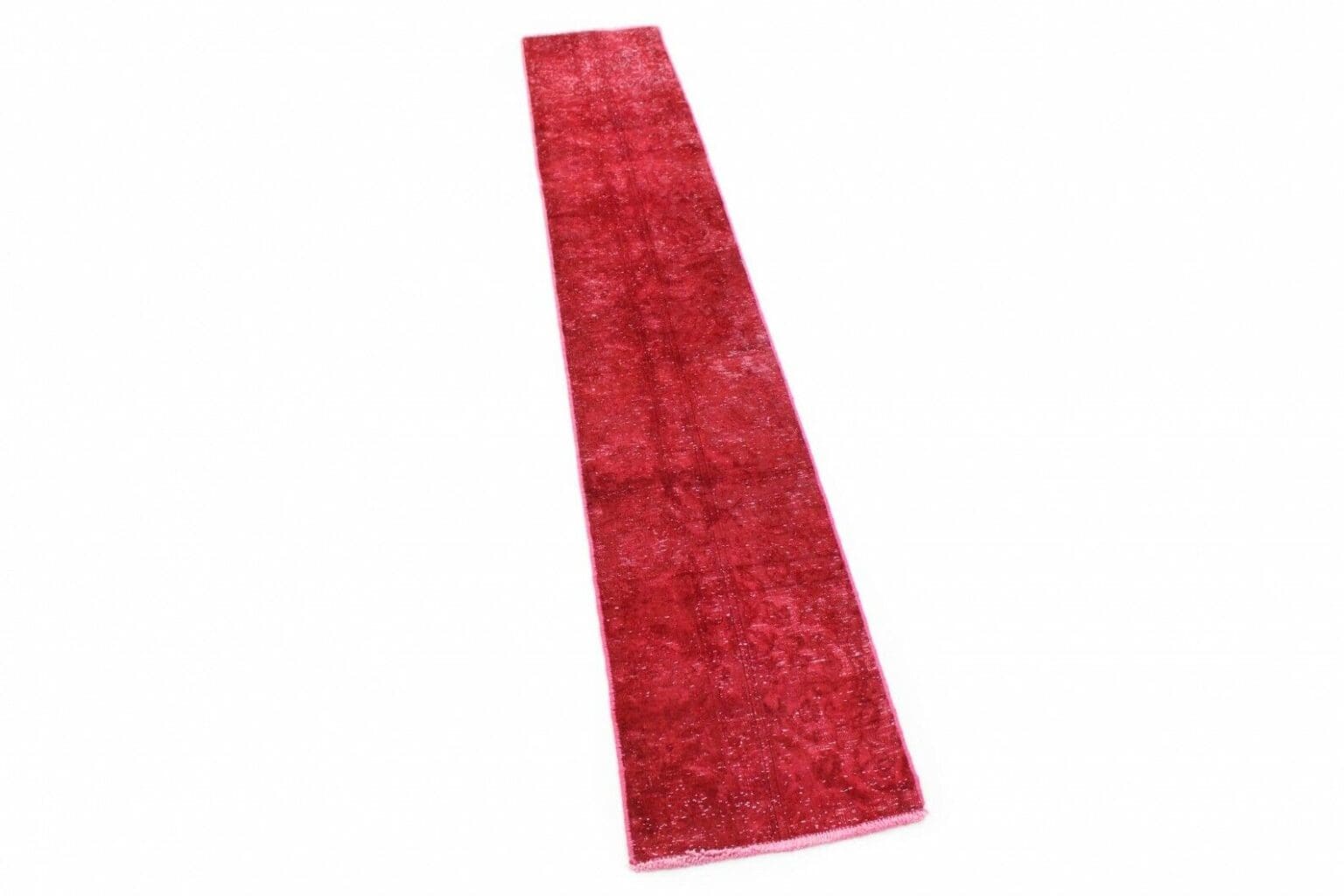
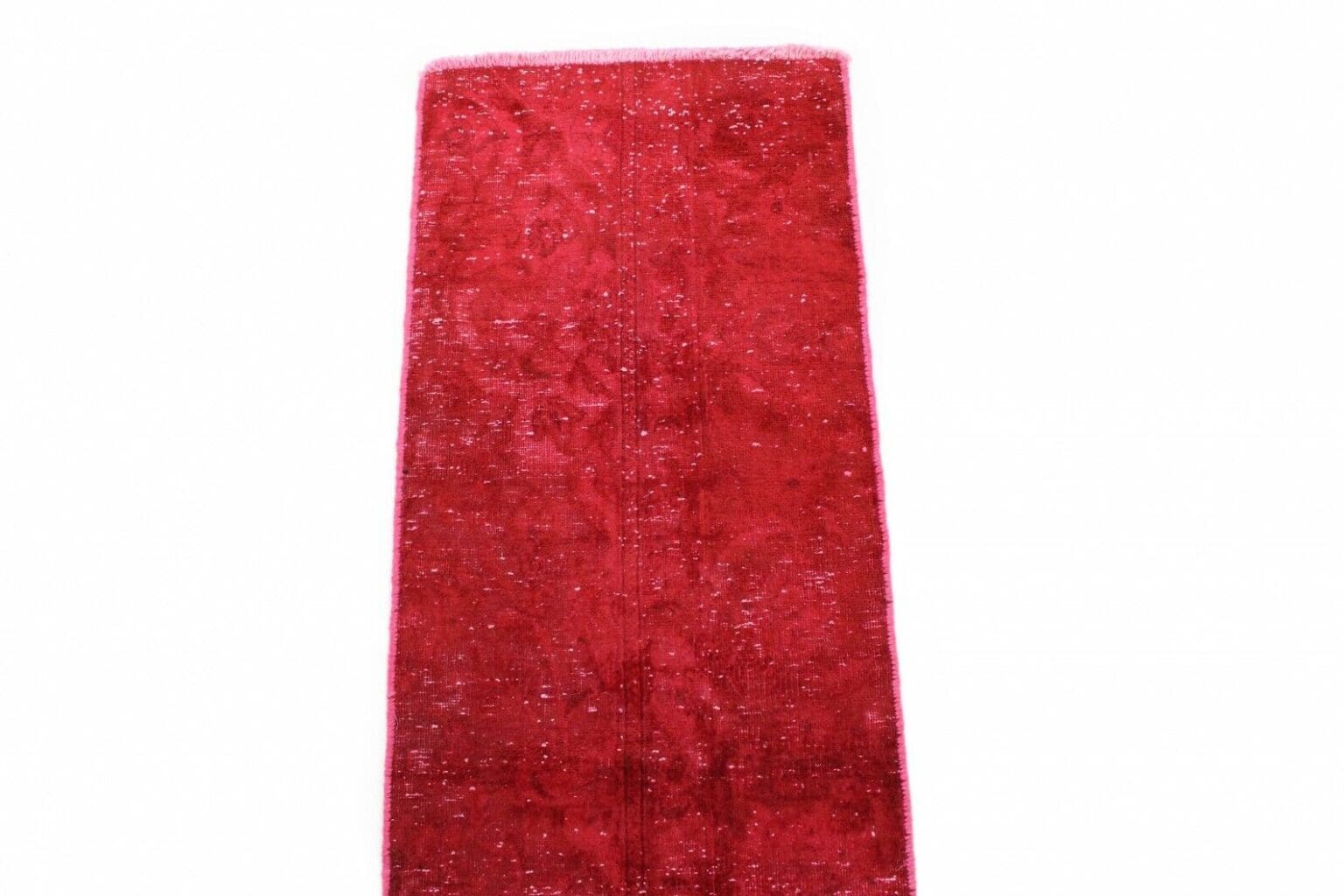
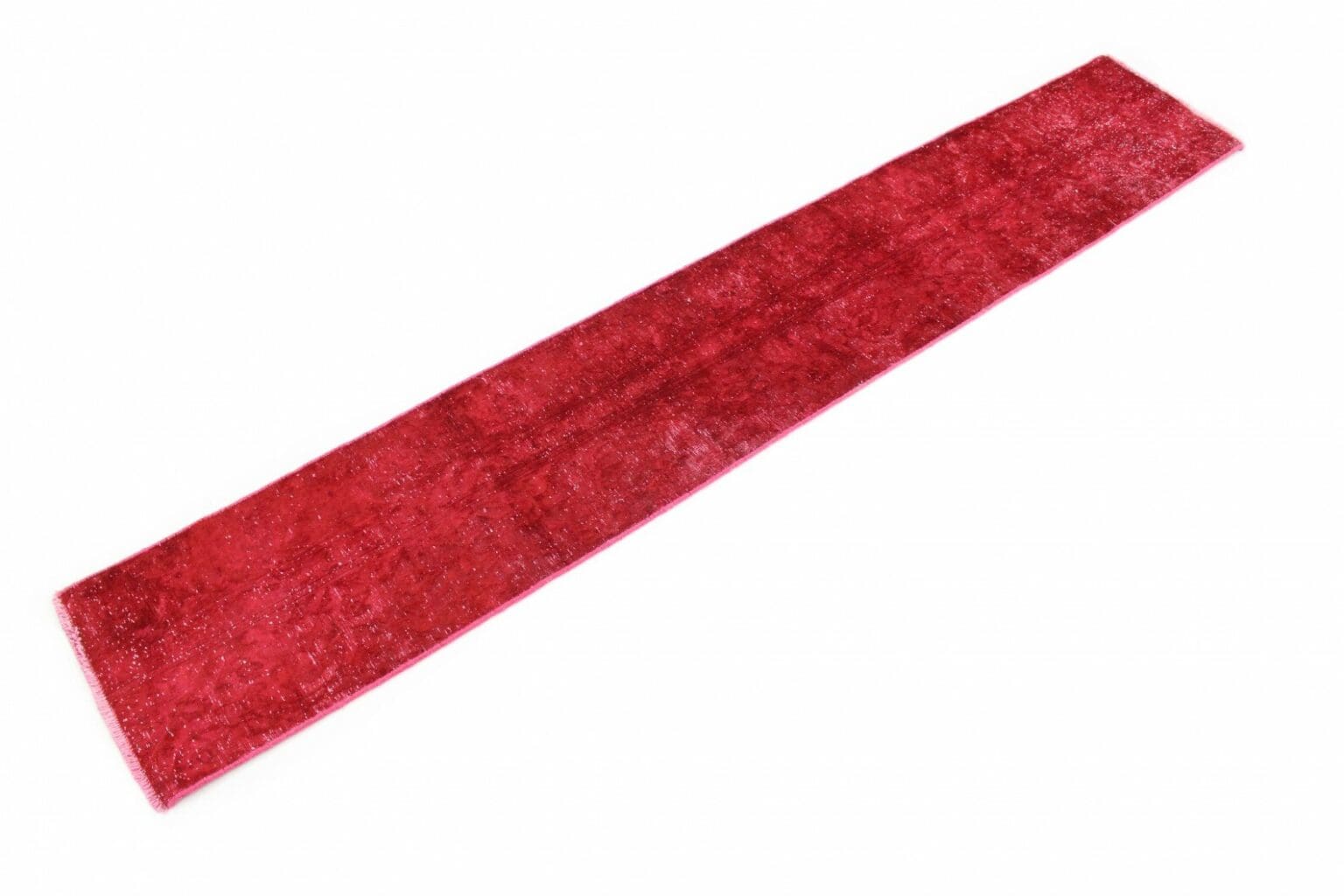
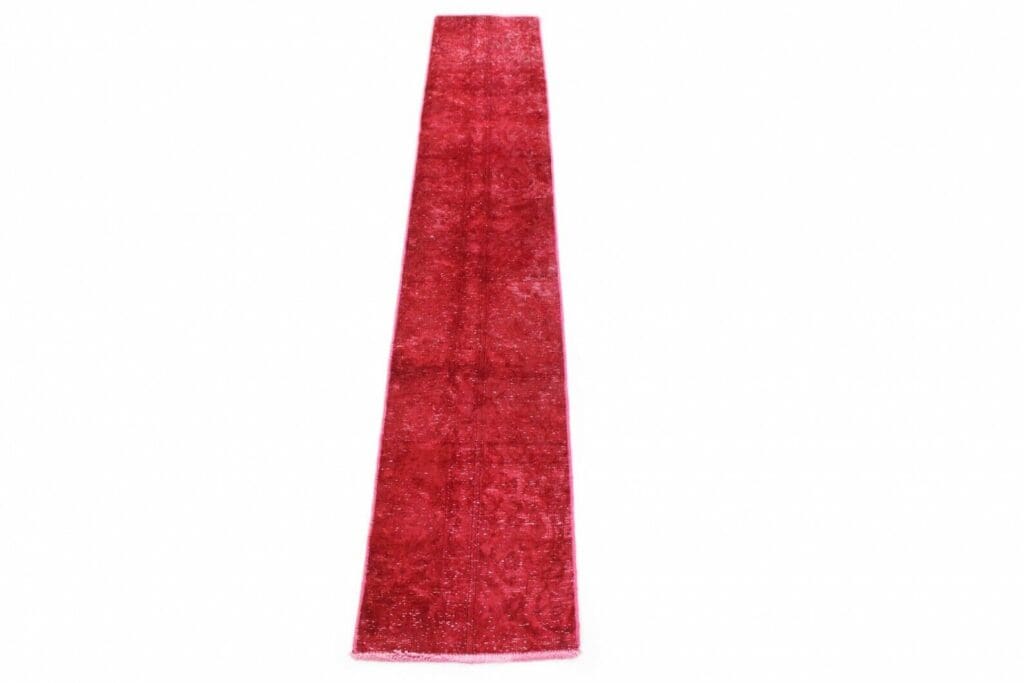
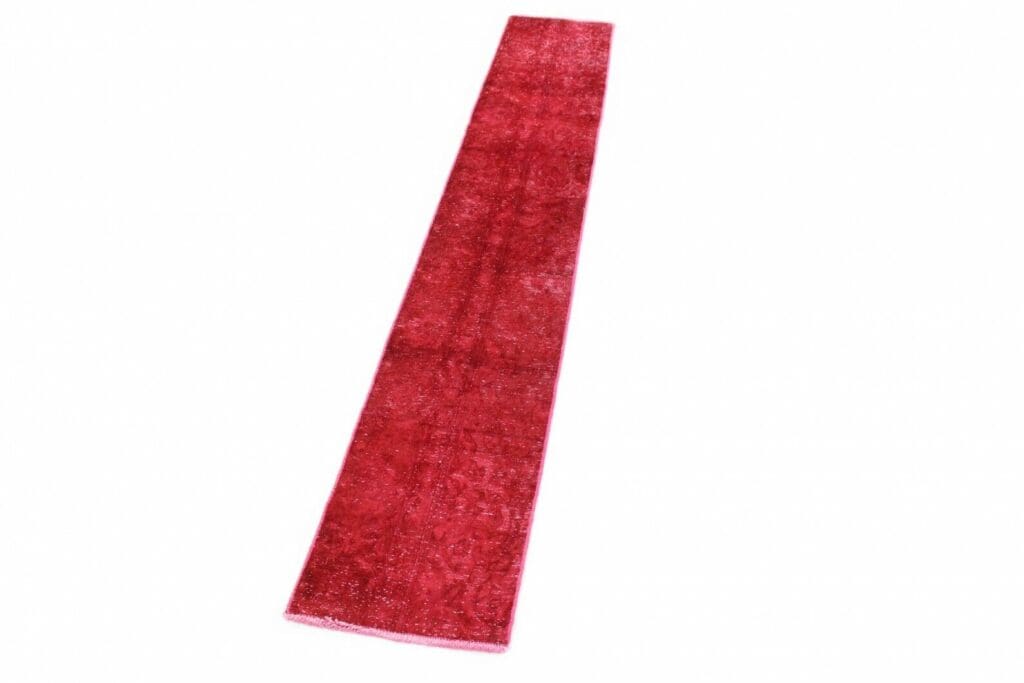
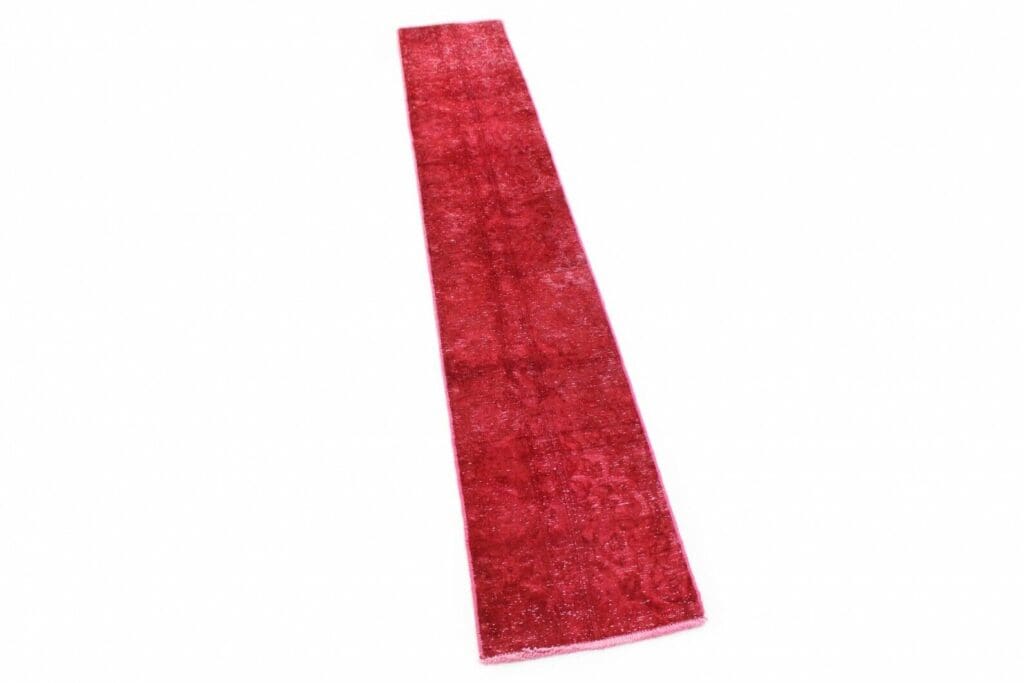
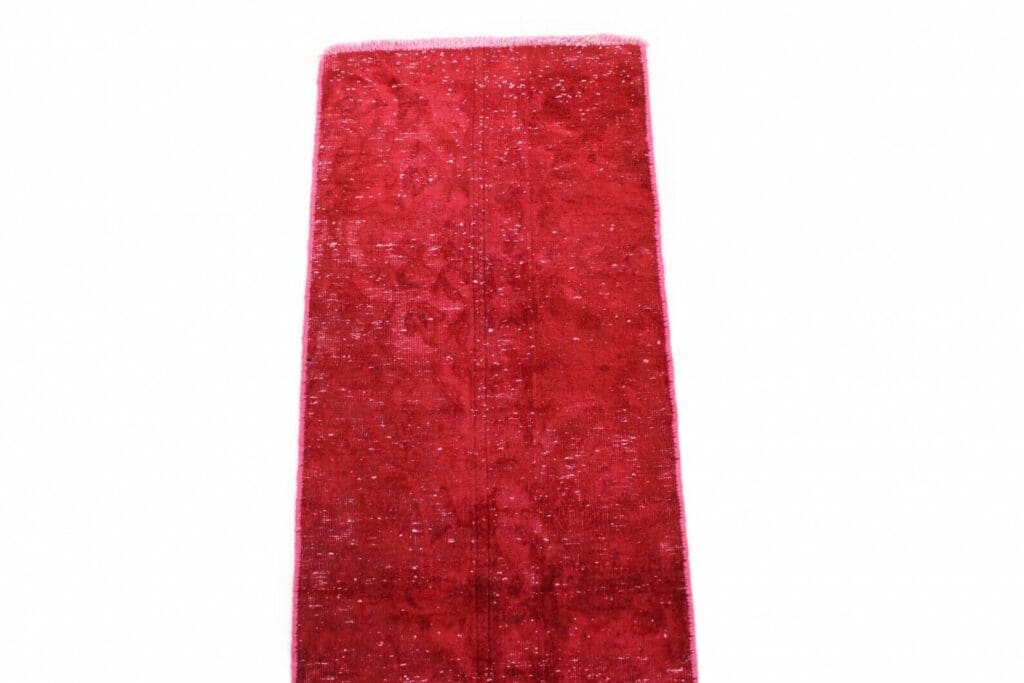
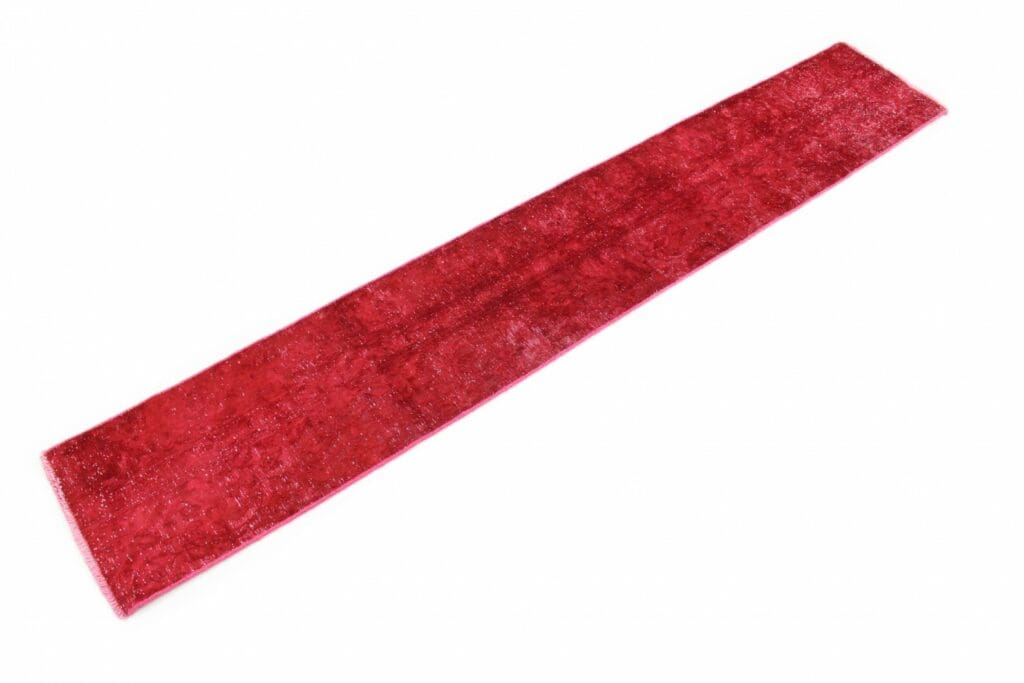
The runner is red and its style is described as modern. These are the documented design characteristics; they do not establish a particular medallion, border, floral motif or geometric scheme. Red can function as a concentrated field of colour and draw attention to a narrow runner within a room. The colour describes this rug’s appearance and should not be read as an indication of a particular place of origin.
The modern classification can be expressed in more than one way in rug design. A contemporary look may involve simplified ornament, restrained repetition, a clear division of the field or a current approach to colour. Modern Oriental rugs do not all share the same layout. For this runner, the available design information is limited to its modern style and red colour. Naming individual symbols or motifs beyond those details would not be supported by the product information.
Across oriental rug traditions, patterns often form a distinctive visual language. Vines, flowers, leaves, stars, rosettes and geometric devices can fulfil different roles in different weaving cultures. Designs are frequently adapted over generations and shaped by local knotting methods and materials. This broader background explains the wide range of ornament found among Oriental rugs. It is not a specific pattern attribution for the present runner.
The narrow runner format generally creates a directional effect in elongated parts of a home. In a hallway, a red rug can connect adjoining areas through a continuous line of colour. In a living room or dining area, it can define a textile zone within the larger floor. The description lists hallways, living rooms and dining areas as suitable settings. Its modern style can be combined with contemporary as well as more traditional interiors, without prescribing one particular furnishing scheme.
Special Features
The listed special feature is suitability for underfloor heating. The runner can therefore be used in rooms equipped with underfloor heating. This information concerns the intended use of the rug and does not replace the instructions for the heating system or proper installation. It should be laid flat and positioned so that its use does not create a tripping hazard.
The condition is recorded as new with label. At the same time, the age range of 20 – 50 years places the item in the vintage category. These two product details are retained together without adding assumptions about previous ownership, storage or use. For care, the description recommends regular vacuuming. For stains, it names a mild soap solution and careful dabbing with a soft cloth. A professional rug-cleaning service may be considered when a thorough cleaning is required.
FAQ
How should I care for this hand-knotted Oriental rug?
Regular vacuuming helps remove dust and dirt from the pile. If a stain occurs, use a mild soap solution and gently dab the affected area with a soft cloth. Rubbing should be avoided so that the pile and surface are treated carefully. A professional rug-cleaning service can also be considered when the rug needs a more comprehensive cleaning.
Where can the red runner be used?
The red vintage runner is described as suitable for hallways, living rooms and dining areas. Its narrow runner format works particularly well in elongated zones, while the red colour creates a defined accent. The modern style can be paired with contemporary or traditional interior schemes. The rug is also listed as suitable for use over underfloor heating.
Can this rug be used outdoors?
Outdoor use is not recommended. Hand-knotted Oriental rugs should be protected from weather exposure and used inside the home. Rain, moisture, direct exposure and changing outdoor conditions can affect textile floor coverings. To support its intended use and service life, the runner should therefore remain in a sheltered indoor setting.
To provide the best experiences, we use technologies like cookies to store and/or access device information. Consenting to these technologies will allow us to process data such as browsing behavior or unique IDs on this site. Not consenting or withdrawing consent, may adversely affect certain features and functions.
Functional Always active
The technical storage or access is strictly necessary for the legitimate purpose of enabling the use of a specific service explicitly requested by the subscriber or user, or for the sole purpose of carrying out the transmission of a communication over an electronic communications network.
Preferences
The technical storage or access is necessary for the legitimate purpose of storing preferences that are not requested by the subscriber or user.
Statistics
The technical storage or access that is used exclusively for statistical purposes.The technical storage or access that is used exclusively for anonymous statistical purposes. Without a subpoena, voluntary compliance on the part of your Internet Service Provider, or additional records from a third party, information stored or retrieved for this purpose alone cannot usually be used to identify you.
Marketing
The technical storage or access is required to create user profiles to send advertising, or to track the user on a website or across several websites for similar marketing purposes.
 SECURE PAYMENT
 SHIPPING PARTNERS


