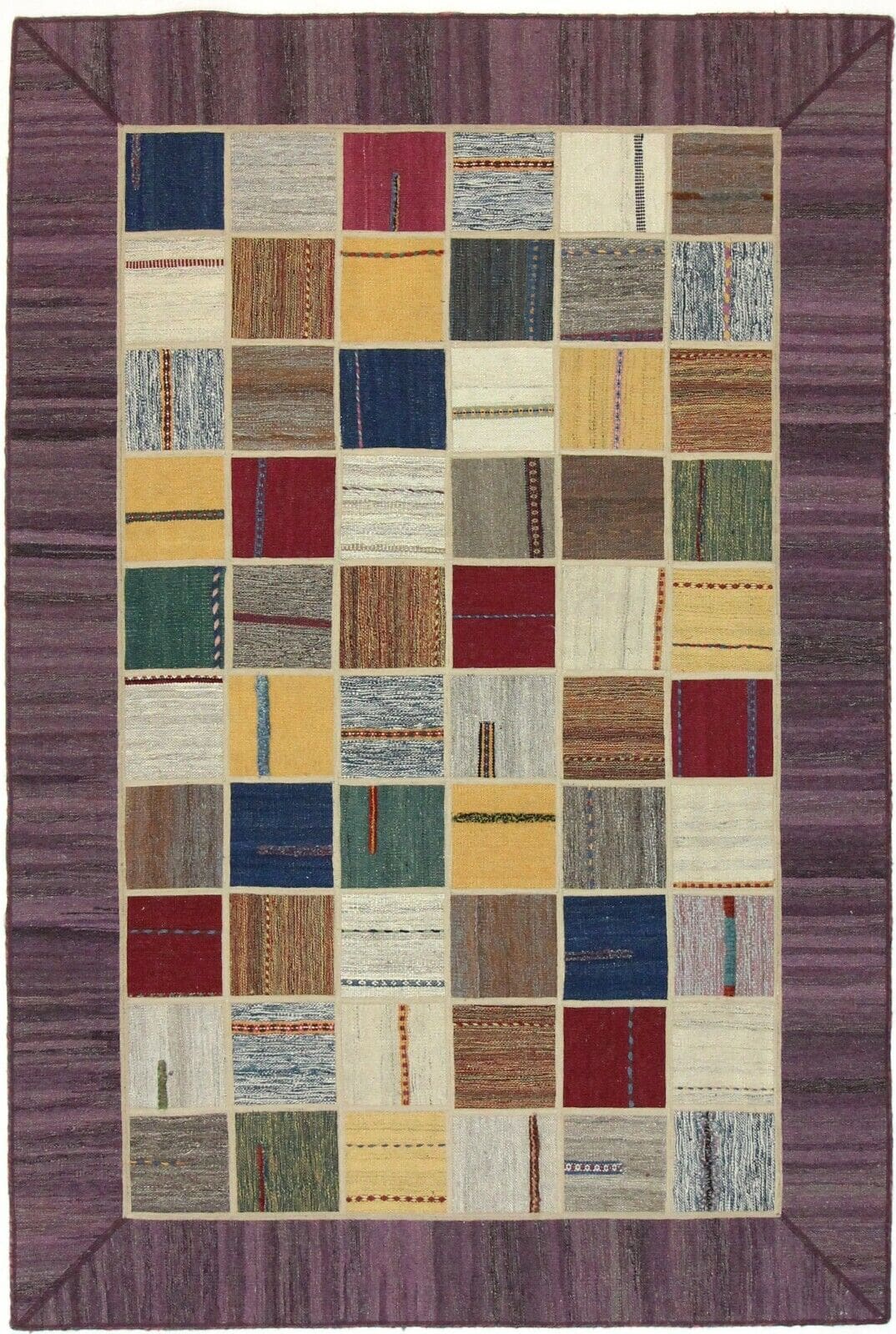
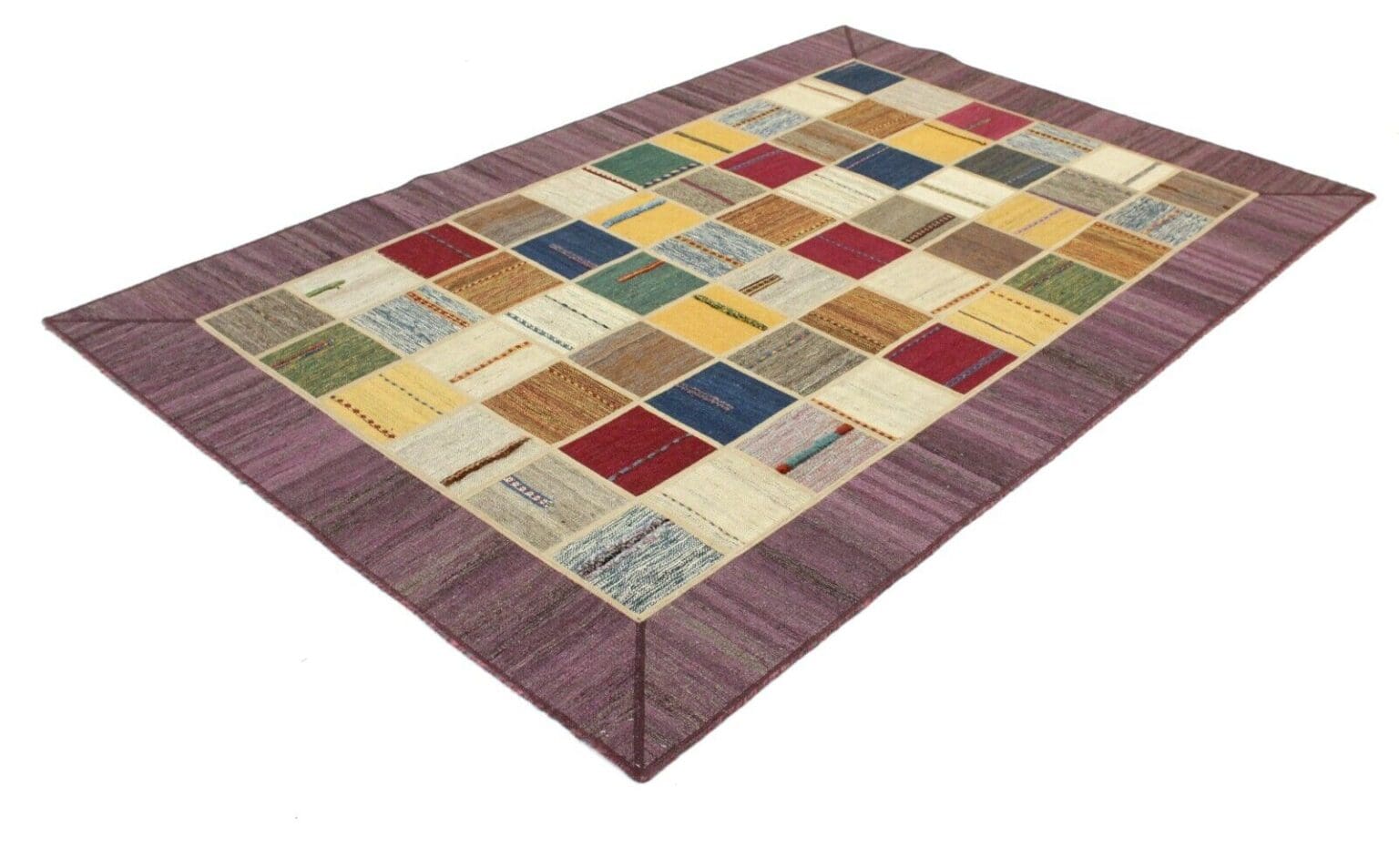
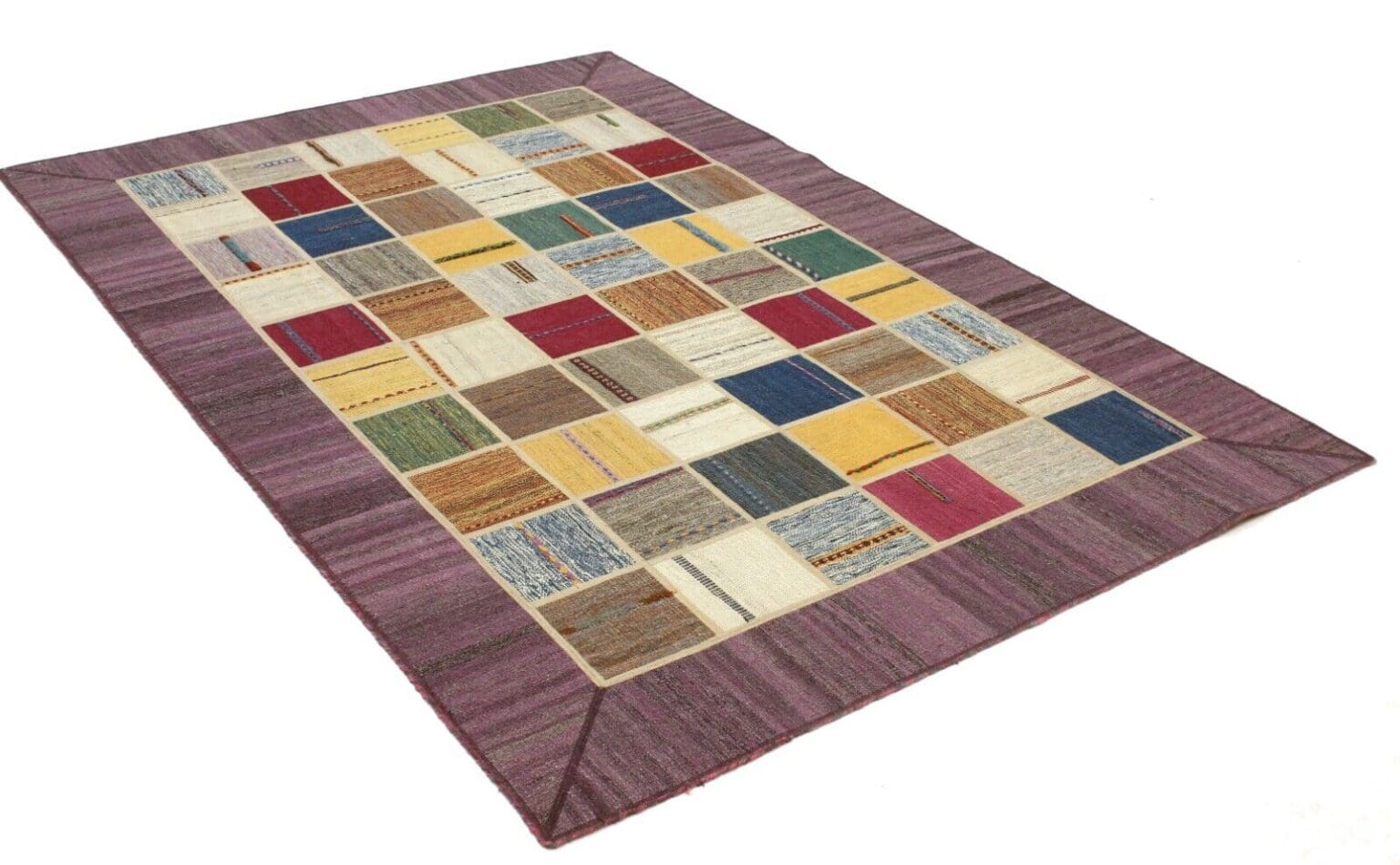
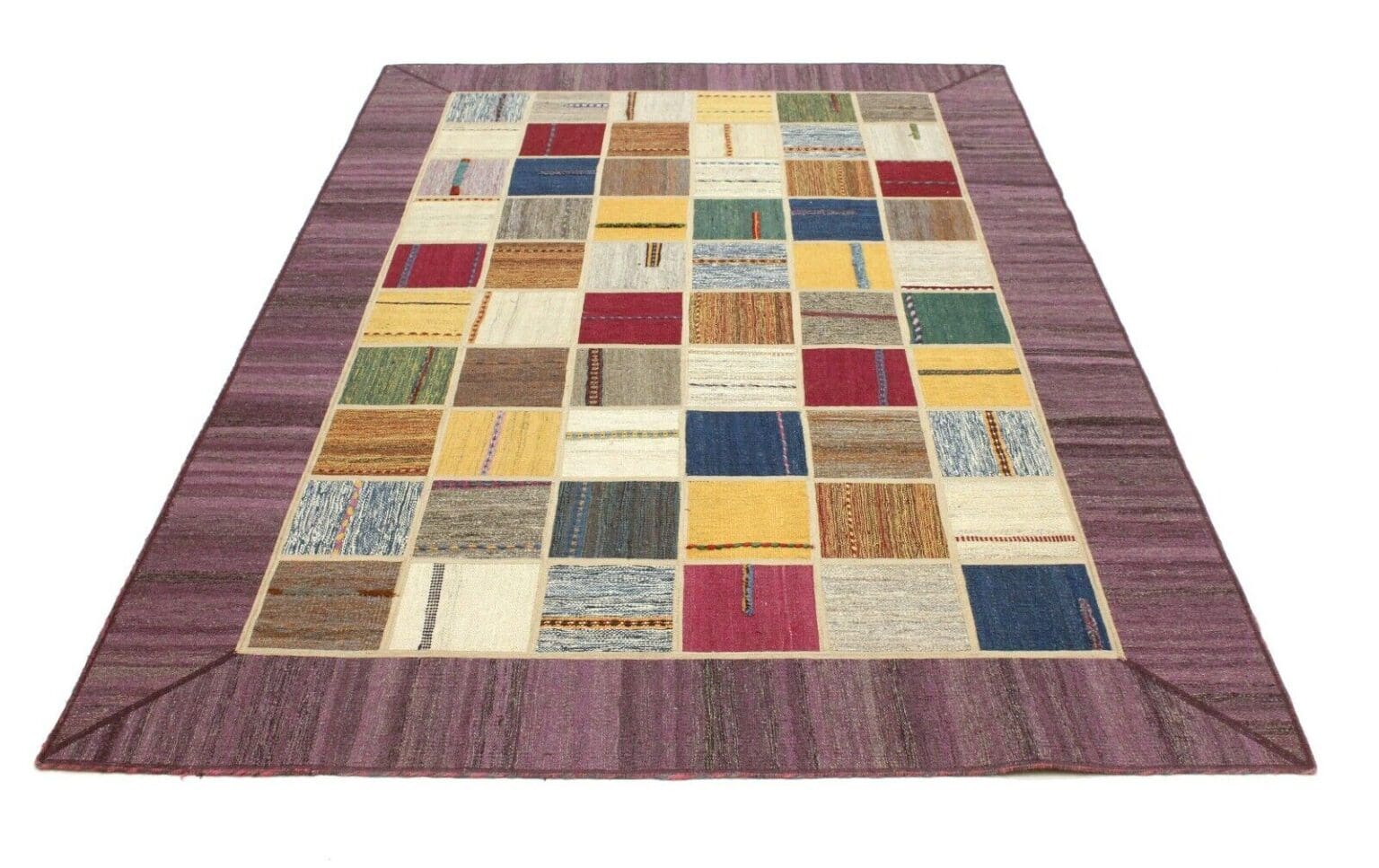
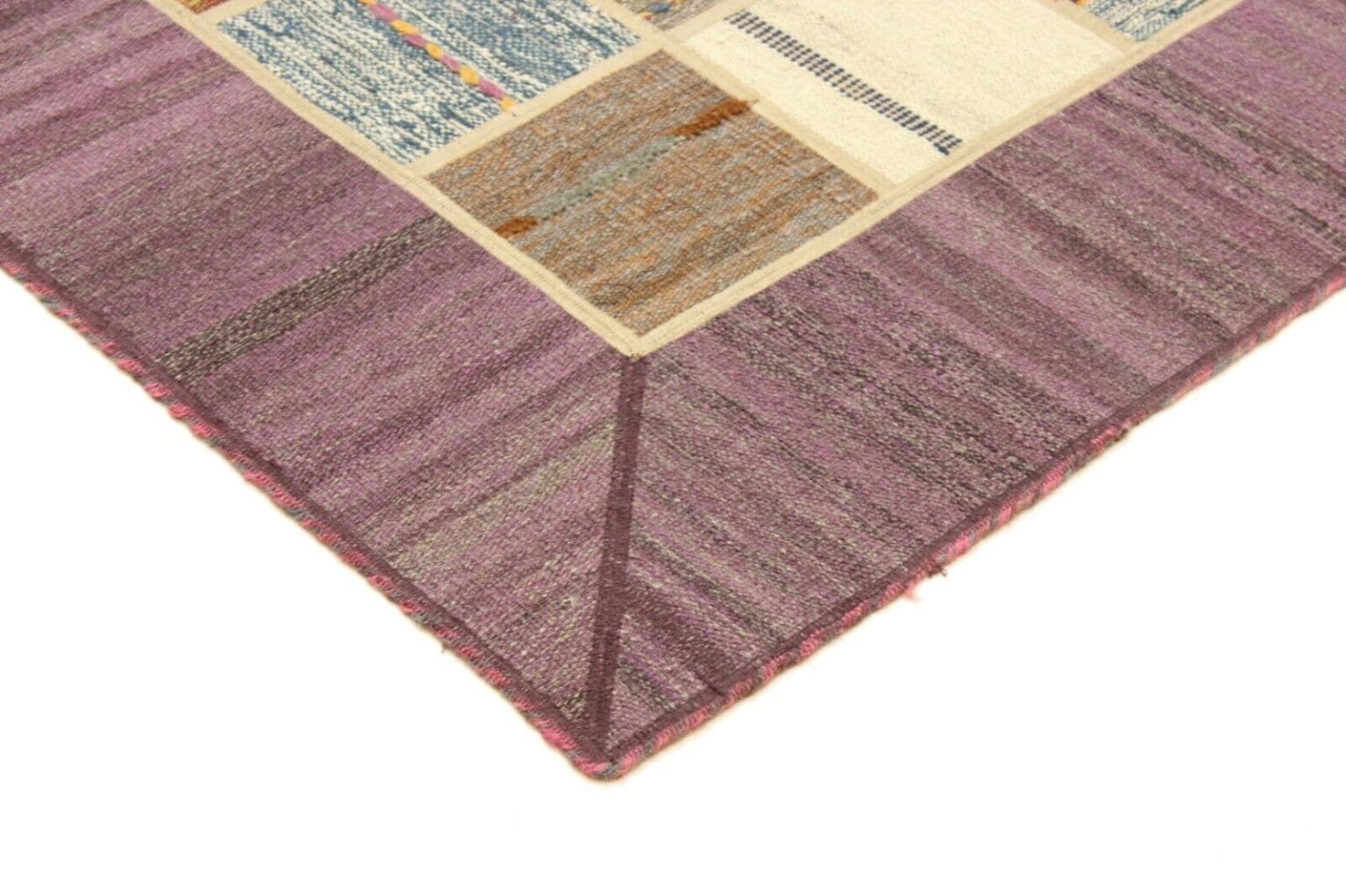
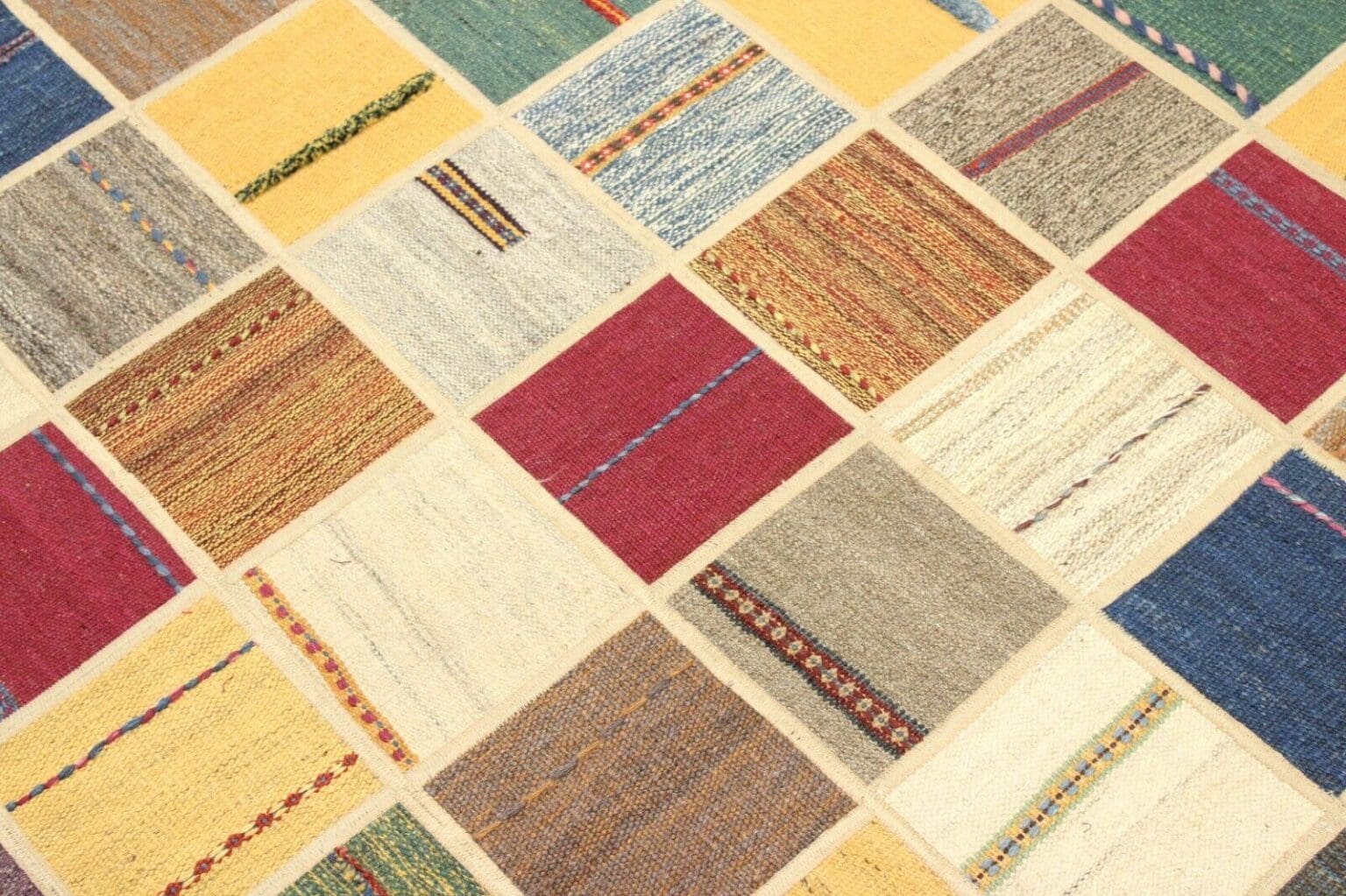
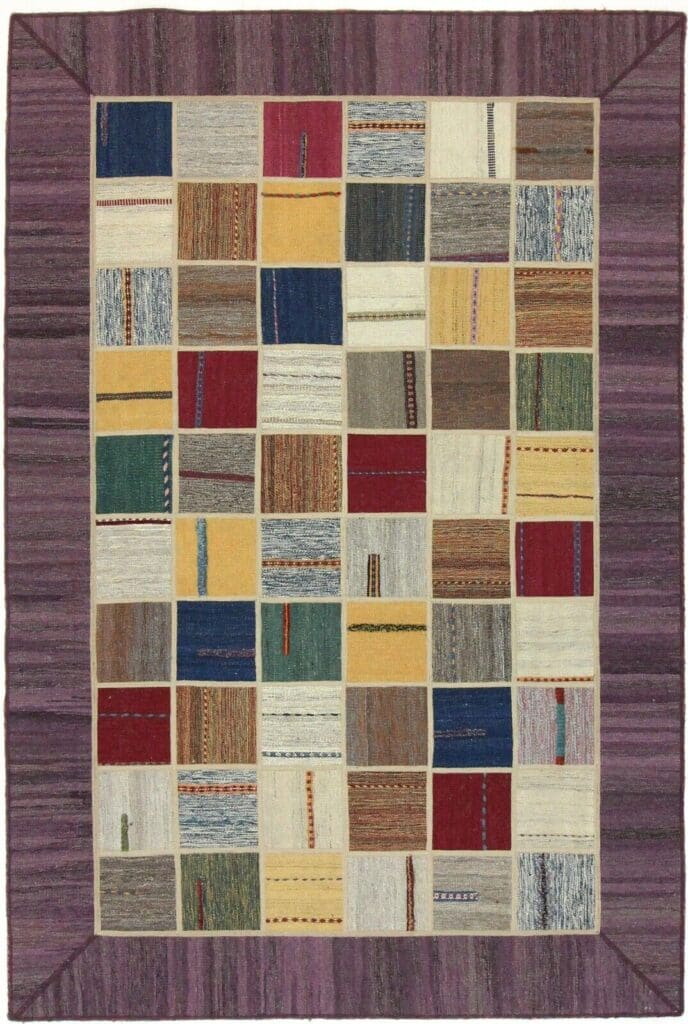
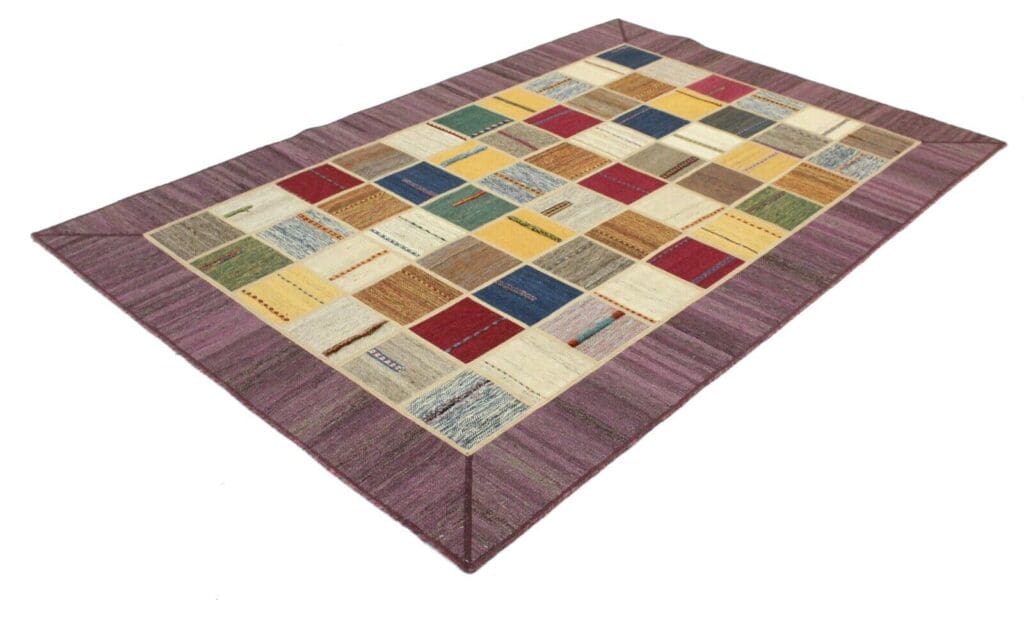
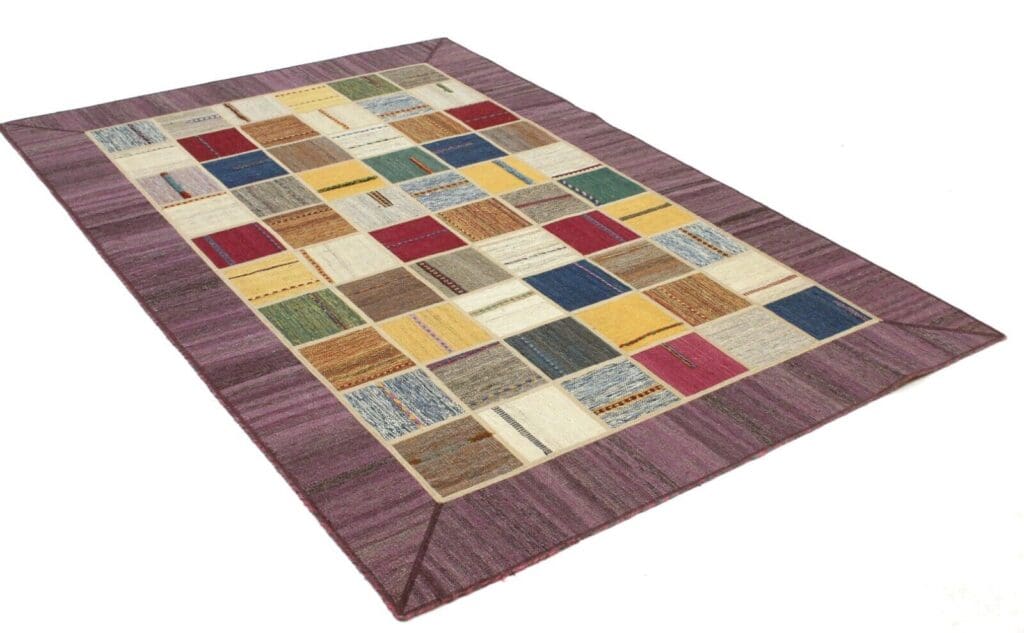
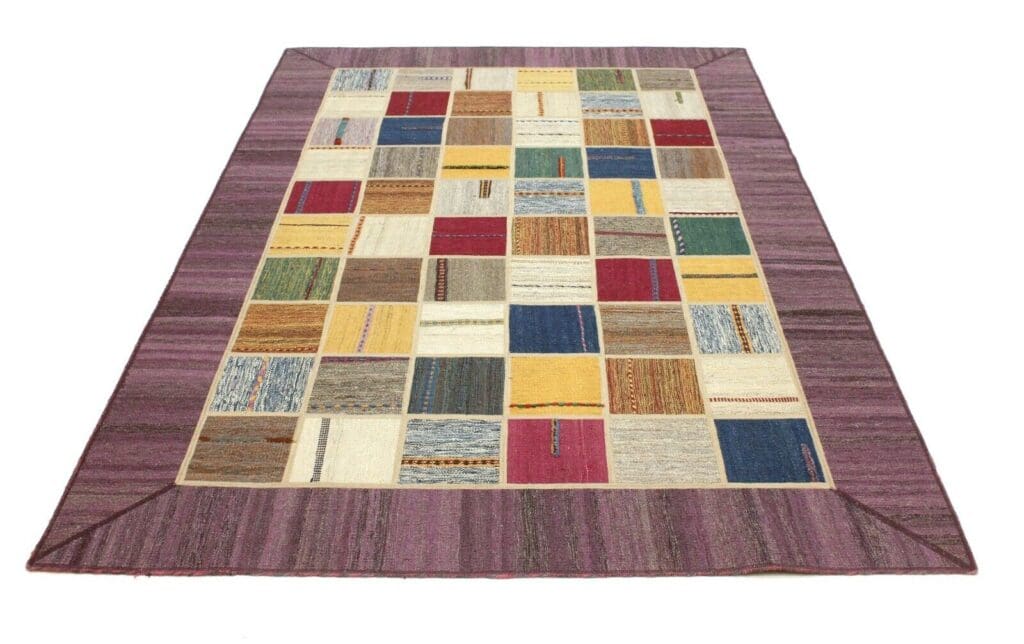
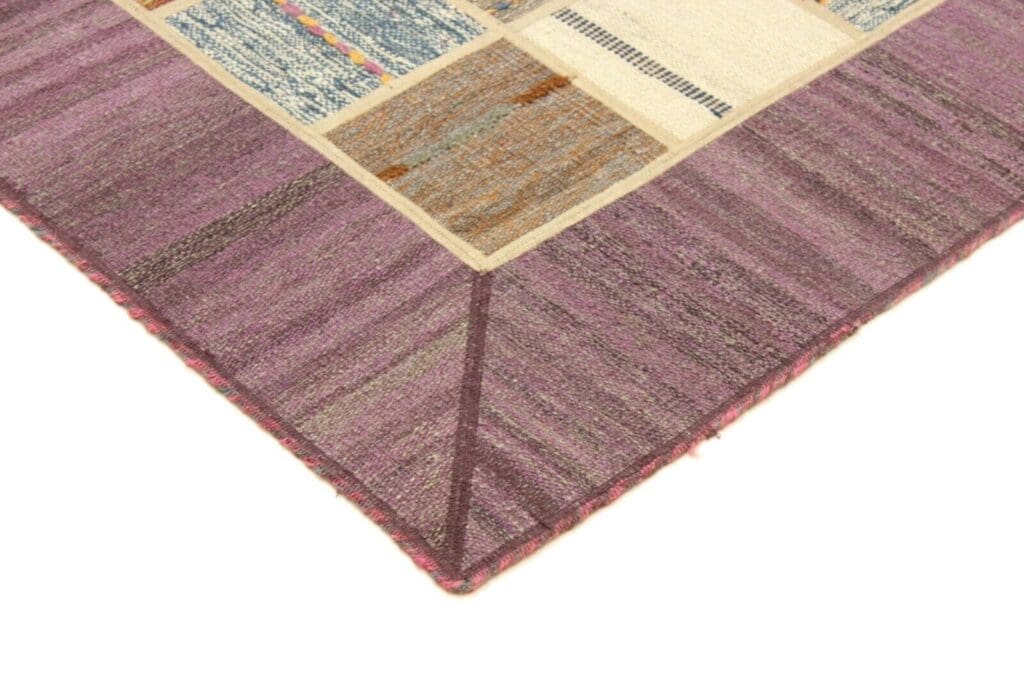
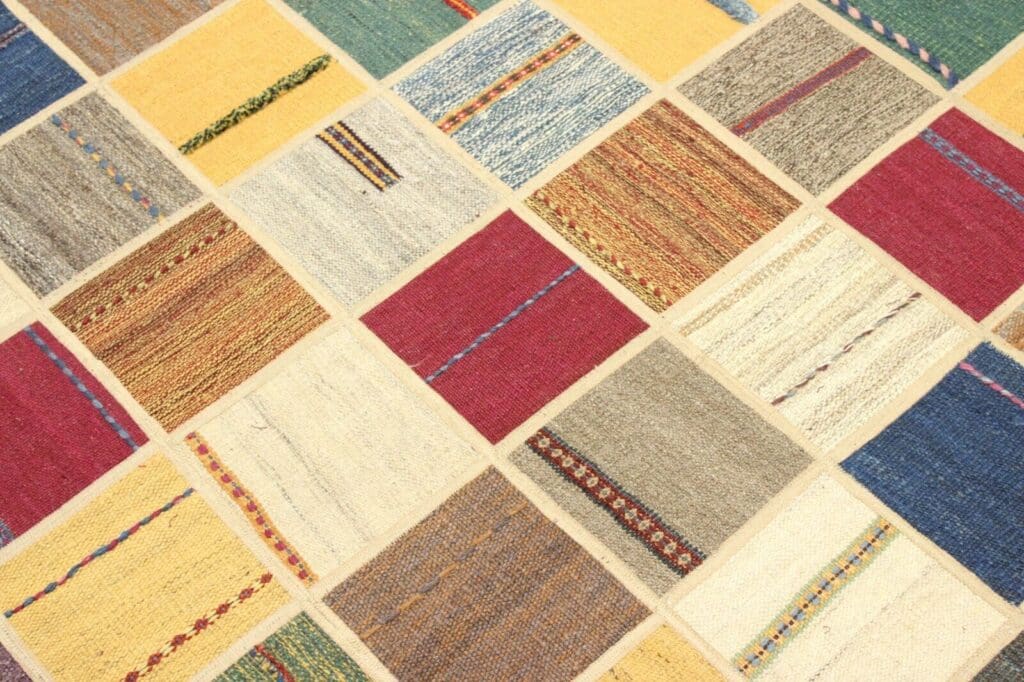
Oriental Rug 241×161 cm Wool Hand-woven
€ 720
Hand-woven Oriental rug | Material: 100% wool and 100% cotton | Size: 241 cm x 161 cm | Pattern: Geometric, Art Deco | Condition: New without label | Features: Non-slip, suitable for underfloor heating, easy to clean
1 available
- ✓Free Shipping in EU
- ✓2-5 Business Days Delivery
- ✓14-Day Return Policy
- ✓Worldwide Shipping on request
 SECURE PAYMENT
 SHIPPING PARTNERS
Inventory number: 0AB3E8CE
Description
Oriental Rug
Material and Craftsmanship
This rug is a hand-woven Kelim with a patchwork design. Its material information specifies 100% wool and 100% cotton. These are the two textile materials named for this piece, and no other fibre or percentage is stated. Wool is part of the rug’s defined material character, while cotton is also expressly included in the composition. The available description does not assign the two materials to particular structural parts.
The term Kelim refers to a flat-woven textile, while the listing identifies the production technique as hand-woven. The product description also mentions hand-knotted among the special features. That additional wording is retained as a stated product characteristic, but the title and principal technique designation identify the rug as hand-woven. The patchwork description indicates a composed visual structure made from several design units or sections.
No knot density, knot type, yarn thickness, loom construction or detailed weaving method is provided. Those technical points therefore cannot be added to the description of this one-off piece. What is established is its hand-woven Kelim designation, its patchwork format and its stated material combination of wool and cotton. The material information does not support a more specific claim about pile, backing or weave structure.
The rug is described as new without a label. Its listed practical properties include a non-slip feature, suitability for underfloor heating and easy cleaning. These are the particular functional details supplied for the item. They do not provide technical specifications about the underside, heat limits or cleaning products. Such details are not given and are consequently not assigned to this rug.
Origin and Tradition
The origin of this rug is unknown. It is therefore presented as an Oriental rug rather than as a Persian rug. No country, province, weaving centre or workshop is identified. Names of well-known rug regions must not be treated as an origin statement here. Oriental rug is the broader product category used for the piece, not evidence of a documented place of manufacture.
Kelim weaving belongs to a broad textile tradition associated with the Orient and neighbouring cultural regions. Historically, flat-woven textiles served both practical and decorative purposes. In a conventional Kelim, coloured weft threads create the visible design within a woven surface rather than producing the raised pile associated with many knotted rugs. This general account explains the technique’s tradition; it does not locate this particular rug.
Regional Kelims can differ considerably in colour systems, pattern vocabulary, weave structure and methods of arranging fields. Some rely on repeated geometric units, while others combine larger areas or contrasting sections. A patchwork concept draws on the possibility of bringing separate visual elements together into one textile composition. The present piece is identified as a patchwork Kelim, but its unknown origin prevents attribution to a specific regional school.
Oriental rug production includes several traditions, among them weaving and knotting. A technical term can describe how a textile is made, while a design term can describe how it looks. Neither one automatically establishes provenance. Reliable geographic attribution requires a stated country, region, workshop or comparable evidence. No such information is supplied for this rug. Its technique, materials, style and condition are documented independently of its origin.
The Art Deco designation places the design within a modern decorative language known for geometry, ordered composition, stylised forms and a controlled surface effect. This influence can be combined with handcraft techniques, including flat weaving. It describes the stated style of the rug rather than its age or place of manufacture. The source does not provide a production date, a historical period for the item or a named designer.
The absence of a label is relevant to identification but does not by itself establish or disprove a particular origin. No signature, certificate or workshop mark is mentioned. The responsible description is therefore precise about what can be established and restrained about what cannot: this is a new, hand-woven patchwork Kelim with an unknown origin, rather than a rug assigned to an unsupported Persian or regional provenance.
Design and Pattern
The pattern is described as geometric, and the style is identified as Art Deco. Geometric rug design may organise a surface through lines, angles, blocks, diamonds, rectangles or repeated intervals. These devices create visual order without requiring a naturalistic scene. For this rug, however, no individual shape, colour sequence, symbol or motif is specified. The description therefore stays with the documented geometric classification.
Patchwork is part of the rug’s named design concept. It describes a composition in which multiple sections or design units contribute to one overall surface. In a textile, this effect can be expressed through changing fields, distinct pattern areas or deliberate transitions between sections. The source does not describe the number or character of those sections. It does establish that the rug is a patchwork Kelim, not which individual motifs appear in it.
Art Deco is commonly associated with strong geometry, balanced proportions and stylised ornament. In interior textiles, these principles can appear through aligned forms, clearly divided areas and a decorative but structured arrangement. The designation does not imply a particular colour palette or a specific historical model. Colours, borders, medallions, repeated rapports and figurative elements are not stated for this piece and are therefore not added.
Flat weaving can suit geometric compositions because the design is integrated directly into the woven surface. In a knotted rug, a pattern is built through rows of individual knots and a pile; a Kelim is described primarily through its woven plane. The listing also records hand-knotted as a special feature, without explaining how that wording relates to the main Kelim designation. The principal title and product description call the rug hand-woven.
A geometric patchwork rug can sit alongside modern furnishings because its visual language is based on organised areas and clear forms. The Art Deco reference adds a decorative, ordered reading to the design. This is a general explanation of the named style, not a claim about a particular room or interior. The rug’s actual visual details should be assessed directly, since the source does not specify colours, motifs or the arrangement of its sections.
The design can therefore be accurately summarised through four supplied terms: Kelim, patchwork, geometric and Art Deco. Together they identify the textile technique, the compositional approach, the pattern family and the style classification. They do not establish a regional origin, an age or a historical attribution. No symbolic interpretation is supplied, so individual shapes should not be assigned meanings that are absent from the product information.
Special Features
The rug is listed as new without a label. Its special features are a non-slip property, suitability for underfloor heating and easy cleaning. The non-slip description points to a practical function during use on the floor, although the construction of that property is not specified. For safe placement, the floor and installation conditions should still be appropriate; no separate technical information about backing or underlay is provided.
Suitability for underfloor heating is expressly included in the product details. This makes the rug appropriate in principle for rooms equipped with that type of heating. The listing does not state temperature limits, insulation values or installation requirements. It also does not prescribe a particular cleaning agent or method. Easy to clean is a stated feature, not a detailed maintenance specification.
The lack of a label is reported together with the new condition. It is not a brand, workshop or provenance statement. There is no information about a signature, certificate, age or documented origin. The defining special characteristics are the hand-woven Kelim construction, the patchwork presentation, the stated wool and cotton materials, the geometric Art Deco style and the practical features named in the listing.
FAQ
How should I care for this Kelim?
The rug is described as easy to clean. For routine care, loose dust and dirt should be removed gently and regularly, avoiding unnecessary stress on the woven surface. Since no precise cleaning process or product is specified, a treatment should not be selected solely on the basis of the word easy. For heavier soiling, a professional cleaner familiar with hand-woven Kelims and wool-and-cotton textiles is a sensible option. The product information does not set a cleaning schedule or name a detergent.
Can the rug be used with underfloor heating?
Yes. Suitability for underfloor heating is expressly listed as one of the rug’s features. Before installation, the floor should be clean, dry and level, and the stated non-slip property should be considered. The description does not provide temperature limits, insulation data or instructions for a particular heating system. Where the installation conditions are unusual, compatibility should be checked professionally before use.
Where does the rug come from?
The origin is unknown. It is therefore described as an Oriental rug without assigning it to a country, province or workshop. The Kelim technique, patchwork format, geometric pattern and Art Deco style cannot by themselves prove a place of manufacture. Oriental rug is a broad category, not a specific provenance statement. The documented facts are its hand-woven presentation, the named materials, its new condition without a label and the listed practical features.
Additional information
| Design Style | |
|---|---|
| Color | |
| Size | |
| Shape | |
| Origin | |
| Material |
Related products

Persian Rug Fars 293 x 186 cm Wool Hand-woven
€ 798
Persian Rug Qashqai 286 x 200 cm Wool Hand-woven
€ 798
Persian Rug Gabbeh 250 x 180 cm Cashmere Hand-knotted
€ 1118
Persian Rug Heriz ca 341 x 242 cm Wool Hand-knotted
€ 1800
Oriental Rug Qashqai 292 x 193 cm Wool Hand-woven
€ 798
Persian Rug Fars 240 x 150 cm Cashmere Hand-knotted
€ 1118
Persian Rug Qashqai 286 x 192 cm Wool Hand-woven
€ 944
Oriental Rug Ushak ca 420 x 296 cm Wool Hand-knotted
€ 2250