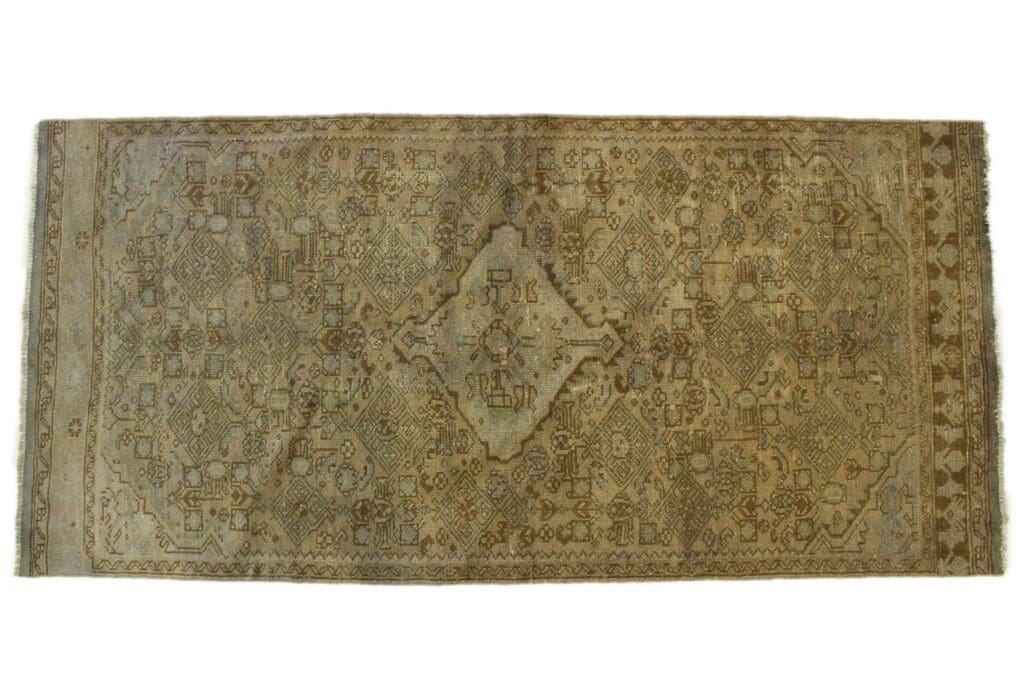
This Oriental rug is hand-knotted and made of wool. Wool is a natural fibre known for its hard-wearing character and comfortable feel. In use, its pile combines a soft surface underfoot with insulating properties. The material gives the rug a natural textile presence while providing the resilient structure associated with wool pile.
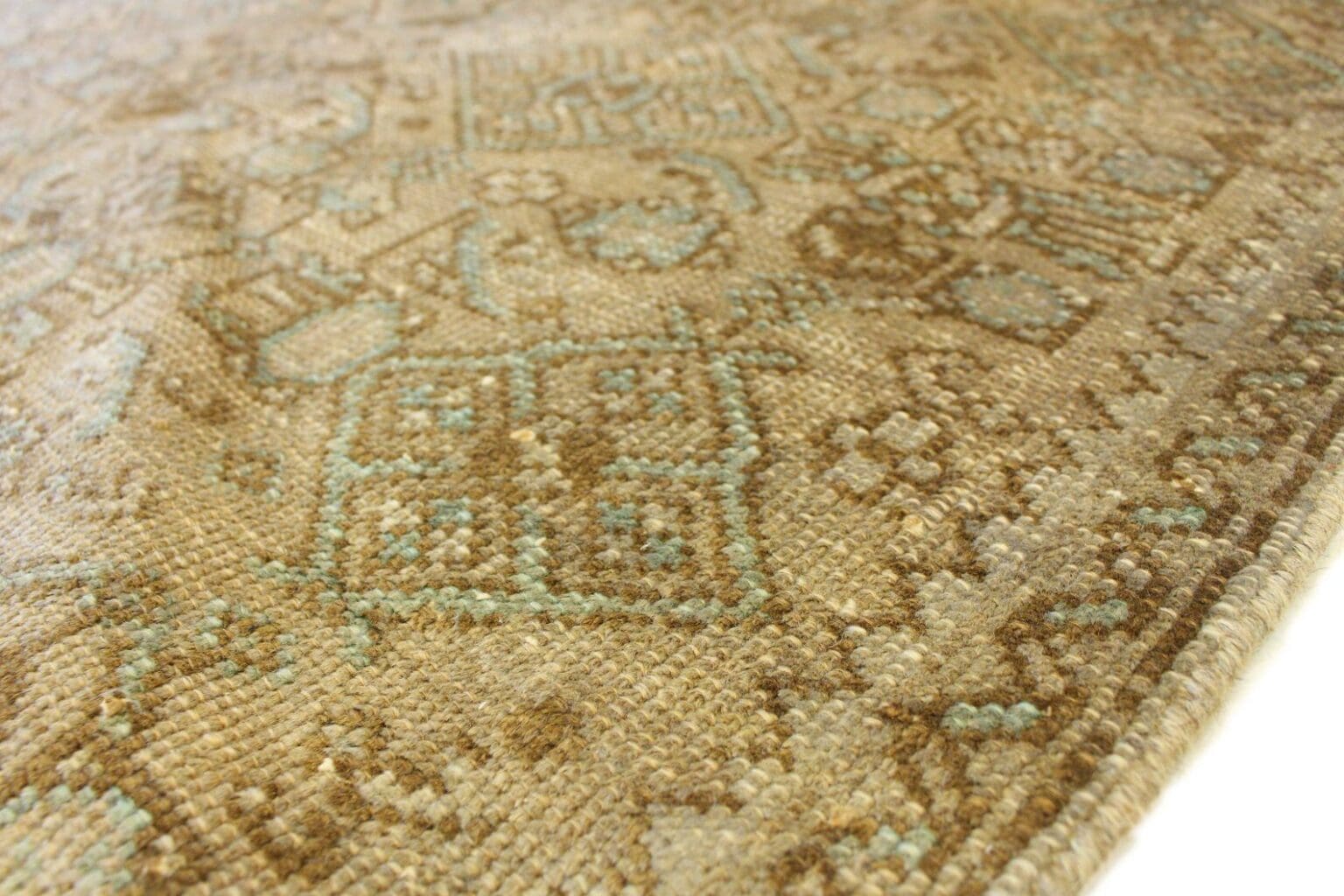
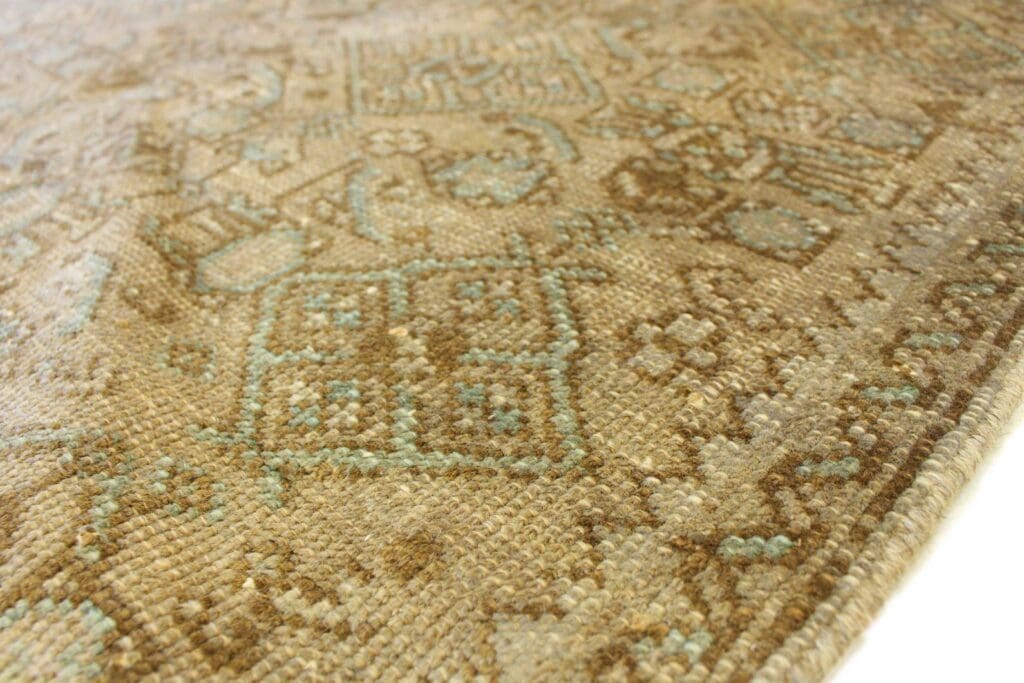
A hand-knotted rug is made by placing each knot individually into the foundation. The surface is therefore built gradually rather than produced as a mechanically repeated pattern. This method allows ornaments, colour transitions and fine details to be formed through the arrangement of the knots themselves. The source description associates this rug’s hand-knotted construction with a high knot density and detailed workmanship.
The relationship between wool and handwork defines the character of this piece. Wool has long been used in Oriental rug making because it is suitable for a durable pile and gives a naturally warm, pleasant surface. Hand-knotting also means that the design is created through a sequence of separate manual actions. The rug is described as a one-off, so its appearance belongs to an individual piece rather than to a mass-produced series.
The stated material is wool, and the long description identifies it as pure wool and as a natural fibre. Its soft handle and insulating qualities are part of the material description. The construction is not presented as a printed textile: the pattern belongs to the knotted pile. This distinction is relevant when viewing the ornaments, since their visual structure is connected with the way the rug has been made.
Origin and Tradition
Oriental rug making describes a broad tradition rather than one single place of production. The regions mentioned in connection with this tradition include the Caucasus, Anatolia and Afghanistan. Each of these areas has developed its own approaches to knotting, colour, composition and ornament. Regional practice can be reflected in the choice of geometric forms, the handling of borders and the balance between patterned and open areas.
The history of Oriental rugs reaches back centuries and is closely connected with the cultures of the Near East and neighbouring weaving regions. Rugs served practical and decorative purposes in a variety of settings. Within nomadic communities, they were used as sources of warmth as well as textile decoration. In domestic spaces, rugs could cover floors, define areas and display the skills and visual traditions of the people who made them.
The craft depends on knowledge passed through families, workshops and local communities. Making a knotted rug requires control of the foundation, the knotting process, pile formation and colour placement. A motif is developed progressively, knot by knot, rather than simply applied to the surface after the textile has been made. This creates a distinct textile depth and allows lines, fields and small ornamental details to follow the structure of the pile.
Colour is an important part of this history. Traditional rug makers worked with available dyes and developed a broad vocabulary of reds, blues, beiges and earth tones. Colours were considered in relation to one another so that the pattern could remain legible across the surface. Later design approaches have revisited these traditions in different ways. Overdyeing is one such approach: it can bring separate motifs into a more unified visual field and create the subdued appearance associated with many contemporary vintage designs.
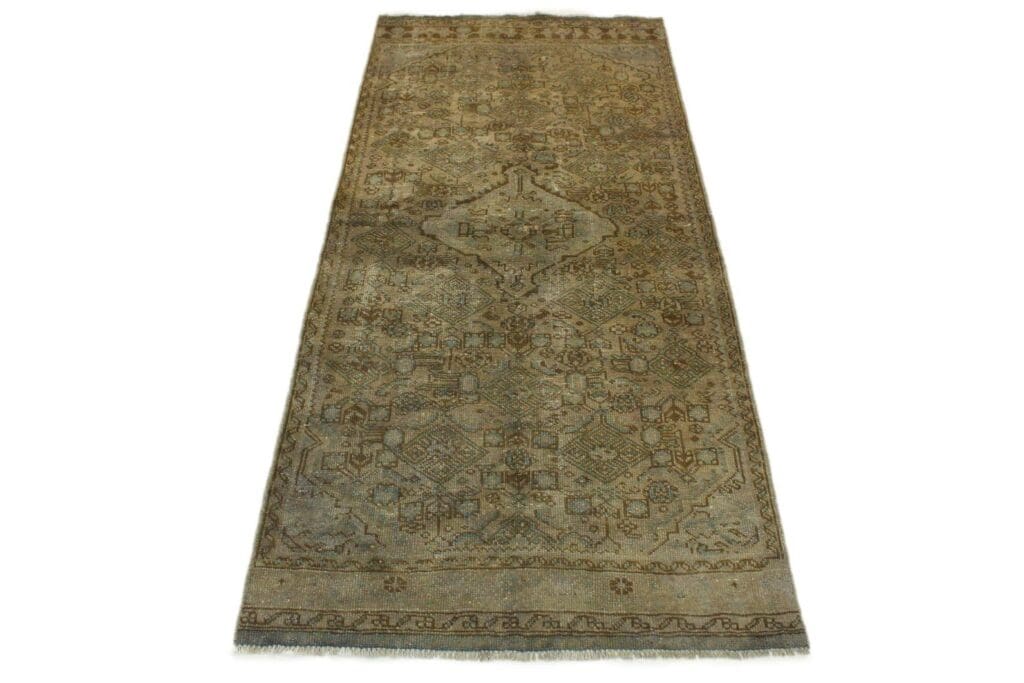
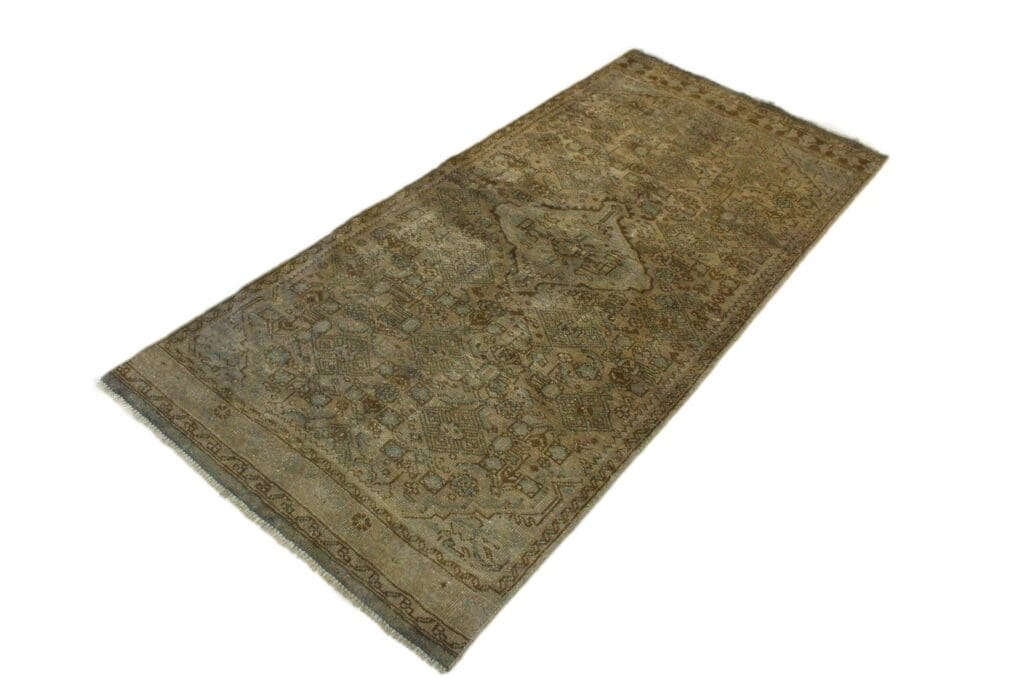
This rug is described as a Vintage Oriental rug with a modern design. It therefore combines a traditional hand-knotted technique with a current interpretation of colour and ornament. The designation Oriental rug identifies the broader craft tradition; it does not assign this particular piece to a named province. Its connection with that tradition is expressed through the wool, the knotting method and the use of ornamental patterning.
Design and Pattern
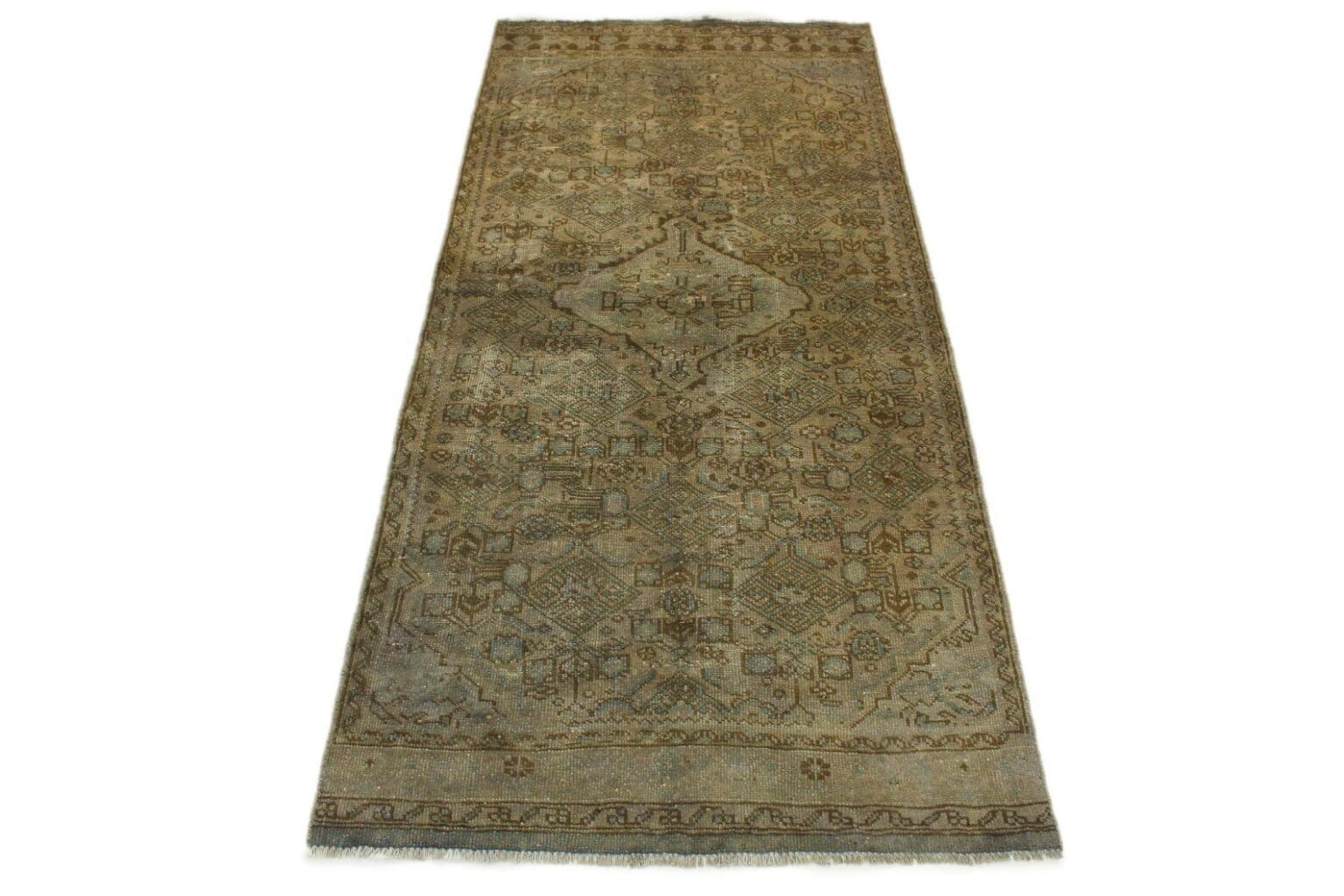
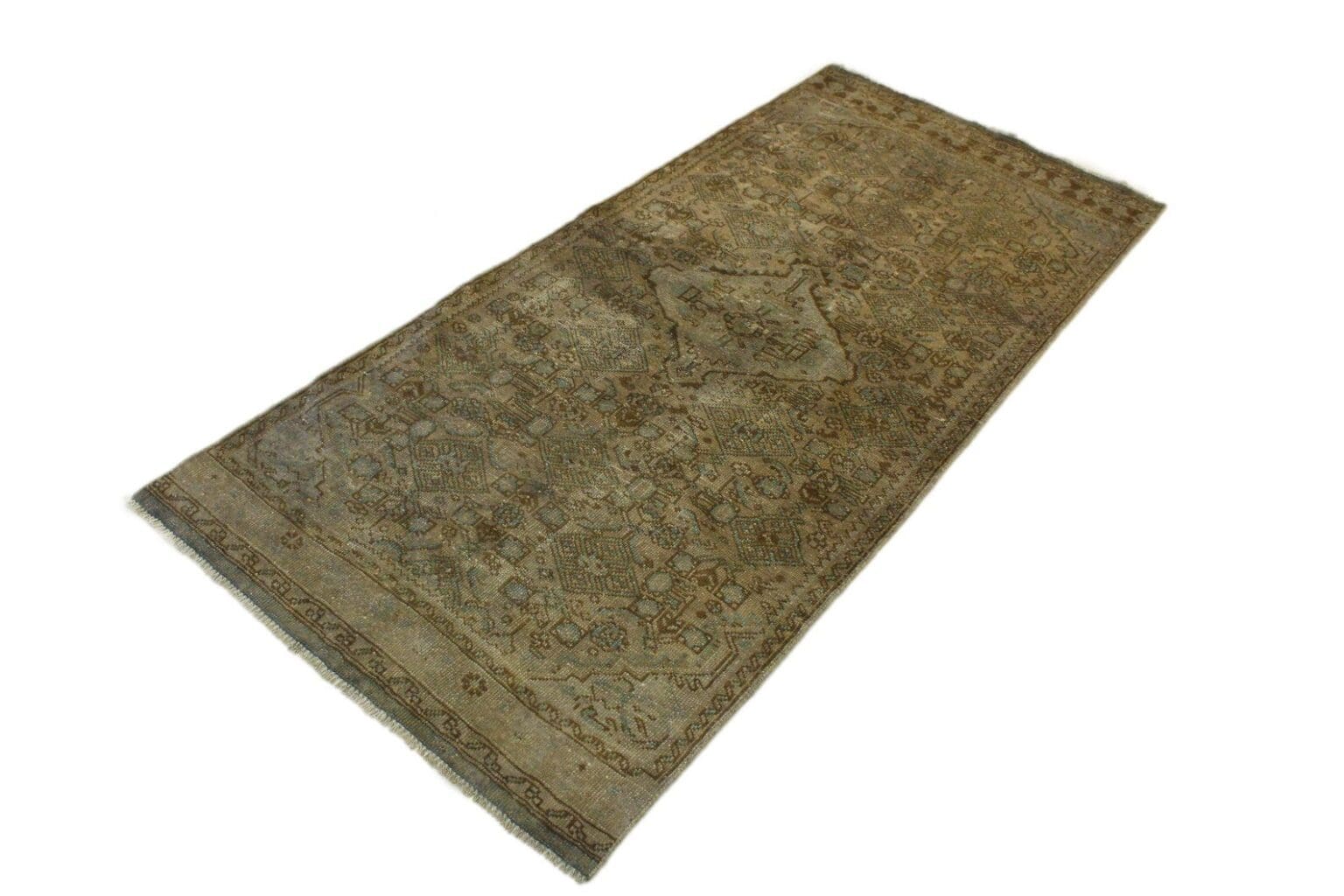
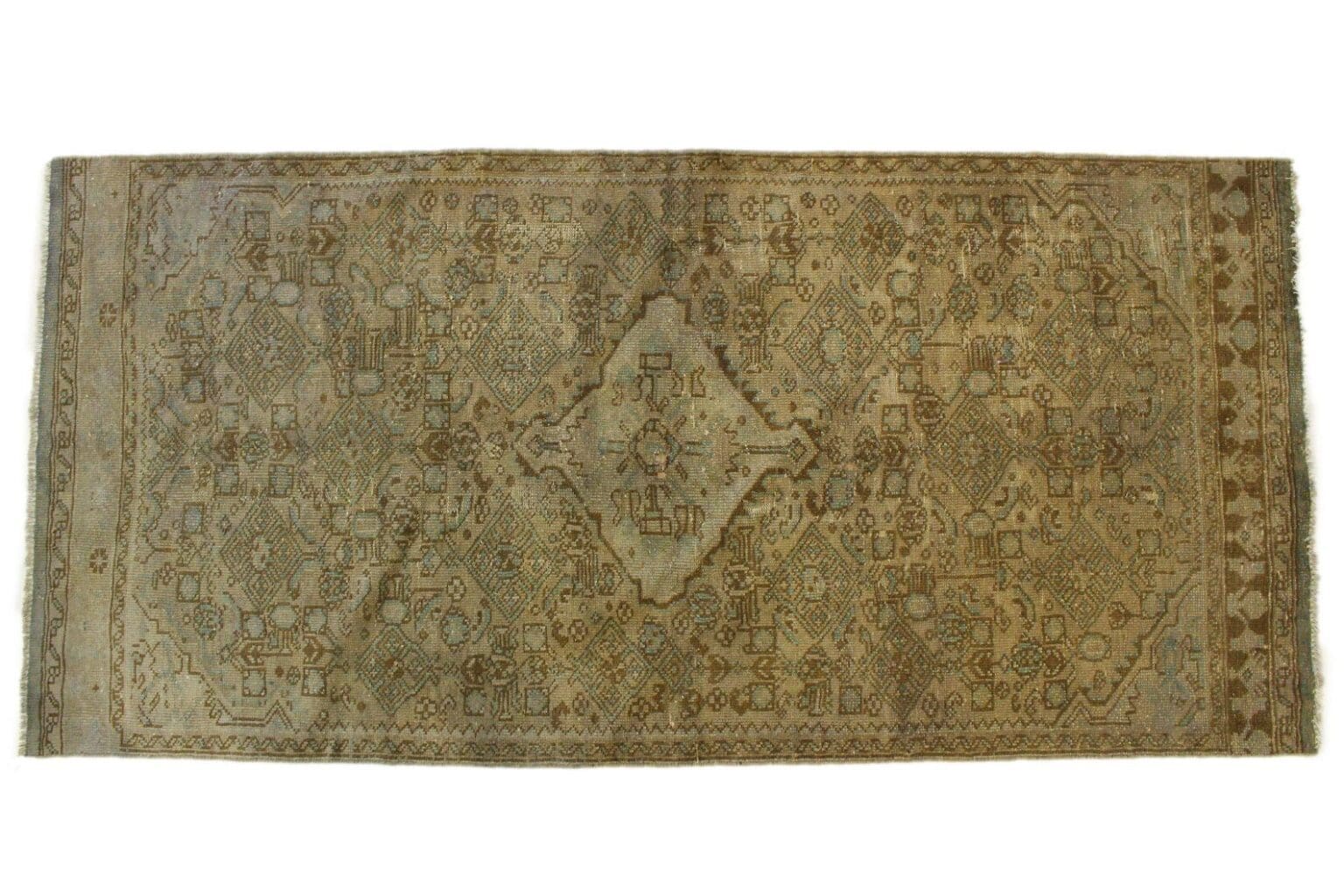
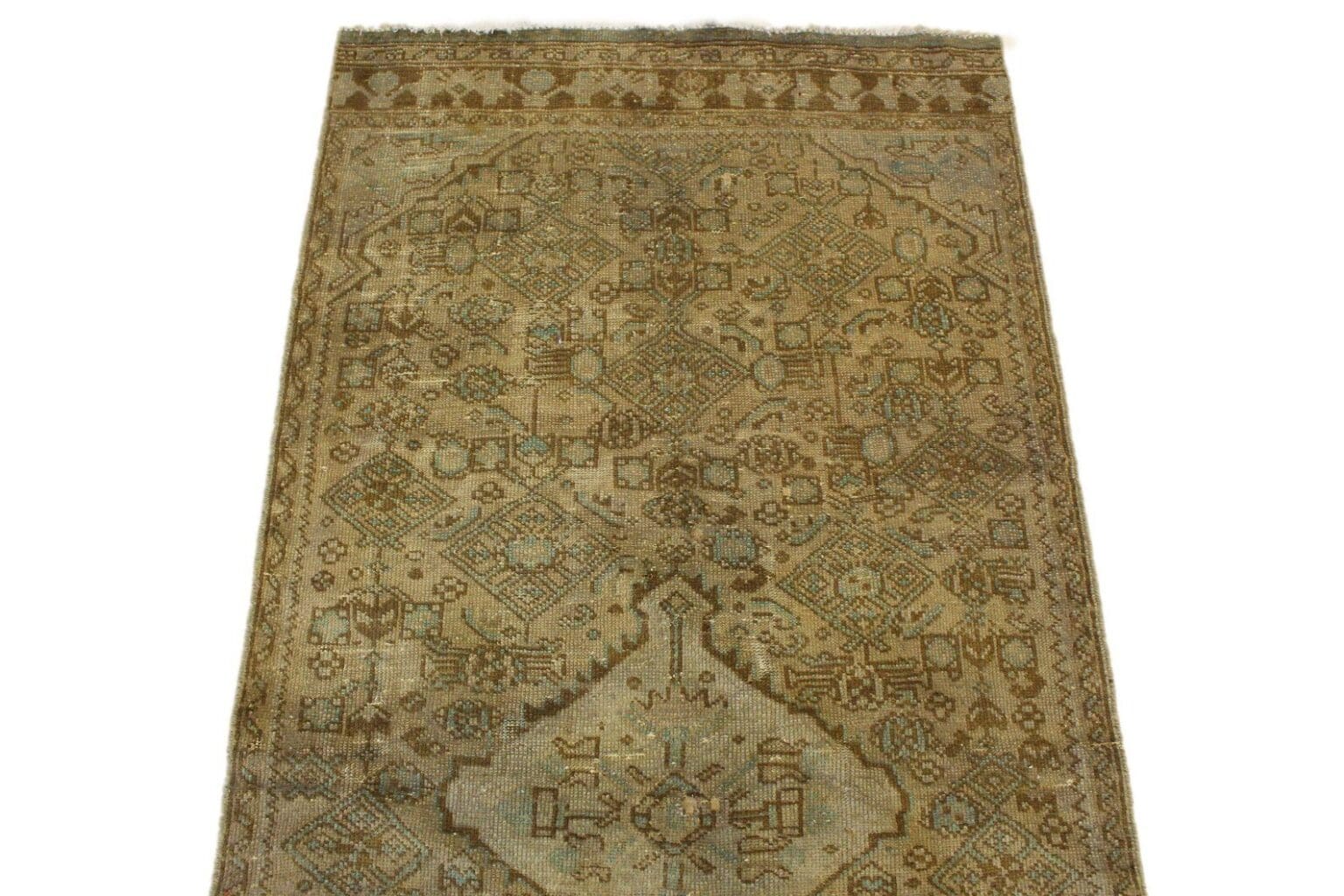
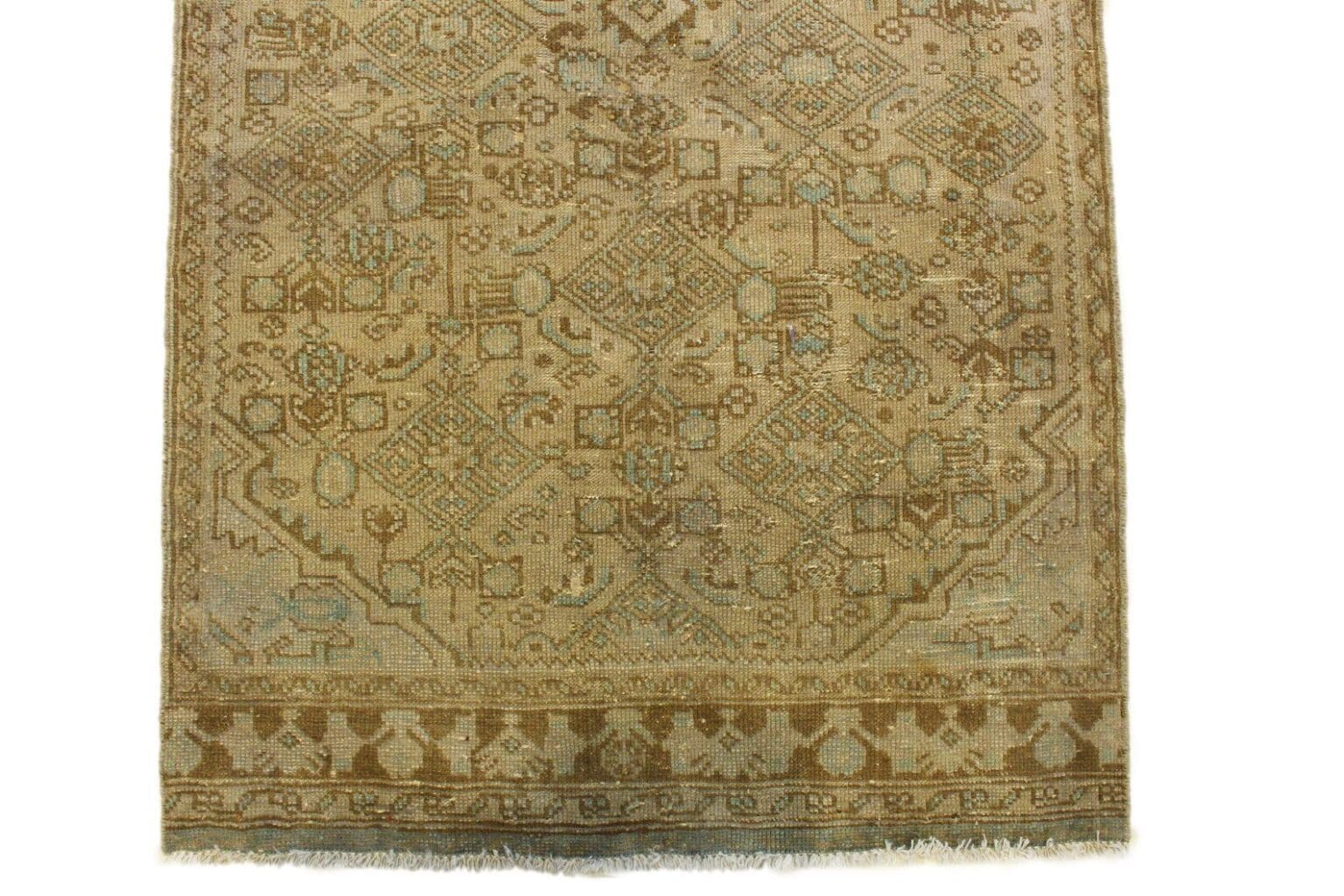
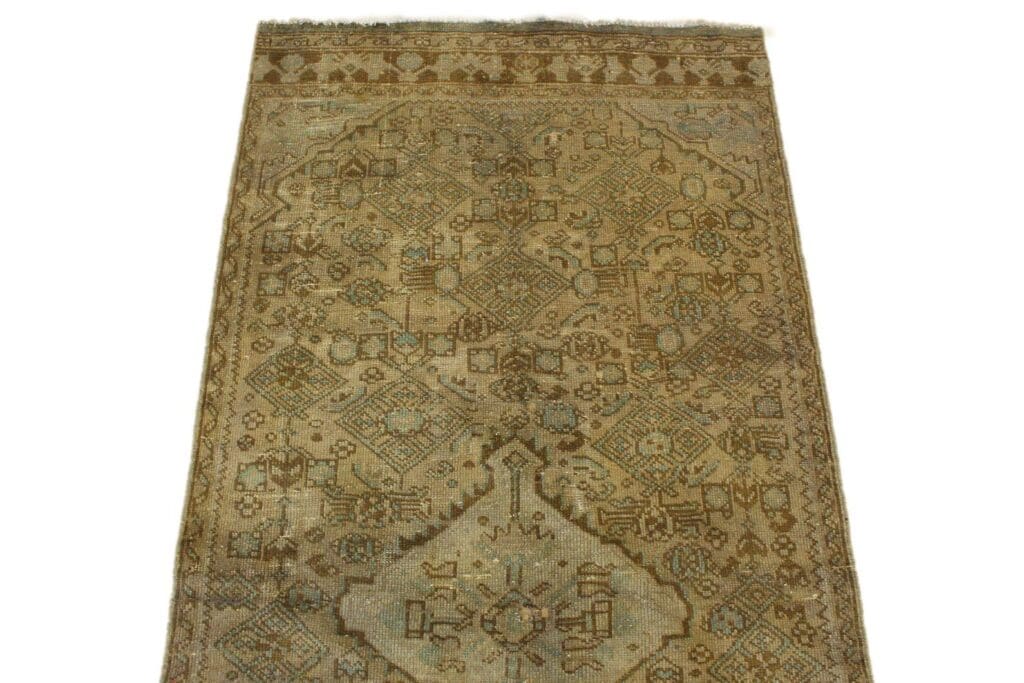
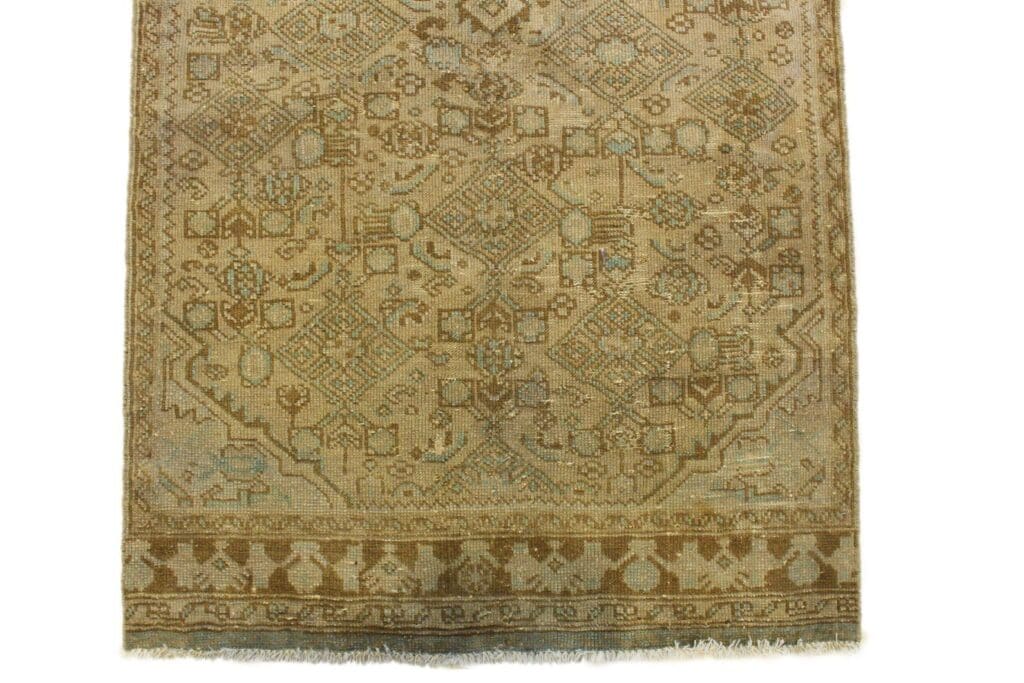
The design is characterised by beige tones and overdyed ornaments. Beige works as a restrained foundation in an interior and can be combined with light neutrals as well as earth colours. The appearance is created by the relationship between several shades rather than by one isolated colour. Gentle tonal transitions give the field a composed and continuous quality.
Overdyed ornaments are a design treatment in which an existing pattern is visually altered or brought together through an additional colour effect. Individual motifs may appear less sharply separated, while the overall surface gains a coherent vintage character. In a hand-knotted rug, the ornament is part of the pile’s construction rather than merely a printed image. The change in colour emphasis can therefore be read together with the underlying textile structure.
The source description refers to fine motifs and geometric patterns. Geometric ornament may be built from lines, angles, repeated units and framed fields. Such elements organise the surface and create a visual rhythm between quieter passages and decorative areas. Here, the beige and earth tones soften the geometry and place it within a modern overall effect. The pattern remains present without dictating a strongly contrasting colour scheme.
The term Vintage describes the visual concept of this rug rather than a stated production year. The pattern brings traditional ornamental ideas into a modern interior language. It can therefore sit alongside both traditional and contemporary furnishings. The neutral palette allows the overdyed ornamentation to remain visible while leaving room for other colours and materials in the surrounding space.
Ornaments in Oriental rugs have often been discussed in relation to cultural or religious meanings. Their interpretation depends on the region, the particular motif and the context in which it was used. No specific symbolism is assigned to the individual ornaments on this rug. What is established is an overdyed ornamental design in beige and earth tones with a modern vintage character. This keeps the pattern description tied to the visible design rather than to an unconfirmed symbolic reading.
Special Features
This rug is described as a one-off with a unique vintage design. Its individual pattern sets it apart from repeatedly manufactured mass-market pieces. It is also listed as new with a tag. The result is a combination of vintage-inspired appearance and the stated current condition.
The rug is suitable for use with underfloor heating. It is listed for several areas of the home and workplace, including the living room, bedroom and office. It is also described as easy to care for and can be cleaned when necessary. These are practical properties stated for this piece and do not depend on assigning it to a particular named weaving province.
Regular vacuuming is recommended to remove dust and dirt from the wool pile. For deeper stains, professional rug cleaning is advised. Direct sunlight should be avoided to help protect the colours. Turning the rug from time to time can support more even wear. These care measures are consistent with the care guidance provided for the Vintage Oriental rug.
FAQ
How should I care for the Vintage Oriental rug?
Vacuum it regularly to remove dust and dirt from the wool pile. If a stain has penetrated more deeply, professional rug cleaning is recommended. Keep the rug out of direct sunlight where possible, as this helps protect the beige tones and overdyed ornaments from fading. Rotating it occasionally can promote more even wear. The rug is described as easy to care for and can be cleaned when required.
Which rooms are suitable for this rug?
The rug can be used in a living room, bedroom or office. Its modern vintage design, beige palette and earth tones work with both contemporary and traditional interior styles. Its suitability for underfloor heating is also expressly stated. The most appropriate room depends on the layout and on how prominently the overdyed ornaments are intended to appear.
Where can the Oriental rug be placed?
It can be placed where its pattern remains visible, for example beneath a coffee table or as a focal point in an entrance area. Direct sunlight should be avoided to help preserve the colours. Placement in a frequently used area is possible because the rug is made of wool and described as easy to care for. Regular rotation can help distribute wear more evenly when the rug is used often.
To provide the best experiences, we use technologies like cookies to store and/or access device information. Consenting to these technologies will allow us to process data such as browsing behavior or unique IDs on this site. Not consenting or withdrawing consent, may adversely affect certain features and functions.
Functional Always active
The technical storage or access is strictly necessary for the legitimate purpose of enabling the use of a specific service explicitly requested by the subscriber or user, or for the sole purpose of carrying out the transmission of a communication over an electronic communications network.
Preferences
The technical storage or access is necessary for the legitimate purpose of storing preferences that are not requested by the subscriber or user.
Statistics
The technical storage or access that is used exclusively for statistical purposes.The technical storage or access that is used exclusively for anonymous statistical purposes. Without a subpoena, voluntary compliance on the part of your Internet Service Provider, or additional records from a third party, information stored or retrieved for this purpose alone cannot usually be used to identify you.
Marketing
The technical storage or access is required to create user profiles to send advertising, or to track the user on a website or across several websites for similar marketing purposes.
 SECURE PAYMENT
 SHIPPING PARTNERS


