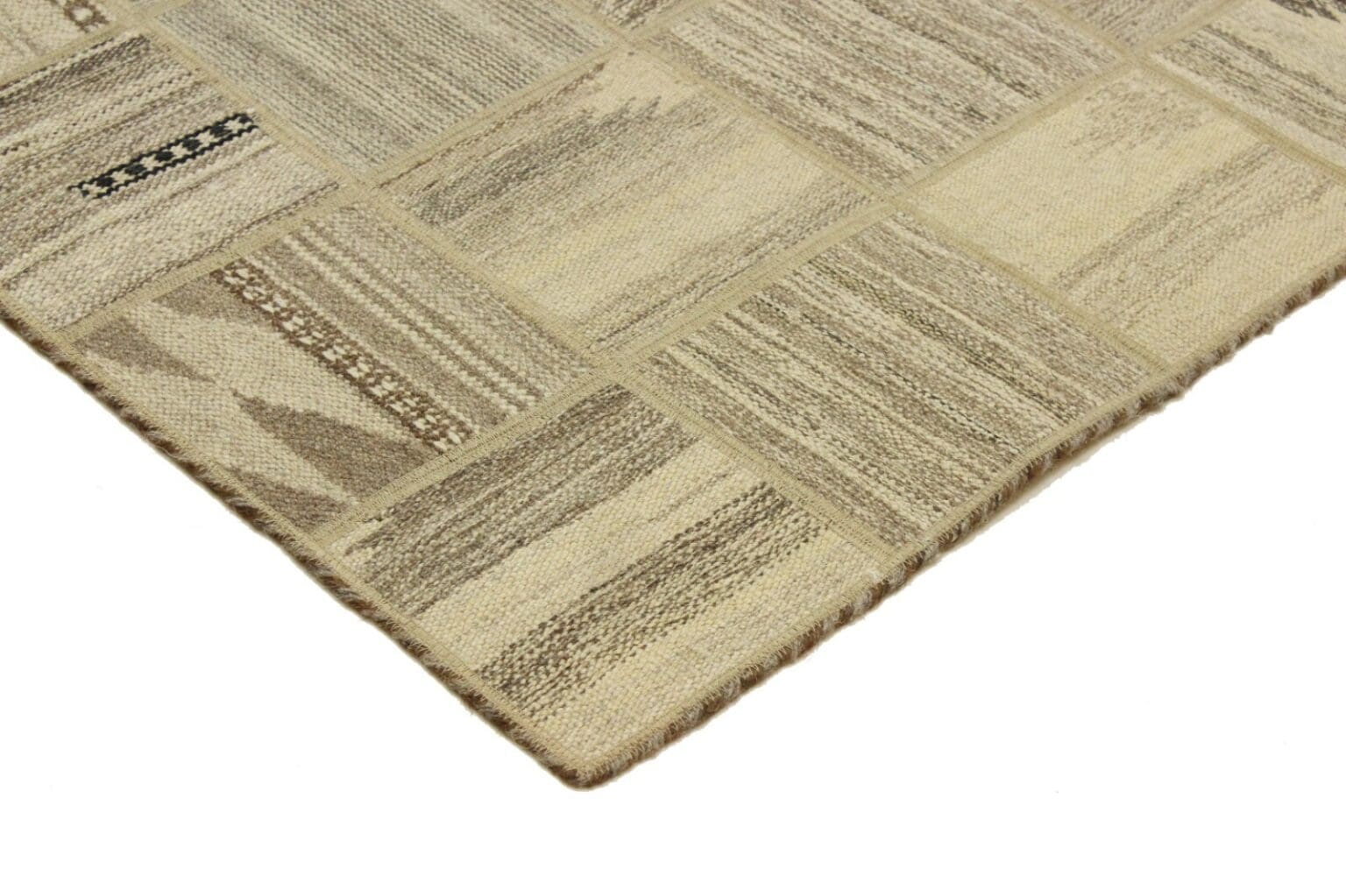
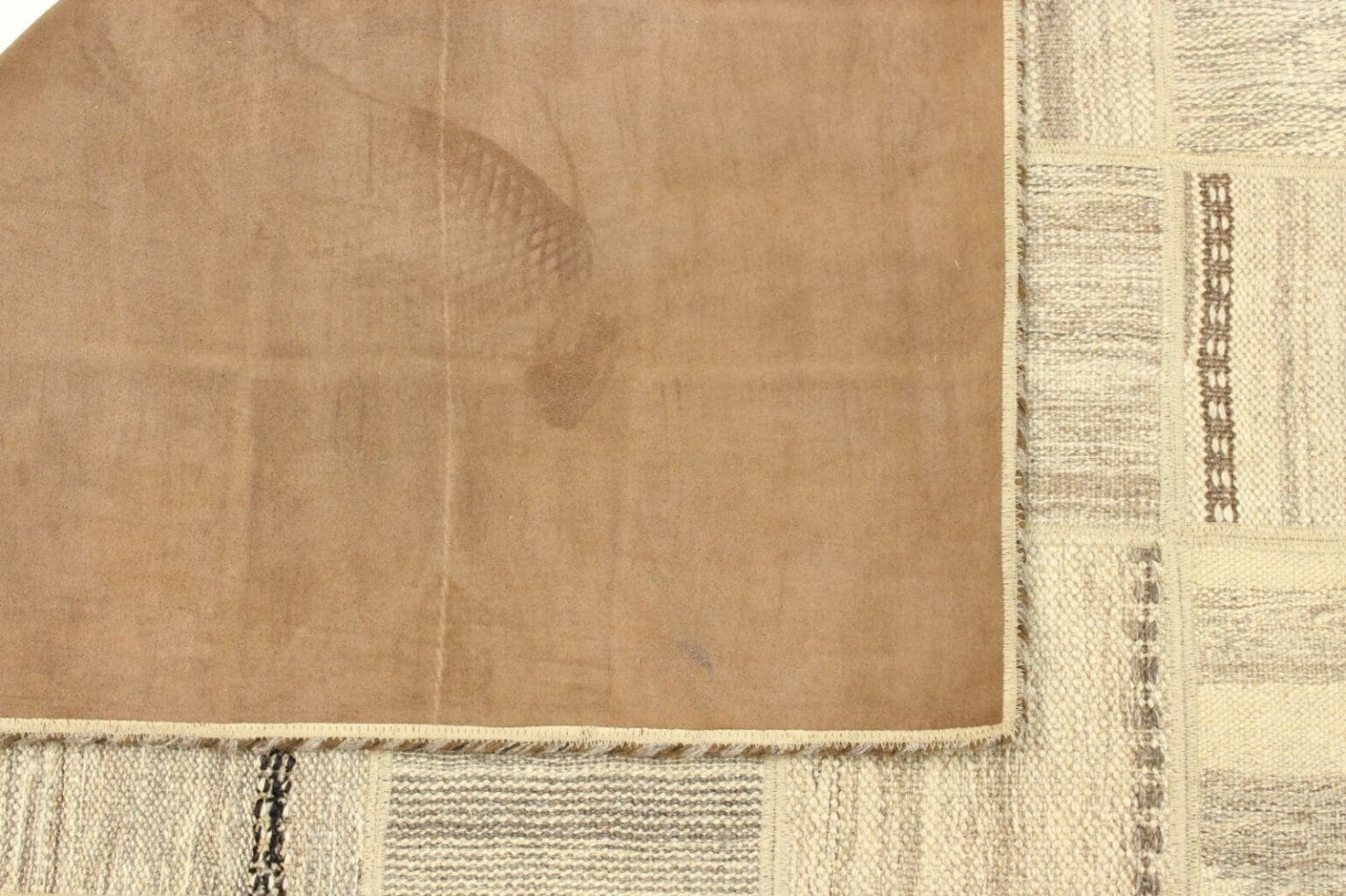
This rug is described as a hand-woven kilim made from 100% wool. A kilim is produced as a flat textile rather than as a rug with an upright pile. The listed flat pile height reflects that construction. Its even surface is part of the visual and practical character of a kilim, where the woven structure remains visible across the design. The product information also lists the weaving method as hand-knotted. The description therefore includes both the hand-woven kilim designation and the separately stated hand-knotted method.
Wool has long been used for rugs and flat-woven textiles because it offers a resilient, tactile fibre structure and accepts colour well. In a wool kilim, the material and the weave work together: the yarns form the surface, the pattern and the body of the textile at the same time. This rug is specified as 100% wool. No other fibre composition is provided, and no separate pile or warp material is identified in the source information.
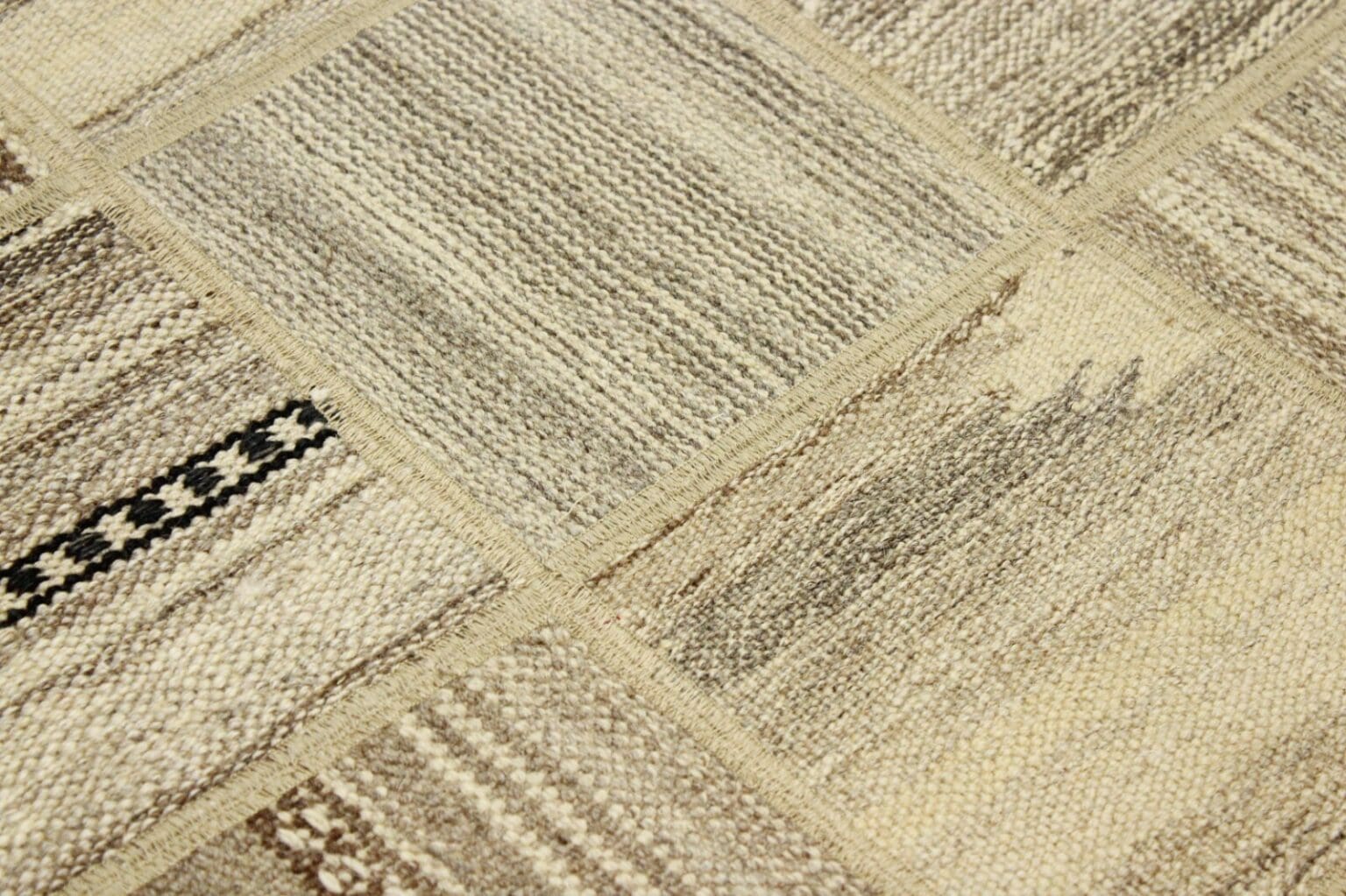
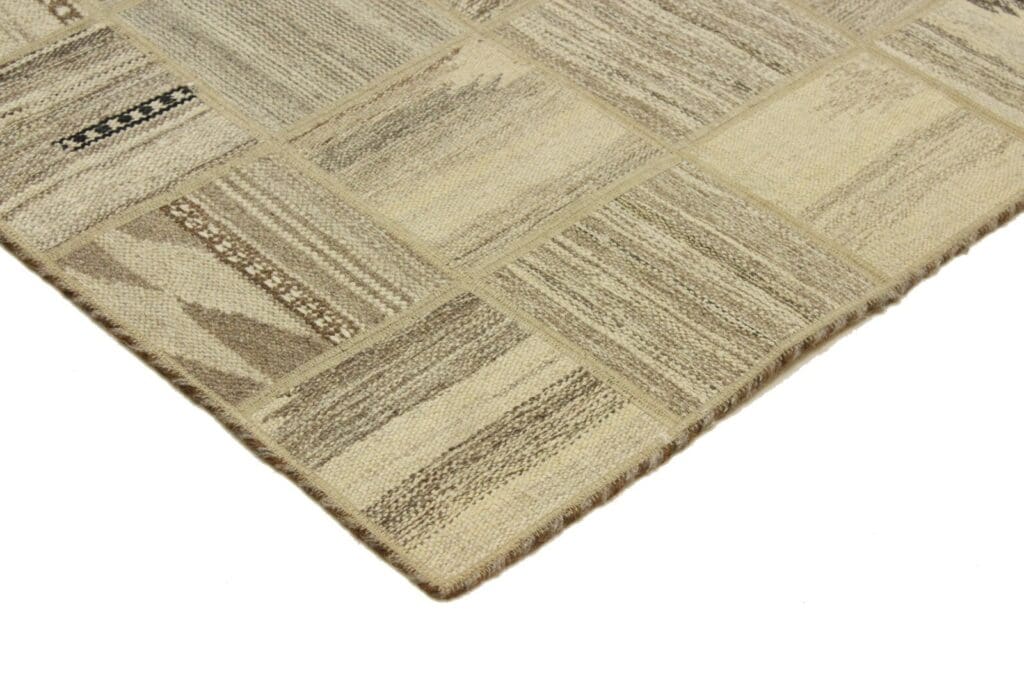
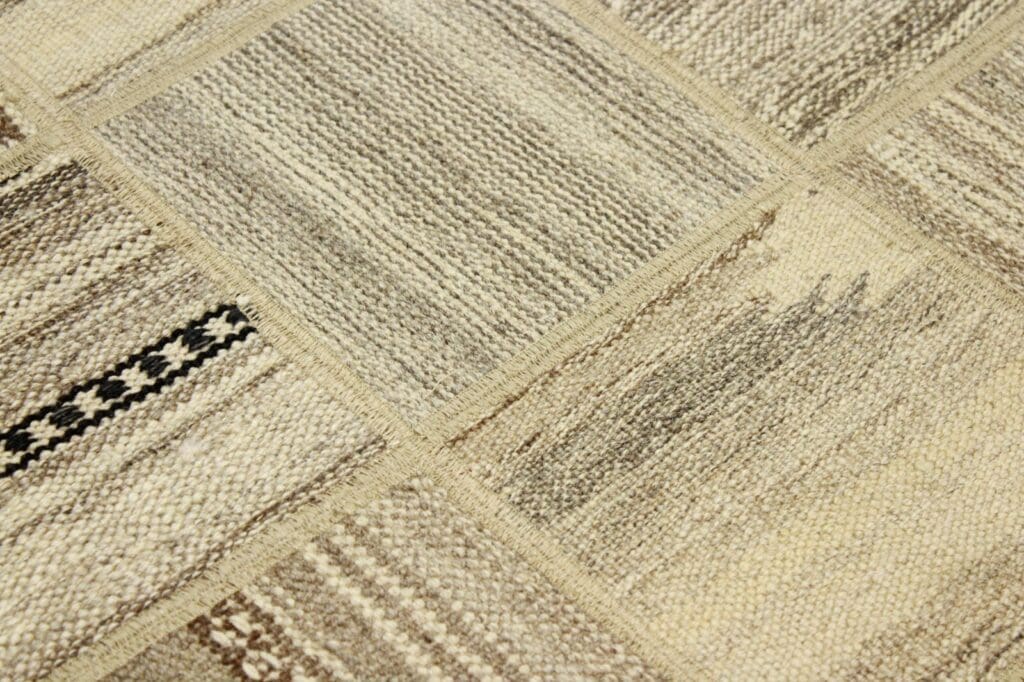
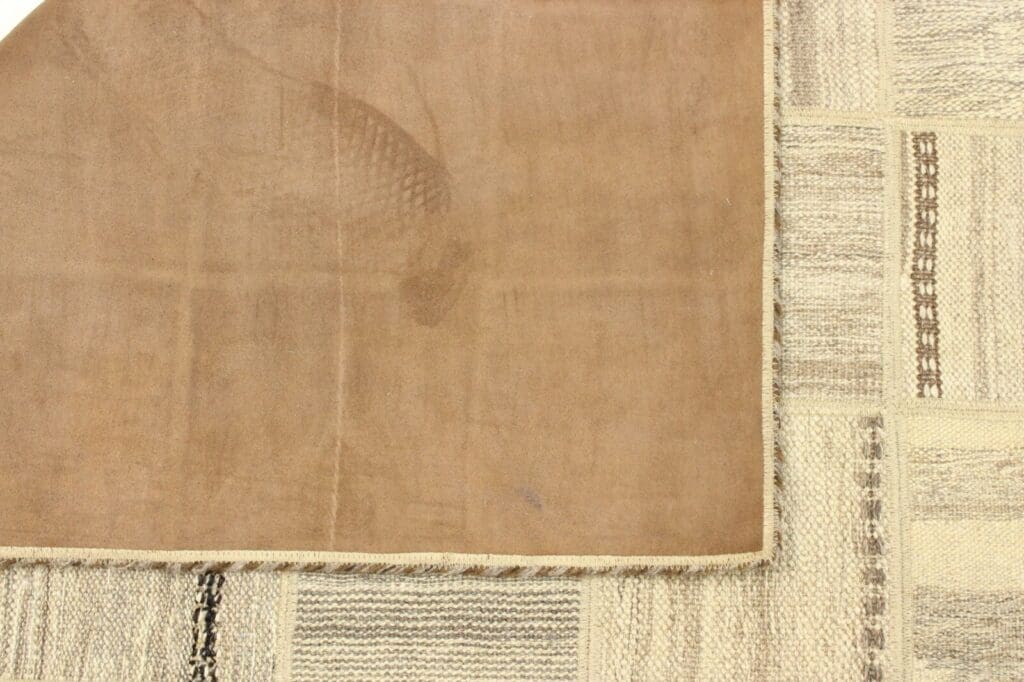
Flat weaving is based on a warp held under tension and weft yarns inserted across it. Coloured areas are built up as the weft passes through the structure, allowing lines, blocks and angular outlines to appear directly in the fabric. This differs from a conventional knotted rug, in which individual knots create a raised pile. The flat construction gives a kilim its characteristic textile profile and keeps the graphic organization of the pattern visible.
The rug is listed as new without a label. Its stated practical features are an anti-slip property, suitability for underfloor heating and easy cleaning. These are the usage details supplied for this piece. The source does not provide a knot count, a production date, an age, or a detailed division between pile and warp. Those points are therefore not added to its description.
Origin and Tradition
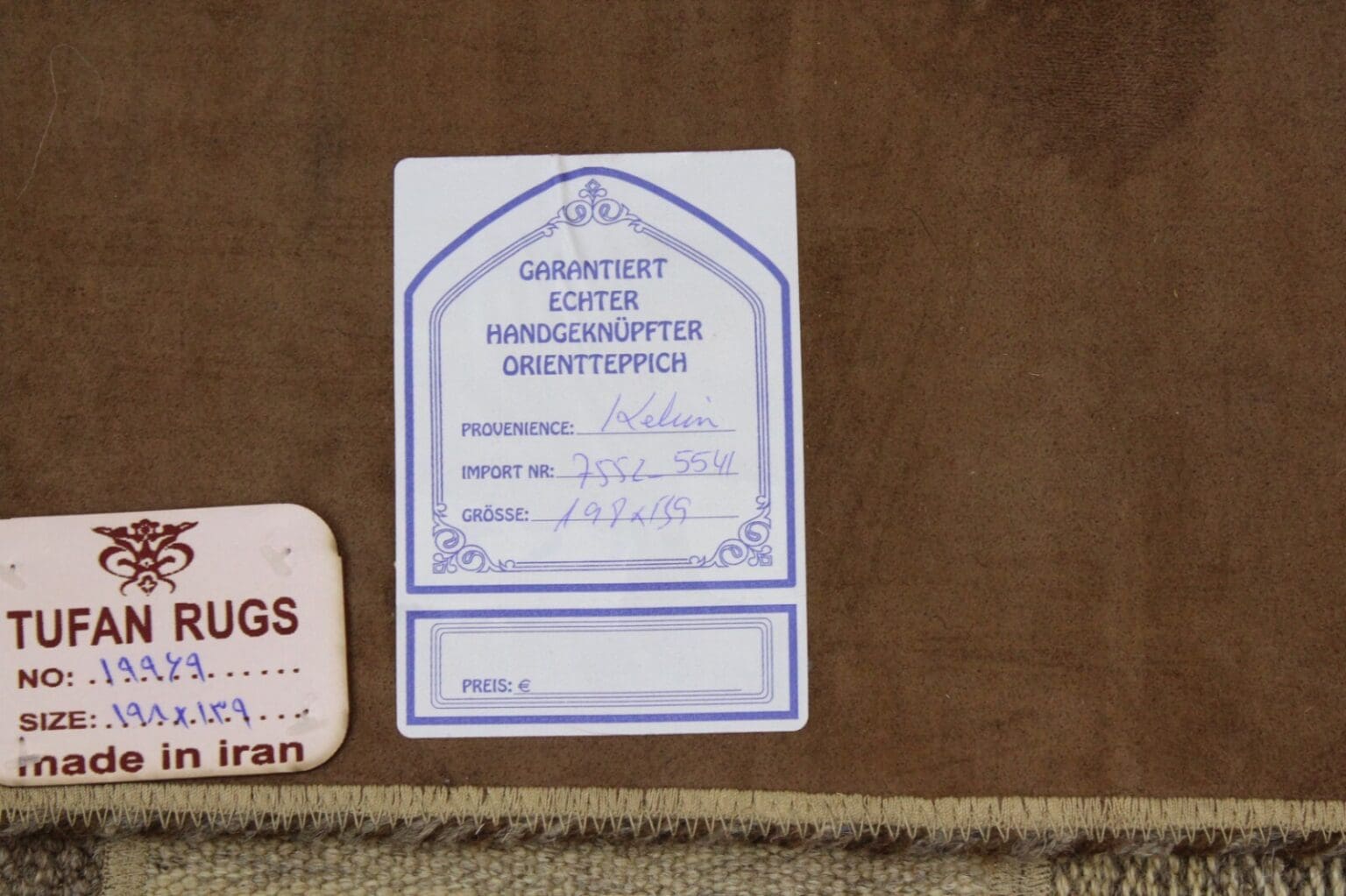
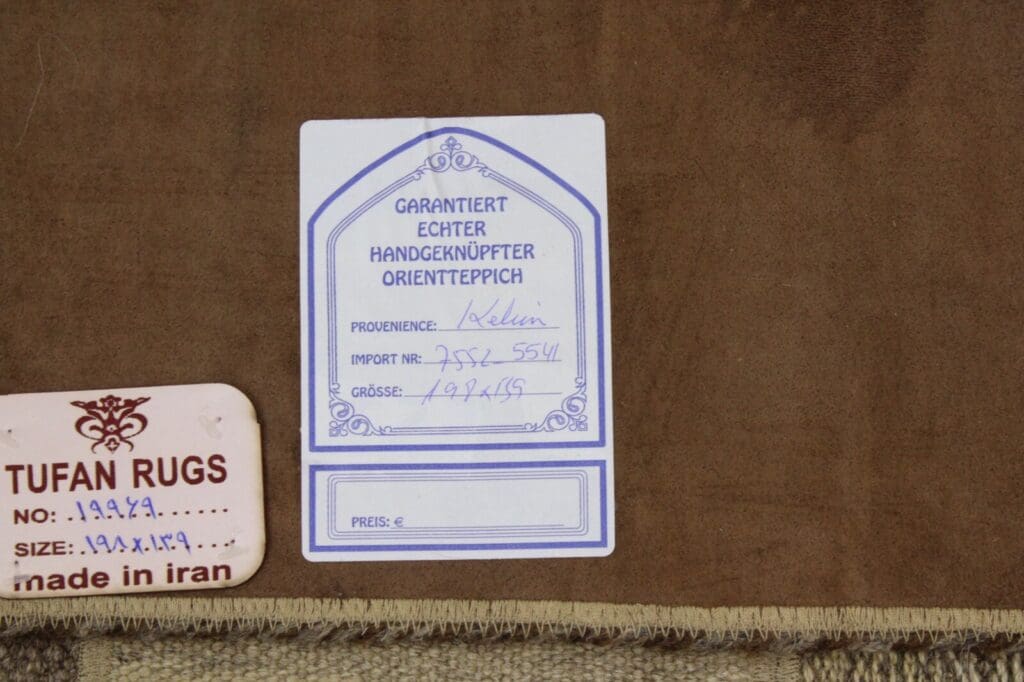
The origin of this rug is unknown. It is consequently presented as an Oriental rug without assigning it to a particular country, province or weaving town. Kilim describes a textile type and a flat-making technique; it does not, by itself, establish a place of manufacture. Flat-woven rugs have been made in more than one regional tradition, so the term cannot be used as a substitute for provenance.
Kilims belong to a long history of woven floor and household textiles. Their structure is made on a loom with a stretched warp and inserted weft. The design develops during weaving rather than through the repeated tying of pile knots. This method allows the maker to arrange coloured sections, bands and angular forms directly within the cloth. The resulting textile can be rolled and moved more easily than many high-pile constructions, which helped flat weaves serve practical as well as decorative purposes.
Across West and Central Asian weaving cultures, flat weaves have been used as floor coverings, wall textiles, dividers, bags and other household pieces. Individual communities developed their own approaches to colour, edge finishing and pattern sequence. Some traditions favour repeated medallion-like forms, others use stripes, stepped shapes or divided fields. The meaning of a particular symbol depends on its local context. No local tradition or regional origin is specified for this rug, so no such attribution is made here.
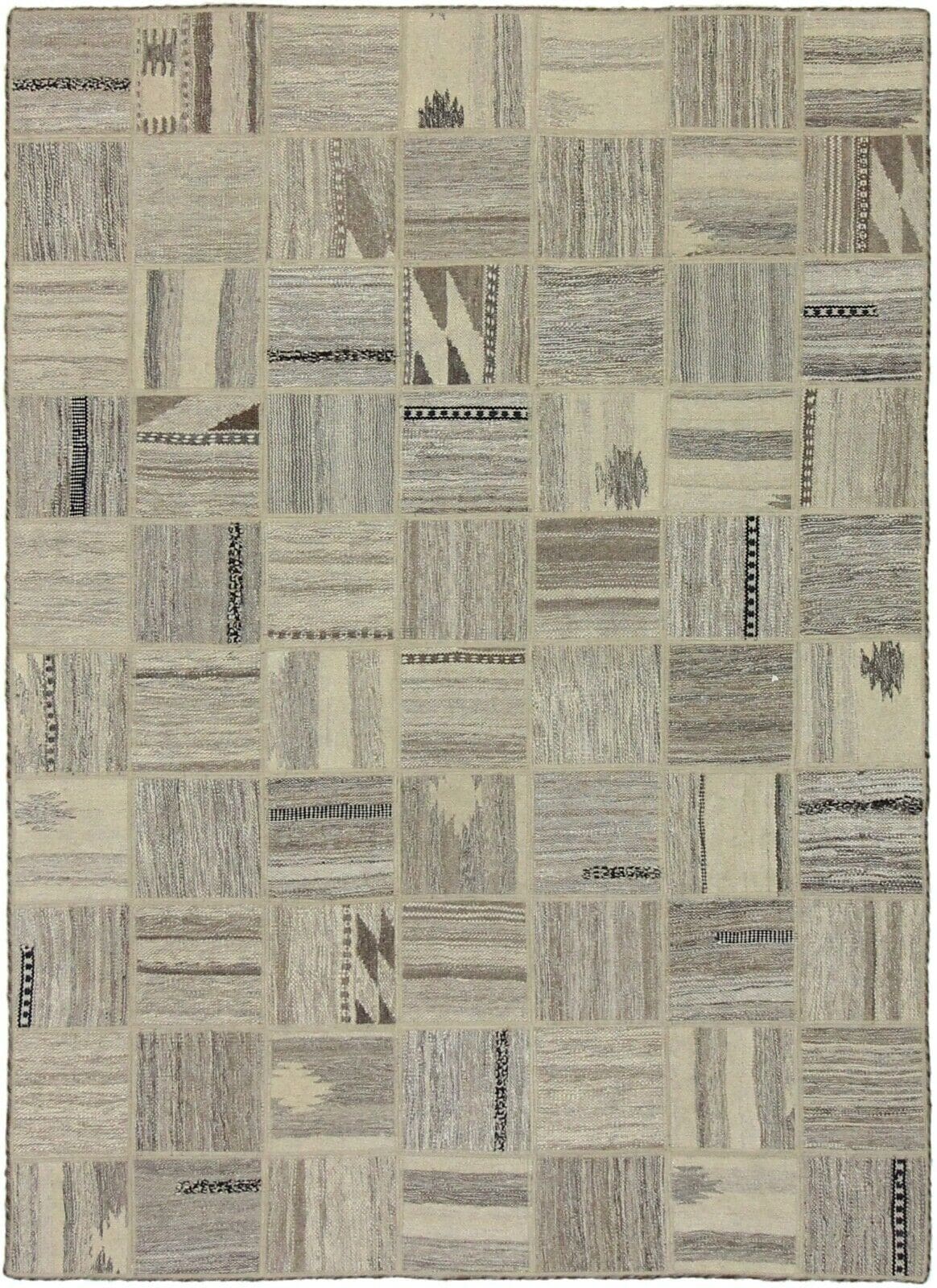
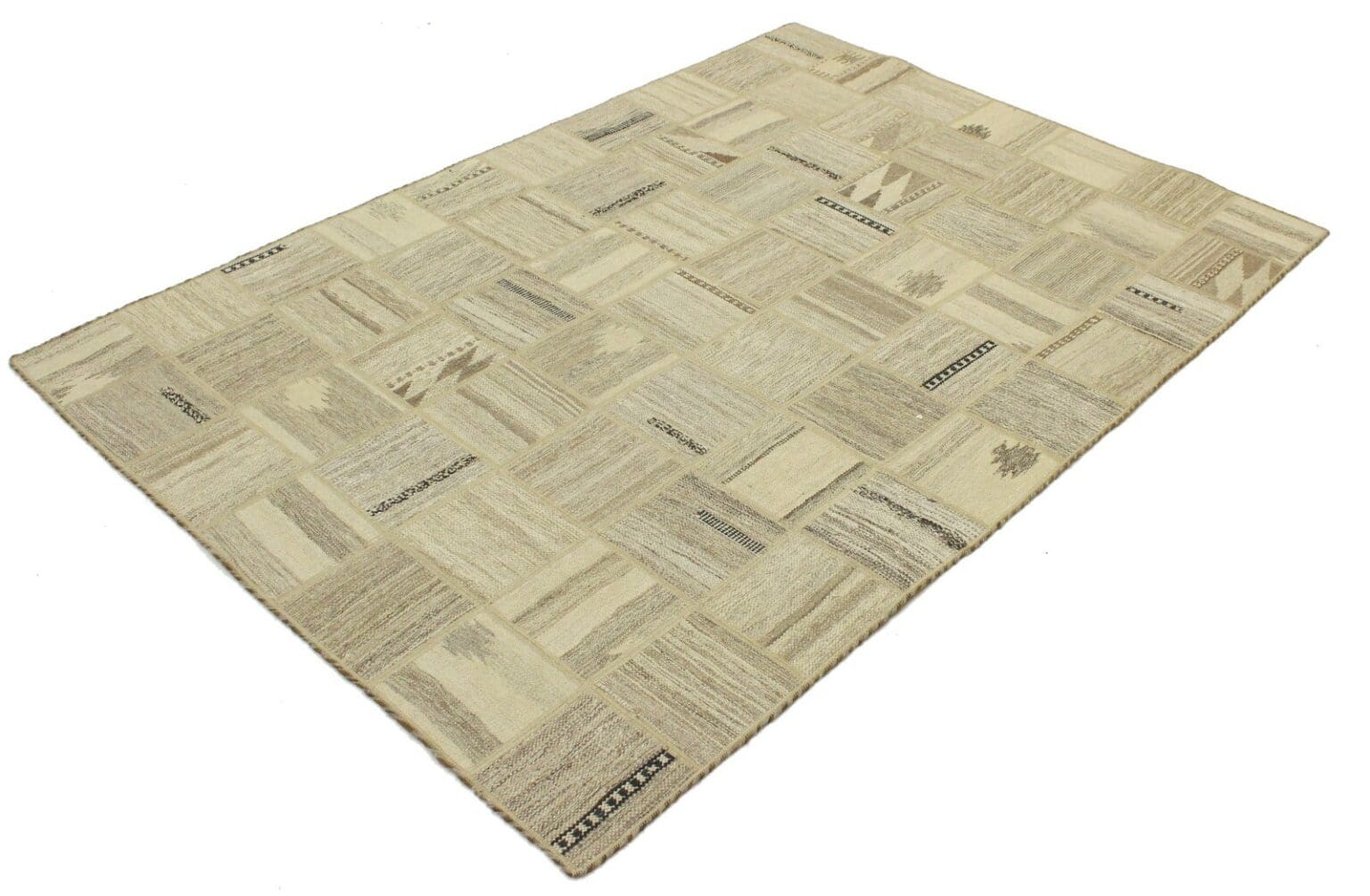
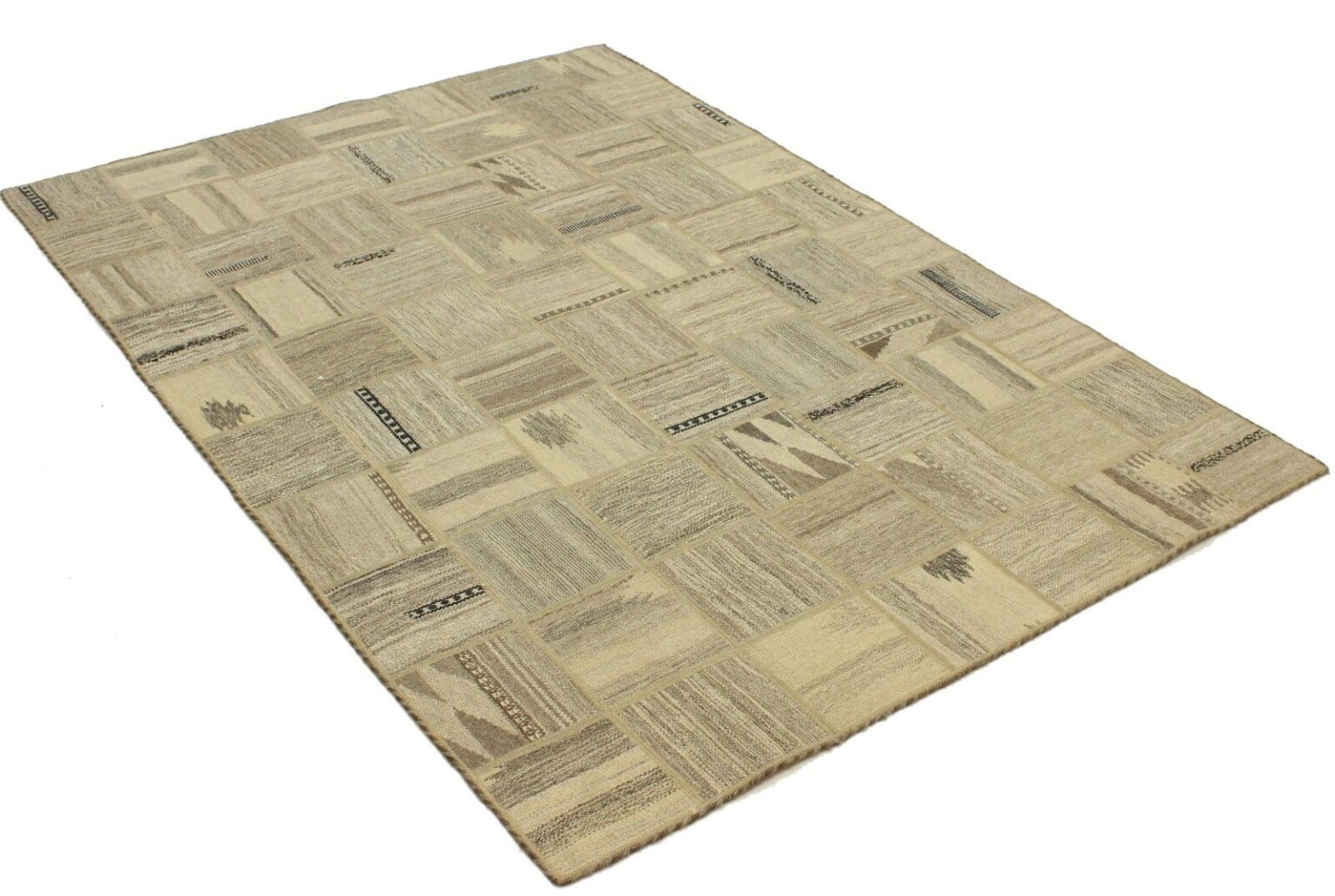
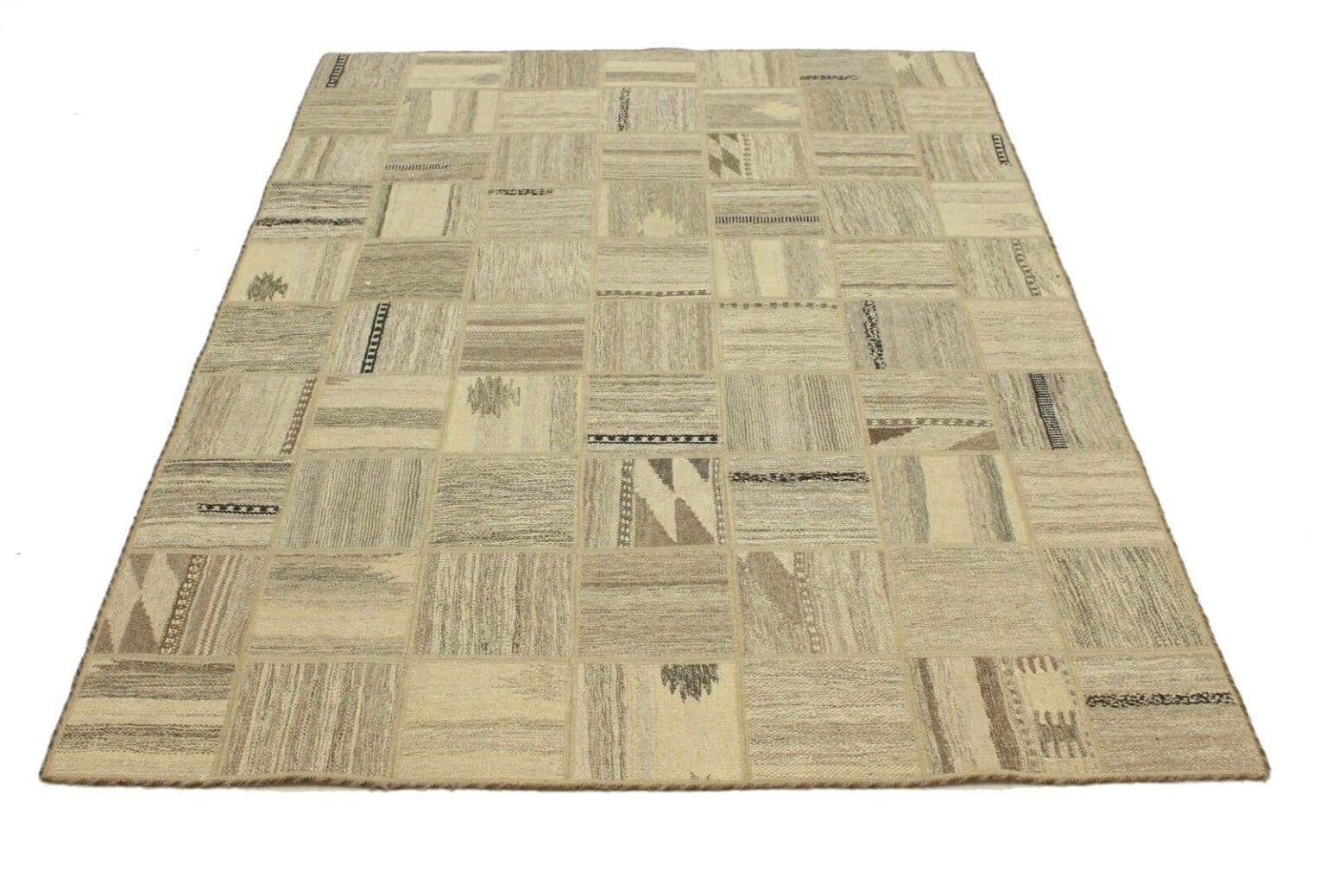
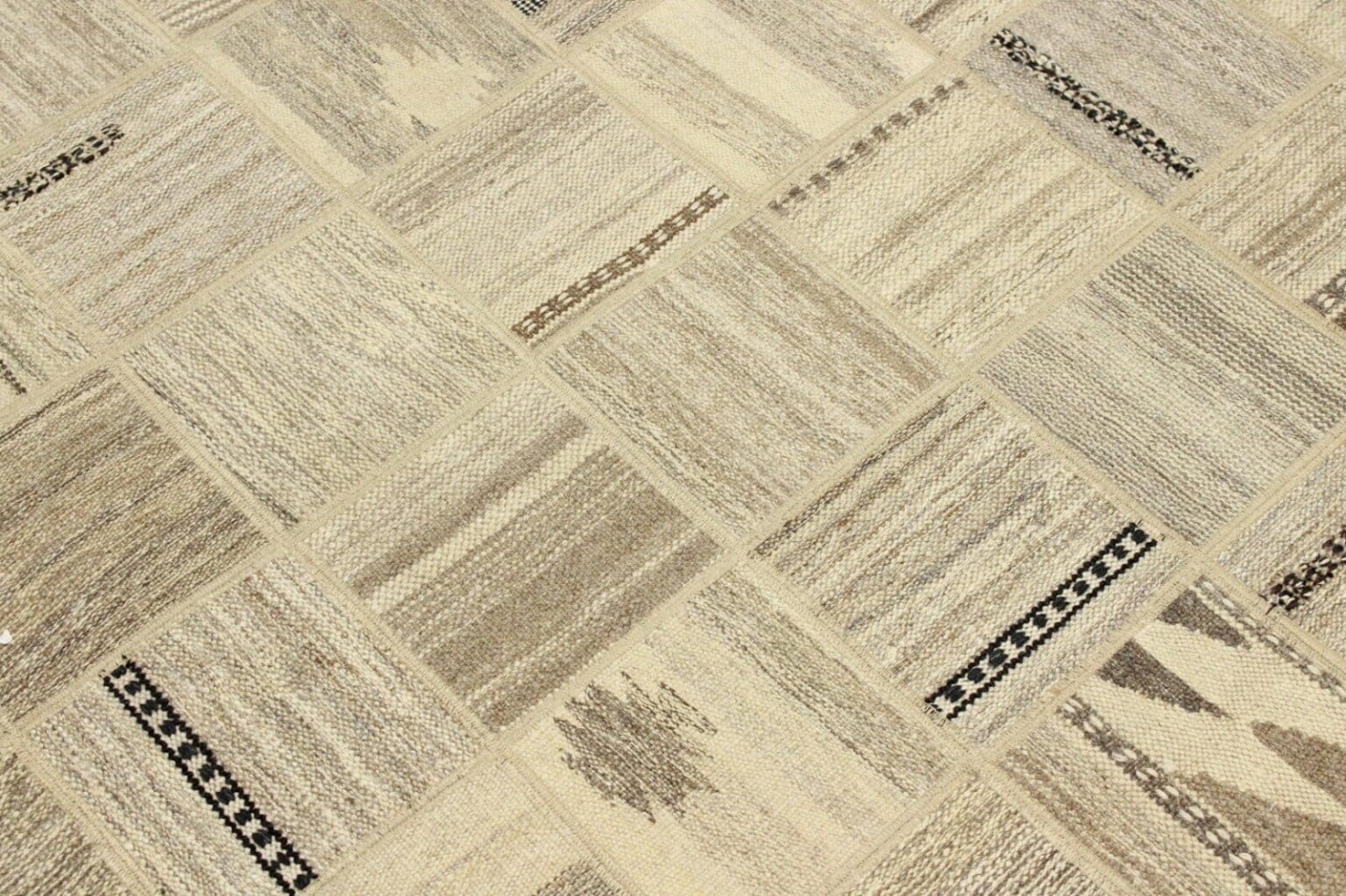
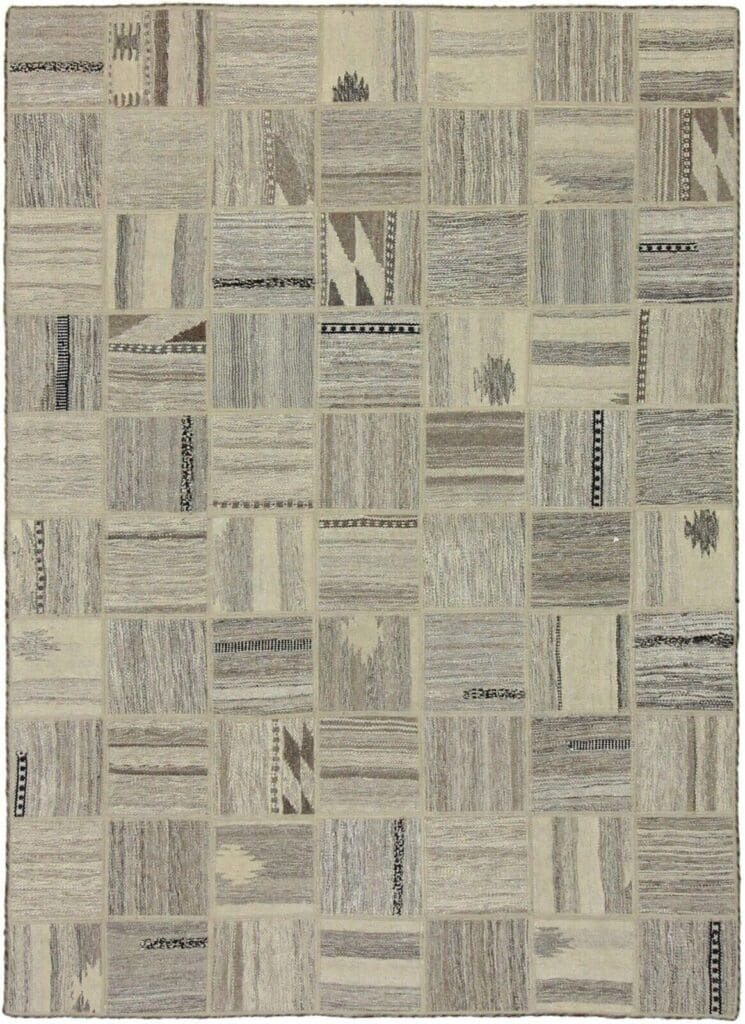
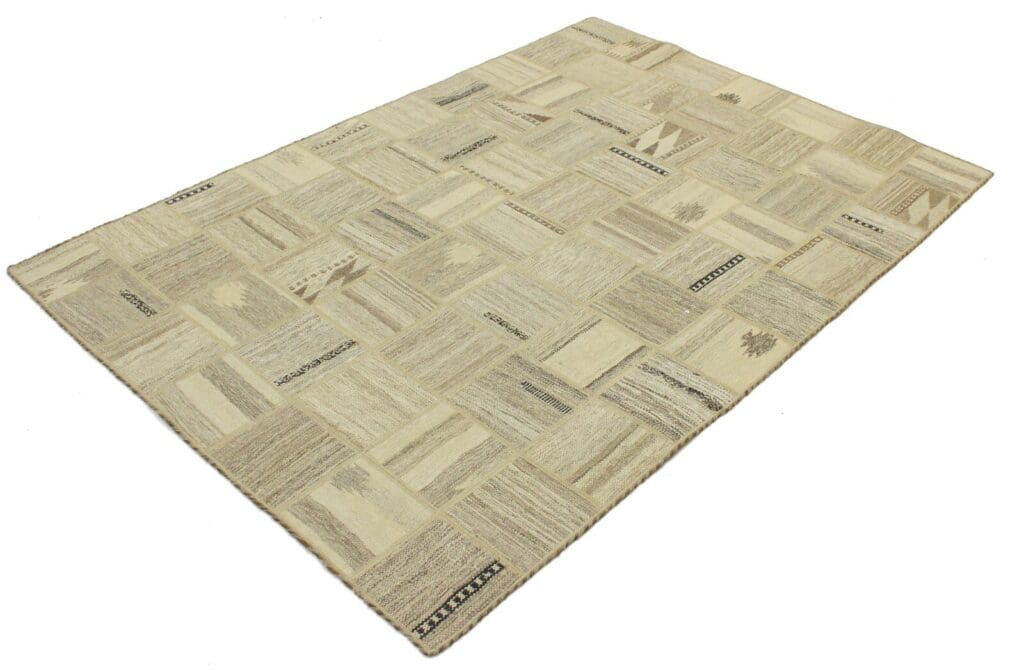
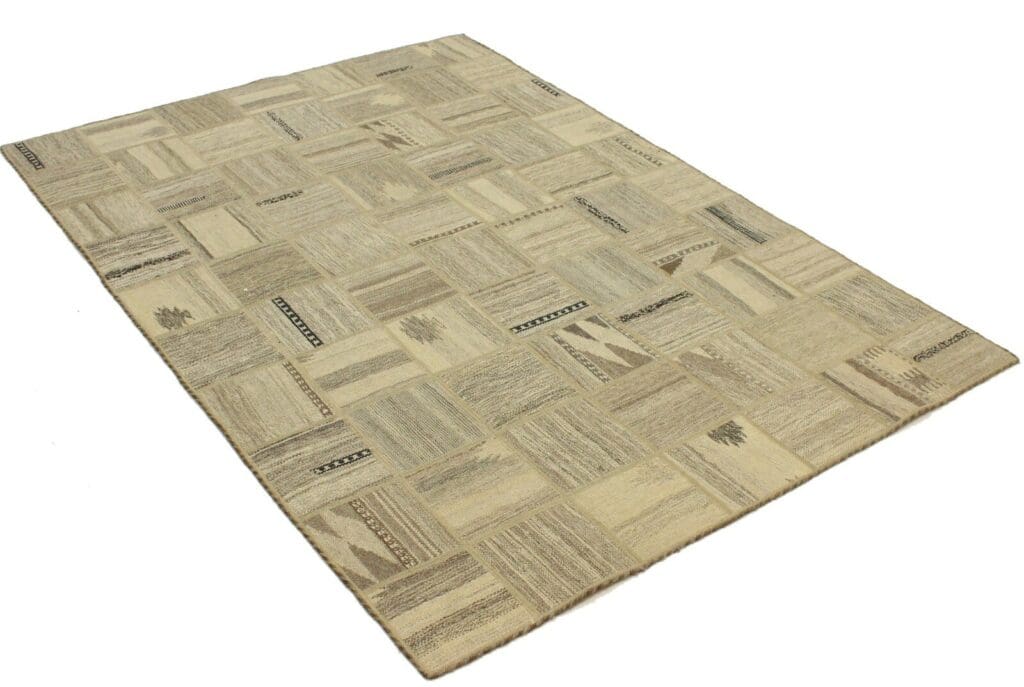
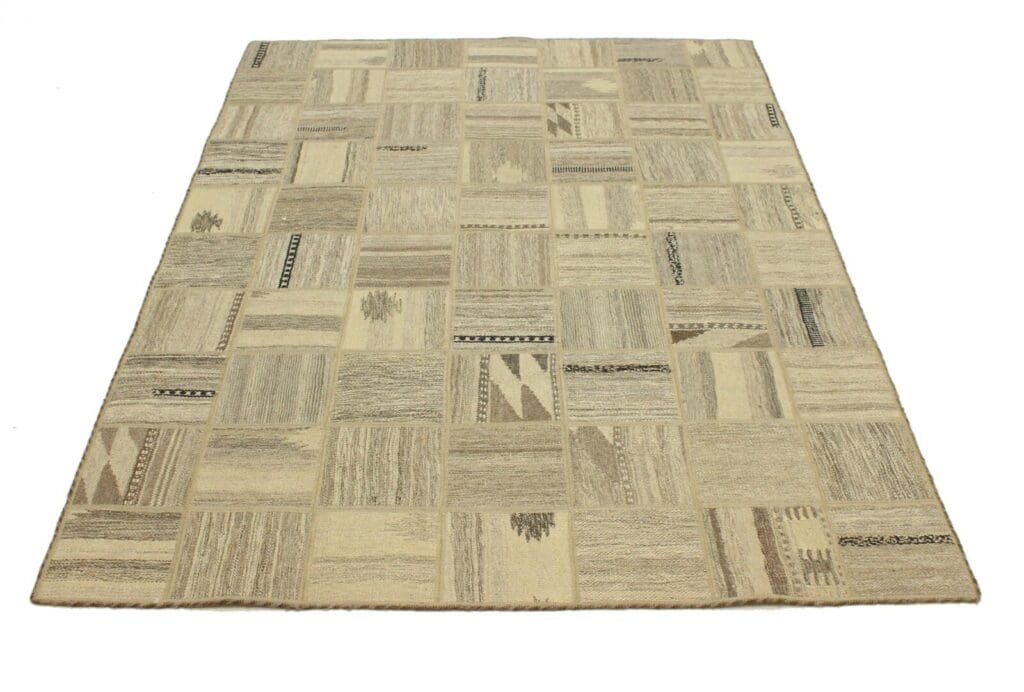
The title calls this piece a patchwork kilim. Patchwork describes a composed visual arrangement in which several sections or textile-like areas appear to form one design. Contemporary interpretations may use this approach to bring different geometric rhythms together, while traditional flat-weave principles remain visible in the emphasis on colour blocks and woven texture. The patchwork designation is a description of appearance, not evidence of a particular place of manufacture.
The Art Deco style reference is likewise a design classification rather than a provenance statement. Art Deco developed as a broad design movement associated with stylized geometry, ordered composition and strong decorative structure. Its influence can be expressed through stepped outlines, repeated lines, framed fields and deliberate contrast. A rug with this classification can be discussed as graphically organized without being linked to a named weaving centre.
Because the origin is unknown, the rug is not identified as Persian or as belonging to a named regional school. Its documented identity rests on the supplied terms kilim, hand-woven, wool, geometric, patchwork and Art Deco, together with its multicoloured appearance. These characteristics place it within the wider field of Oriental textile design while leaving its exact provenance open.
Design and Pattern
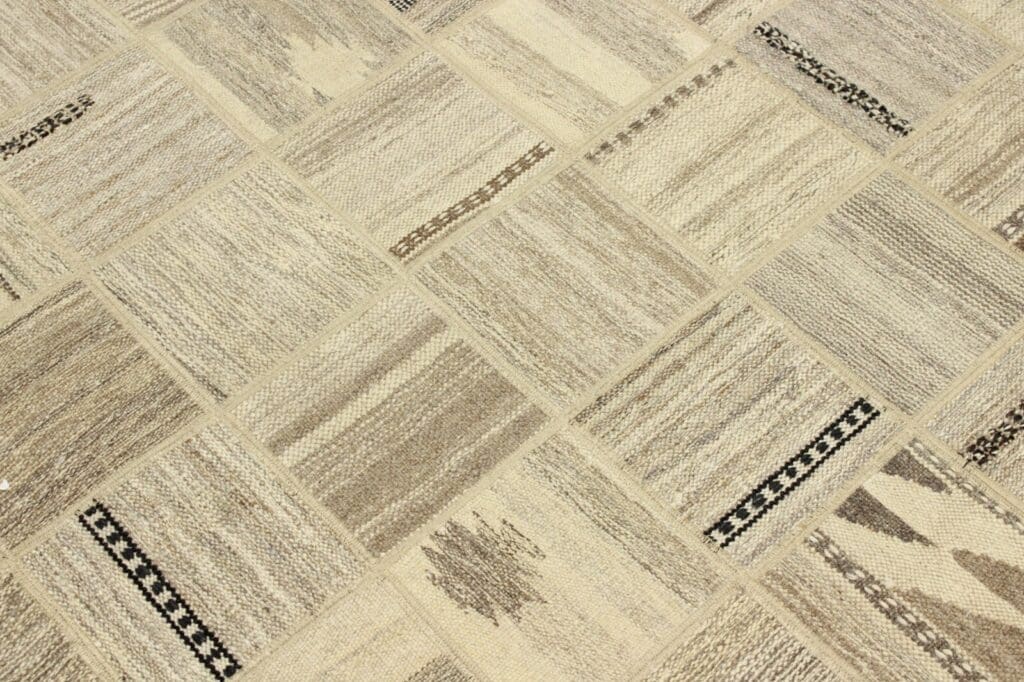
The pattern is described as geometric. Geometric rug design uses lines, angles, grids, repeated forms and bounded fields to organize a surface. In a flat-woven textile, these elements can remain especially legible because there is no deep pile to soften or obscure the outlines. The viewer encounters the pattern through the arrangement of woven colour and the rhythm of the textile structure.
The patchwork description suggests a composition made from several distinct-looking sections rather than one uninterrupted motif. Such an arrangement may set different fields beside one another, vary the scale of geometric forms or use changes in colour to separate areas. It does not require perfect bilateral symmetry. The available description does not name individual colours, symbols or regional motifs; it identifies the rug as multicoloured and geometric.
Art Deco contributes a stylistic reading based on clarity, stylization and visual order. Rather than reproducing natural forms in detail, Art Deco often reduces them to clean silhouettes, repeated angles and balanced decorative units. In textile design, the approach can appear through stepped shapes, framed panels, linear borders and controlled repetition. The style label supplied for this rug therefore complements its geometric pattern without changing its material or origin.
No floral, figurative or province-specific pattern is stated. It would therefore be inaccurate to attach a named regional motif to this piece. Its design can be described precisely through the facts provided: it is geometric, multicoloured, presented as a patchwork kilim and classified in the Art Deco style. These features offer a visual description while avoiding an unsupported attribution to a particular weaving centre.
In a kilim, the design is inseparable from the weaving process. Weft sections establish the coloured areas, and the flat surface holds the individual fields within a unified textile. Small differences in the way lines and sections meet are part of the relationship between pattern and handwork, although no specific irregularities are stated for this rug. The general result is a textile with a clear, graphic arrangement rather than a high-pile surface dominated by texture.
The multicoloured palette is recorded without a list of shades. This leaves the composition open to the interaction of several colours, but it does not justify naming particular tones. The same restraint applies to the patchwork layout: its presence is stated in the title, while the exact number, size and arrangement of sections are not described. The reliable design vocabulary is therefore geometric, patchwork, multicoloured and Art Deco.
Special Features
The rug is listed as new without a label. It is made of 100% wool and has a flat pile height. The stated functional features are anti-slip, compatibility with underfloor heating and easy cleaning. Together with the geometric, multicoloured patchwork appearance, these details define the specific offer without requiring a regional attribution.
Its flat structure can be relevant in spaces where a low-profile textile is preferred. The anti-slip feature is included in the product description, as is suitability for underfloor heating. The easy-cleaning property is also explicitly listed. No performance rating, care certificate or technical specification beyond these statements is supplied.
Wool kilims are generally cared for by removing loose dust gently and addressing spills without excessive rubbing. A vacuum cleaner used without an aggressive brush can help keep surface dirt from accumulating. Fresh liquid should be blotted with a clean, slightly damp cloth rather than worked deeply into the textile. For heavier soiling, professional cleaning is a suitable option. These are general care principles for wool flat weaves and do not add a special cleaning system to this rug.
The unknown origin is also an important descriptive feature. The rug can be presented accurately as an Oriental kilim without assigning it to Iran, another country or a named province. Its identity comes from the documented material, construction, surface, pattern, style and usage properties.
FAQ
What are the material and construction details?
The rug is described as a kilim made from 100% wool. It is identified as hand-woven in the title, and the product information additionally lists the weaving method as hand-knotted. Its pile height is flat, which corresponds to the even surface associated with kilim construction. No knot density is given, and there is no separate specification for pile and warp materials. The reliable material information is therefore the full wool composition, while the construction is represented by the supplied hand-woven kilim description, the separately stated hand-knotted method and the flat surface.
How is the design described?
The design is geometric and multicoloured. The title also calls the rug a patchwork kilim, indicating a composition made up of several visual sections or pattern areas. Its style is listed as Art Deco, a classification associated with stylized geometry, ordered lines and decorative structure. The source does not identify individual colours, symbols, floral elements or a regional pattern name. The rug should therefore be described through the confirmed features of geometric patterning, multicoloured appearance, patchwork presentation and Art Deco styling, without attaching it to a specific province or weaving school.
How can this kilim be used and cared for?
The rug is listed as new without a label. It has a flat pile height and is described as anti-slip, suitable for underfloor heating and easy to clean. A low-profile flat weave can be practical where a high surface would be inconvenient. For routine care, gentle vacuuming without a harsh brush attachment can remove loose dirt. Spills should be blotted carefully with a clean, slightly damp cloth instead of being rubbed into the wool. Professional cleaning may be considered for more substantial soiling. The product description states that cleaning is easy, but it does not prescribe a particular cleaning product or interval.
To provide the best experiences, we use technologies like cookies to store and/or access device information. Consenting to these technologies will allow us to process data such as browsing behavior or unique IDs on this site. Not consenting or withdrawing consent, may adversely affect certain features and functions.
Functional Always active
The technical storage or access is strictly necessary for the legitimate purpose of enabling the use of a specific service explicitly requested by the subscriber or user, or for the sole purpose of carrying out the transmission of a communication over an electronic communications network.
Preferences
The technical storage or access is necessary for the legitimate purpose of storing preferences that are not requested by the subscriber or user.
Statistics
The technical storage or access that is used exclusively for statistical purposes.The technical storage or access that is used exclusively for anonymous statistical purposes. Without a subpoena, voluntary compliance on the part of your Internet Service Provider, or additional records from a third party, information stored or retrieved for this purpose alone cannot usually be used to identify you.
Marketing
The technical storage or access is required to create user profiles to send advertising, or to track the user on a website or across several websites for similar marketing purposes.
 SECURE PAYMENT
 SHIPPING PARTNERS


