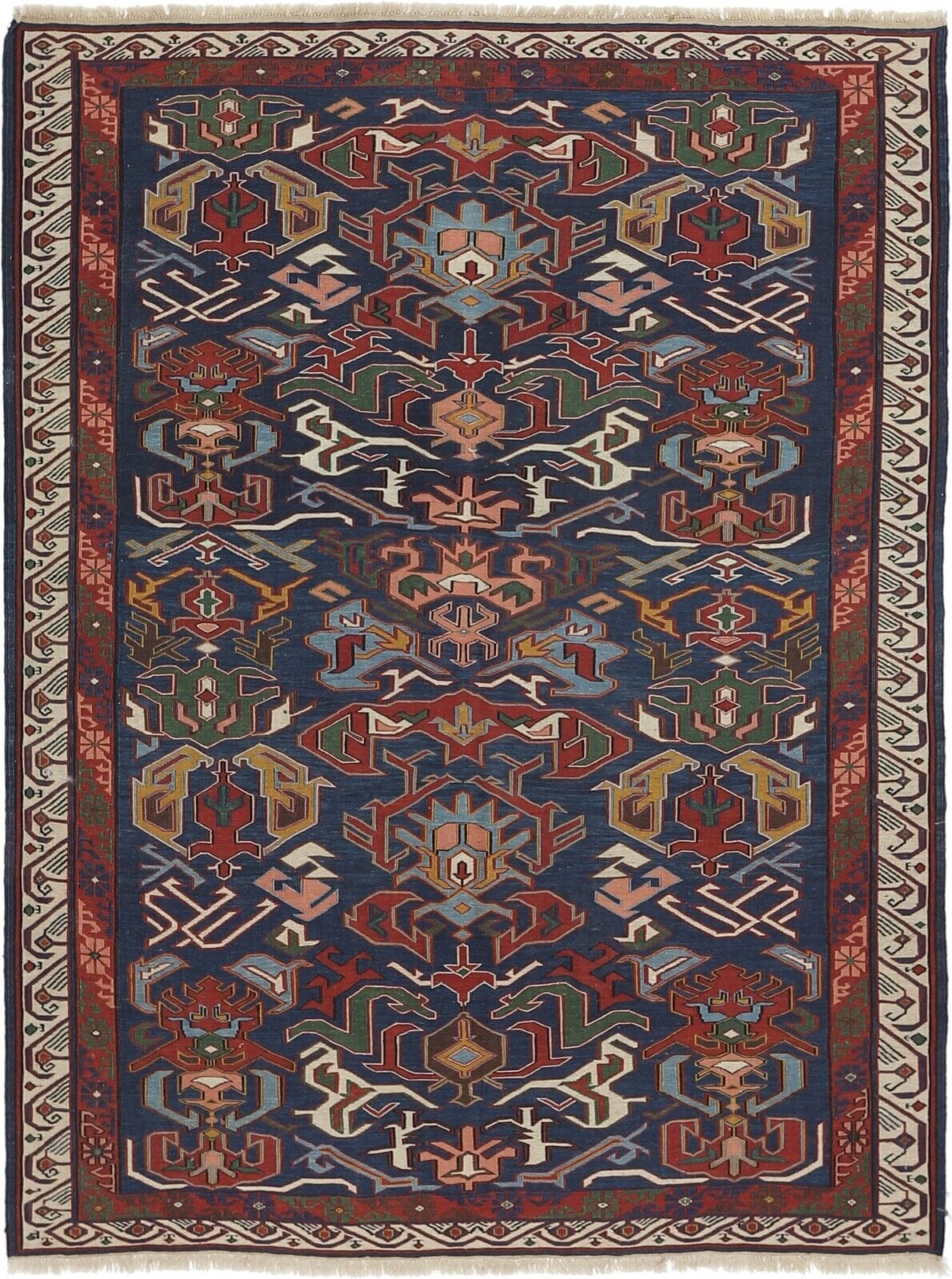
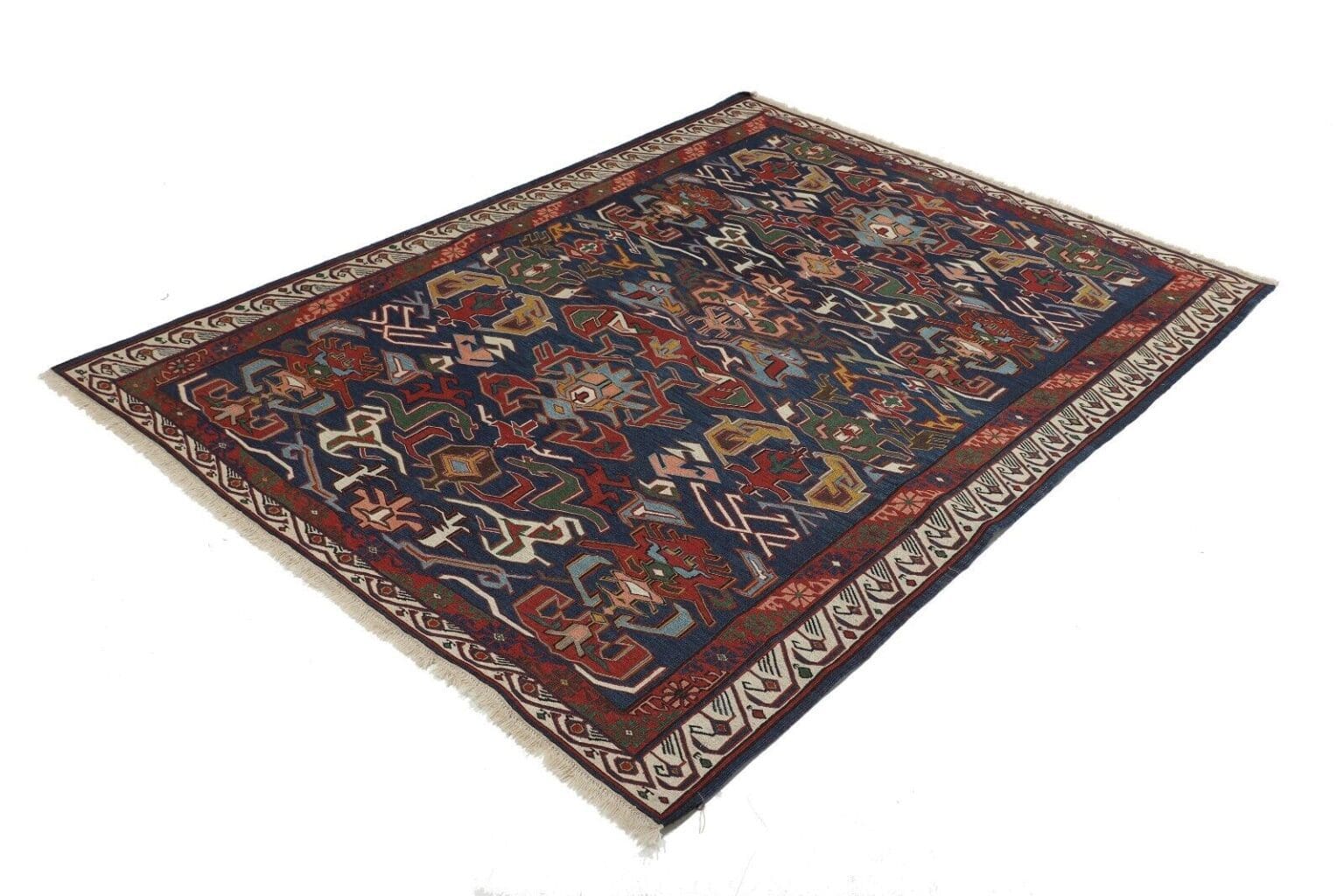
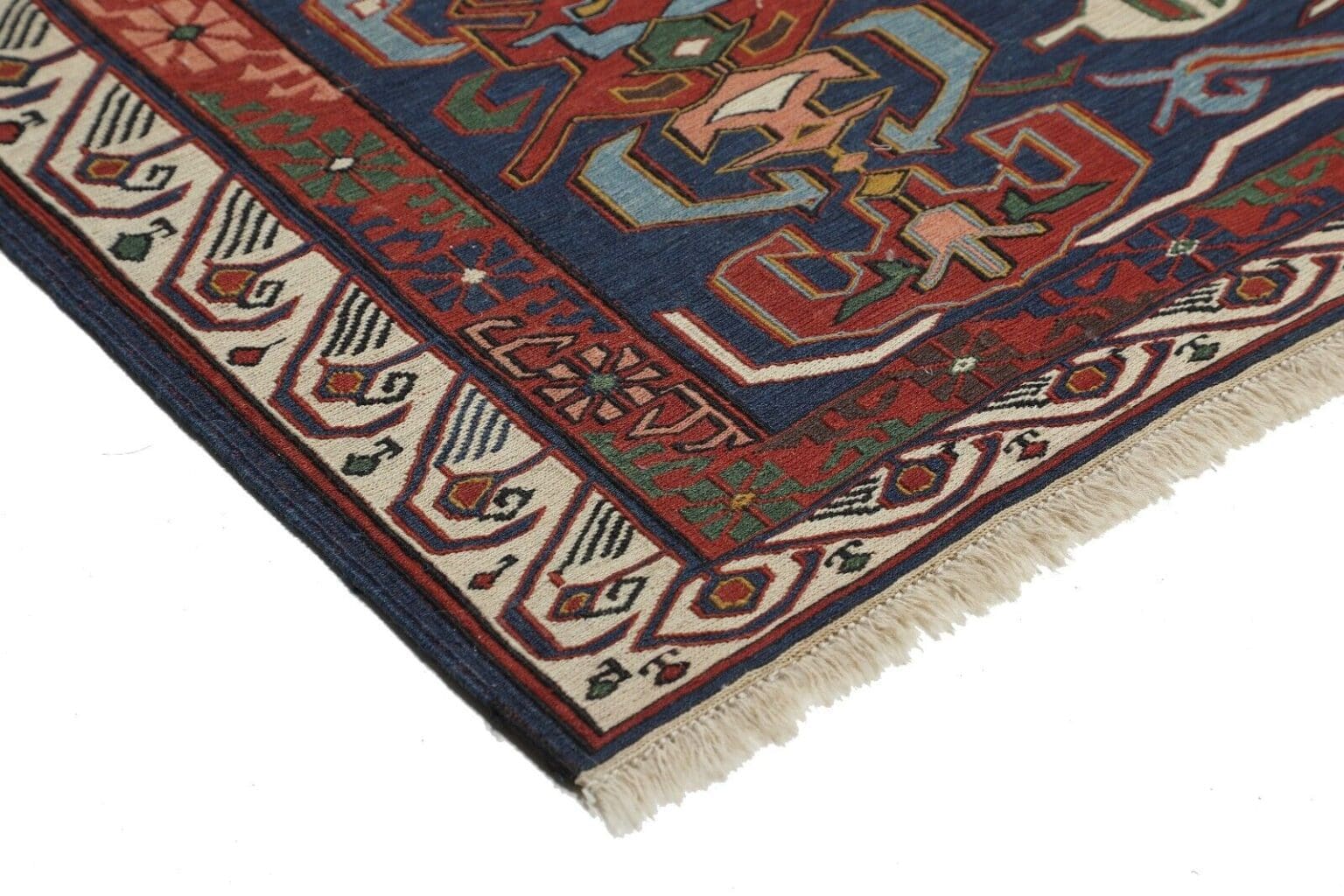
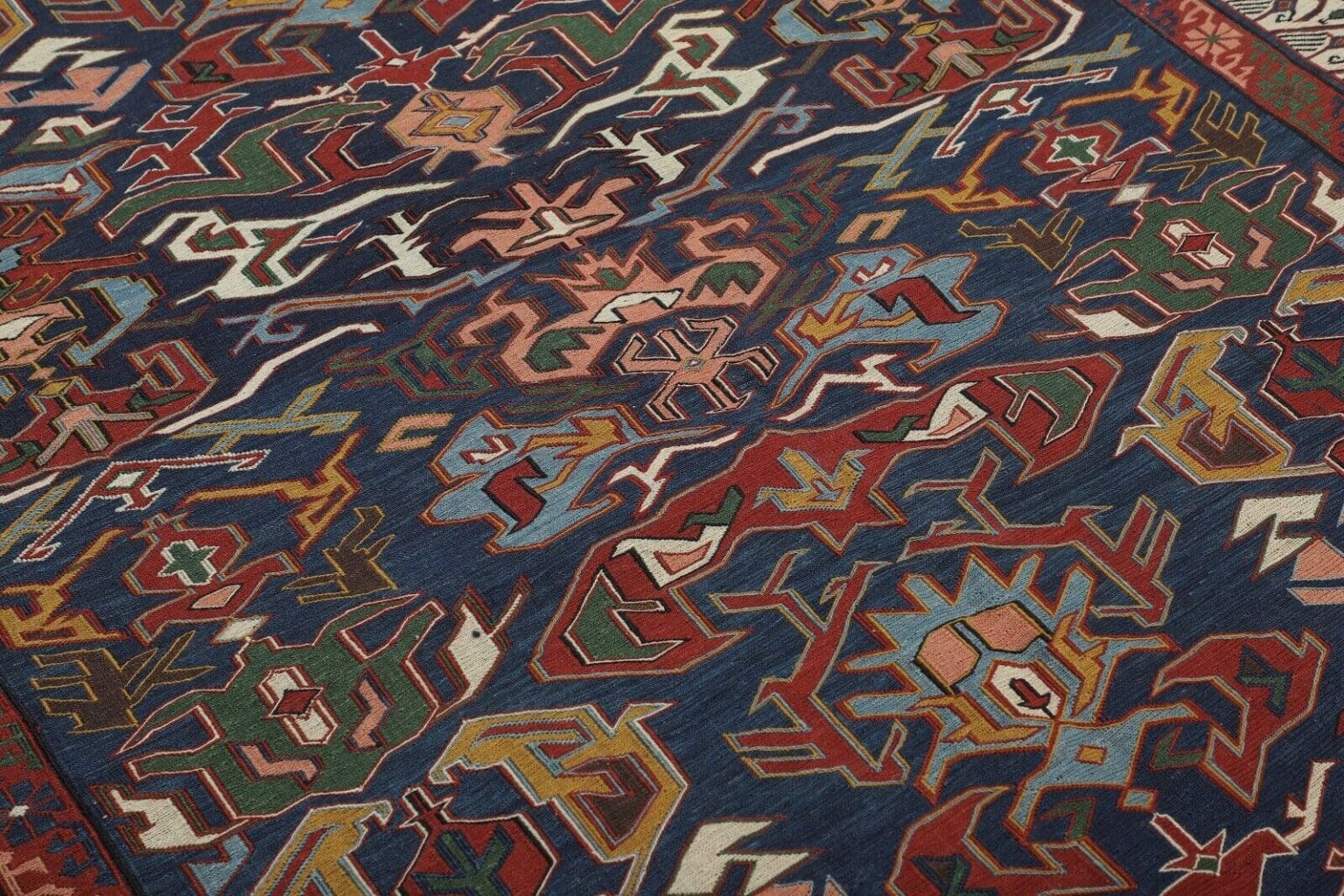
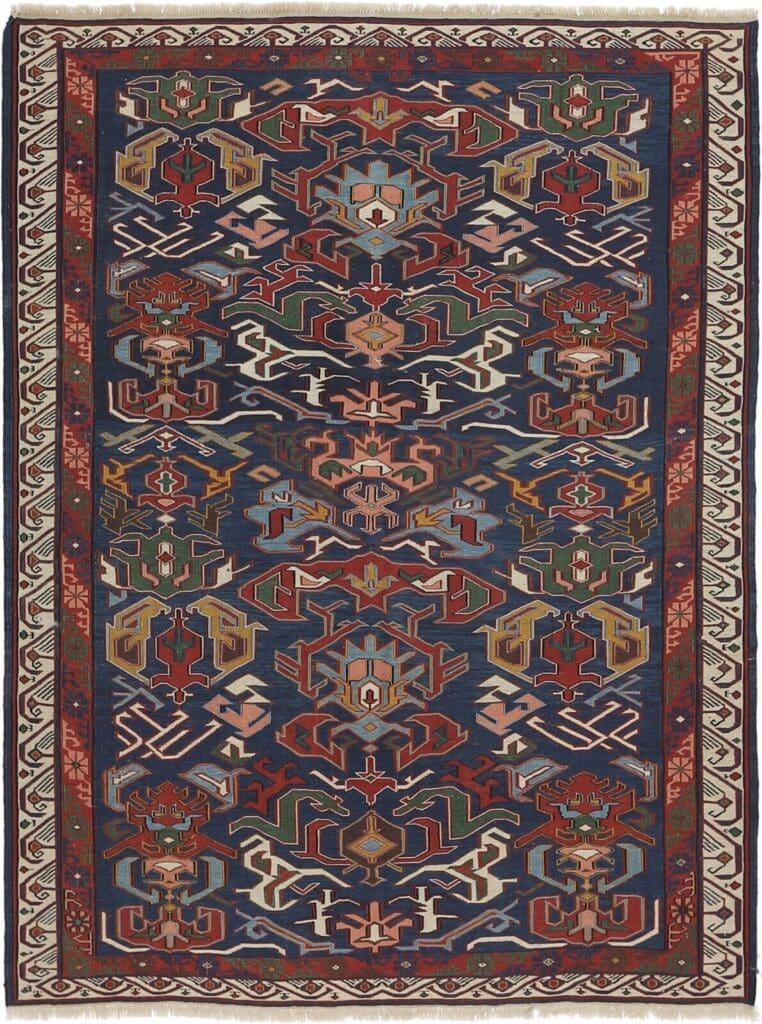
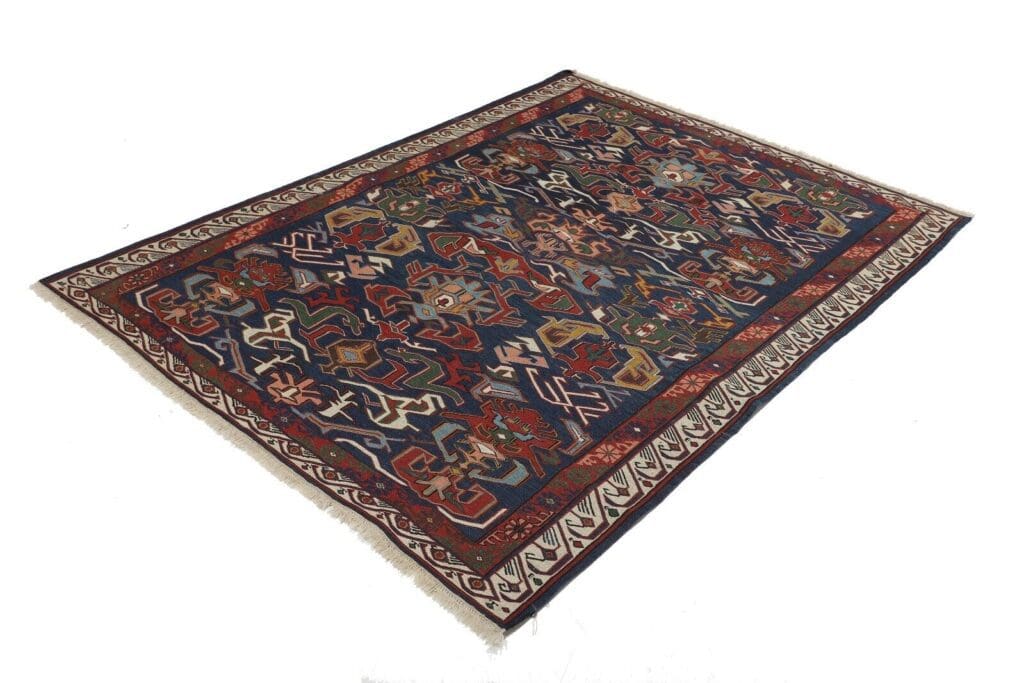
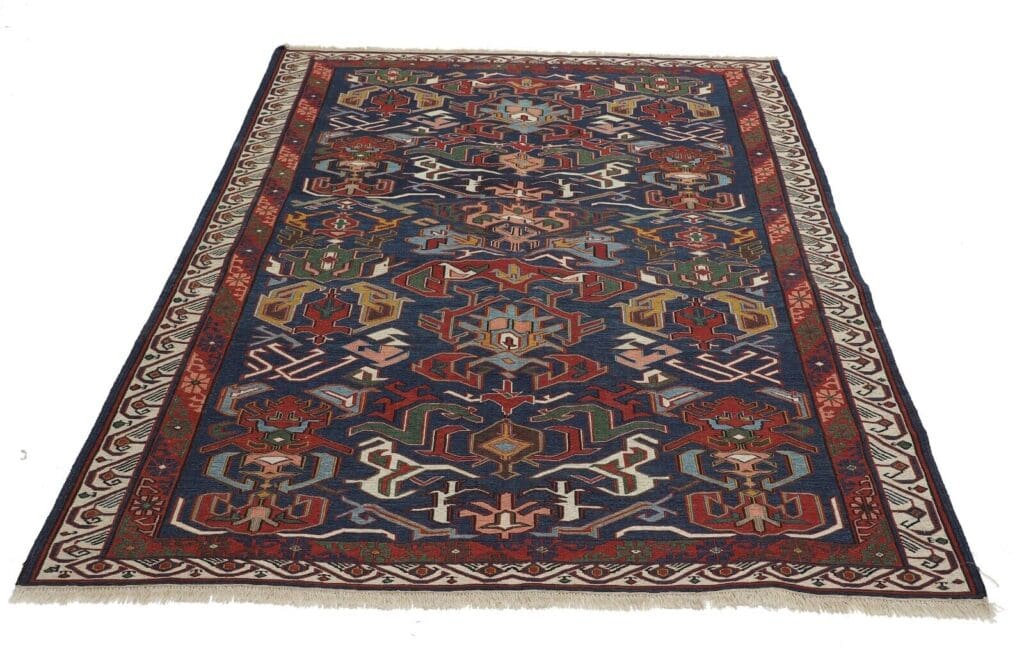
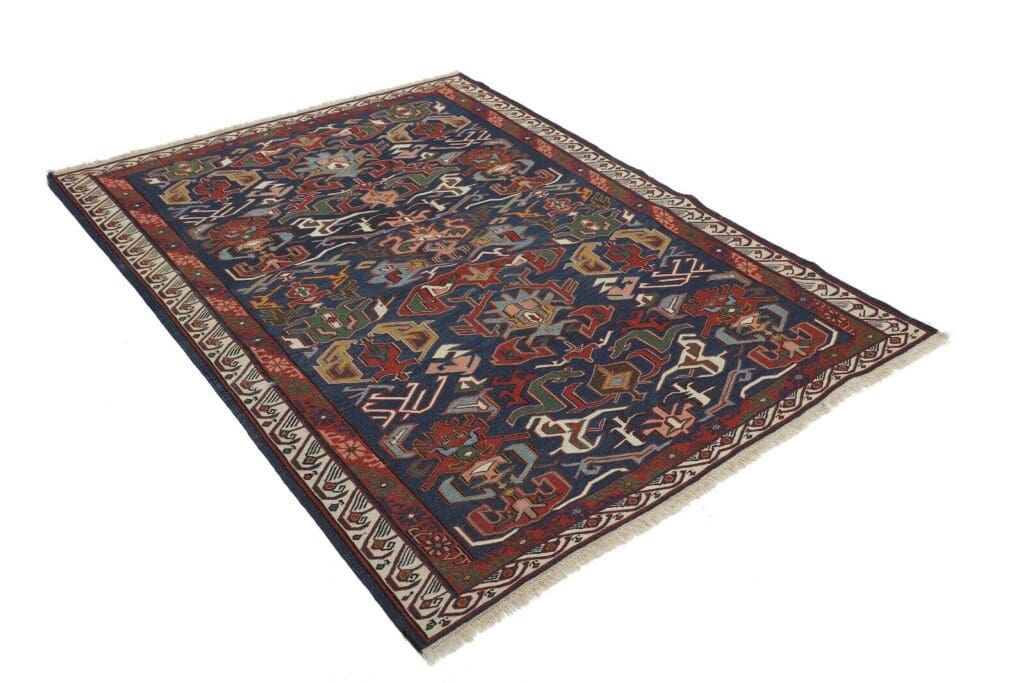
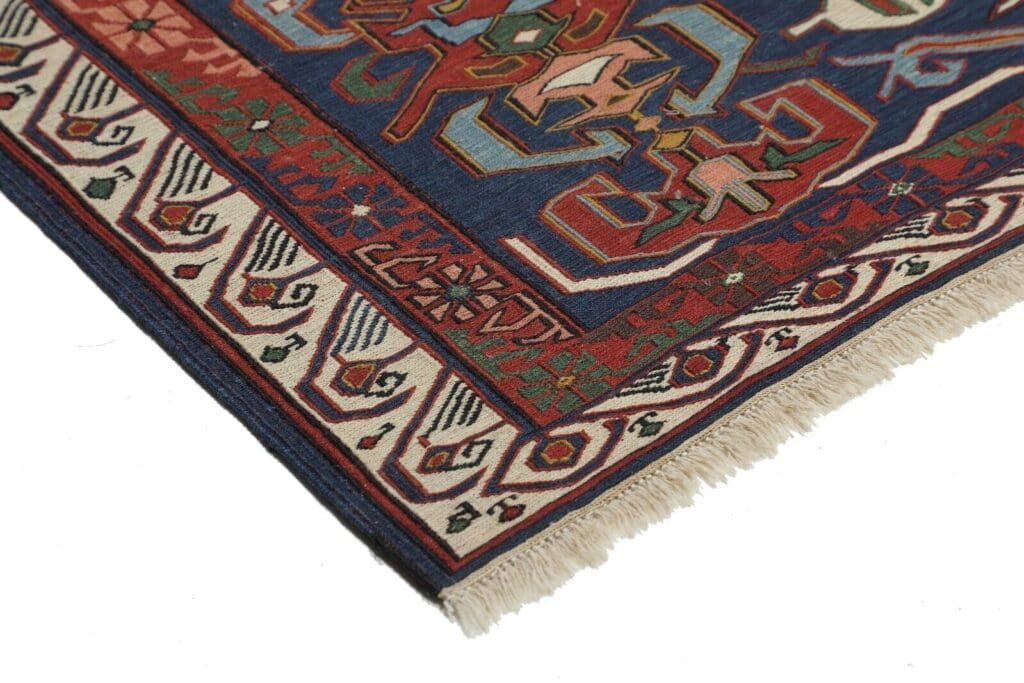
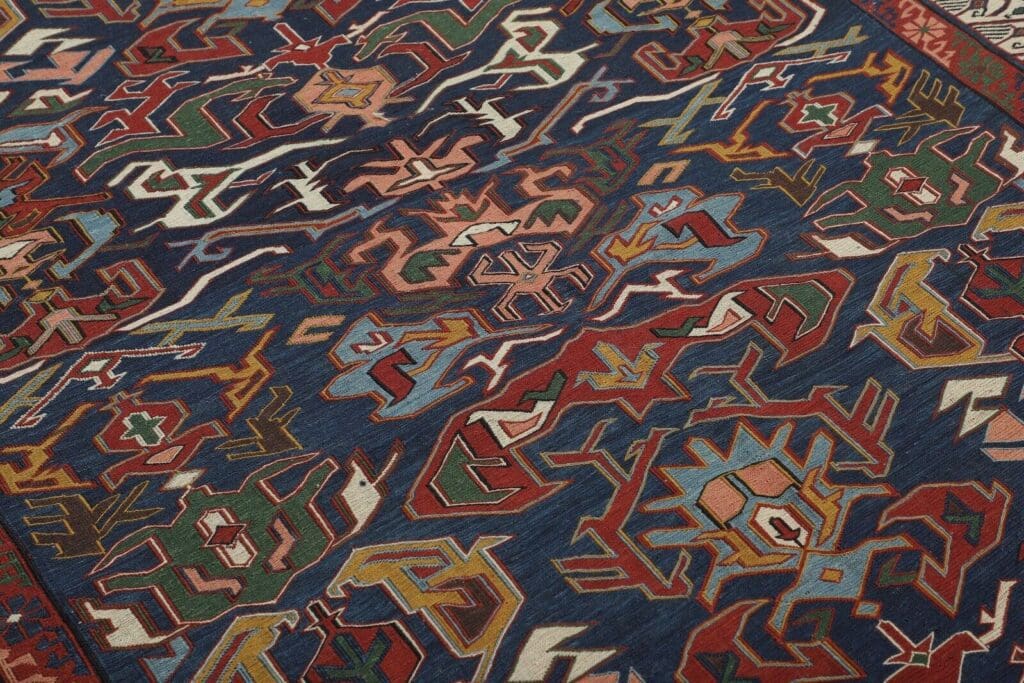
This classic Kilim is made of wool and hand-woven. Unlike a knotted rug with a constructed pile, a Kilim is formed through a weaving process that creates a flat textile surface. The result is a distinctive, relatively low-profile structure. Here, the short pile height allows the geometric design to remain clearly visible and gives the rug the characteristic appearance of a hand-woven Oriental textile.
Wool is a natural material that has been used in rug making for centuries. It can retain warmth and has a pleasant feel under the hand. Wool is also hard-wearing, which makes it suitable for a rug intended for everyday use. In this piece, the material and the technique are closely connected: wool forms the visible textile surface, while hand production gives each individual Kilim its own execution.
Hand weaving is directly present in the structure of a Kilim. The textile surface is built gradually as the woven elements are joined in sequence. This work requires patience and practical skill. Every Kilim is therefore described as a one-off. This rug is also described as abrasion-resistant, non-slip, suitable for underfloor heating, and pet-friendly. It is listed as a used rug from the 21st century, from 2000 onward.
Origin and Tradition
The origin region of this rug is unknown. It is therefore described as an Oriental rug rather than as a rug from a named province or country. Oriental rug is a broad cultural and craft designation, not documented proof of a particular origin for this individual Kilim. No specific regional attribution is established for this piece.
The history of Oriental rugs includes many different weaving and knotting traditions across Asia and neighbouring regions. Turkey, Iran, Afghanistan, and the Caucasus developed varied forms, materials, colour systems, and techniques over the centuries. Each area established its own ways of working. Geometric signs, repeated borders, and stylised botanical forms could be passed down through generations while also being adapted to local practices.
Kilims occupy a distinct place within these traditions because they are woven rather than made as conventional pile rugs. Their structure is created through the interaction of warp and weft. Depending on the weaving tradition, makers may use different patterning methods, colour transitions, and forms. The flat woven surface often makes the design immediately legible and gives a Kilim a different textile quality from a rug with a dense knotted pile.
Across many cultures, traditional rugs and Kilims served more purposes than simply covering a floor. They could be used in domestic life, as textile furnishings, and as expressions of regional design. Motifs were often developed from nature, inherited signs, or geometric systems. A single motif does not necessarily have the same meaning everywhere; its interpretation can depend on its arrangement, colour, technique, and cultural setting.
The general history of the Kilim reaches far back, while this example is assigned to the 21st century, from 2000 onward. It therefore combines an established handcraft technique with a later period of production. Its unknown origin remains part of the description: the wider Kilim tradition can be explained without assigning this particular piece to an undocumented workshop, region, or country.
Design and Pattern
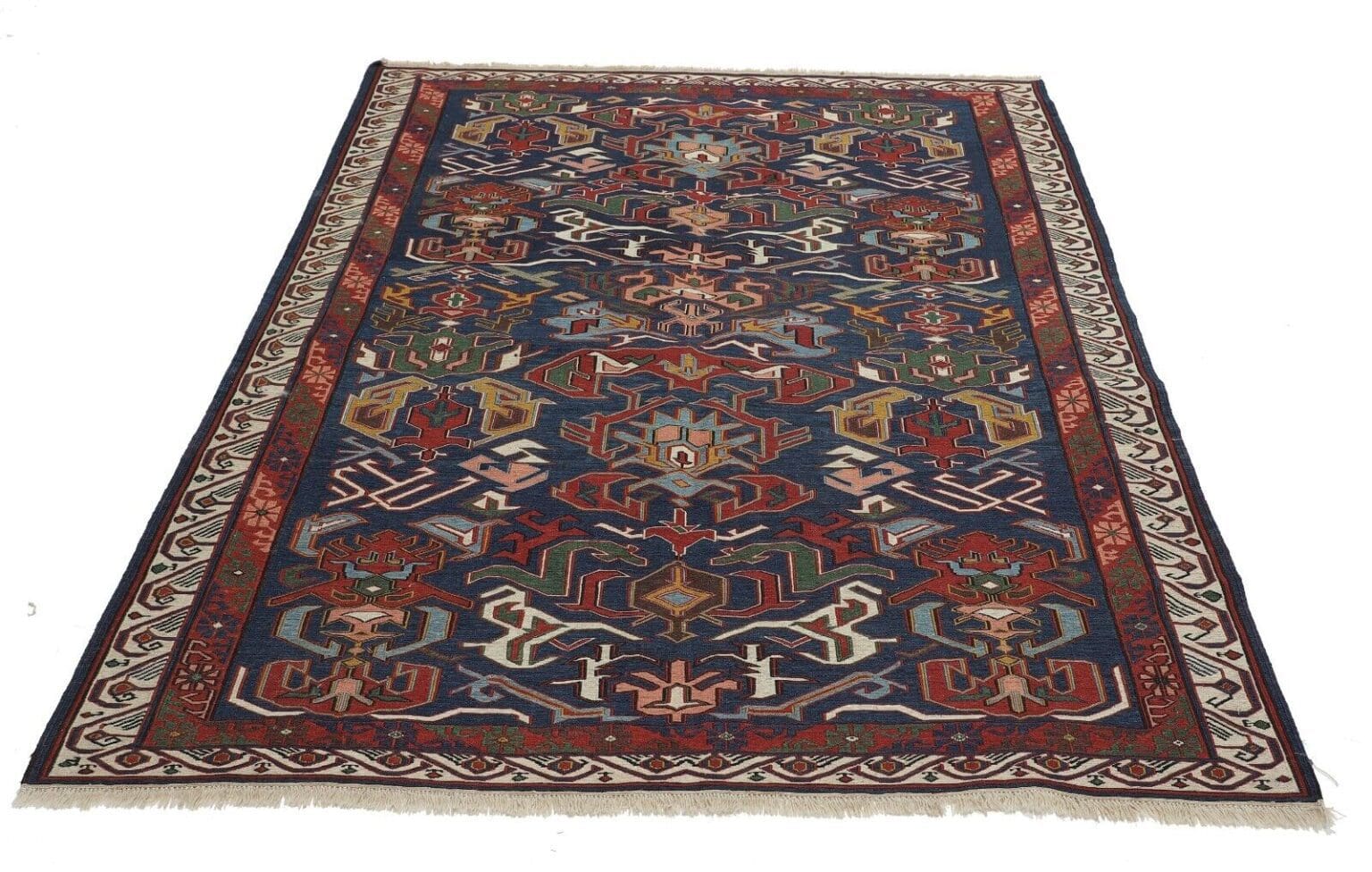
The pattern of this Kilim is geometric. Its design is consequently based on shapes, lines, angles, repetition, and clearly organised areas. Geometric patterns may appear as individual signs, repeated sequences, or connected fields. In a woven rug, these forms are integrated into the textile structure itself, so the pattern remains closely related to the method of production.
Traditional Kilim design often uses geometric figures and may supplement them with stylised floral elements, depending on the regional tradition. Diamonds, stripes, hooked forms, zigzags, and structured borders are recurring possibilities in Oriental weaving. They can organise a surface, mark transitions, or lead the eye between centre and edges. The specific pattern information for this rug is geometric; no individual symbols or named ornaments are identified.
The colour effect of classic Kilims can range from earthy shades to strong, vivid colours. Such contrasts help separate geometric shapes and make a pattern’s rhythm apparent. This general language of colour and form may draw on traditional models while also working within a contemporary interior. For this rug, the concrete design information is the geometric arrangement together with the colourful character described for the classic Kilim.
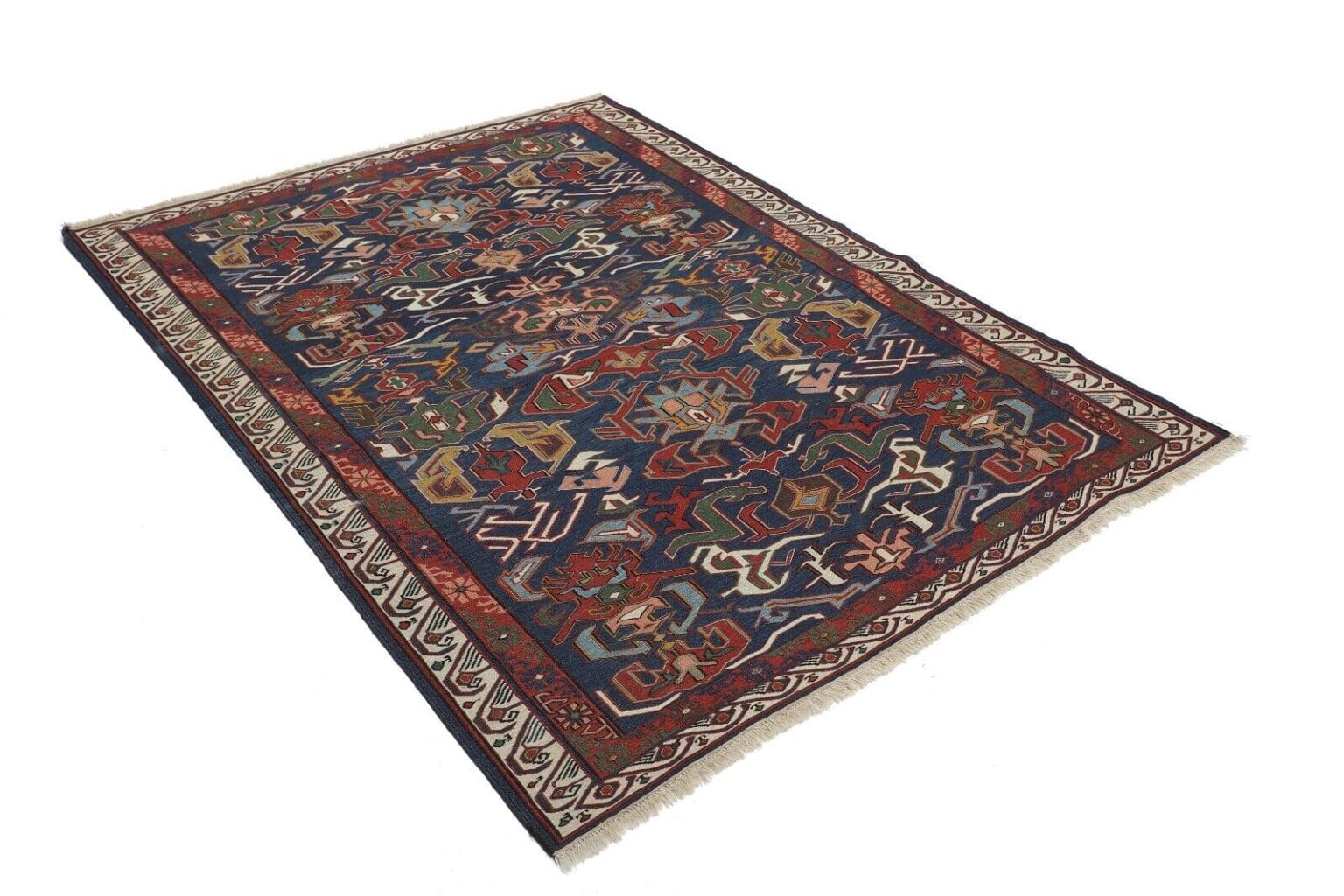
A Kilim has a different visual effect from a high-pile rug because of its flat woven construction. Light and shade are distributed more evenly across the surface, while the woven lines and fields remain directly visible. The short pile height supports this clear appearance. The pattern can therefore be read as a textile composition in its own right, without a long pile obscuring its outlines.
Geometric Kilim patterns are not restricted to one furnishing style. Inherited forms can sit within traditional rooms as well as modern settings. Their textile character remains essential: the design is not printed onto the finished surface, but created through hand weaving. Pattern, material, and technique consequently form one connected visual and structural whole.
Special Features
The central special feature of this piece is its hand-woven construction. Each Kilim is described as a one-off because handmade production results in an individual execution. Making one requires patience and skill and can take several weeks or even months. Wool is a renewable raw material, and the handcraft process is described as producing a reduced ecological footprint.
Several practical properties are specified for this rug: it is abrasion-resistant, non-slip, suitable for underfloor heating, and pet-friendly. It is also listed with a short pile height. Its condition is used. These details belong to the concrete character and equipment of the offered one-off piece. They complement the material and weaving information without replacing an individual inspection of the surface before use.
FAQ
How should I care for my hand-woven Kilim?
Regular vacuuming without a brush attachment helps protect the fibres. For stains, begin with a damp cloth and a mild cleaning product. Strong chemicals should be avoided so that the wool and woven structure are not unnecessarily stressed.
Is this rug suitable for floors with underfloor heating?
Yes. This Kilim is suitable for use on floors with underfloor heating. Its materials and structure allow it to be used on a suitably equipped floor. Wool can retain heat without the rug being adversely affected by it.
Can I use the rug in a heavily frequented area?
Yes. The classic Kilim can also be used in areas with heavy foot traffic. Its wool and handcraft construction are described as robust. It is additionally abrasion-resistant, making it suitable for regular everyday use.
To provide the best experiences, we use technologies like cookies to store and/or access device information. Consenting to these technologies will allow us to process data such as browsing behavior or unique IDs on this site. Not consenting or withdrawing consent, may adversely affect certain features and functions.
Functional Always active
The technical storage or access is strictly necessary for the legitimate purpose of enabling the use of a specific service explicitly requested by the subscriber or user, or for the sole purpose of carrying out the transmission of a communication over an electronic communications network.
Preferences
The technical storage or access is necessary for the legitimate purpose of storing preferences that are not requested by the subscriber or user.
Statistics
The technical storage or access that is used exclusively for statistical purposes.The technical storage or access that is used exclusively for anonymous statistical purposes. Without a subpoena, voluntary compliance on the part of your Internet Service Provider, or additional records from a third party, information stored or retrieved for this purpose alone cannot usually be used to identify you.
Marketing
The technical storage or access is required to create user profiles to send advertising, or to track the user on a website or across several websites for similar marketing purposes.
 SECURE PAYMENT
 SHIPPING PARTNERS


