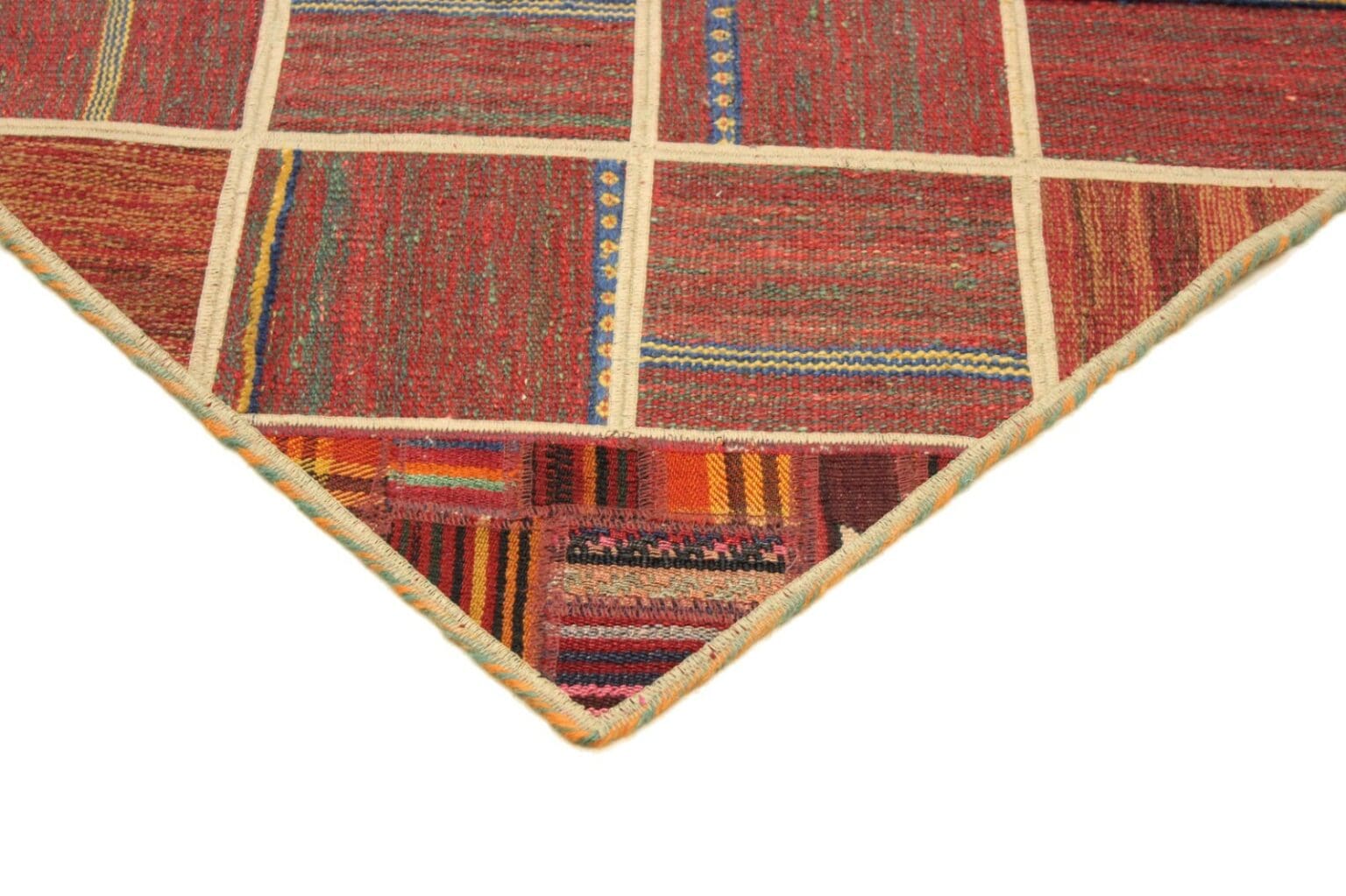
This Oriental rug is made as a hand-woven kilim. Kilims are flat-woven textiles. Their surface is formed by interlacing the weft with the warp rather than by tying individual knots and leaving a raised pile. The method produces a relatively level textile structure in which the design is created directly through the placement of differently coloured yarns.
The material is specified as 100% wool. Wool has long been used in kilim weaving because its fibres are suitable for forming a firm textile surface. During weaving, the yarn is inserted across the warp and compacted to create the fabric. Colour changes can be introduced as the work progresses, allowing fields, lines and geometric areas to be built into the structure itself. No separate warp material is stated for this rug.
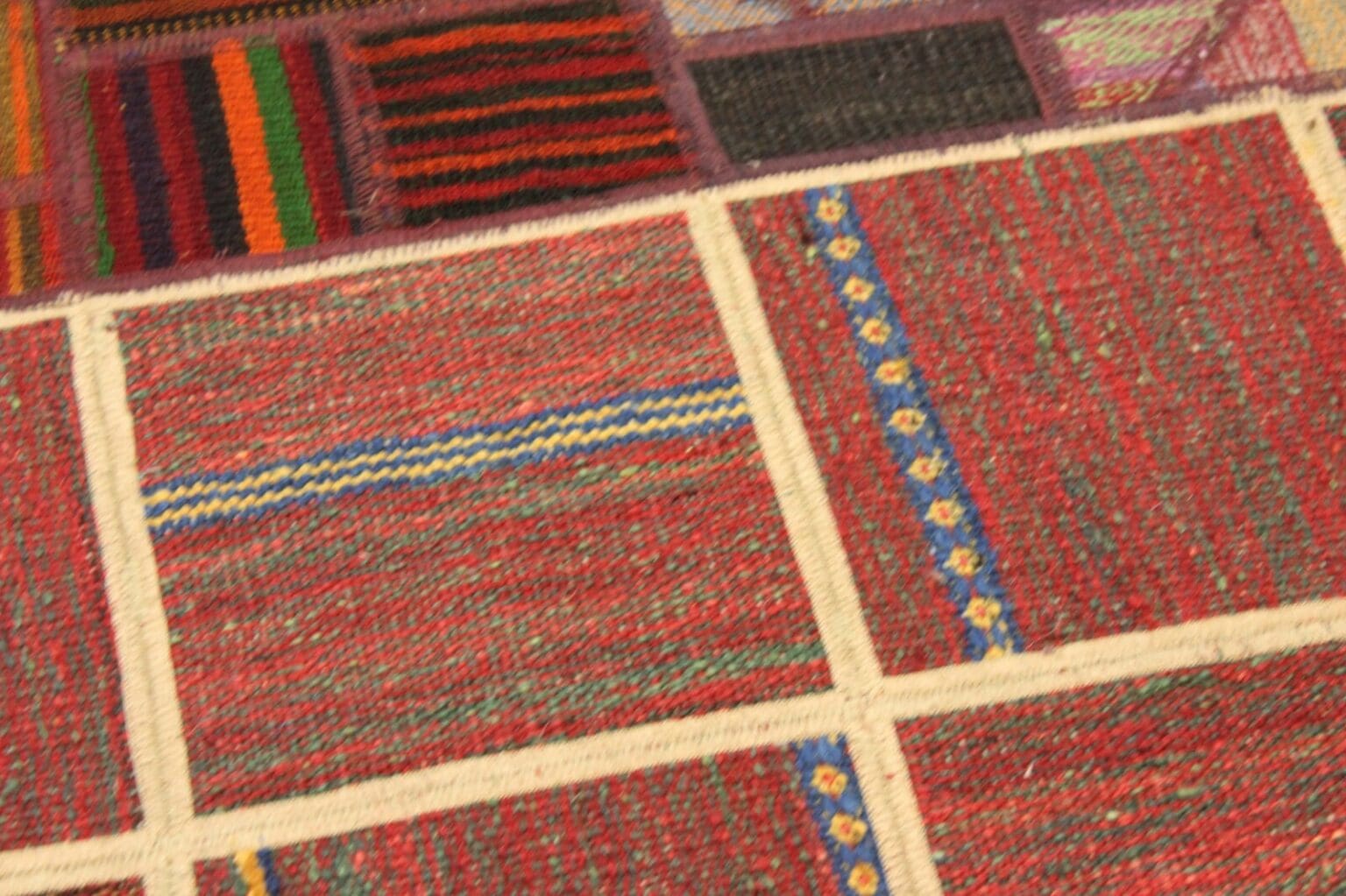
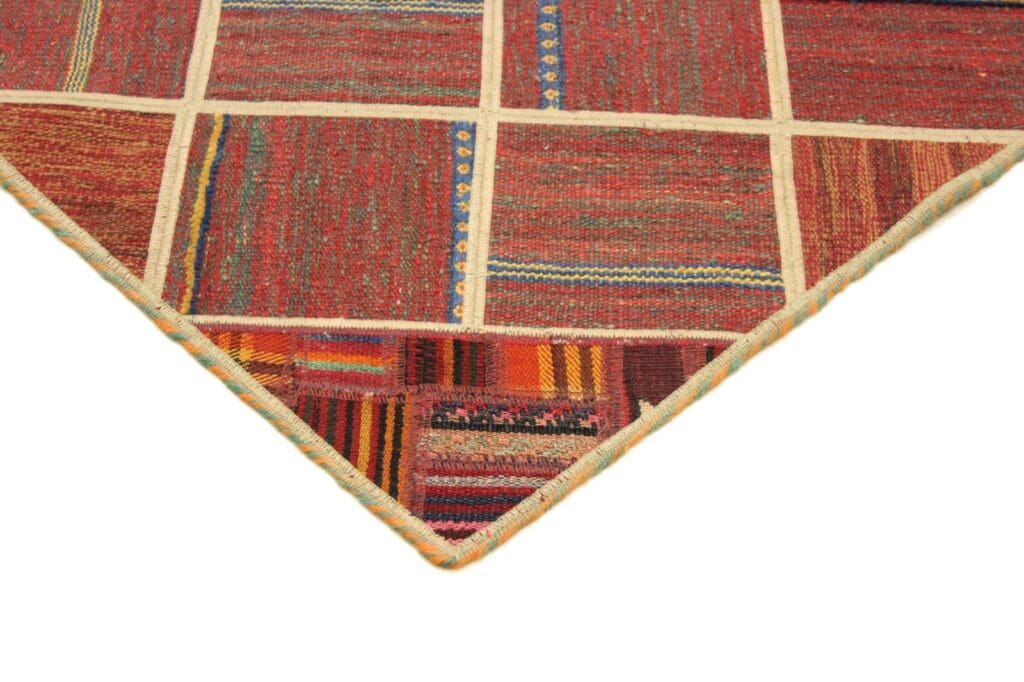
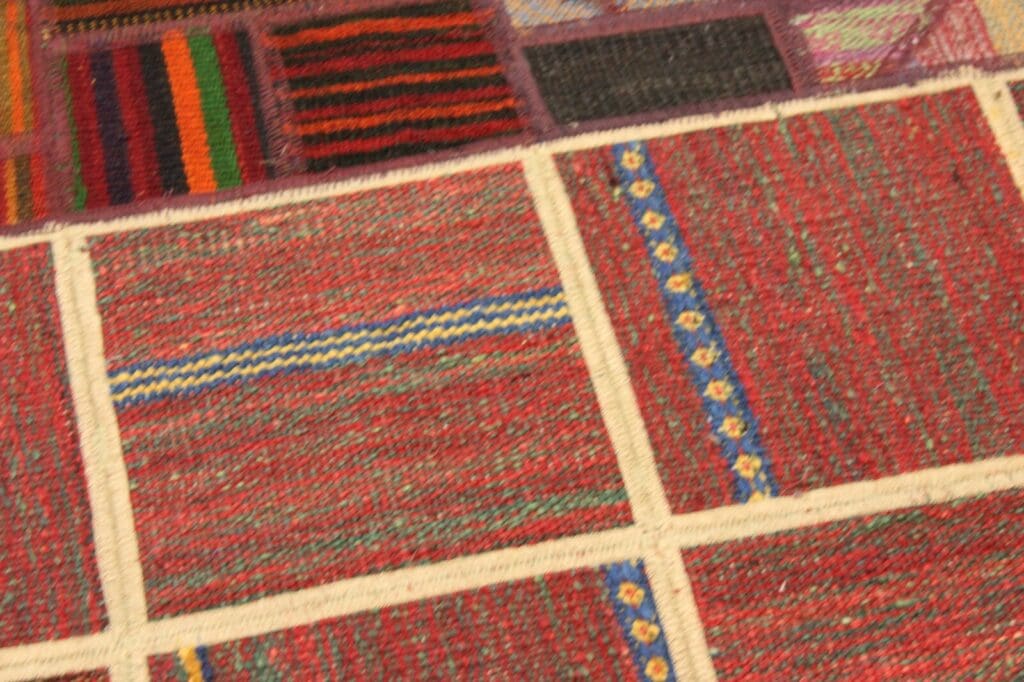
The term flat weave identifies the construction clearly. It distinguishes this piece from a hand-knotted pile rug, where rows of knots create a surface of cut or looped fibres. In a kilim, the visible face remains primarily the woven fabric. The relationship between the warp and weft provides both the structure and the basis for the pattern. Different weaving methods may produce different edges, joins and surface effects, while retaining the essential flat-woven principle.
Hand weaving requires control of the warp tension, the insertion of the weft and the sequence of colours. A weaver must maintain the intended width and keep the developing pattern aligned as the textile grows. In a patchwork design, several visual fields or sections are brought together in one composition. The description Modern Kilim Patchwork therefore combines a traditional flat-weaving method with a contemporary arrangement of multiple design areas.
Origin and Tradition
No province or specific place of manufacture is given for this rug. It is therefore described as an Oriental rug rather than as a Persian rug. Kilim identifies the weaving technique and does not, by itself, establish one particular regional origin. Flat-woven rugs have been made in different weaving traditions, so the construction should not be used to assign this piece to an unnamed province.
Flat weaving is one of the long-established textile crafts associated with Oriental rug traditions. The process begins with a set of warp threads held under tension. Weft yarn is then passed across them and compacted, gradually forming a continuous surface. Since no pile knots are required, the visual character comes from the woven structure, the yarns and the arrangement of colours and shapes.
Historically, kilims have served practical as well as decorative purposes. Flat-woven textiles could be used as floor coverings, covers or furnishing textiles, and their construction made them suitable for handling and transport. Their patterns were developed within the possibilities of the loom. Stripes, diamonds, stepped forms, rectangles and zigzag lines can be built into a woven surface with particular clarity because the design is created at the same time as the fabric.
Kilim traditions are not defined by one single pattern system. Designs may be organised in repeated bands, balanced fields or more freely arranged sections. The exact appearance depends on the weaving tradition, the period, the intended use and the individual design concept. The joining or combination of separate areas is also familiar in textile work. A patchwork interpretation draws on this idea by bringing different-looking sections into a unified surface.
The term Modern Kilim refers to a current interpretation of the flat-woven form. The technique remains connected to established handcraft, while the selection of colours and the arrangement of motifs can reflect modern interior design. Modern describes the design approach here, not a particular country or province. It should therefore be read separately from any statement about origin.
The wider history of Oriental rugs includes both knotted and woven textiles. Persian rugs from Iran form one part of that history, but not every Oriental rug is Persian. When an individual kilim has no named Iranian origin, it is more accurate to describe its construction and design without assigning it to Iran. This distinction keeps technique, style and provenance separate.
Design and Pattern
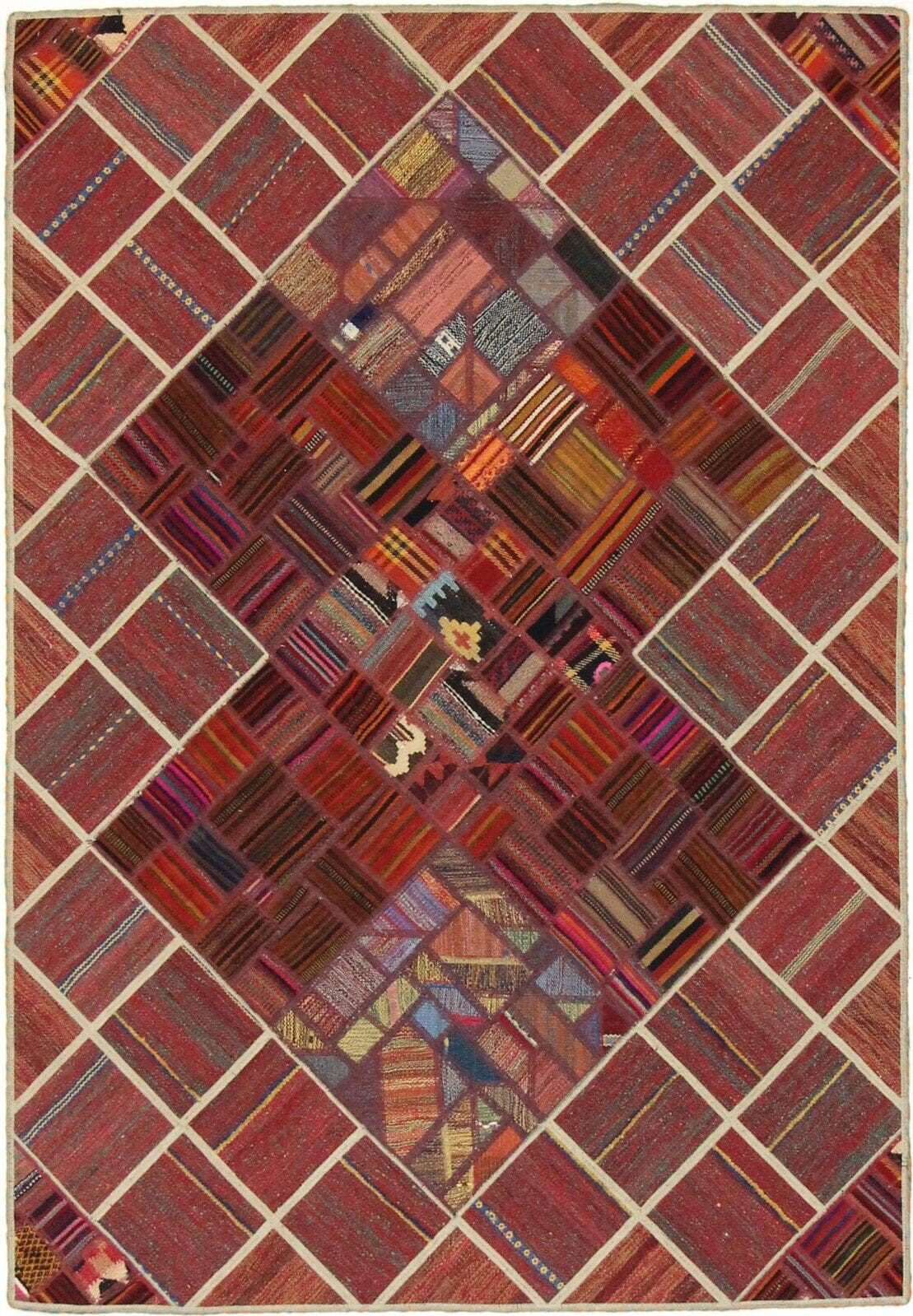
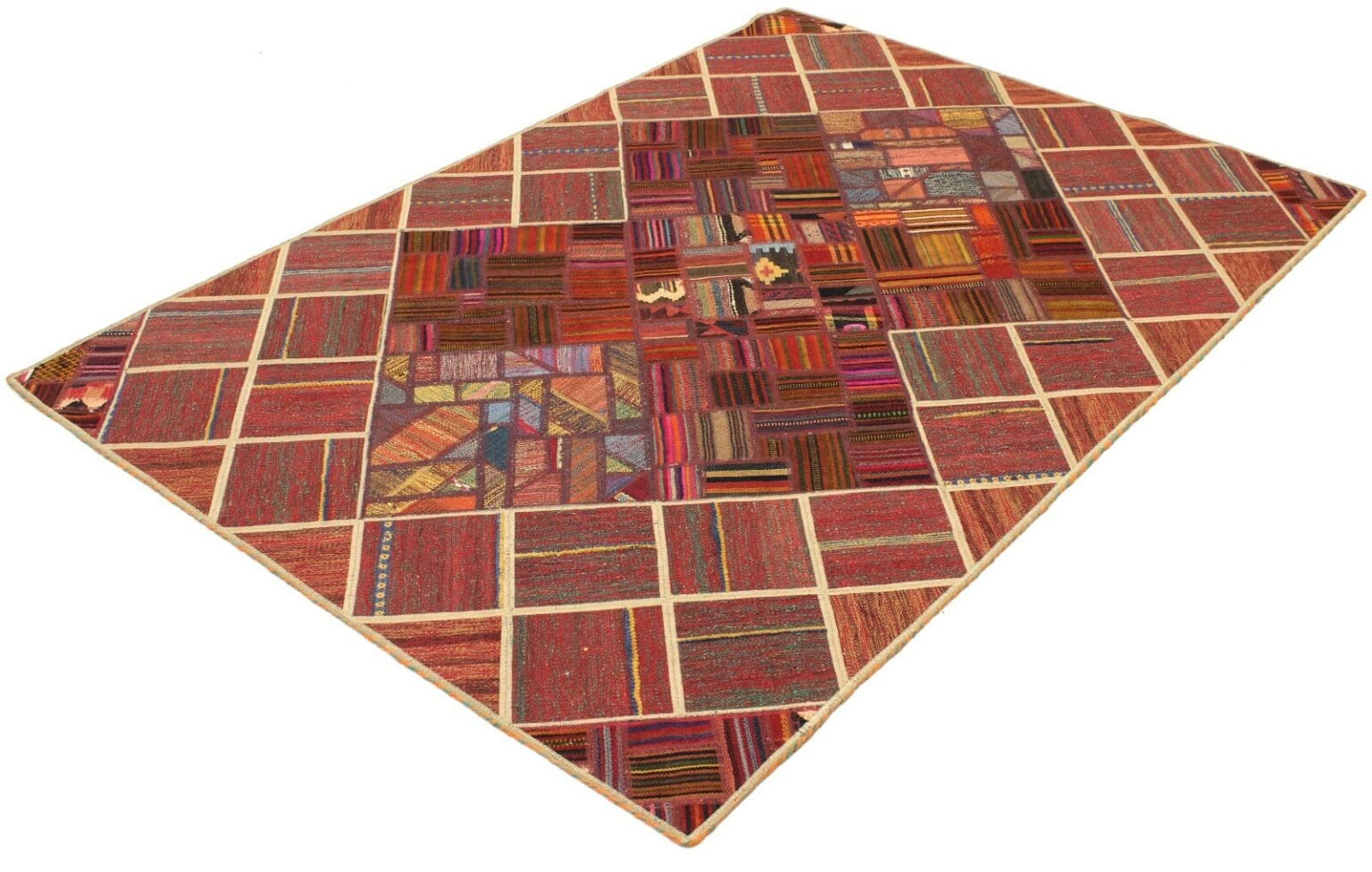
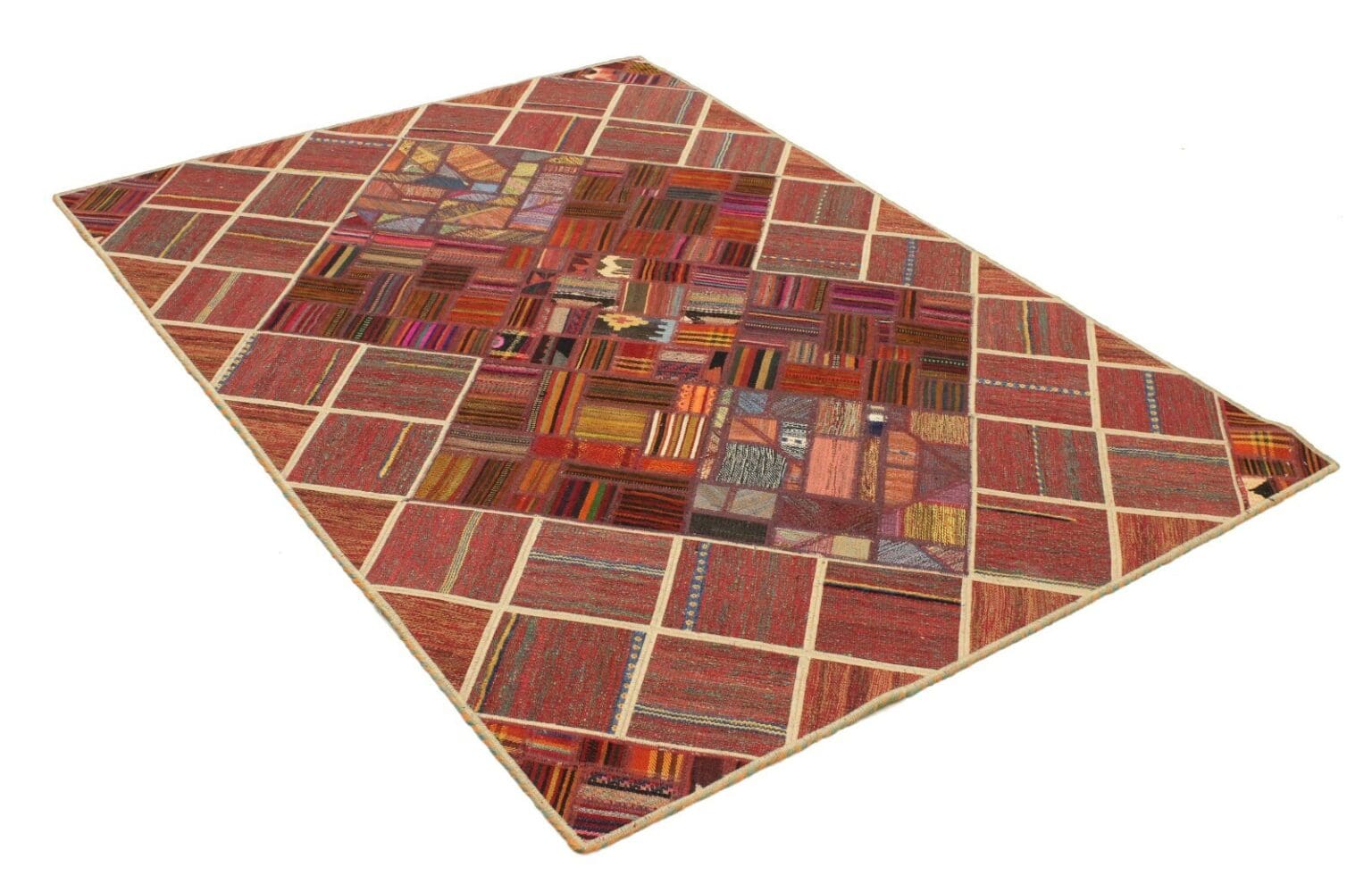
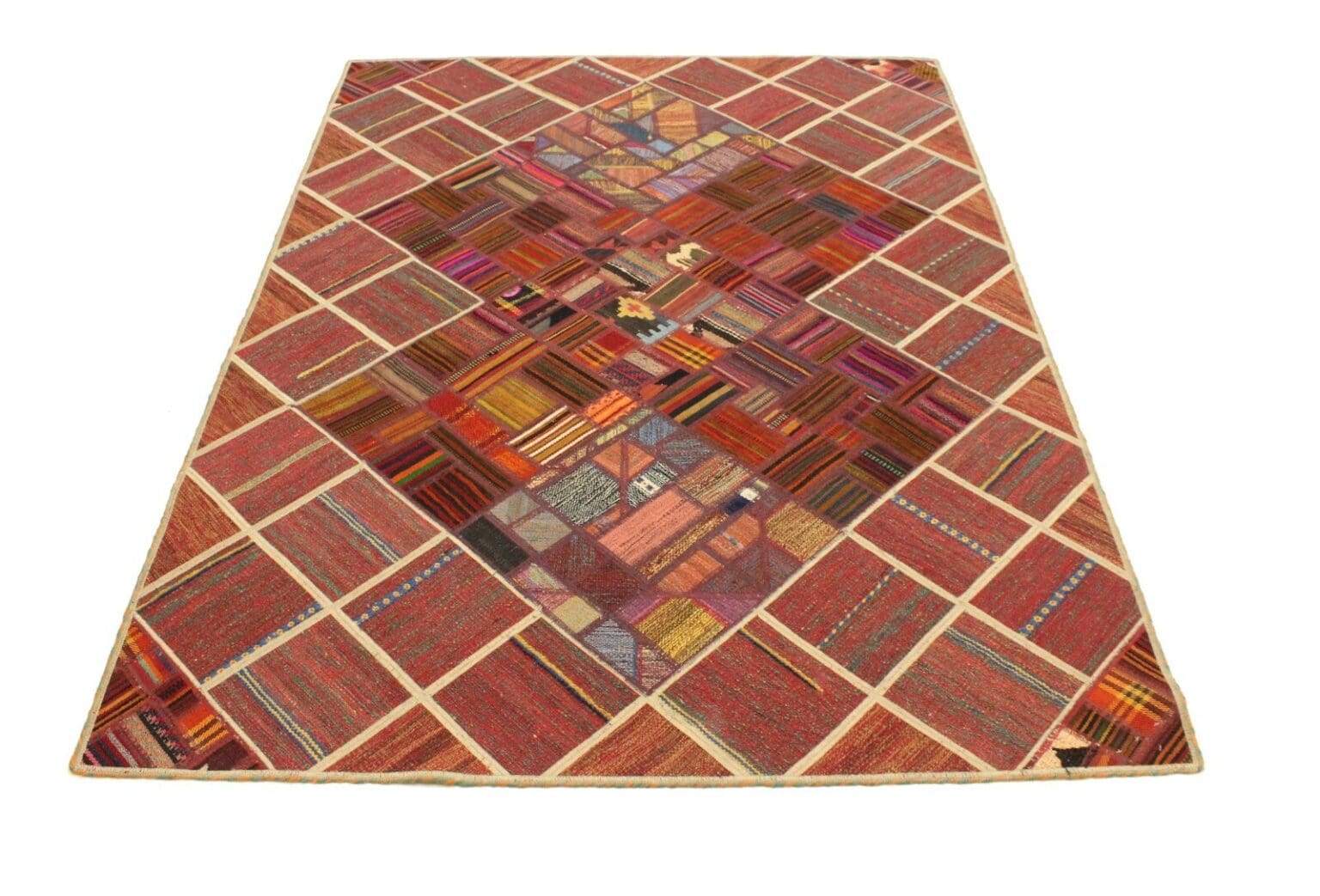
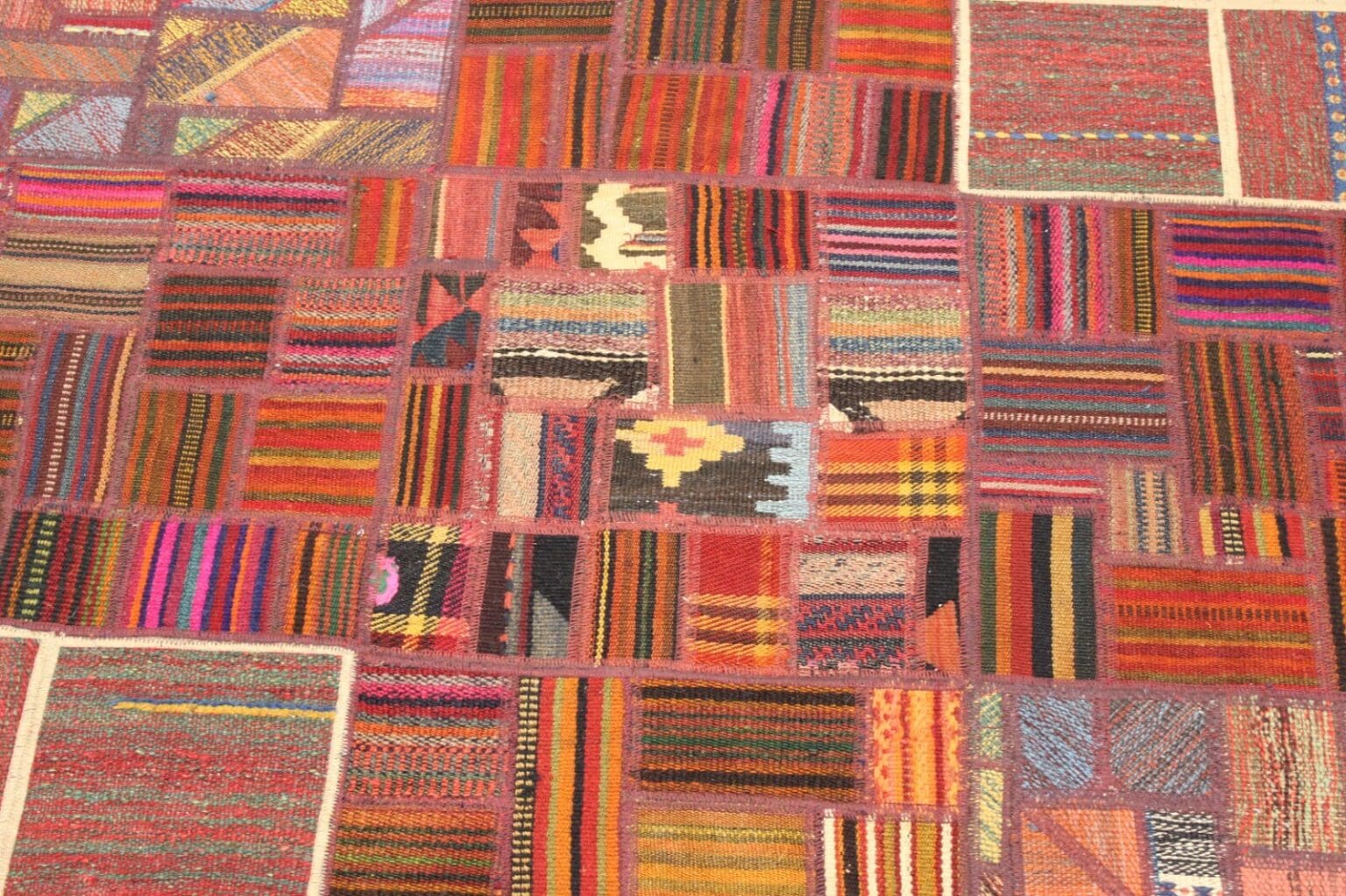
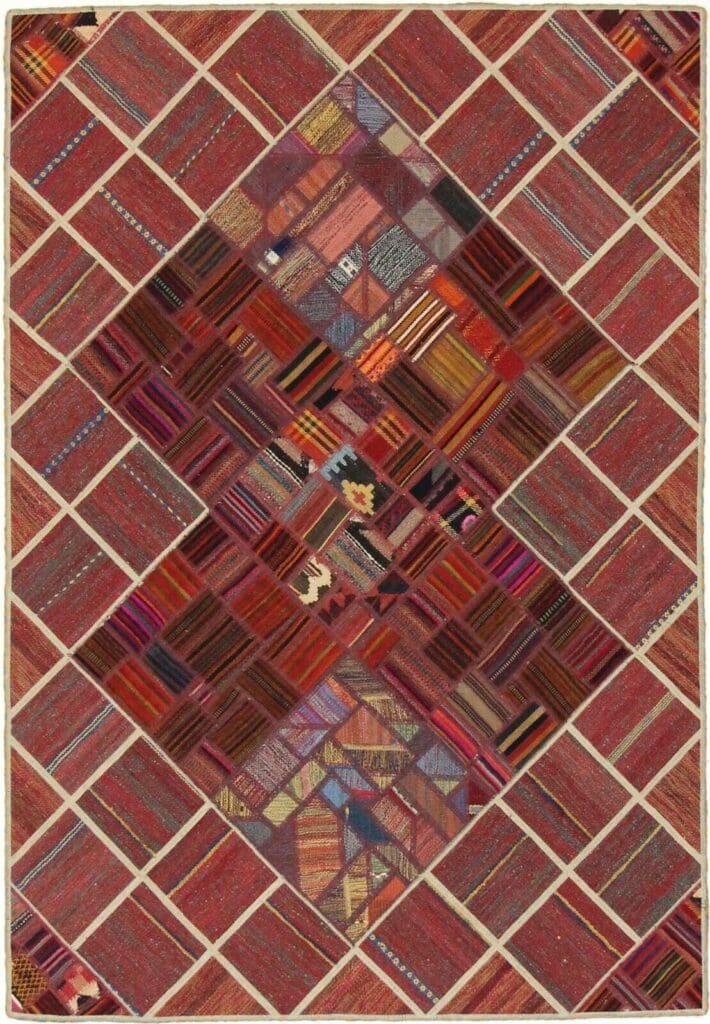
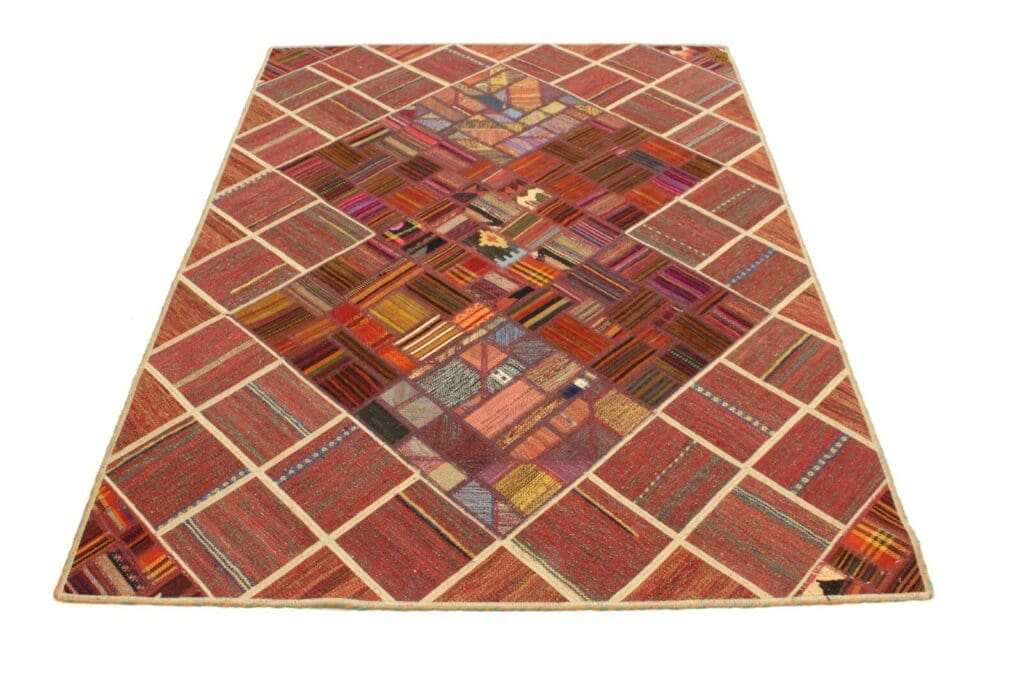
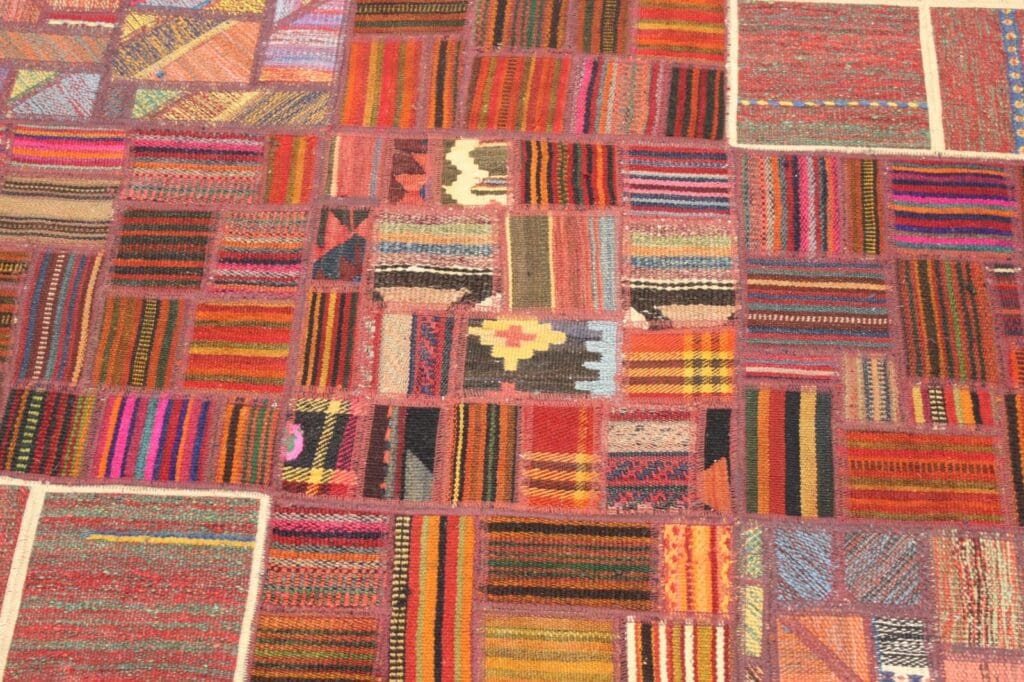
The rug is described as multicoloured, Art Deco and patchwork. A multicoloured composition uses several shades rather than relying on a single dominant colour. In a flat weave, these colours are produced through the yarns themselves. Areas of colour may meet in clear boundaries, form lines or be organised as separate sections. The result is a design that is part of the textile structure rather than an added surface decoration.
The Art Deco reference points to a visual language based on order, defined outlines and geometric clarity. Art Deco developed as an international design movement associated with structured forms, repeated rhythms and strong contrasts. These qualities work naturally with flat weaving, where straight lines, angles and compact fields can be represented directly. The style description does not establish a regional origin for this particular rug.
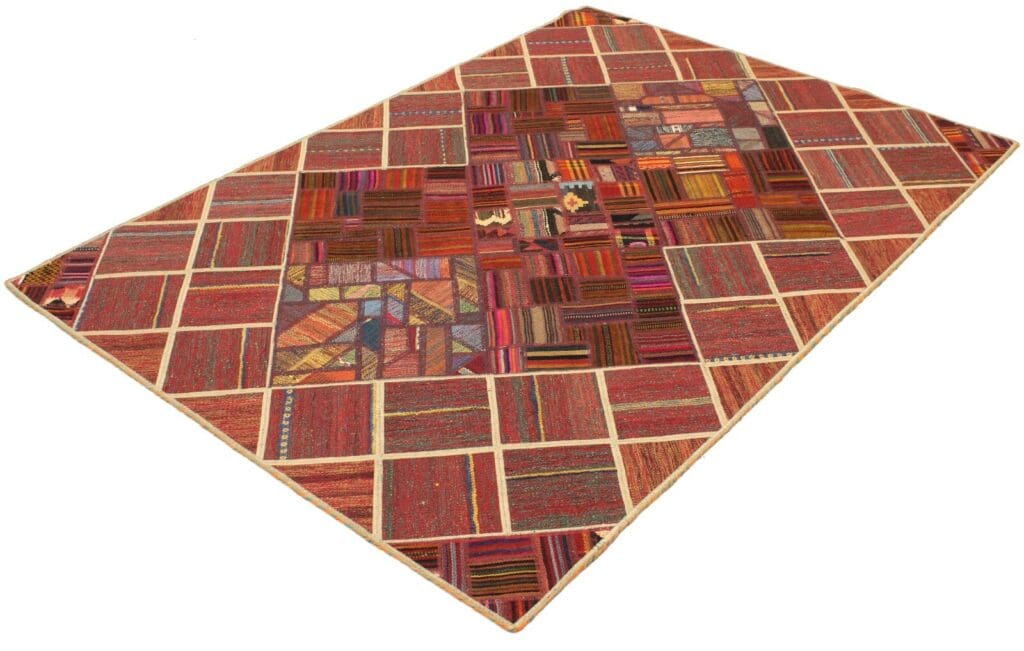
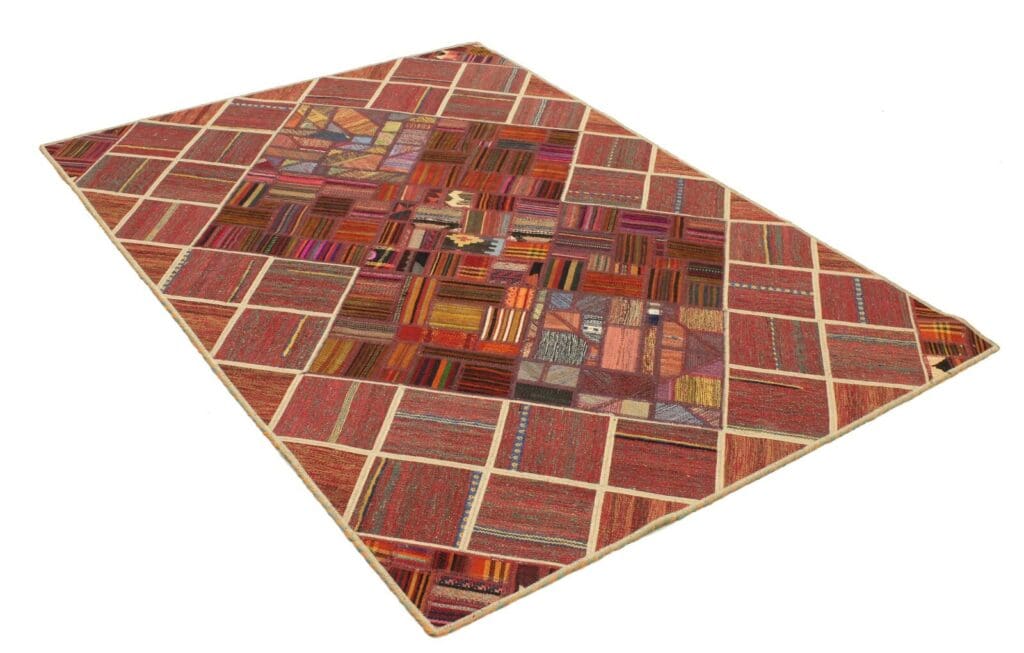
Patchwork describes the impression of a composition assembled from several parts or pattern fields. Instead of one uninterrupted central motif, the eye may encounter a sequence of areas that differ in colour, shape or internal arrangement. Together they form a single overall design. The method gives the surface visual variety while preserving the unity of the woven textile.
Geometric kilim designs are often built from simple units such as squares, rectangles, diamonds, stripes and stepped lines. These elements can be repeated, mirrored or offset to create movement across the field. Repetition establishes a rhythm, while changes in colour can make similar forms appear distinct. Such visual effects arise from the possibilities of the loom and do not need to be linked to one specific historical model.
The multicoloured palette and the Art Deco character show how a traditional textile method can be used within a modern design vocabulary. The weave remains visible and contributes to the appearance of the pattern. The patchwork layout interrupts a single continuous scheme and places emphasis on the relationship between neighbouring fields. This makes the organisation of the surface an important part of the rug’s design.
A kilim can be used in different interior settings because its flat construction and graphic pattern are not restricted to one type of room. This rug is described as suitable for all rooms. That statement indicates versatile intended use. Its appearance in a particular setting will also depend on the surrounding furniture, the available light and the way its colours relate to the room.
Special Features
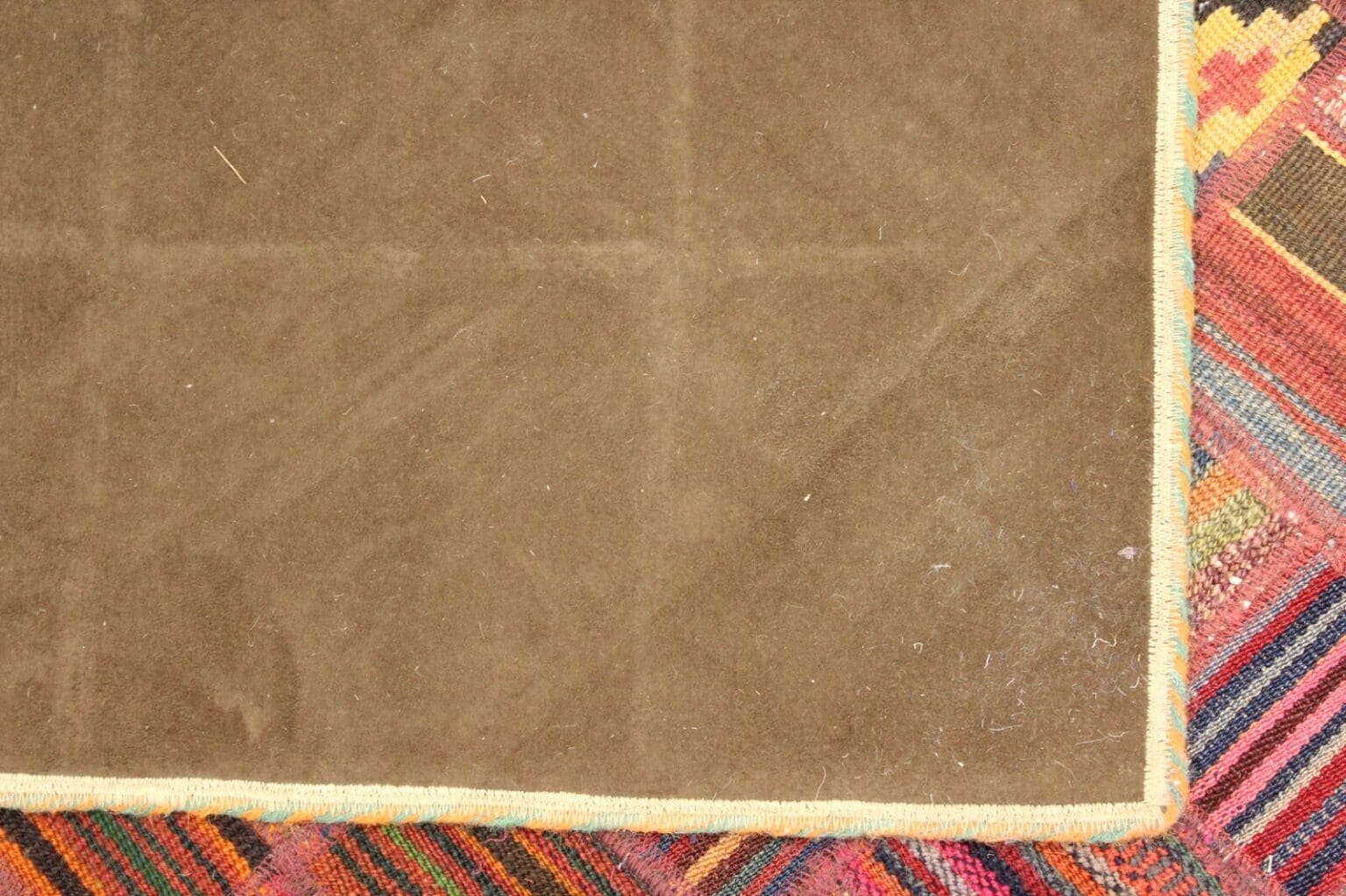
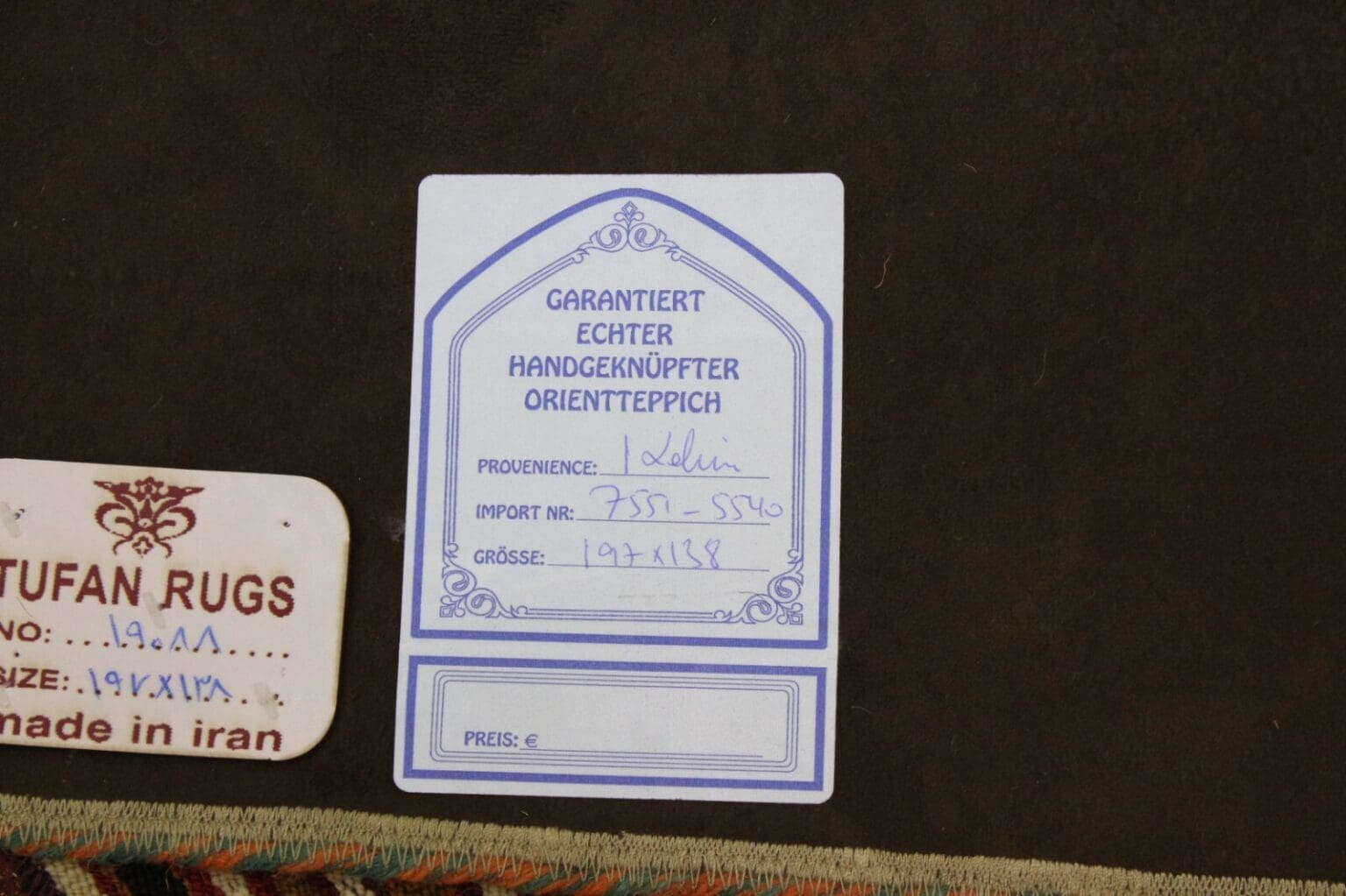
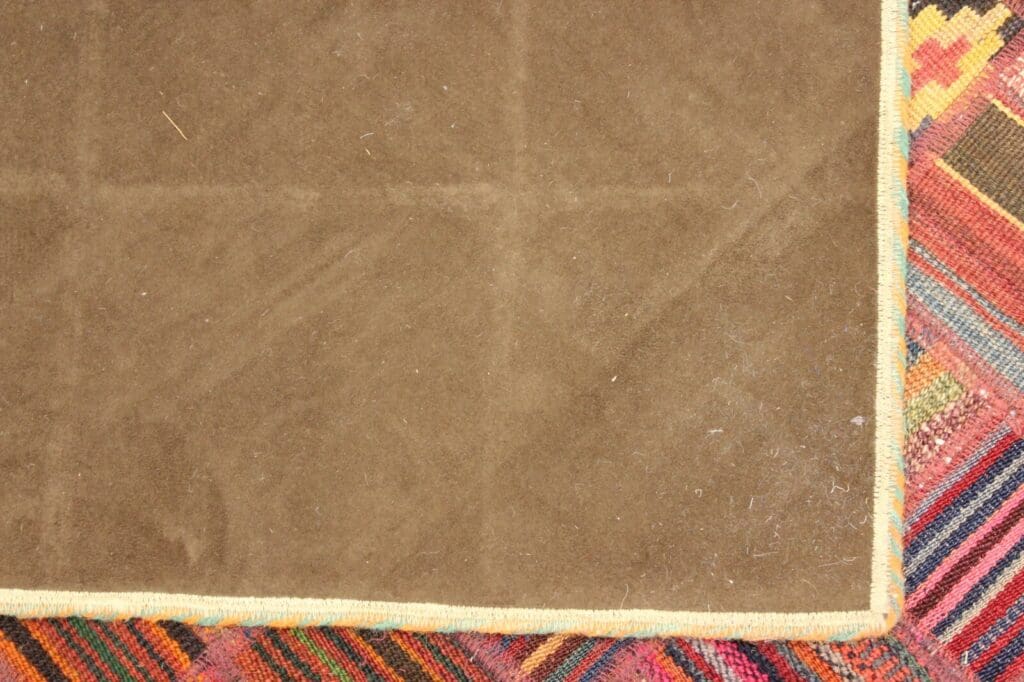
The rug is described as new without a tag. It is identified as a hand-woven Modern Kilim Patchwork with a multicoloured Art Deco pattern and flat-weave construction. The material is 100% wool. It is also specified as suitable for underfloor heating and for use in all rooms. These details describe the condition, material, construction and stated suitability of this individual piece.
The combination of hand weaving and a contemporary patchwork arrangement is central to its description. Its flat construction distinguishes it from a hand-knotted pile rug. Care should follow methods appropriate for wool flat weaves; no separate, rug-specific cleaning instructions or special treatment are provided for this piece.
FAQ
What is a kilim?
A kilim is a flat-woven textile. Its pattern is formed by the interaction of warp and weft threads rather than by tying knots to create a raised pile. This gives the textile its level woven surface. Kilim describes the construction and does not automatically identify one province or one country of origin.
What does patchwork mean in this rug’s design?
Patchwork refers to a composition made from several related fields or sections. In this rug, the patchwork principle is combined with a multicoloured Art Deco pattern. Different areas may read as individual textile elements while contributing to one overall arrangement. The term describes the visual design and should not be confused with a statement about regional provenance.
Can this rug be used over underfloor heating?
The rug is specified as suitable for underfloor heating. It is also described as suitable for all rooms. It is hand-woven and made from 100% wool. For installation, the instructions for the heating system and the use of a suitable rug pad should be observed so that heat circulation and the rug’s position remain appropriate for the room.
To provide the best experiences, we use technologies like cookies to store and/or access device information. Consenting to these technologies will allow us to process data such as browsing behavior or unique IDs on this site. Not consenting or withdrawing consent, may adversely affect certain features and functions.
Functional Always active
The technical storage or access is strictly necessary for the legitimate purpose of enabling the use of a specific service explicitly requested by the subscriber or user, or for the sole purpose of carrying out the transmission of a communication over an electronic communications network.
Preferences
The technical storage or access is necessary for the legitimate purpose of storing preferences that are not requested by the subscriber or user.
Statistics
The technical storage or access that is used exclusively for statistical purposes.The technical storage or access that is used exclusively for anonymous statistical purposes. Without a subpoena, voluntary compliance on the part of your Internet Service Provider, or additional records from a third party, information stored or retrieved for this purpose alone cannot usually be used to identify you.
Marketing
The technical storage or access is required to create user profiles to send advertising, or to track the user on a website or across several websites for similar marketing purposes.
 SECURE PAYMENT
 SHIPPING PARTNERS


