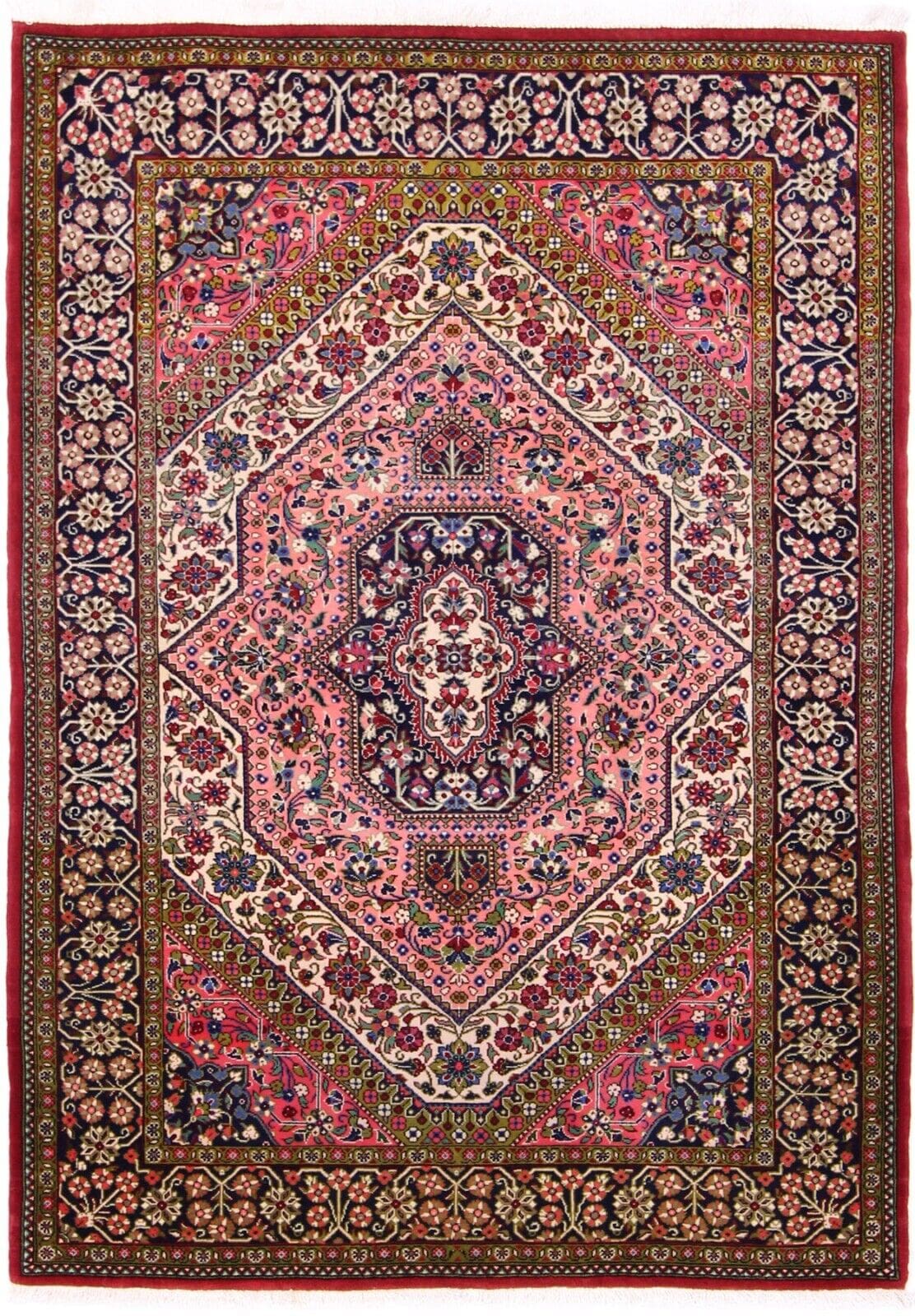
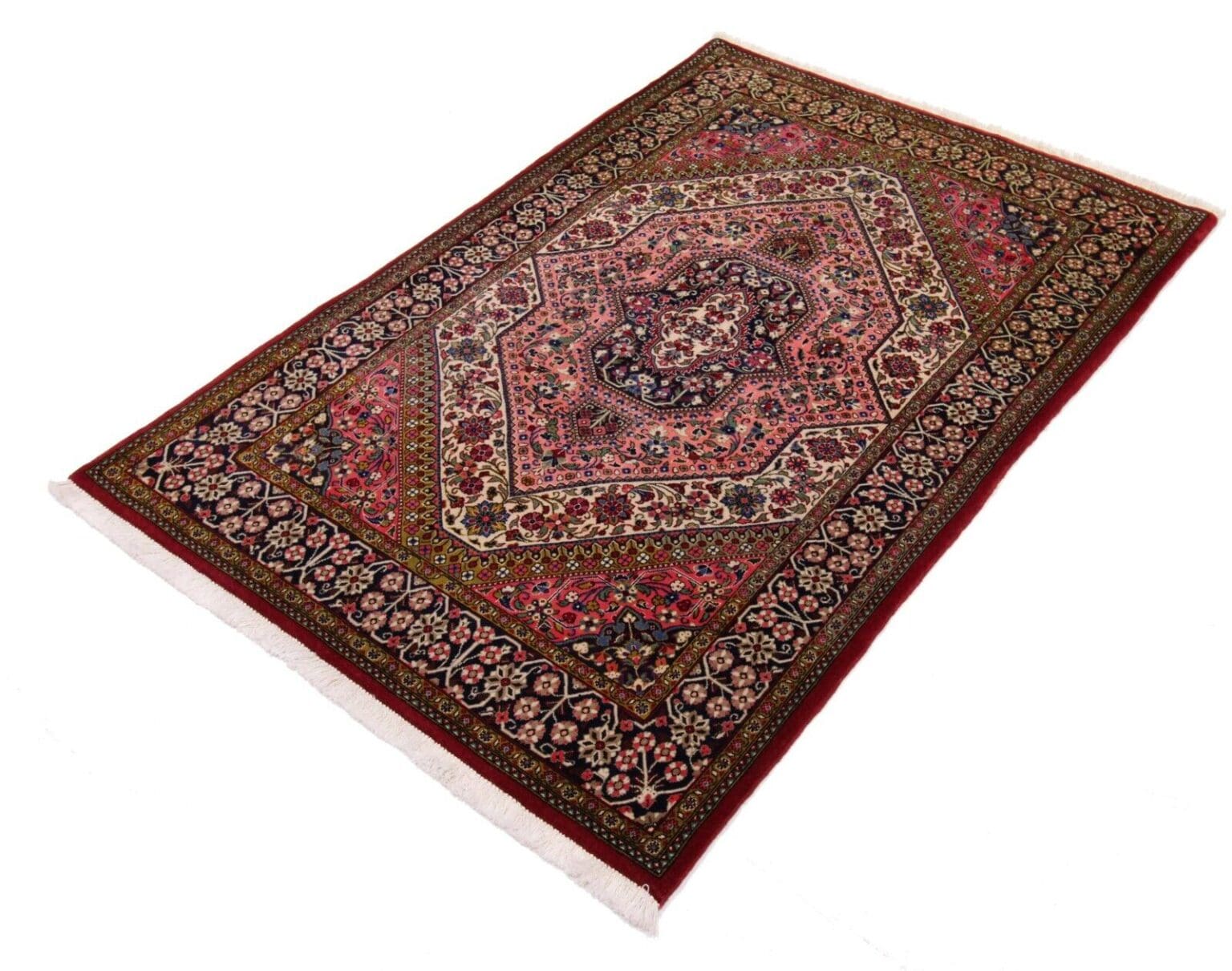
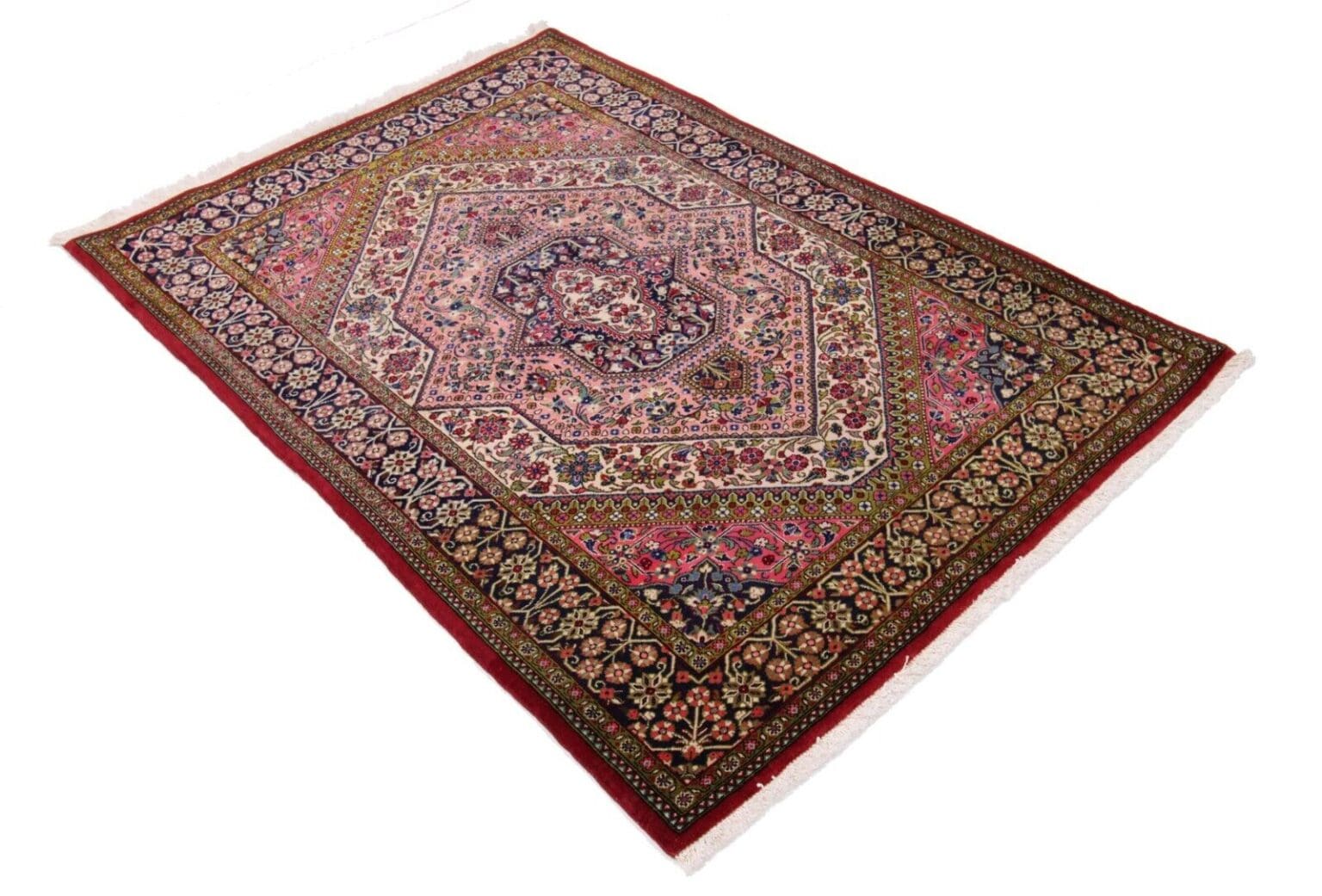
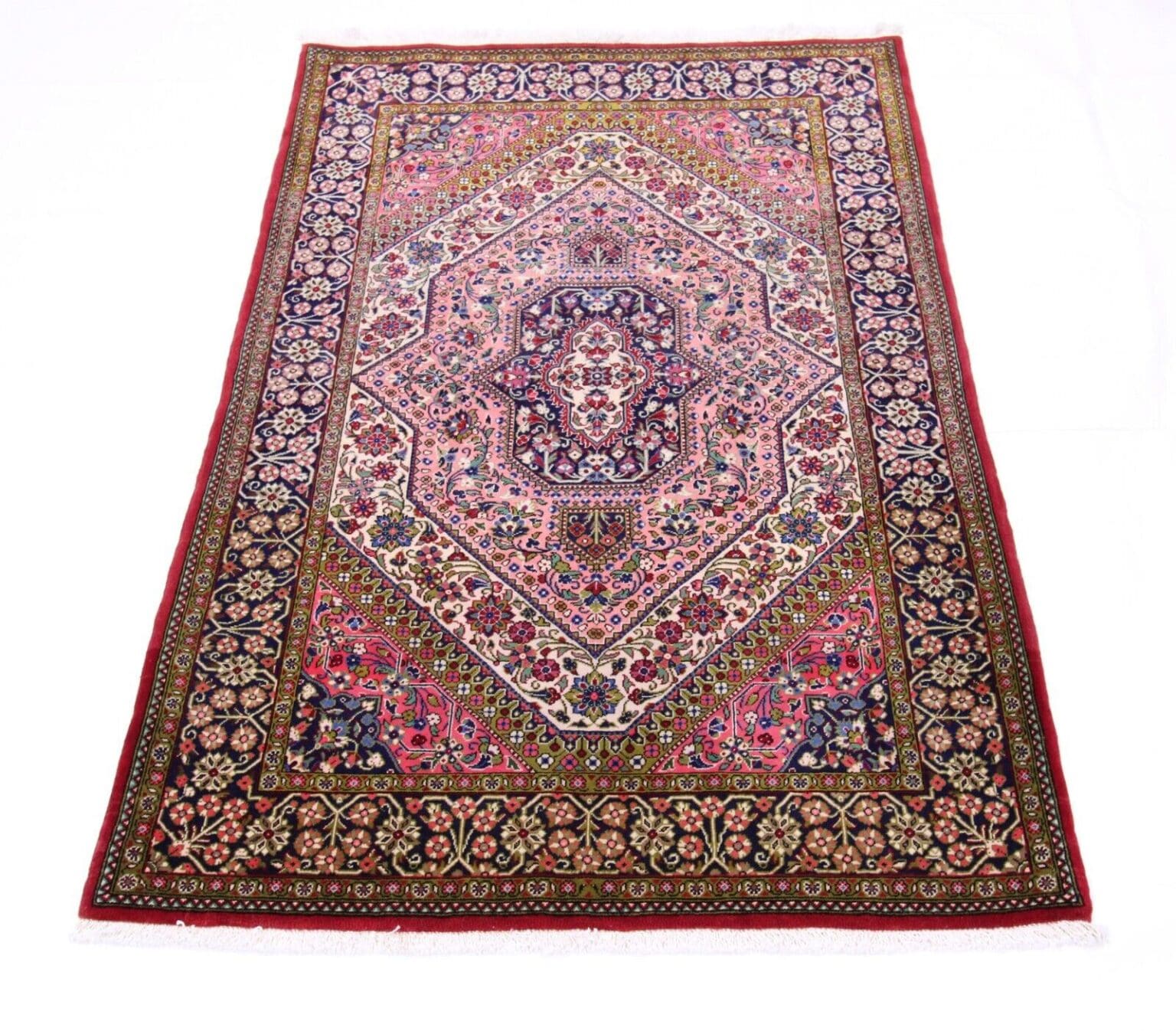
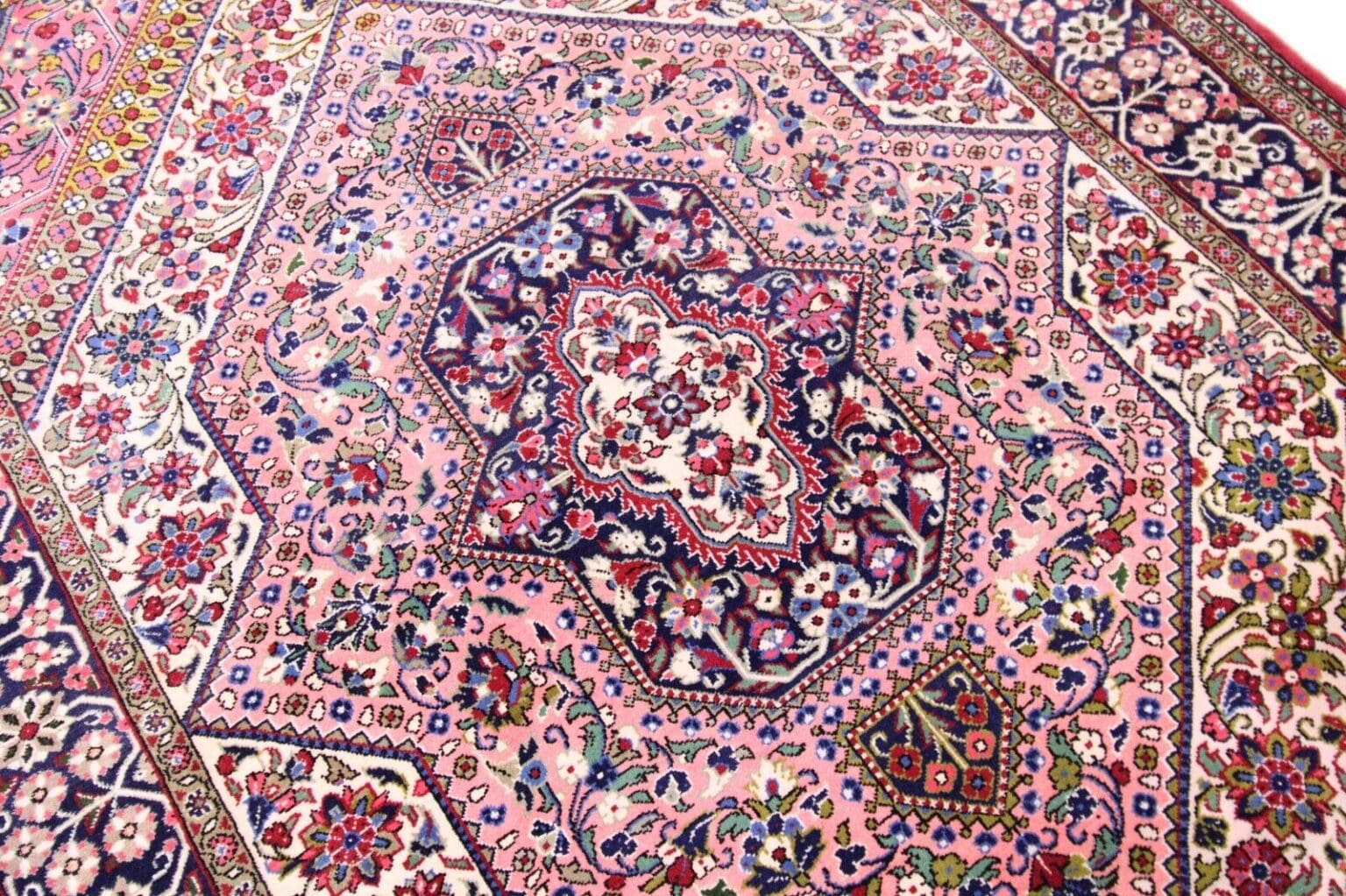
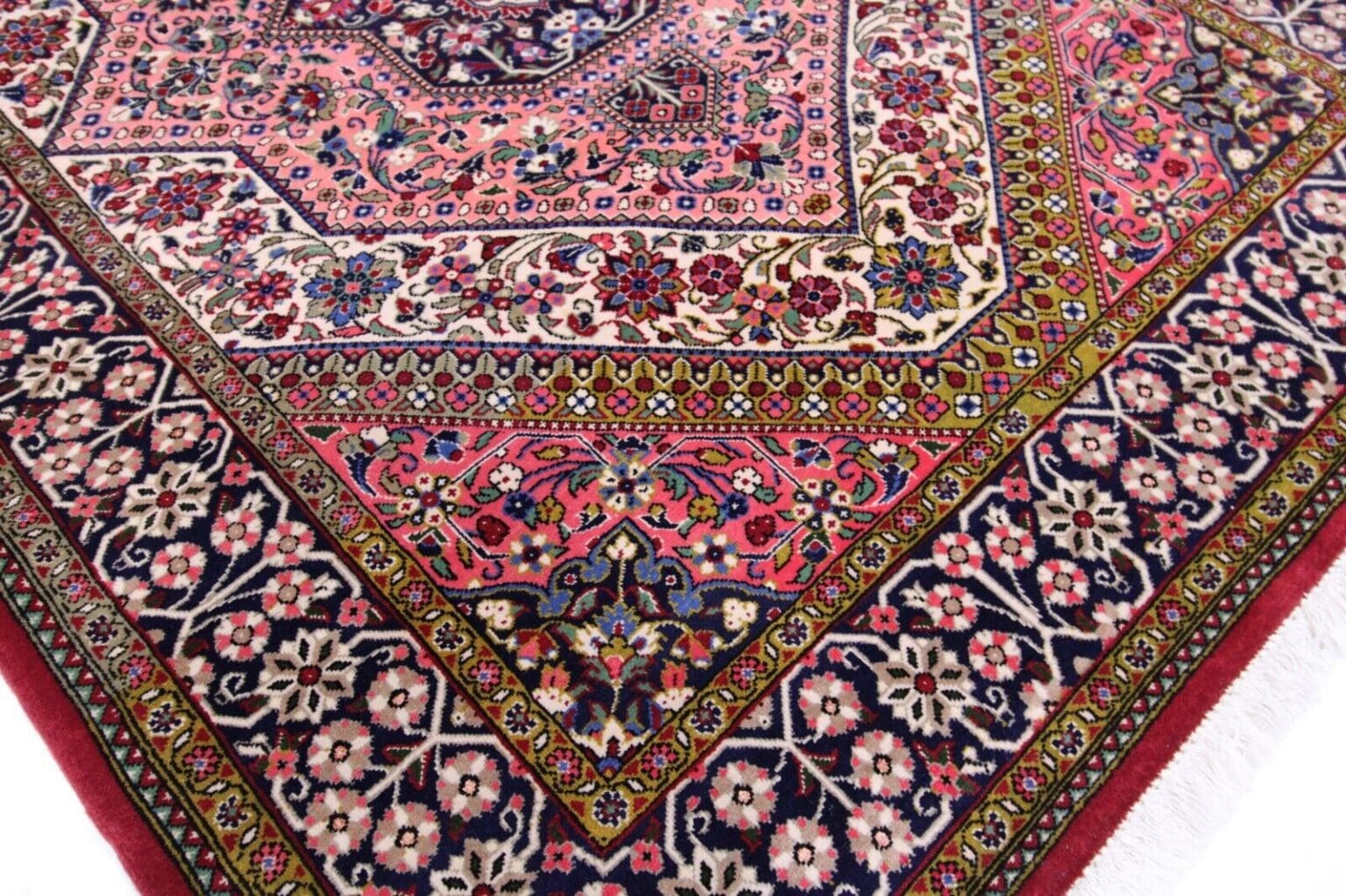
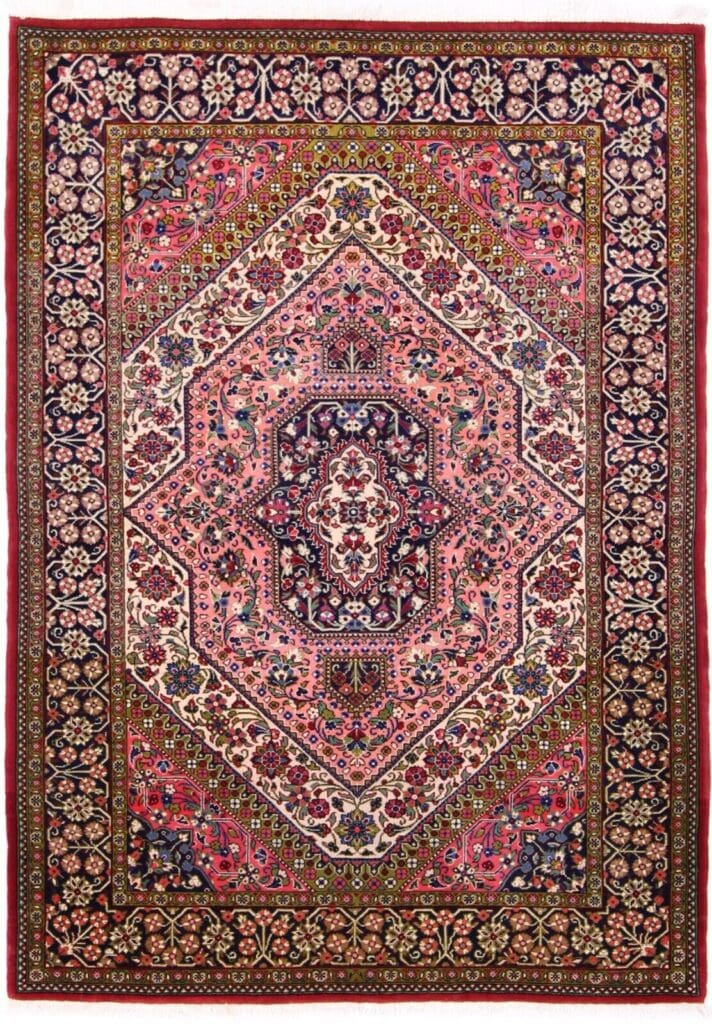
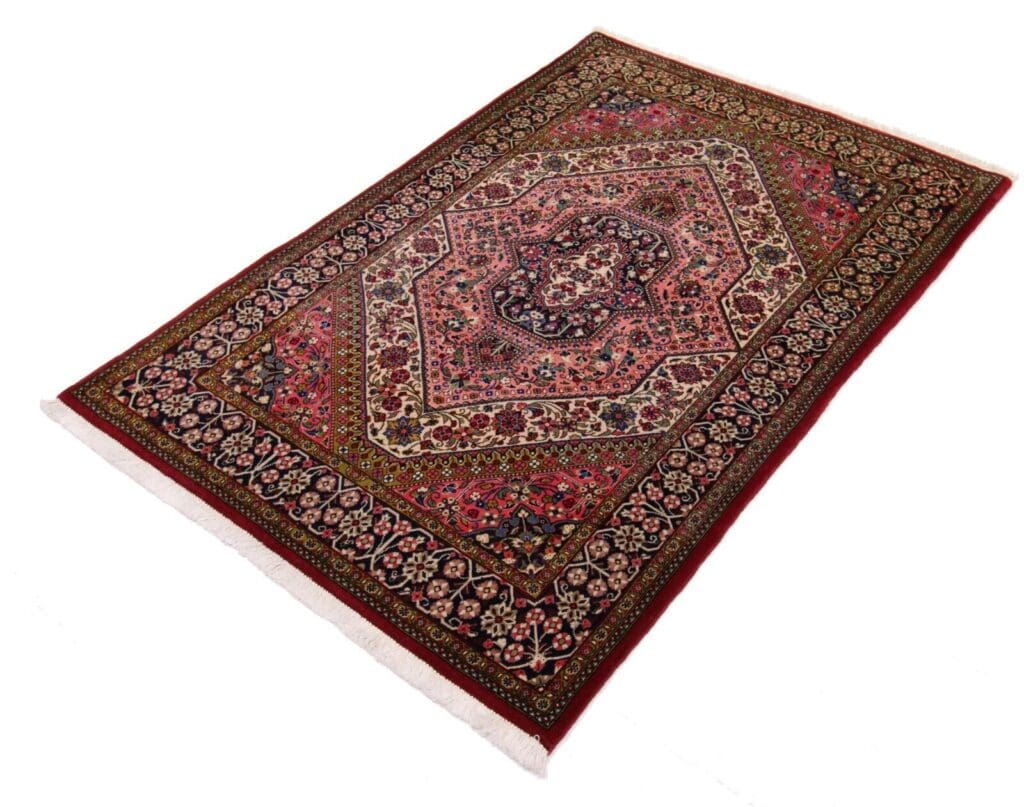
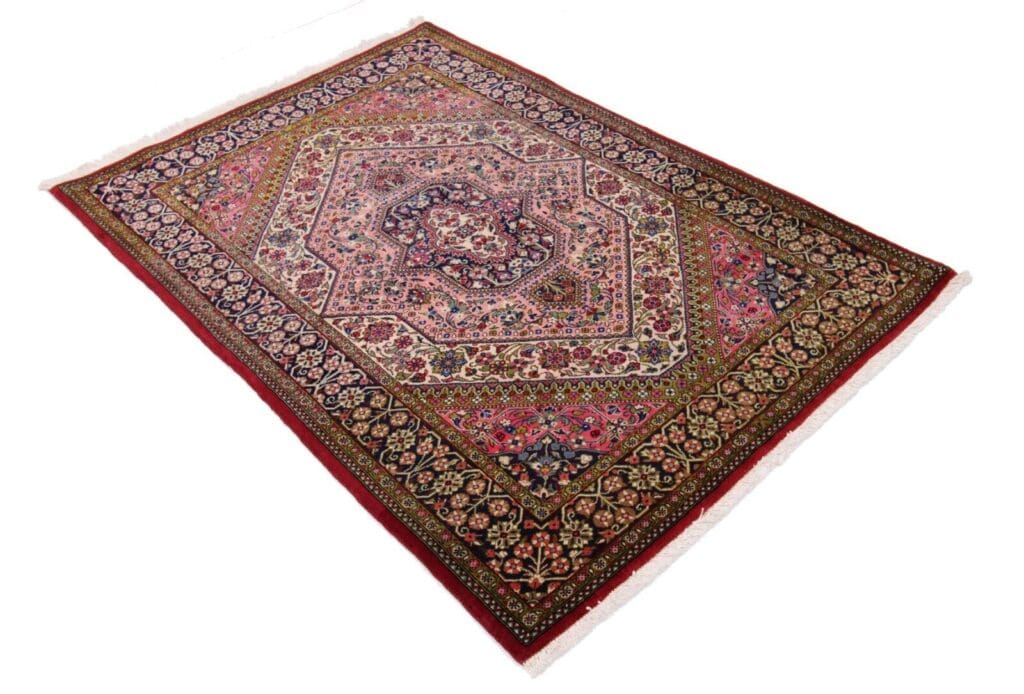
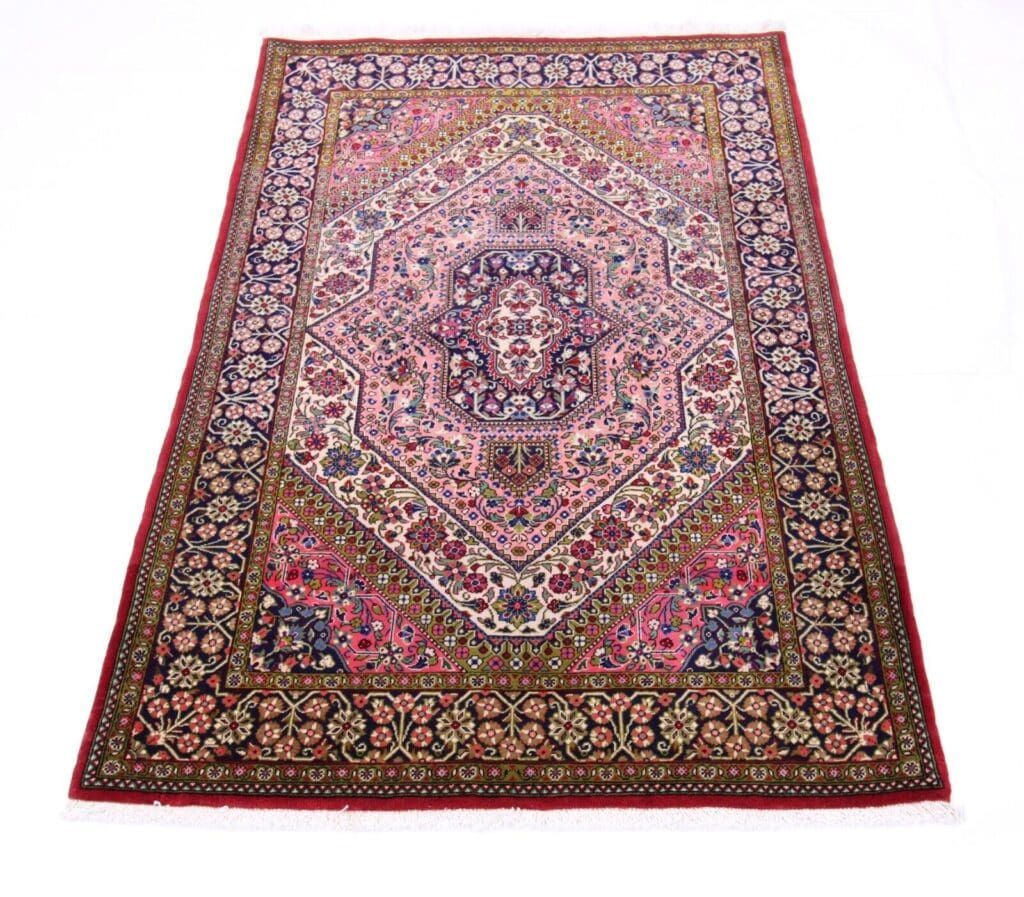
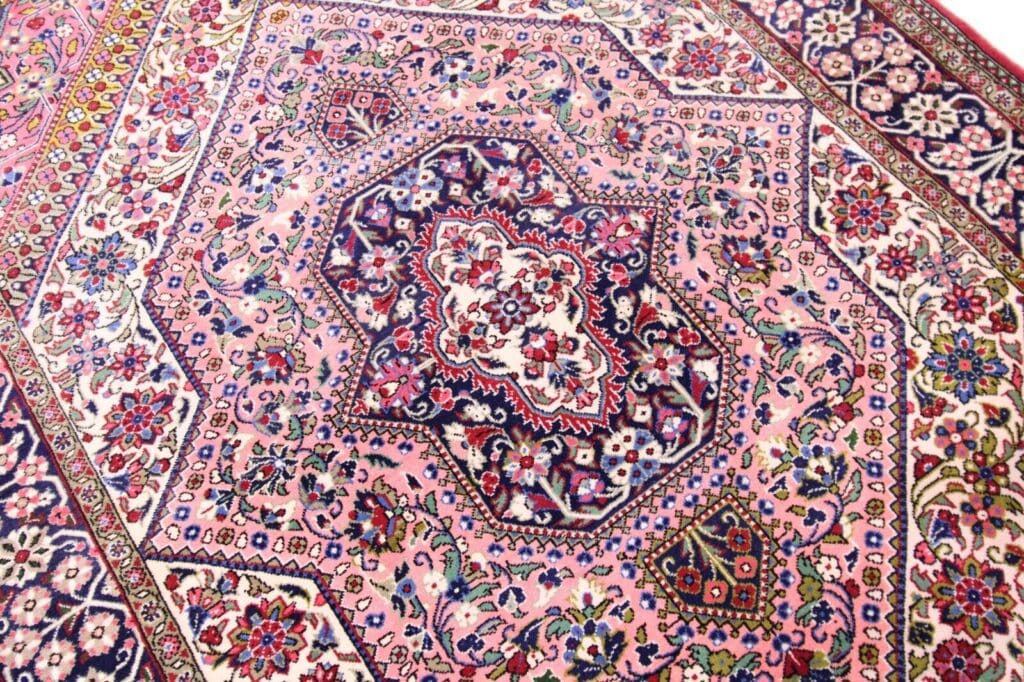
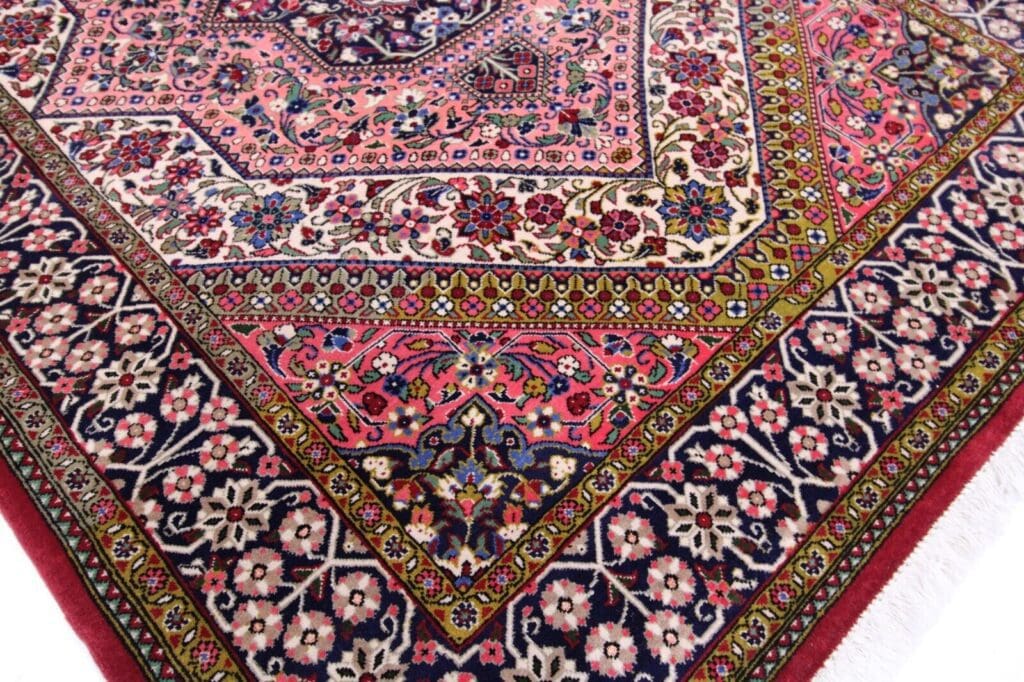
Oriental Rug 184×122 cm Hand-knotted
€ 1454
Hand-knotted Oriental rug | Technique: Hand-knotted | Size: 184 x 122 cm | Condition: Top condition
Sold out
- ✓Free Shipping in EU
- ✓2-5 Business Days Delivery
- ✓14-Day Return Policy
- ✓Worldwide Shipping on request
 SECURE PAYMENT
 SHIPPING PARTNERS
Inventory number: 6DED1681
Description
Oriental Rug
Material and Craftsmanship
This rug is hand-knotted. Hand-knotting is a traditional method in which individual knots are tied by hand around the warp threads. The weaver builds the pile row by row, securing each section before moving on to the next. Unlike a machine-made surface, a hand-knotted rug is formed through a sequence of separate manual operations, and the character of the finished textile depends on the weaver’s control of the knotting, the drawing of the pattern and the finishing work.
The source describes this rug as hand-knotted but does not specify the pile fibre, the warp material, the knot density or the precise construction. Those details are therefore not assigned here. In the wider tradition, Oriental rugs may be made with wool, silk or combinations of fibres, while cotton or other materials can be used in the foundation. The choice of material affects handle, surface appearance, resilience and maintenance, but no particular material is stated for this individual rug.
Hand-knotting normally requires several stages. A foundation is prepared first, knots are placed according to the intended design, and rows are compacted as the work progresses. The pile is then trimmed, the sides are secured and the ends are finished. The pace of production depends on the design, the scale of the field and the level of detail required. This method explains why hand-knotted rugs are treated as individual textile works rather than as identical factory products.
Origin and Tradition
The term Oriental rug covers a broad group of hand-knotted and hand-woven textiles made across several weaving cultures. Within that broad field, Persian rugs form one important tradition, with long-established centres including Isfahan, Tabriz and Kashan. Other weaving regions have developed their own approaches to colour, composition, knotting and finishing. A place name used for a rug style can describe a design tradition, a weaving centre or a recognised visual language, so origin and pattern should be kept conceptually separate.
Iranian carpet production has a long history of regional specialisation. Urban workshops often became known for carefully organised drawings, balanced medallions and detailed floral compositions, while village and tribal weavers frequently developed more direct, repeat-based or geometric arrangements. These distinctions are not absolute, and designs have travelled between workshops and communities over time. Patterns have been adapted, redrawn and combined as weavers responded to local customs, available dyes and changing preferences.
Isfahan is associated in general with refined compositions and elaborate floral drawing. Tabriz is widely recognised for precise workshop carpets in a range of formats, including designs based on medallions, gardens and repeating motifs. Kashan has a strong place in Persian carpet history and is often connected with floral fields and curving vine work. These regional traditions provide useful context for understanding Oriental rugs, but none of these locations is identified as the origin of this particular rug.
Traditional rugs also reflect the organisation of the communities that produced them. A workshop piece may follow a prepared pattern, sometimes called a cartoon, that guides the placement of knots and colours. In village and nomadic settings, the design may be recalled from experience or built from familiar motifs. The resulting balance between planning and manual variation is part of the history of the craft. Even when a pattern is repeated across a region, each completed rug remains a separate textile object.
The making of a rug has traditionally involved knowledge passed between generations. Skills include preparing the foundation, tying consistent knots, selecting and combining colours, reading a design and finishing the edges. Natural dyes have played an important historical role in many weaving cultures, while synthetic dyes are also present in later production. Regional traditions are not fixed categories: techniques evolve, motifs migrate and workshop practices change. This continuing history is why Oriental rugs are discussed both as household textiles and as examples of material culture.
Design and Pattern
Oriental rug designs draw on a wide vocabulary of floral forms, geometric structures, symbolic figures and repeating arrangements. Common compositions include a central medallion surrounded by a field, an all-over pattern without a single focal point, and border systems that frame the interior design. Some rugs use vines, leaves and blossoms to create movement across the surface; others rely on angular lines, stepped shapes and clearly divided compartments. These are general design traditions, not a description of the pattern on this rug, which is not specified in the source.
Floral motifs are often arranged as continuous scrolling branches, paired blossoms or formal garden imagery. In workshop traditions, such motifs may be drawn with fine curves and carefully balanced spacing. Geometric designs can be built from diamonds, hexagons, hooked forms or repeated smaller units. The same basic motif may appear in different proportions or with different levels of abstraction. A design name can therefore refer to a family of visual ideas rather than to one fixed template.
Many traditional compositions use a relationship between field and border. The field carries the principal arrangement, while one or more borders establish rhythm around it. Narrow guard borders may separate the main field from a wider outer band, helping the pattern remain legible across the surface. Repetition creates order, while small variations introduced during hand production prevent the design from appearing mechanically identical in every section.
Colour has both a structural and a cultural role in rug design. A darker outline can separate motifs, while related shades create depth within leaves, flowers or geometric forms. Contrasting colours can make a border distinct from the field, and restrained palettes can give a composition a calm, unified appearance. Historical palettes vary according to region, period, dye materials and workshop practice. Because the colours of this rug are not described, no specific palette or colour arrangement is attributed to it.
Motifs may also carry associations with nature, mythology and regional culture. Floral imagery can suggest gardens or seasonal growth, while geometric forms may express order, repetition or protection in particular design traditions. Historical symbols and stylised figures have been interpreted differently across regions and periods. These meanings are part of the broader cultural background of Oriental rugs, but they should not be used to assign an unrecorded motif to an individual piece.
Design complexity is not determined solely by the number of visible motifs. The relationship between scale, spacing, outline, border structure and colour contrast also affects how a composition reads. A hand-knotted rug can contain an intricate drawing, a restrained repeat or a more open arrangement. Without a stated pattern description, the correct approach is to leave the design of this rug open rather than substitute a regional or stylistic label that has not been provided.
Special Features
The specific features recorded for this rug are its hand-knotted technique, its stated top condition and its given format. No pile or warp material, knot density, age, province, signature or pattern is supplied. Keeping those distinctions clear is important when describing a one-off textile: general knowledge about Oriental rugs can explain the craft, but it cannot replace information about the individual piece.
Its hand-knotted construction places it within a long-standing textile tradition in which the surface is built manually rather than printed or mechanically reproduced. The condition is described as top condition. Condition remains a practical part of a rug’s identity because it concerns the preservation of the surface and structure, although no further details about wear, repairs, fringes or edges are stated here.
The rug can therefore be presented precisely without adding an unsupported attribution. Its documented identity rests on the supplied description: an Oriental rug, hand-knotted, in top condition, with the stated dimensions. Further assessment of fibre, origin or design would require additional examination or documentation.
FAQ
How should a hand-knotted Oriental rug be cared for?
Regular, gentle vacuuming helps remove loose dust and everyday particles before they settle into the pile. The vacuum should be used without an aggressive rotating brush, especially if the surface or fringes are delicate. Spills should be addressed promptly by blotting rather than rubbing, since rubbing can spread moisture and disturb the fibres. Strong household cleaners should not be applied without specialist advice. Professional cleaning at suitable intervals can help maintain the textile, but the appropriate method depends on the fibre, dyes, construction and condition. Direct, prolonged sunlight may contribute to fading, so placing the rug away from intense exposure is sensible. Since the material of this rug is not specified, a professional should assess it before any wet treatment or repair.
What is the difference between an Oriental rug and a Persian rug?
Oriental rug is a broad term for rugs associated with weaving traditions across parts of Asia and the surrounding regions. Persian rug refers specifically to rugs from the Persian or Iranian tradition. Persian weaving includes recognised centres such as Isfahan, Tabriz and Kashan, each with a varied history of designs and techniques. The two terms should not be treated as interchangeable when the origin of a particular rug has not been documented. This rug is described as an Oriental rug, and no province or country of manufacture is supplied. Its hand-knotted technique identifies the method of production, not a specific place of origin. A pattern that resembles a design from one region would also not, by itself, prove that the rug was made there.
How long can the making of a hand-knotted rug take?
The time required varies considerably. A weaver must prepare the foundation, follow or establish the design, tie individual knots, compact the rows, trim the pile and finish the sides and ends. A simpler drawing can progress differently from a highly detailed composition, and the working pace depends on knot scale, available labour and workshop organisation. Larger or more complex rugs can require many months or longer, while smaller or less intricate pieces may be completed more quickly. The source does not state the production time for this rug, so no specific duration is assigned to it. The important point is that hand-knotting is a staged manual process, not a single operation, and its duration depends on details that have not been recorded here.
Additional information
| Design Style | |
|---|---|
| Color | |
| Size | |
| Shape | |
| Origin | |
| Material |
Related products

Persian Rug Tabriz 206 x 150 cm Wool Hand-knotted
€ 1830
Persian Rug Tabriz 353 x 253 cm Wool & Silk Hand-knotted
€ 4200
Persian Rug Nain 330 x 215 cm Wool Hand-knotted
€ 3600
Persian Rug Qom 216 x 142 cm Wool Hand-knotted
€ 990
Persian Rug Nain 200 x 129 cm Wool Hand-knotted
€ 2100
Oriental Rug Kashan 352 x 271 cm Wool Hand-knotted
€ 2820
Persian Rug Tabriz 290 x 205 cm Wool Hand-knotted
€ 5850
Oriental Rug Kashmir 285 x 185 cm Silk Hand-knotted
€ 1230